
The Mechanics of Disinflation: Why Cooling Inflation Doesn't Mean Falling Prices
As the U.S. inflation rate cools in 2026, everyday prices remain elevated. Understanding the difference between disinflation and deflation reveals why wages, not price drops, are the true engine of economic recovery.

In short
- Headline inflation in the U.S. has cooled significantly, a process known as disinflation.
- Disinflation means prices are rising more slowly, not that they are falling back to pre-2020 levels.
- Policymakers actively avoid deflation (falling prices) because it can trigger severe economic recessions.
By mid-2026, the U.S. economy has largely navigated one of the most turbulent macroeconomic periods in modern history. Headline inflation, which peaked at a blistering 9% in the summer of 2022, has cooled significantly, hovering between 2.5% and 3.3% depending on the month and the specific metric used. For central bankers and institutional investors, this stabilization is widely viewed as a successful navigation of a complex economic storm.
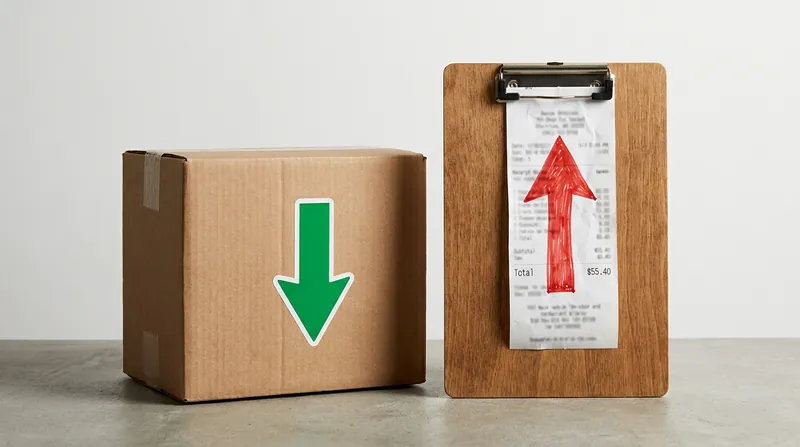
Yet, for millions of American households, the macroeconomic victory laps feel disconnected from reality. When consumers walk into a grocery store, sign a new lease, or pay their monthly utility bills, the numbers on the receipts do not look like a victory. The financial strain remains palpable, leading to widespread frustration even as official reports declare that the worst of the crisis is over.[1]
This disconnect stems from a fundamental misunderstanding of economic terminology—specifically, the crucial difference between a "price level" and an "inflation rate." When policymakers celebrate cooling inflation, they are describing a phenomenon known as disinflation, a concept that is often conflated with falling prices.[1][5]
Disinflation simply means that the rate at which prices are rising has slowed down. If a basket of groceries increased in price by 9% one year, and only 3% the next year, that is disinflation. The groceries are still getting more expensive, just at a much less aggressive pace. The baseline cost has permanently shifted upward.[1]
What many consumers actually desire when they hope for "lower prices" is deflation—a sustained period where the absolute cost of goods and services falls back to previous levels. However, in modern macroeconomic management, deflation is viewed not as a relief, but as an economic nightmare that central banks will do almost anything to avoid.[5]
The danger of deflation lies in human psychology and corporate math. If consumers expect prices to be lower next month, they delay major purchases. This drop in demand forces companies to slash prices further, which cuts directly into profit margins. To survive, businesses institute wage freezes and widespread layoffs, triggering a deflationary spiral that is notoriously difficult to escape. This is precisely why the Federal Reserve targets a steady 2% inflation rate rather than zero.[5]
Because central banks actively prevent deflation, the price increases of the early 2020s are permanently baked into the economy. Consumer prices in 2026 remain roughly 25% higher than they were in January 2020. The old prices are simply not coming back.[1]
The burden on households is not just that prices rose quickly, but that they rose and stayed at that new, elevated plateau. For a family paying substantially more for rent and childcare than they did five years ago, a 2.5% inflation rate in 2026 simply adds new weight to an already heavy load.[1]
So, if prices are never going back down to 2019 levels, how does the economy ever recover its balance? The answer lies not in the cost of goods, but in the value of labor. The true engine of economic recovery—and the way consumers actually regain their footing—is through the sustained growth of "real wages."[5]
Economists draw a sharp distinction between nominal wages and real wages. Nominal wages are the literal dollar amounts printed on a paycheck. Real wages adjust that dollar amount for the current cost of living. If your nominal wage increases by 4%, but inflation is running at 5%, your real wage has actually declined, meaning you can buy less than you could the year before.
The genuinely uplifting news for the U.S. economy is that the labor market has shown remarkable resilience in closing this gap. According to labor data, wage growth successfully outpaced inflation for 34 consecutive months between May 2023 and March 2026.[2]
During this nearly three-year stretch, workers were slowly clawing back the purchasing power they lost during the initial inflation shock. While the absolute prices of goods remained high, the number of hours a typical employee had to work to afford those goods began to steadily fall.[2][5]
A critical, often-overlooked factor in this wage recovery is productivity. As businesses invest heavily in artificial intelligence, automation, and more efficient supply chains, the overall output per worker increases. This technological integration is reshaping how companies operate across multiple sectors.
When workers become more productive, companies can afford to pay them higher nominal wages without needing to raise the prices of their end products to maintain profit margins. This productivity loop is the "Goldilocks" scenario that allows for painless disinflation, satisfying both the workforce and the central bank.
The path forward is not entirely without friction. In the spring of 2026, geopolitical tensions and energy supply shocks temporarily pushed headline inflation back above 3%, briefly causing inflation to outpace wage growth once again. Furthermore, market analysts note that the Federal Reserve's interest rate decisions remain highly sensitive to these external shocks, balancing the need to cool prices against the risk of stalling the broader bull market.[2][3][4]
Ultimately, the transition out of an inflationary crisis requires patience and a shift in perspective. The cost of living will not return to its pre-pandemic baseline, but as long as productivity-driven wage growth continues to outpace the newly stabilized inflation rate, the American consumer's purchasing power will quietly and steadily rebuild.[5]
Terms to know
- Disinflation
- A temporary slowing of the pace of price inflation; prices are still going up, just more slowly.
- Deflation
- A general decline in prices for goods and services, typically associated with a severe economic contraction.
- Nominal Wages
- The literal dollar amount printed on a worker's paycheck, unadjusted for the cost of living.
- Real Wages
- Wages adjusted for inflation, representing the actual purchasing power of a worker's income.
- Core PCE
- The Personal Consumption Expenditures price index excluding volatile food and energy prices, which is the Federal Reserve's preferred inflation gauge.
Questions readers ask
What is the difference between disinflation and deflation?
Disinflation means prices are still rising, but at a slower rate than before. Deflation means prices are actually falling across the broader economy.
Why doesn't the government want prices to go back to 2019 levels?
Falling prices (deflation) typically cause consumers to delay spending, which leads to lower corporate profits, widespread layoffs, and a shrinking economy.
Are my wages actually keeping up with inflation?
For most of the period between mid-2023 and early 2026, average U.S. wage growth outpaced inflation, meaning purchasing power was slowly recovering, though recent energy spikes have temporarily challenged that trend.
How does productivity affect inflation?
When workers become more productive—often through new technology or AI—companies can afford to pay them more without having to raise the prices of their goods to maintain profit margins.
Different angles
Macroeconomists' view
Focuses on aggregate data, target rates, and the necessity of avoiding deflationary spirals.
Central bankers and macroeconomic institutions view disinflation as a policy triumph. From their perspective, stabilizing the rate of price increases prevents the economy from slipping into a catastrophic deflationary spiral, where falling prices lead to delayed consumption, lower corporate profits, and mass unemployment. They argue that a steady, predictable 2% inflation rate is the optimal environment for long-term investment and economic growth.
Consumer Advocates' view
Focuses on the cumulative cost-of-living burden and the reality of household budgets.
Consumer advocates argue that celebrating a lower inflation rate ignores the permanent damage done to household balance sheets. Because prices are roughly 25% higher than they were in 2020, a 2.5% inflation rate today simply adds to an already unsustainable baseline. They emphasize that until housing, childcare, and grocery costs become a smaller percentage of the median family's take-home pay, the macroeconomic 'soft landing' will continue to feel like a recession for the working class.
Labor Economists' view
Focuses on real wage growth, purchasing power, and the job market's capacity to absorb shocks.
Labor economists measure recovery not by the price tag on goods, but by how many hours of labor it takes to buy them. They highlight that for nearly three years, wage growth successfully outpaced inflation, allowing workers to slowly rebuild their purchasing power. This camp argues that the ultimate solution to the inflation crisis is not forcing prices down, but fostering a high-productivity labor market where nominal wages can rise without triggering further price hikes.
- Macroeconomists & Central Bankers
- Focuses on aggregate data, target rates, and the necessity of avoiding deflationary spirals.
- Consumer Advocates
- Focuses on the cumulative cost-of-living burden and the reality of household budgets.
- Market Analysts
- Focuses on how inflation trends impact asset prices, interest rates, and corporate earnings.
- Labor Economists
- Focuses on real wage growth, purchasing power, and the job market's capacity to absorb shocks.
Perspectives this story doesn't cover
- Small Business Owners
- Fixed-Income Retirees
Sources
Source coverage
5 outlets
4 viewpoints surfaced





- [1]Stanford Economic ReviewConsumer Advocates
Disinflation Without Relief: Why 2026 Still Feels Like a Cost-of-Living Crisis
Read on Stanford Economic Review → - [2]StatistaLabor Economists
Wages Fall Behind Inflation Once Again Amid Iran War
Read on Statista → - [3]International Monetary FundMacroeconomists & Central Bankers
World Economic Outlook, April 2026
Read on International Monetary Fund → - [4]MarketWatchMarket Analysts
This bull market isn’t going to end because of Fed rate hikes under Warsh
Read on MarketWatch → - [5]Factlen Editorial TeamLabor Economists
Synthesis by Factlen editorial team
Read on Factlen Editorial Team →

More in Finance
See all →Split Economy
The Mechanics of 'Goods Deflation': Why Physical Products Are Getting Cheaper While Services Stay Sticky
2 sources
Inflation Lags
Why Global Inflation Won't Drop Instantly Despite Plummeting Oil Prices
4 sources

Purchasing Power
How a Surging Dollar and Plunging Oil Prices Are Quietly Crushing Inflation
6 sources

Savings Strategy
Decoding 'Real Yield': How Everyday Savers Are Finally Beating Inflation
2 sources
Comments
Every angle. Every day.
Get Finance stories with full source coverage and perspective breakdowns, free every day.