
US and Iranian Delegations Open High-Stakes Talks in Switzerland to Halt Regional Conflict
Following four months of direct military confrontation and devastating civilian casualties, US and Iranian officials have arrived in Geneva for indirect negotiations aimed at establishing a ceasefire.
By Factlen Editorial Team
- US Administration & Allies
- Focuses on re-establishing deterrence, halting Iranian support for proxy militias, and maintaining leverage through sanctions.
- Iranian Leadership
- Demands immediate relief from economic sanctions and formal accountability for US military strikes on Iranian soil.
- European Mediators
- Prioritizes immediate de-escalation to stabilize global energy markets and prevent a wider regional war.
- Human Rights Advocates
- Demands transparency and independent investigations into civilian casualties, specifically the Minab school bombing.
What's not represented
- · Civilians in Minab affected by the strikes
- · Commercial shipping operators in the Strait of Hormuz
Why this matters
These talks represent the first viable off-ramp to a conflict that has disrupted global energy markets, destabilized the Middle East, and resulted in significant civilian loss of life. The outcome will dictate whether the region steps back from the brink of a wider war or plunges into a prolonged, multi-front confrontation.
Key points
- US and Iranian delegations have arrived in Geneva for indirect ceasefire negotiations.
- Swiss and Omani diplomats are mediating the talks via shuttle diplomacy.
- Iran is demanding sanctions relief and accountability for the deadly Minab school bombing.
- The US is demanding a verifiable halt to Iran's support for regional proxy militias.
- Israel has temporarily limited military actions in Lebanon to support the de-escalation effort.
- Failure in Geneva could trigger a wider, multi-front war in the Middle East.
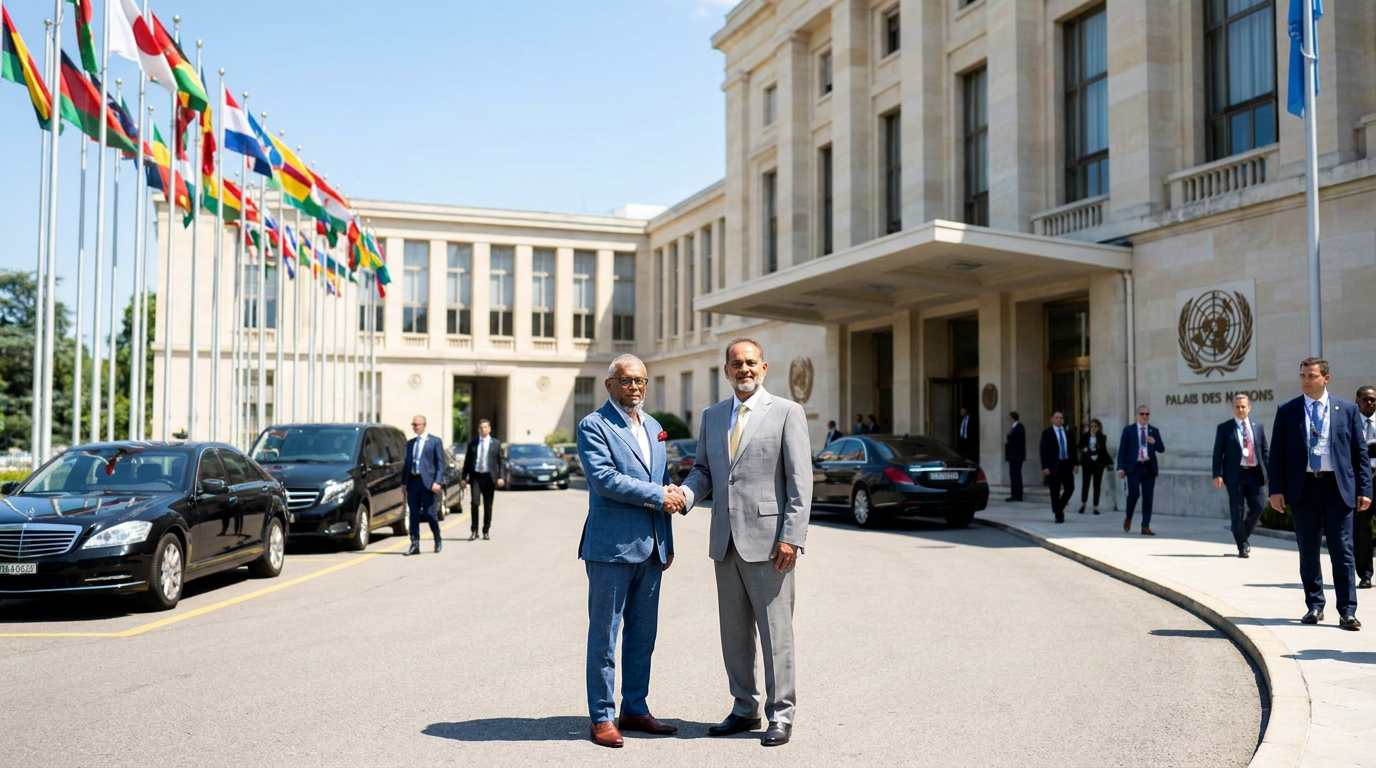
Delegations from the United States and Iran have officially arrived in Geneva, Switzerland, marking the commencement of the most consequential diplomatic engagement since the outbreak of direct hostilities earlier this year. The talks aim to establish a ceasefire and a framework for de-escalation after four months of unprecedented military confrontation.[1][4]
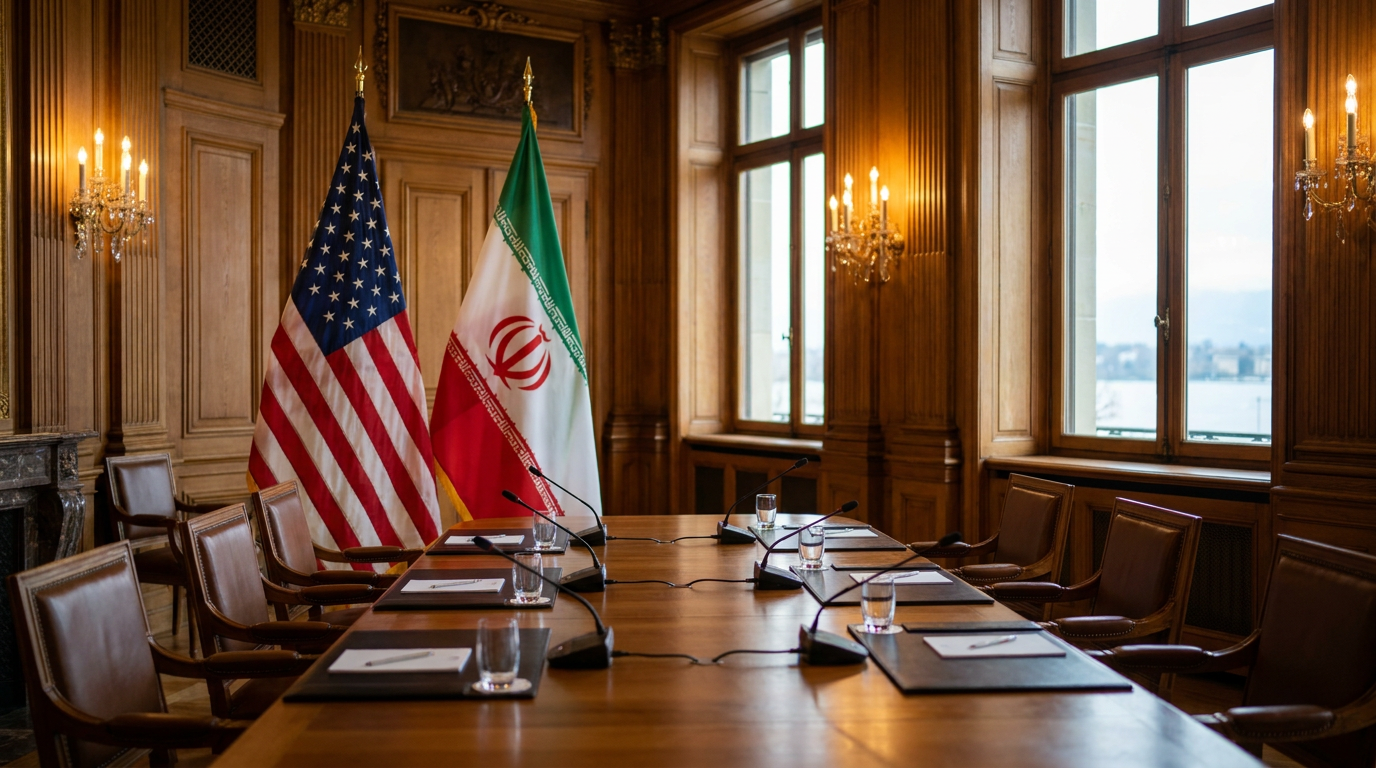
The structure of these negotiations is highly choreographed. Because the US and Iran do not maintain formal diplomatic relations, the delegations are not sitting in the same room. Instead, they are engaging in "indirect talks," a mechanism where Swiss and Omani diplomats shuttle proposals back and forth between separate hotels.[1][7]
This method of shuttle diplomacy is painstakingly slow, but it provides both Washington and Tehran the political cover necessary to negotiate without appearing to capitulate to domestic hardliners. The immediate goal is a cessation of direct strikes and a mutual stand-down of regional proxy forces.[6]
The backdrop to these talks is a conflict that has fundamentally rewritten the rules of engagement in the Middle East. What began as a series of regional skirmishes rapidly escalated in February 2026 into direct US-Iran military exchanges, bypassing the traditional proxy warfare that has characterized the region for decades.[4][6]

The human cost of this escalation looms large over the Geneva proceedings. The most contentious and tragic incident remains the February bombing of an elementary school in the Iranian town of Minab. A US Tomahawk cruise missile struck the facility on the first day of the wider conflict, killing at least 175 people, the vast majority of whom were children.[2][8]
Accountability for the Minab strike is a primary demand from the Iranian delegation. Tehran is insisting on a formal acknowledgment and reparations, framing the incident as a war crime. Meanwhile, human rights organizations and international observers are expressing growing concern over the transparency of the Pentagon's internal investigation.[2][8]
Critics fear that the US Defense Department, under the leadership of Secretary Pete Hegseth and the Trump administration, may attempt to classify the findings of the Minab investigation to shield the military from international backlash. The lack of public answers nearly four months after the strike has severely complicated the diplomatic atmosphere.[2]
On the American side, the Trump administration's negotiating posture remains rooted in a "maximum pressure" framework, albeit adapted for an active conflict scenario. The US delegation's core demand is the verifiable cessation of Iranian support for regional militias, including Hezbollah in Lebanon and the Houthis in Yemen.[5]
On the American side, the Trump administration's negotiating posture remains rooted in a "maximum pressure" framework, albeit adapted for an active conflict scenario.
The US is also demanding strict limits on Iran's ballistic missile program, which was used extensively during the February exchanges. Washington argues that any ceasefire that leaves Iran's missile infrastructure intact merely pauses the conflict rather than resolving it.[4][5]
To enforce these demands, the US is leveraging the crippling economic sanctions that have been aggressively expanded since the conflict began. The administration has signaled that partial sanctions relief is on the table, but only in exchange for irreversible concessions from Tehran regarding its military posture.[5][6]
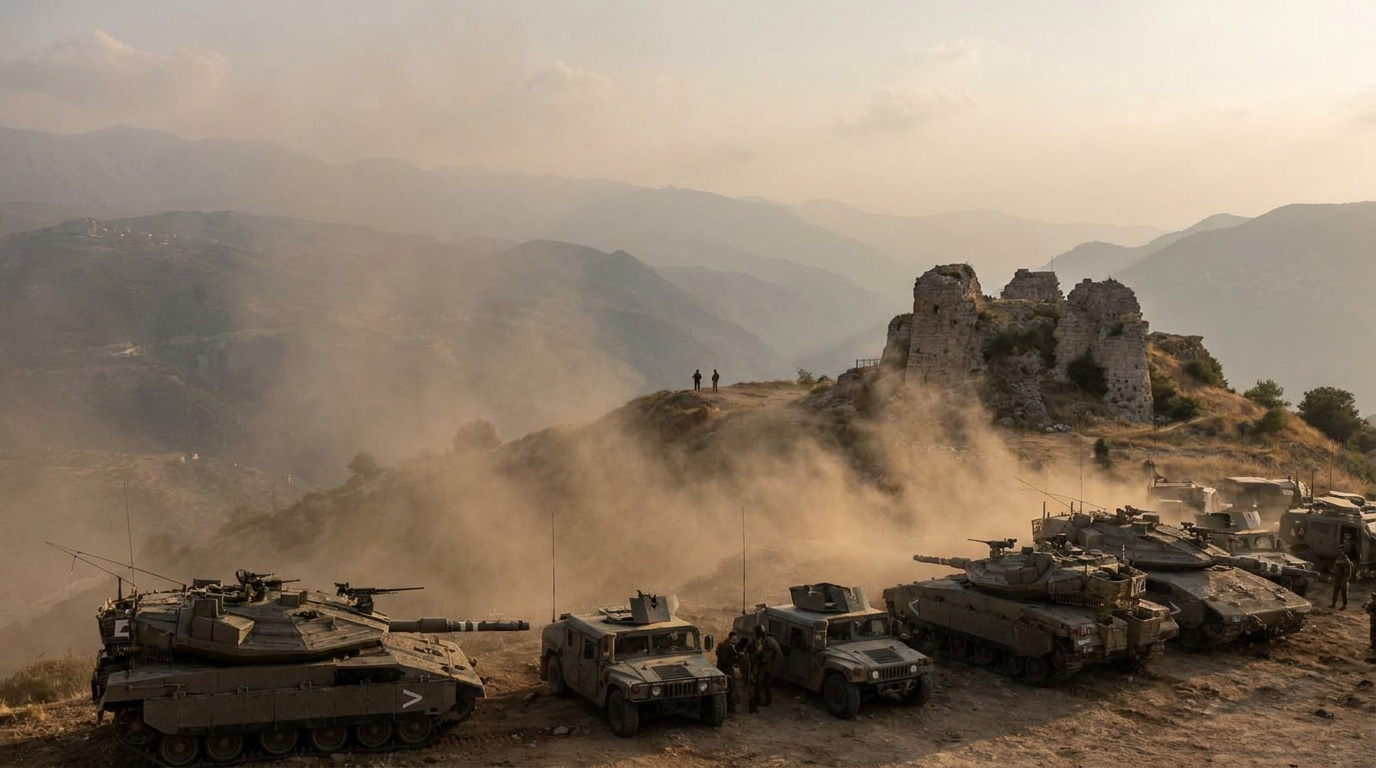
The ripple effects of the Geneva talks are already being felt across the region's various flashpoints. In a move widely interpreted as a confidence-building measure tied to the negotiations, Israel has directed its military to limit its actions in southern Lebanon.[3]

This tactical pause in Lebanon aims to prevent Hezbollah from opening a full-scale northern front, which would almost certainly derail the fragile diplomatic process in Switzerland. However, tensions remain exceptionally high, and Israeli officials have stressed that the limitation is temporary and conditional.[3]
European mediators, who have spent weeks laying the groundwork for the Geneva summit, are cautiously optimistic but acutely aware of the fragility of the talks. Their primary objective is to secure a localized ceasefire in the Persian Gulf to stabilize global energy markets, which have seen severe volatility since February.[7]
The economic stakes are massive. The conflict has severely disrupted shipping through the Strait of Hormuz, a critical chokepoint for global oil supplies. A successful framework agreement in Geneva would immediately ease insurance premiums on commercial shipping and lower energy costs worldwide.[6][7]

Despite the economic incentives, the path to an agreement is fraught with domestic political landmines for both governments. In Washington, the Trump administration faces pressure from hawkish factions who view any negotiation with Tehran as a concession, demanding instead a decisive military victory.[5]
Conversely, the Iranian leadership is navigating intense domestic outrage over the Minab bombing and the broader economic devastation caused by the war. Hardline factions within the Islamic Revolutionary Guard Corps (IRGC) are reportedly skeptical of the talks, arguing that the US cannot be trusted to honor any sanctions relief.[8]
The coming days in Geneva will test whether the mutual exhaustion of a four-month war can overcome decades of entrenched hostility. Mediators are focusing on "sequencing"—the precise order in which concessions are made—to build trust incrementally.[6][7]
If the talks collapse, military analysts warn that the conflict will likely enter a new, more destructive phase, potentially drawing in neighboring Gulf states and forcing a wider US military deployment to the region. The window for diplomacy is open, but it is exceptionally narrow.[4][6]

How we got here
February 2026
Regional skirmishes escalate into direct military exchanges between the US and Iran.
February 2026
A US cruise missile strikes a school in Minab, Iran, killing at least 175 civilians.
April 2026
The conflict settles into a destructive stalemate, severely disrupting global shipping.
June 2026
US and Iranian delegations arrive in Geneva for indirect ceasefire negotiations.
Viewpoints in depth
The US Administration's View
Washington views the talks as a mechanism to enforce deterrence and dismantle Iran's proxy network.
For the Trump administration, the Geneva talks are an extension of its 'maximum pressure' campaign, now applied to an active conflict. US negotiators argue that any ceasefire must address the root cause of regional instability: Iran's funding and arming of proxy militias like Hezbollah and the Houthis. The US position is that returning to the pre-February status quo is unacceptable, as it leaves Iran's ballistic missile infrastructure intact. Consequently, Washington is demanding verifiable, irreversible concessions on Iran's military posture before agreeing to any meaningful sanctions relief.
Iran's View
Tehran approaches the negotiations demanding economic relief and accountability for US strikes on its soil.
The Iranian delegation's primary objective is securing relief from the crippling economic sanctions that have devastated the country's economy. However, domestic politics heavily influence their stance. The horrific civilian death toll from the Minab school bombing has generated immense public outrage, forcing Iranian negotiators to demand formal US accountability and reparations as a prerequisite for a broader peace framework. Hardline factions within Iran remain deeply skeptical of the talks, arguing that the US has historically failed to honor its commitments regarding sanctions relief.
The Mediators' View
European and Gulf diplomats are focused on immediate de-escalation to prevent a wider war.
For the Swiss, Omani, and European diplomats facilitating the talks, the immediate priority is stopping the violence, regardless of whether a comprehensive political settlement is reached. They view the conflict as a profound threat to global economic stability, particularly due to the disruption of energy shipments through the Strait of Hormuz. Mediators are employing a strategy of 'sequencing'—attempting to orchestrate small, reciprocal confidence-building measures, such as Israel's pause in Lebanon, to slowly build enough trust to secure a formalized ceasefire in the Gulf.
What we don't know
- Whether the Pentagon will ever publicly release the findings of its investigation into the Minab school bombing.
- How much sanctions relief the US is actually willing to offer in exchange for Iranian military concessions.
- Whether hardline factions in either Washington or Tehran will accept a compromise agreement.
Key terms
- Indirect Talks
- A diplomatic negotiation where opposing parties do not meet face-to-face, relying instead on a neutral third party to relay messages and proposals.
- Shuttle Diplomacy
- The action of an outside party in serving as an intermediary between principals in a dispute, without direct principal-to-principal contact.
- Proxy Forces
- Armed groups or militias that act on behalf of, or with the support of, a larger state power, allowing that state to exert influence without direct military involvement.
- Maximum Pressure
- A US foreign policy strategy characterized by the aggressive use of economic sanctions and diplomatic isolation to force a target nation to change its behavior.
Frequently asked
Why are the talks happening in Switzerland?
Switzerland has historically acted as the protecting power representing US diplomatic interests in Iran since relations were severed in 1980. Geneva offers a neutral ground for international mediation.
Will US and Iranian officials meet face-to-face?
No. The delegations are engaging in 'indirect talks,' meaning third-party mediators from Switzerland and Oman are carrying messages between the two sides, who remain in separate locations.
What happened in Minab?
In February 2026, a US Tomahawk cruise missile struck an elementary school in the Iranian town of Minab, killing at least 175 people, mostly children. The incident remains a major point of contention in the talks.
How does this affect Israel and Lebanon?
The broader US-Iran conflict has heightened tensions between Israel and the Iran-backed militant group Hezbollah in Lebanon. Israel has temporarily limited its military actions in Lebanon to avoid derailing the Geneva talks.
Sources
Source coverage
8 outlets
4 viewpoints surfaced








[1]Al JazeeraIranian Leadership
US-Iran delegations arrive as talks begin in Switzerland
Read on Al Jazeera →[2]The GuardianHuman Rights Advocates
Four months after the horrific Iran school bombing, fears grow that Trump and Hegseth will bury the truth
Read on The Guardian →[3]NYTUS Administration & Allies
Israel directs its military to limit its actions in Lebanon, though tensions persist.
Read on NYT →[4]ReutersUS Administration & Allies
US and Iranian officials open indirect talks in Geneva aiming to de-escalate Gulf conflict
Read on Reuters →[5]Fox NewsUS Administration & Allies
Trump administration takes hardline stance as Geneva talks with Iran commence
Read on Fox News →[6]Council on Foreign RelationsEuropean Mediators
The Stakes of the 2026 Geneva Talks
Read on Council on Foreign Relations →[7]BBCEuropean Mediators
European mediators hope for breakthrough in US-Iran Geneva summit
Read on BBC →[8]Tehran TimesIranian Leadership
Iran demands full lifting of sanctions and accountability for Minab attack at Swiss talks
Read on Tehran Times →

More in news politics
See all 10 stories →US-Iran Deal
How the Fragile US-Iran Peace Deal Could Unravel Over Lebanon
8 sources
Lebanon Border
Israel Limits Lebanon Actions to Salvage US-Iran Deal, but Refuses to Withdraw
7 sources
NLRB Powers
Supreme Court Declines Macy's Appeal, Leaving Expanded NLRB Penalties Intact
6 sources
Downing Street Crisis
UK Prime Minister Keir Starmer on the Brink as Andy Burnham Mounts Leadership Threat
7 sources
Every angle. Every day.
Get news politics stories with full source coverage and perspective breakdowns delivered to your inbox.