
The Rise of the 'Iron Path': How Via Ferratas Are Democratizing the Mountains
Once a World War I military tactic, via ferratas are experiencing a global tourism boom, allowing hikers to safely scale vertical cliffs using fixed cables and specialized gear.
By Factlen Editorial Team
- Outdoor Tourism Industry
- Views via ferratas as a vital, accessible gateway for everyday people to experience high-alpine environments safely.
- Alpine Conservationists
- Argues that the unchecked proliferation of 'fun' iron routes degrades natural rock faces and overcrowds fragile ecosystems.
- Safety & Engineering Regulators
- Focuses on the technical standards of rock anchors, gear manufacturing, and the physics of fall-arrest systems.
What's not represented
- · Local mountain town residents dealing with increased traffic and tourism.
- · Search and rescue teams who must extract climbers from difficult vertical terrain.
Why this matters
Via ferratas are transforming mountain tourism by allowing everyday hikers to safely access vertical cliffs once reserved for elite climbers. Understanding how the gear works and the history behind these routes is essential for anyone looking to safely participate in this booming outdoor sport.
Key points
- Via ferratas use fixed steel cables and iron rungs to make vertical climbing accessible to hikers.
- Climbers use a specialized Y-lanyard with an energy absorber to safely arrest static falls.
- The modern sport originated during World War I when troops bolted routes into the Dolomites.
- The activity is experiencing a massive post-pandemic tourism boom in North America and Asia.
- Conservationists are raising concerns over the environmental impact of heavily engineered 'fun' routes.
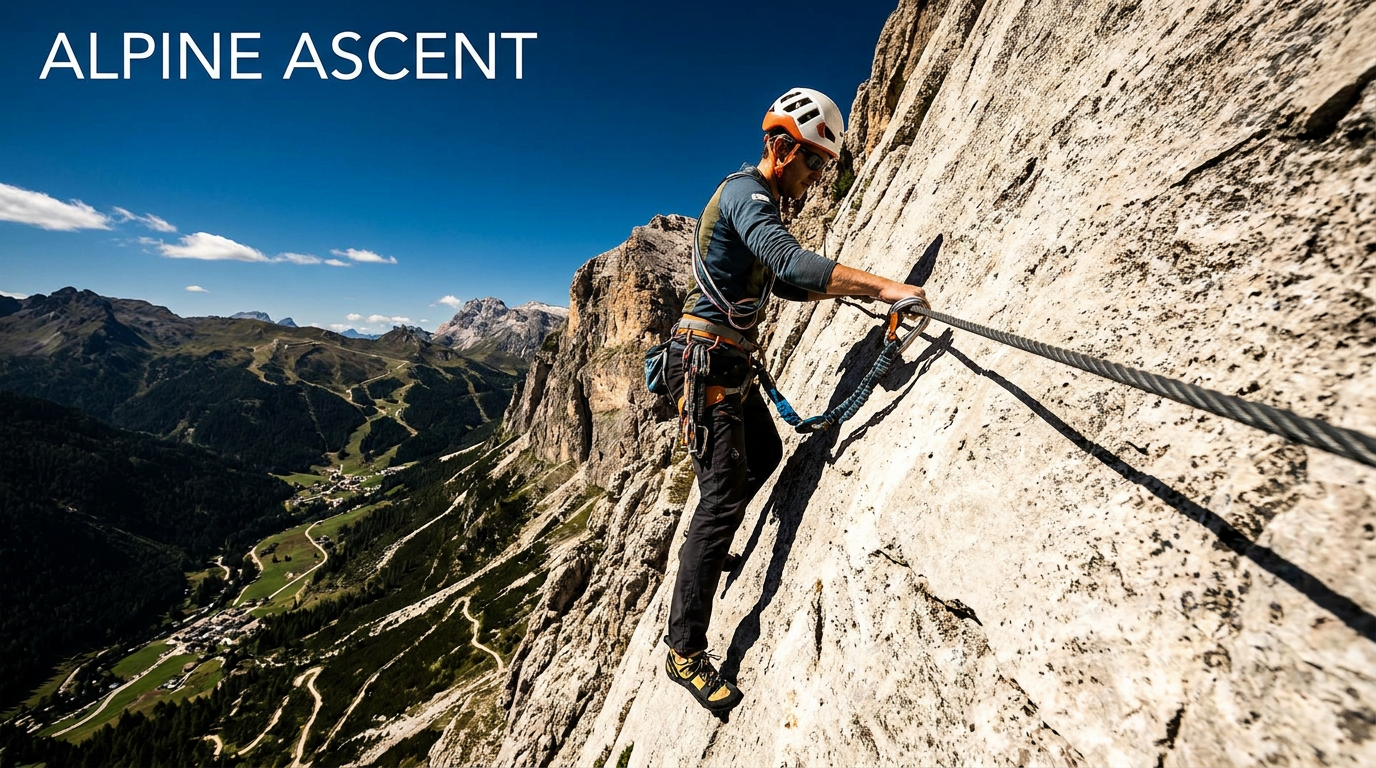
Imagine standing on a sheer limestone cliff, a thousand feet above a sweeping alpine valley. The wind is howling, the drop below is absolute, and yet, you feel entirely secure. You do not have years of technical rock climbing experience, nor are you relying on a partner to catch you with a dynamic rope. Instead, you are clipped into a thick steel cable bolted directly into the mountain face. This is the world of via ferrata—a thrilling hybrid of hiking and mountaineering that is rapidly democratizing access to some of the most extreme vertical landscapes on Earth.[4]
Translated from Italian as the "iron path," via ferrata has transitioned from a niche alpine curiosity into a booming global outdoor industry. Following the COVID-19 pandemic, interest in structured mountain adventures surged, pushing the sport far beyond its traditional European strongholds. Today, it represents a distinct, commercially viable sector of adventure tourism, drawing a diverse demographic of hikers who want the adrenaline of a summit push without the steep learning curve of traditional alpinism. Researchers note that it is no longer just a sub-category of climbing, but a unique discipline.[1]
At its core, a via ferrata is a protected climbing route equipped with fixed steel cables, iron rungs, carved steps, and suspended bridges. These permanent fixtures provide both reliable handholds and a continuous safety line. By removing the need to place temporary gear or understand complex rope systems, the iron path allows almost anyone with basic fitness and a head for heights to navigate exposed, overhanging terrain that would otherwise be reserved for elite climbers. It transforms an impossible cliff into a manageable, albeit thrilling, staircase.[4][6]
The mechanism that makes this possible is elegantly simple, yet heavily engineered. Climbers wear a standard sitting harness, but instead of tying into a rope, they use a specialized "via ferrata set." This device consists of a Y-shaped lanyard equipped with two large, auto-locking carabiners. As the climber ascends the iron rungs or natural rock features, they slide both carabiners along the steel safety cable that runs parallel to the route.[4][6]

The critical maneuver occurs every few meters when the climber reaches a steel rock anchor bolting the cable to the mountain. Because the carabiners cannot slide past the anchor, the climber must unclip one carabiner, move it past the bolt, and re-clip it to the next section of cable. Only when the first carabiner is securely attached do they repeat the process with the second. This leapfrog method ensures the climber is never detached from the mountain's safety system at any point during the ascent.[4]
While the clipping process is straightforward, the physics of a potential fall are severe. Unlike traditional rock climbing, where a stretchy dynamic rope absorbs the energy of a fall, a via ferrata fall is highly static. If a climber slips, they will plunge down the steel cable until their carabiners smash into the nearest rock anchor below. Without intervention, the resulting shock load would be catastrophic, easily snapping the lanyard, shattering the carabiners, or causing severe bodily injury to the climber.[6]
To solve this, every modern via ferrata set features a mandatory energy absorber connecting the Y-lanyard to the harness. This compact pouch contains a length of webbing intricately stitched together. In the event of a high-impact fall, the stitching is designed to violently tear open, deploying the extra webbing to decelerate the climber and absorb the massive kinetic energy. It is a single-use lifeline that makes the entire sport viable.[6]
To solve this, every modern via ferrata set features a mandatory energy absorber connecting the Y-lanyard to the harness.
The engineering of these routes has evolved significantly since their inception. While early protected paths featuring wooden ladders and iron pins existed in the 19th century—such as the 1843 route constructed on Austria's Dachstein under the direction of Friedrich Simony—the modern via ferrata was born out of necessity and bloodshed. During World War I, the jagged peaks of the Dolomites became a brutal, high-altitude battleground between Italian and Austro-Hungarian forces fighting for control of the valleys.[6]
To move troops, artillery, and vital supplies across hostile, freezing peaks, military engineers worked tirelessly to bolt iron rungs and heavy cables into the sheer rock faces. These wartime installations allowed soldiers to navigate the treacherous terrain quickly and quietly, fighting a war of attrition in an environment where avalanches, freezing temperatures, and sheer exposure were often just as deadly as enemy fire.[6]

After the war ended, these vast networks of military routes were largely abandoned to the harsh alpine elements. It wasn't until decades later that regional alpine clubs began restoring the rusting cables and replacing the decaying wooden ladders with modern steel fixtures. What began as a desperate military infrastructure was gradually repurposed for civilian recreation, laying the foundation for the modern European mountain tourism industry and opening the high peaks to the public. These historical routes still bear the scars of their past, with climbers occasionally passing old trenches and wartime artifacts.[6]
Today, there are over 1,000 established via ferrata routes spidering across the European Alps, heavily concentrated in the limestone massifs of Italy, Austria, and France. But the sport's recent boom has pushed its borders outward. Expansion has surged across North America, where ski resorts and private guiding companies are installing iron paths to attract summer visitors, turning the sport into a year-round economic driver that revitalizes mountain towns during the warmer off-season months. The accessibility of the sport makes it highly attractive to regional tourism boards.[1][6]
The growth is equally explosive in Asia. In China, scenic areas like Zhejiang Province's Yandang Mountain have seen via ferrata bookings quadruple in recent years. Driven by highly curated social media posts and a cultural shift toward experiential travel, young tourists are flocking to these routes. For many, the iron path offers a profound sense of empowerment and stress relief—a way to conquer nature and capture stunning aerial photographs without needing professional athletic ability.[5]

However, this rapid commercialization is sparking intense debate within the broader mountaineering community. Traditional alpine organizations, such as the Club Arc Alpin, warn that the unchecked proliferation of routes is fundamentally altering the character of the mountains. They argue that the influx of large crowds brings noise, waste, and wildlife disruption to previously remote and ecologically fragile alpine environments, threatening the very pristine nature that draws people to the outdoors in the first place. The debate centers on how much infrastructure belongs in the wilderness.[3]
A major point of contention is the rise of the "fun" via ferrata. Conservationists draw a strict line between classic routes—which follow natural lines of weakness in the rock to reach a summit—and modern, heavily engineered courses designed purely for amusement. Routes enriched with zip-lines, excessive metal netting, and artificial obstacles are heavily criticized for degrading the natural landscape into a mere backdrop for an outdoor amusement park.[3]
Beyond environmental concerns, the sheer scale of the sport is forcing a reckoning with safety standards. The International Climbing and Mountaineering Federation (UIAA) has dedicated significant resources to studying the long-term integrity of the steel rock anchors that hold these routes together. Bolted into limestone and exposed to decades of harsh weather, these anchors are highly susceptible to hidden stress corrosion and cracking, prompting urgent updates to global manufacturing standards.[2]

As via ferrata continues to evolve, land managers and researchers are realizing that it can no longer be treated simply as a sub-category of rock climbing. It is a distinct hybrid sport with its own unique risk profiles, participation pathways, and environmental impacts. Managing its future will require dedicated academic research and policy frameworks to balance commercial viability with the preservation of the raw alpine environments that make the sport so captivating in the first place. Without this data, destinations risk overdevelopment and ecological degradation.[1]
For now, the iron paths remain one of the most compelling ways for everyday adventurers to step into the void. By bridging the gap between a casual hike and a technical summit expedition, via ferratas offer a rare opportunity to experience the terrifying beauty of the vertical world. They provide a profound sense of accomplishment, allowing hikers to conquer their fears safely tethered to the mountain, one carabiner at a time. As the sport grows, the challenge will be ensuring that the mountains themselves survive the enthusiasm of the crowds.[7]
How we got here
1843
First precursor to modern via ferratas constructed on Austria's Dachstein mountain.
1914
Italian and Austro-Hungarian troops build extensive iron paths in the Dolomites during WWI.
1990s
Via ferratas begin to be heavily commercialized by European alpine clubs to boost tourism.
2020
UIAA releases updated global safety standards for rock anchors to combat stress corrosion.
2023
Post-pandemic outdoor boom drives massive expansion of routes in North America and Asia.
Viewpoints in depth
Outdoor Tourism Industry
Views via ferratas as a vital, accessible gateway for everyday people to experience high-alpine environments safely.
Commercial guides, regional tourism boards, and outdoor recreation researchers argue that via ferratas democratize the mountains. By providing a structured, managed environment, these routes allow hikers to experience the physical and mental empowerment of vertical climbing without the steep learning curve of traditional alpinism. In regions like North America and China, the sport is injecting fresh momentum into local economies and drawing a younger, diverse demographic into nature.
Alpine Conservationists
Argues that the unchecked proliferation of heavily engineered routes degrades natural rock faces and overcrowds fragile ecosystems.
Traditional mountaineering organizations, such as the Club Arc Alpin, view the rapid expansion of via ferratas with caution. They draw a strict line between "classic" routes that follow natural lines of weakness in the rock and modern "fun" routes that bolt zip-lines and excessive metal into the landscape purely for amusement. Conservationists warn that these high-traffic attractions bring noise, waste, and wildlife disruption to previously remote and ecologically sensitive alpine environments.
Safety & Engineering Regulators
Focuses on the technical standards of rock anchors, gear manufacturing, and the physics of fall-arrest systems.
For organizations like the UIAA, the primary concern is the unseen physics of the iron path. A fall on a via ferrata generates massive static shock loads that can easily snap standard climbing gear. Regulators are constantly updating manufacturing standards for energy-absorbing lanyards and investigating the long-term integrity of the steel rock anchors bolted into the mountain, which are highly susceptible to hidden stress corrosion over decades of weather exposure.
What we don't know
- How the long-term environmental impact of high-traffic via ferratas will affect fragile alpine wildlife.
- Whether the surge in inexperienced climbers will lead to increased accident rates despite the safety gear.
- How many legacy rock anchors from older routes suffer from hidden stress corrosion.
Key terms
- Via Ferrata
- Italian for "iron path"; a mountain route equipped with fixed ladders, cables, and bridges to assist climbers.
- Energy Absorber
- A critical safety device in a via ferrata lanyard designed to tear open and absorb the massive shock load of a static fall.
- Carabiner
- A specialized metal loop with a spring-loaded gate used to connect the climber's harness to the steel safety cable.
- Rock Anchor
- A steel bolt drilled and glued into the mountain face to secure the via ferrata cable.
Frequently asked
Do I need prior rock climbing experience to do a via ferrata?
No. Most routes are designed for beginners and hikers, requiring only basic fitness, a head for heights, and the proper safety equipment.
What happens if I fall on a via ferrata?
You will slide down the steel cable until your carabiners hit the nearest rock anchor. The energy absorber in your lanyard will deploy to cushion the severe impact force.
Where are the most famous via ferrata routes?
The Italian Dolomites are considered the birthplace and global capital of the sport, though routes are now popular across the Alps, North America, and Asia.
Sources
Source coverage
7 outlets
3 viewpoints surfaced







[1]Journal of Outdoor Recreation and TourismOutdoor Tourism Industry
Via Ferrata tourism and recreation research agenda
Read on Journal of Outdoor Recreation and Tourism →[2]UIAASafety & Engineering Regulators
Rock Anchors and Bolts: Essential work in climber safety
Read on UIAA →[3]Club Arc AlpinAlpine Conservationists
The Via ferrata boom
Read on Club Arc Alpin →[4]AFAROutdoor Tourism Industry
What it's like climbing a via ferrata
Read on AFAR →[5]Global TimesOutdoor Tourism Industry
Via Ferrata gains popularity among young people
Read on Global Times →[6]WikipediaSafety & Engineering Regulators
Via ferrata
Read on Wikipedia →[7]Factlen Editorial TeamSafety & Engineering Regulators
Synthesis by Factlen editorial team
Read on Factlen Editorial Team →

Every angle. Every day.
Get travel stories with full source coverage and perspective breakdowns delivered to your inbox.