
SolarSquare Secures $53 Million to Scale Residential Rooftop Solar Across India
The Mumbai-based startup has raised a Series C round led by B Capital to expand its full-stack home energy platform as India's decentralized solar market accelerates.

The push to decentralize India's energy grid has received a massive injection of capital, with Mumbai-based clean energy startup SolarSquare securing $53 million in a Series C funding round. Led by global investment firm B Capital, the raise marks the largest venture capital investment to date in India's rapidly expanding residential solar sector.
The fresh capital pushes the company's total funding past the $100 million threshold, signaling strong institutional confidence in a market that is suddenly inflecting after years of slow, fragmented growth. The round also saw increased commitments from a deep bench of existing climate and technology investors, including Lightspeed, Elevation Capital, Lowercarbon Capital, Rainmatter by Zerodha, and Good Capital.[1]
Founded in 2015 by Neeraj Jain, Nikhil Nahar, and Shreya Mishra, SolarSquare initially focused on commercial and industrial clients before pivoting its attention entirely to the residential market in 2021. The shift was a calculated bet on the eventual mainstreaming of home energy systems. Today, the startup operates as a fully integrated, full-stack provider, managing the entire lifecycle of a rooftop solar transition.
Rather than acting merely as a marketplace or an equipment vendor, the company handles initial home consultations, custom system design, financing assistance, physical installation, and long-term maintenance. This end-to-end approach is designed to remove the friction and complexity that has historically deterred homeowners from upgrading their energy infrastructure.[2]
The scale of SolarSquare's current operations illustrates the sudden momentum in the Indian climate tech ecosystem. The startup reports that it has already powered approximately 50,000 homes across the country, establishing itself as India's largest standalone residential rooftop solar provider.
Financially, the company is currently operating at an annual revenue run rate exceeding ₹1,000 crore, or roughly $117 million. The newly secured $53 million will be deployed to expand the company's geographic footprint into new cities, strengthen its proprietary technology and asset-management platforms, and scale its workforce as it attempts to build a nationally recognized, trusted home-energy brand.[1]
A central hurdle in India's residential solar market has long been a profound trust deficit between consumers and a highly fragmented landscape of local installers. A standard rooftop solar system requires a significant upfront capital investment—typically between ₹2 lakh and ₹4 lakh ($2,400 to $4,800) for an urban household. To convince families to make that leap, SolarSquare introduced a vertically integrated model that includes explicit performance guarantees.
By assuring customers of the specific energy output and financial returns their systems will generate, the company attempts to de-risk the purchase. The startup's proprietary technology platform now manages what it claims is the largest portfolio of residential solar assets in the country, tracking the performance of every installation in real time.[2]
The venture capital community views this operational discipline as the key to unlocking a massive, previously stubborn market. Rahul Taneja, a partner at Lightspeed, noted that the firm originally backed SolarSquare based on the thesis that "trust would decide who wins residential solar in India." He emphasized that the startup has cemented its leadership position precisely through its full-stack model and performance guarantees.
Similarly, Karan Mohla, General Partner at B Capital, framed the investment as a strategic bet on India's decentralized energy transition. "India's energy transition will not be won on the grid alone—it will be won home by home, city by city," Mohla stated, praising the founding team's persistence and strong unit economics.[2]
Beyond the startup's individual execution, the broader macroeconomic and policy environment in India has shifted dramatically in favor of residential renewables. For years, adoption was sluggish; SolarSquare CEO Shreya Mishra noted that when the company first entered the residential space, only about 100,000 Indian homes were installing rooftop systems annually.
Today, the market has accelerated to the point where roughly 100,000 homes are adopting solar power every ten days. This surge is being driven by a confluence of rising electricity tariffs, increasing household power consumption due to extreme heat and appliance adoption, and growing middle-class concerns regarding long-term energy security.
Government policy has acted as the ultimate catalyst for this recent explosion in consumer demand. The launch of Prime Minister Narendra Modi's PM Surya Ghar initiative earlier this year has fundamentally altered the landscape by offering substantial subsidies to households that install rooftop solar systems.
The high-profile federal program has not only improved the immediate financial calculus for homeowners but has also driven a massive wave of consumer awareness across the subcontinent. By signaling that rooftop solar is a national priority, the initiative has legitimized the technology for millions of families who might otherwise have viewed it as a niche or experimental upgrade.[1]
Despite the recent surge in installations, industry analysts and investors believe the sector remains in the very early innings of a multi-decade growth cycle. Current estimates suggest that India possesses nearly 70 million residential rooftops that are structurally suitable for solar panel installations.
Yet, even with the recent acceleration, fewer than 5% of those viable homes are currently equipped with solar technology. For well-capitalized startups like SolarSquare, this massive untapped market represents a generational opportunity to build a decentralized utility network from the ground up, transforming millions of passive electricity consumers into active energy producers.[3]
The influx of venture capital into the sector is not limited to a single player, indicating a broader maturation of India's climate tech ecosystem. Other renewable energy ventures have also successfully tapped private markets in recent months, with Ahmedabad-based Grew Solar raising nearly $34 million and commercial solar provider Candi Solar securing $58.5 million in debt funding from the International Finance Corporation.
However, SolarSquare's massive Series C stands out for its pure focus on the residential consumer. As the company looks toward the future, its founders are already laying the groundwork for the next phase of the home energy transition, which will likely involve integrating battery storage solutions and smart grid technologies to further insulate households from public grid vulnerabilities.[1]
Key points
- Mumbai-based SolarSquare raised $53 million in a Series C round led by B Capital.
- The startup provides end-to-end residential solar installations, complete with performance guarantees.
- India's residential solar market has accelerated dramatically, with 100,000 homes adopting solar every 10 days.
- The surge is being driven by rising grid tariffs and the government's PM Surya Ghar subsidy program.
Open questions
- How quickly the supply chain for solar panels and inverters can scale to meet the sudden surge in Indian consumer demand.
- Whether traditional utility companies will lobby for regulatory changes as more high-paying urban households defect from the public grid.
- How the integration of residential battery storage will affect the overall cost and adoption rate in the coming years.
Timeline
2015
SolarSquare is founded, initially focusing on commercial and industrial solar installations.
2021
The company pivots its business model to focus entirely on the residential rooftop solar market.
Early 2024
The Indian government launches the PM Surya Ghar initiative, providing subsidies that dramatically accelerate consumer demand.
June 2026
SolarSquare raises $53 million in a Series C round, pushing its total capital raised past $100 million.
- Clean Energy Founders
- Emphasize that standardizing the consumer experience and guaranteeing performance are the keys to unlocking the market.
- Venture Capitalists
- View decentralized solar as a highly scalable, asset-backed investment opportunity with strong unit economics.
- Policy & Market Analysts
- Point to macroeconomic pressures and government subsidies as the true catalysts for the recent market inflection.
Perspectives this story doesn't cover
- Traditional utility companies facing potential revenue loss from grid defection
- Lower-income households who may still be priced out of the transition despite government subsidies
Sources
Source coverage
3 outlets
3 viewpoints surfaced



- [1]DealStreetAsiaVenture Capitalists
India's SolarSquare raises $53m in Series C round led by B Capital
Read on DealStreetAsia → - [2]YourStoryVenture Capitalists
SolarSquare raises $53M in Series C round led by B Capital
Read on YourStory → - [3]StartupCornersVenture Capitalists
Startup Funding Recap June 16 2026: AI, Solar, and Agritech Raises
Read on StartupCorners →

More in Business
See all →Tunneling Tech
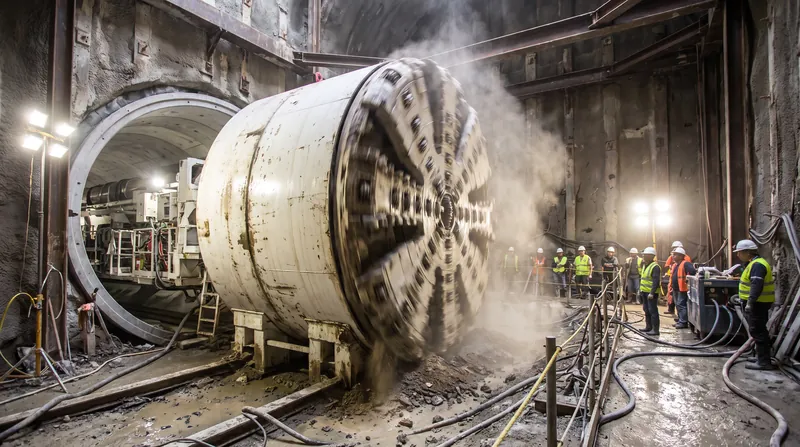
The Boring Company Secures $3 Billion Series D to Fund UAE Tunnel Expansion
5 sources
AI Hardware
Positron AI Secures $875 Million to Build Memory-First Inference Chips
5 sources

AI Infrastructure
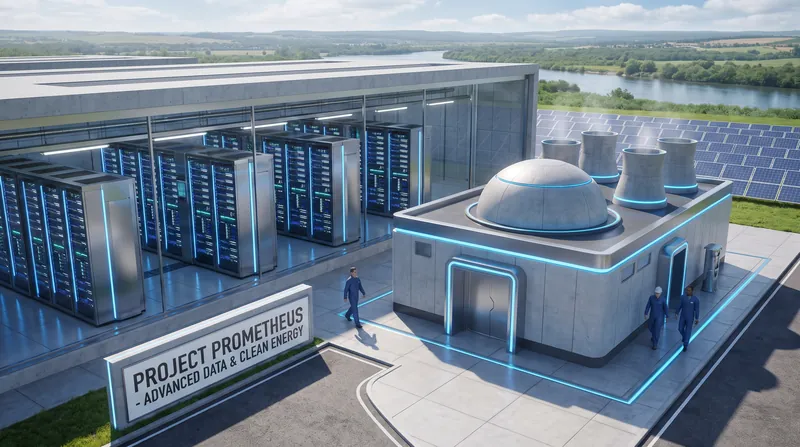
Valar Atomics Secures $1 Billion Series B to Scale Nuclear Power for AI Data Centers
4 sources
AI Infrastructure
AI Inference Chip Startup Etched Secures $700M at $21 Billion Valuation to Scale Compute Clusters
8 sources

Comments
Every angle. Every day.
Get Business stories with full source coverage and perspective breakdowns, free every day.