
The Ultimate 2026 E-Bike Buying Guide: Navigating Motors, Batteries, and Safety
As e-bikes become a mainstream transportation solution in 2026, navigating motor types, battery capacities, and safety certifications is essential for finding the perfect ride.
By Factlen Editorial Team
- Urban Commuters
- Prioritize high-capacity batteries, cargo utility, and Class 3 speeds to effectively replace daily car trips.
- Safety & Advocacy Groups
- Emphasize the critical need for UL battery certifications, proper charging habits, and responsible trail etiquette.
- Cycling Enthusiasts
- Value lightweight 'stealth' designs, natural pedal feel, and mid-drive motors that mimic traditional cycling.
- Industry Analysts
- Focus on market maturation, smart IoT integration, and the divergence of regional motor power regulations.
What's not represented
- · Traditional analog bicycle purists
- · Pedestrian safety advocates
Why this matters
Purchasing an e-bike is a significant investment that can replace daily car trips, improve cardiovascular health, and lower your carbon footprint. Understanding the technical specifications ensures you buy a safe, reliable vehicle that legally fits your local bike paths and perfectly matches your daily commute.
Key points
- E-bikes are categorized into three classes, dictating their top speed and whether they feature a throttle.
- Watt-Hours (Wh) is the most accurate metric for comparing battery capacity and estimating riding range.
- Mid-drive motors offer superior hill-climbing efficiency, while hub motors provide an affordable option for flat commutes.
- Ensuring an e-bike carries a recognized safety certification like UL 2849 is critical to preventing battery fires.
The electric bicycle has decisively shifted from a niche curiosity to a cornerstone of modern urban mobility. In 2026, the market is moving beyond basic electrification toward intelligent, integrated transportation solutions that are actively replacing short car trips. What an e-bike can do today goes far beyond simple pedal assistance; the latest models are smarter, more powerful, and more comfortable than ever before. Software now anticipates rider needs, motors respond more naturally to pedaling cadence, and high-capacity batteries take riders further on a single charge. Whether you are a daily commuter looking to bypass gridlock, a parent hauling groceries, or an outdoor enthusiast tackling steep trails, the sheer variety of specialized e-bikes can be overwhelming. Navigating this maturing market requires a solid understanding of the underlying technology, from motor wattage and battery chemistry to local regulatory classes.[6][7][11]
The first and most critical decision when purchasing an e-bike is selecting the appropriate regulatory class, which dictates how the motor delivers power and where the bike can legally be ridden. In North America, e-bikes are generally categorized into three tiers. Class 1 e-bikes are pedal-assist only, meaning the motor only engages when the rider is actively pedaling, and the assistance cuts off once the bike reaches 20 miles per hour. Because they most closely mimic traditional bicycles, Class 1 models are the most universally accepted and are typically allowed on city streets, bike lanes, and many multi-use paths. They are an excellent starting point for new riders who want a natural cycling experience with a helpful tailwind.[1][5][11]
Class 2 e-bikes share the 20 mph speed limit of Class 1 but add a crucial feature: a throttle. This allows the rider to propel the bike forward without pedaling at all, much like a scooter or moped. The throttle is particularly beneficial for starting from a dead stop at traffic lights, carrying heavy cargo, or assisting riders with limited mobility. Class 3 e-bikes, on the other hand, are designed for speed and efficiency. They are strictly pedal-assist like Class 1, but the motor continues to provide power up to 28 mph. These faster models are highly popular among daily commuters who need to keep up with urban traffic over longer distances. However, the added speed means Class 3 bikes are often restricted from standard bike paths and mountain bike trails, requiring riders to stick to roads and designated motorized lanes.[1][5]

Beyond the class system, the heart of any e-bike is its motor, and buyers must choose between two primary designs: hub motors and mid-drive motors. Hub motors are housed inside the center of the front or rear wheel. They are generally more affordable, require less maintenance, and are perfectly suited for flat urban commutes and casual cruising. However, because they operate independently of the bike's gears, they can feel less efficient on steep inclines. Mid-drive motors, positioned at the bike's bottom bracket between the pedals, directly drive the chain. This allows the motor to leverage the bike's existing gear system, making mid-drives exceptionally efficient at climbing hills and navigating rugged terrain. They also provide a more balanced center of gravity and a highly natural, responsive riding feel, though they come at a premium price point.[4][7]
Motor power is another crucial variable, and 2026 has seen a distinct divergence in regional standards and consumer expectations. In the United States, there is a growing demand for higher-power motors, with 750-watt to 1000-watt systems increasingly becoming the standard for premium cruisers, cargo bikes, and off-road models. This higher torque allows riders to handle steep inclines with less effort and supports heavier payloads without straining the system. Conversely, in regions like the European Union and Australia, strict regulations cap continuous motor power at 250 watts. To compensate for lower wattage, manufacturers in these markets focus heavily on optimizing motor efficiency, torque sensors, and lightweight frame designs to maximize performance within legal limits.[7][8]
Understanding e-bike batteries requires deciphering a bit of electrical jargon, specifically Volts (V), Amp-Hours (Ah), and Watt-Hours (Wh). Voltage can be thought of as the "horsepower" or electrical force of the battery. A higher voltage, such as a 48V or 52V system, allows the battery to push power to the motor more efficiently, resulting in better acceleration and hill-climbing ability compared to older 36V systems. Amp-Hours represent the battery's capacity, akin to the size of a car's fuel tank. A higher Ah rating means the battery holds more electrical charge. However, looking at Volts or Amp-Hours in isolation can be misleading when comparing different bikes.[2][3]
Understanding e-bike batteries requires deciphering a bit of electrical jargon, specifically Volts (V), Amp-Hours (Ah), and Watt-Hours (Wh).
The ultimate metric for evaluating an e-bike's true range and energy capacity is the Watt-Hour (Wh). Calculated by simply multiplying the Volts by the Amp-Hours (V x Ah = Wh), the Watt-Hour rating provides the most accurate measure of the total energy stored in the battery pack. When comparing two prospective e-bikes, the one with the higher Wh rating will almost always offer a longer potential riding distance on a single charge, assuming similar riding conditions. Manufacturers often advertise broad range estimates—such as "40 to 80 miles"—but these figures are highly dependent on rider weight, terrain, wind resistance, and the level of pedal assistance used. The Wh rating offers a concrete, standardized number to cut through marketing claims.[3][4]

As riders increasingly rely on e-bikes for longer commutes and heavy-duty tasks, the industry trend for 2026 is a significant bump in battery capacity. While 500 Wh was once considered ample, many modern e-bikes now feature batteries pushing 800 Wh or more. This shift is driven by the rising popularity of cargo bikes and the frequent use of high-assistance modes. To accommodate this demand without creating overly bulky frames, manufacturers are utilizing advanced lithium-ion cell chemistries and, in premium models, dual-battery configurations that seamlessly link two power packs to effectively double the bike's range, eliminating "range anxiety" for long-distance tourers and delivery riders.[6]
With the proliferation of high-capacity lithium-ion batteries, safety has become the most critical buying consideration in 2026. Following a rise in battery fires associated with cheap, unregulated mobility devices, stringent safety certifications are now paramount. Buyers should explicitly look for batteries and electrical systems that have been tested to meet recognized safety standards, most notably UL 2849 or EN 15194. These certifications ensure that the battery cells, the motor, and the charger have undergone rigorous testing to prevent thermal runaway, overcharging, and short circuits. In many jurisdictions, including parts of California and the EU, these safety certifications are now legally mandated for new e-bikes, making it a vital question to ask any dealer.[9][10]
The integration of smart technology is another defining feature of the 2026 e-bike landscape. Systems like the Bosch Smart System have transformed the e-bike into a fully connected Internet of Things (IoT) device. Modern e-bikes frequently feature Bluetooth connectivity, allowing riders to link their smartphones to the bike's computer. This enables over-the-air software updates, customizable power delivery profiles, and advanced GPS navigation displayed directly on the handlebars. Furthermore, integrated security features such as digital locking, GPS theft tracking, and even anti-lock braking systems (ABS) are migrating from the automotive world to premium e-bikes, providing unprecedented control and peace of mind.[6]
Frame design has also evolved to meet diverse consumer needs, with the "step-through" frame shedding its outdated stigma to become a dominant style. By removing the high top tube, step-through frames allow riders to easily mount and dismount the bike. This accessibility is incredibly valuable for commuters wearing work attire, older riders with limited mobility, and anyone managing a heavy load. This ties into the massive growth of "XXL" cargo and utility e-bikes. Featuring extended rear racks, modular seating for children, and payload capacities exceeding 300 pounds, these heavy-duty machines are explicitly designed to replace the family minivan for school runs, grocery shopping, and urban errands.[8]

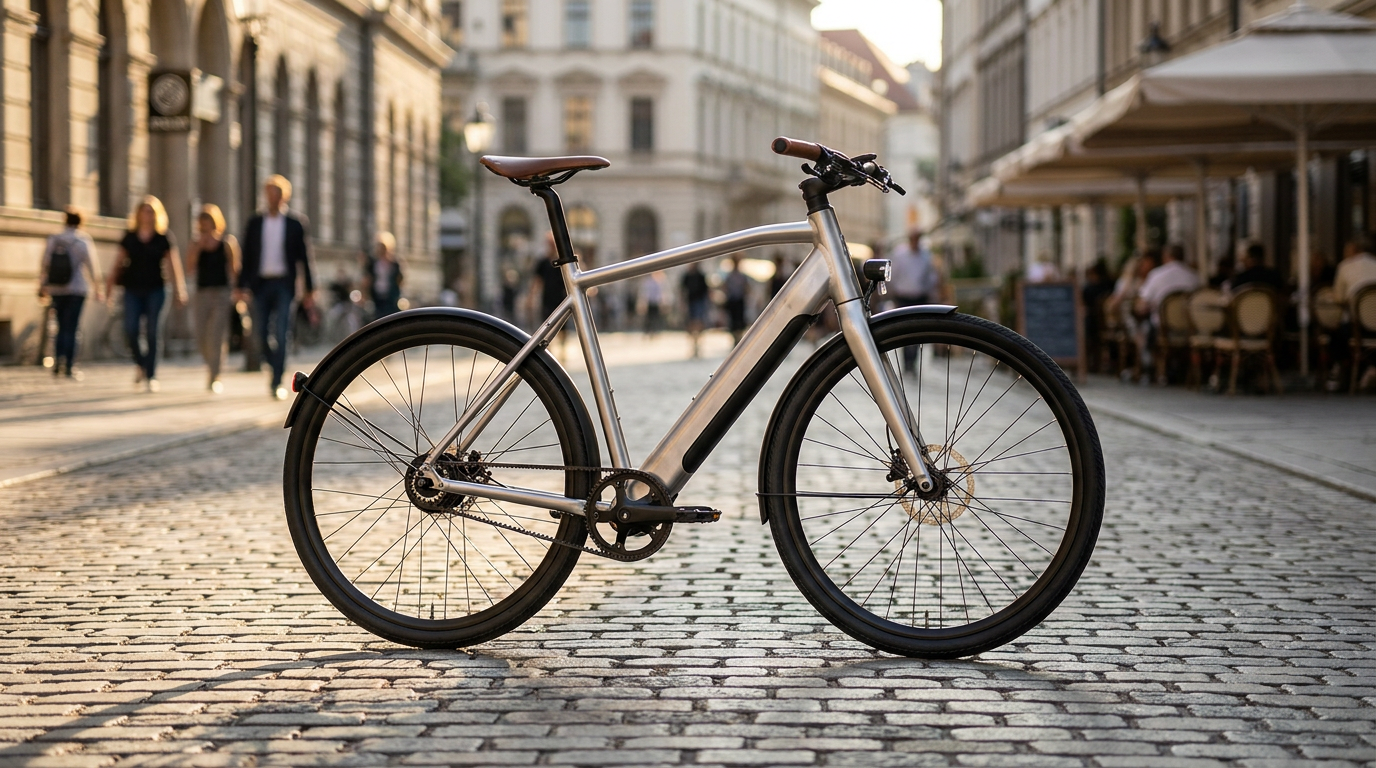
On the opposite end of the spectrum is the rising trend of the "stealth" or lightweight e-bike. Thanks to miniaturized hub motors and slim batteries hidden entirely within the downtube, these models are virtually indistinguishable from traditional analog bicycles. Utilizing advanced materials like carbon fiber and optimized aluminum, manufacturers have managed to bring the total weight of these fully equipped e-bikes well under 40 pounds (18 kilograms). While they typically offer lower motor torque and smaller battery capacities than their heavy-duty counterparts, stealth e-bikes appeal strongly to cycling purists, apartment dwellers who need to carry their bikes up stairs, and riders who want a sporty, agile feel.[8]
To protect this investment, understanding proper battery maintenance is essential. Lithium-ion e-bike batteries degrade over time, but their lifespan can be significantly extended through careful charging habits. Experts universally recommend avoiding deep discharges; instead of running the battery down to zero, riders should aim to keep the charge between 20% and 80% for daily use. Furthermore, batteries should never be left plugged in unattended for days, nor should they be stored or charged in extreme temperatures, which can permanently damage the cell chemistry. Using only the manufacturer-supplied charger is also critical to prevent overcharging and potential fire hazards.[4][10]
Ultimately, while technical specifications and online reviews provide a necessary foundation, the most important step in buying an e-bike is the test ride. E-bikes represent a significant financial investment, and factors like frame geometry, saddle comfort, and the specific feel of the motor's power delivery cannot be fully conveyed on a spec sheet. Purchasing from a reputable local dealer not only allows for hands-on testing but also ensures access to professional assembly, warranty support, and specialized mechanical service. As the e-bike market continues to mature in 2026, prioritizing quality components, safety certifications, and reliable after-sales support will guarantee a ride that is both thrilling and dependable for years to come.[9]
How we got here
2015
Lithium-ion batteries become the industry standard, replacing heavy and inefficient lead-acid packs.
2020
The global pandemic triggers a massive surge in e-bike adoption as commuters seek alternatives to public transit.
2024
UL safety certifications become legally mandated in several major US cities following a rise in unregulated battery fires.
2026
High-capacity 800+ Wh batteries and smart IoT integration become the new standard for premium commuter e-bikes.
Viewpoints in depth
Urban Commuters
For this group, the e-bike is a direct car replacement.
Commuters prioritize high Watt-Hour batteries (800Wh+) to eliminate range anxiety, integrated cargo racks for groceries, and Class 3 speeds to keep up with city traffic. Their primary concern is utility and reliability over long daily distances, favoring models that offer built-in lighting, fenders, and robust anti-theft GPS tracking.
Cycling Enthusiasts
Purists and recreational riders value the 'stealth' e-bike trend.
Enthusiasts favor lightweight frames under 40 pounds, mid-drive motors that amplify natural pedaling torque without feeling artificial, and Class 1 classification to ensure unrestricted access to mountain bike trails and nature paths. They are willing to sacrifice raw motor power and massive battery capacity in exchange for a bike that handles and feels like a traditional analog bicycle.
Safety & Advocacy Groups
With the rapid influx of cheap, imported e-bikes, safety advocates are sounding the alarm on battery fires.
Advocacy groups argue that UL 2849 certification should be a mandatory baseline for all e-bikes sold globally. They push for clearer consumer education on lithium-ion charging best practices, such as the 20-80% charging rule, and advocate for responsible trail etiquette to ensure e-bikes can safely share infrastructure with pedestrians and traditional cyclists.
What we don't know
- How upcoming federal and state legislation might further restrict or reclassify high-speed Class 3 e-bikes on public multi-use trails.
- The long-term environmental impact and recycling infrastructure capacity for the millions of high-capacity lithium-ion e-bike batteries entering the market.
Key terms
- Watt-Hour (Wh)
- A measure of total electrical energy capacity, calculated by multiplying Volts by Amp-Hours; the best indicator of an e-bike's potential range.
- Mid-Drive Motor
- An electric motor positioned at the bike's pedals that drives the chain directly, offering excellent hill-climbing efficiency and a natural riding feel.
- Hub Motor
- An electric motor housed inside the center of the front or rear wheel, known for being affordable and low-maintenance.
- Torque Sensor
- A device that measures how hard the rider is pedaling and delivers motor assistance proportionally, creating a smooth and intuitive boost.
- UL 2849
- A rigorous safety certification standard for e-bikes that tests the battery, motor, and charger to prevent electrical fires and malfunctions.
Frequently asked
What is the difference between Class 1, 2, and 3 e-bikes?
Class 1 provides pedal assistance up to 20 mph. Class 2 includes a throttle that works without pedaling up to 20 mph. Class 3 is pedal-assist only but supports speeds up to 28 mph.
How far can an e-bike go on a single charge?
Range varies widely based on battery size, terrain, and assistance level, but most modern e-bikes offer between 40 and 80 miles per charge. Look at the Watt-Hour (Wh) rating for the best estimate of total energy.
Are e-bike batteries safe from catching fire?
High-quality e-bike batteries are very safe, provided they meet rigorous testing standards. Always ensure the bike you purchase carries a recognized safety certification like UL 2849 or EN 15194.
Do I need a license or insurance to ride an e-bike?
In most regions, e-bikes that fall within the standard Class 1, 2, or 3 definitions are treated legally as bicycles, meaning they do not require a driver's license, registration, or insurance.
Sources
Source coverage
11 outlets
4 viewpoints surfaced











[1]REICycling Enthusiasts
How to Choose an E-Bike
Read on REI →[2]Yose PowerSafety & Advocacy Groups
Understanding the Different Types and Classifications of E-bike Batteries
Read on Yose Power →[3]EM3EVSafety & Advocacy Groups
E-Bike Battery Basics: Volts, Amps, and Watts Explained
Read on EM3EV →[4]Carbon Speed CycleSafety & Advocacy Groups
36V vs. 48V E-Bike Batteries: Efficiency and Range
Read on Carbon Speed Cycle →[5]Priority BicyclesCycling Enthusiasts
E-Bike Classes Explained: Class 1, 2, and 3
Read on Priority Bicycles →[6]CyclobilityUrban Commuters
E-Bike Trends 2026: The 11 Biggest Changes on the Road
Read on Cyclobility →[7]Tracer BikesUrban Commuters
Top 6 E-Bike Trends in 2026: High-Power Motors and Long-Range Batteries
Read on Tracer Bikes →[8]Lease a BikeUrban Commuters
E-Bike Trends for 2026: Lighter, Smarter, and More Powerful
Read on Lease a Bike →[9]Electric Bike AdvisorSafety & Advocacy Groups
The Beginner's E-Bike Buying Guide (2026 Edition)
Read on Electric Bike Advisor →[10]Bicycle ColoradoSafety & Advocacy Groups
E-Bike Buying Guide and Safety Standards
Read on Bicycle Colorado →[11]Factlen Editorial TeamIndustry Analysts
Synthesis by Factlen editorial team
Read on Factlen Editorial Team →


Every angle. Every day.
Get shopping stories with full source coverage and perspective breakdowns delivered to your inbox.