
The Science of Space: How Interior Design Physically Alters the Human Brain
Emerging research in neuroaesthetics reveals that room layouts, lighting, and textures trigger measurable biological responses, shifting interior design from an art form to a tool for preventative mental healthcare.
By Factlen Editorial Team
- Evidence-Based Designers
- Focuses on translating biometric data into practical architectural and interior design choices to actively improve human health and productivity.
- Neuroscience Researchers
- Focuses on the empirical validation of aesthetic experiences through fMRI scans, EEG data, and the measurement of biological markers like cortisol.
- Neuro-Inclusive Advocates
- Emphasizes the variability of human sensory processing, advocating for adaptable spaces that accommodate neurodivergent individuals.
What's not represented
- · Real estate developers balancing the cost of neuroarchitectural materials against standard construction budgets
- · Low-income communities lacking access to optimized, health-promoting indoor environments
Why this matters
We spend the vast majority of our lives indoors, meaning our homes and workplaces are constantly shaping our nervous systems. Understanding how to optimize these spaces allows us to actively lower our daily stress, improve our focus, and support our long-term mental health.
Key points
- Neuroarchitecture uses brain-imaging technology to prove that interior design directly impacts human biology.
- Well-designed spaces can lower cortisol levels by up to 20% while increasing serotonin and dopamine.
- The human brain has a hardwired preference for curvilinear shapes and natural, biophilic textures.
- Hospitals using evidence-based design see faster patient recovery times and reduced need for pain medication.
- The future of the field involves neuro-inclusive spaces that adapt to individual sensory processing needs.
The universal experience of walking into a room and feeling an immediate, inexplicable shift in mood is not merely a matter of subjective taste. When a person steps into a space and instantly feels their shoulders drop or their anxiety spike, their nervous system is reacting to a complex web of spatial cues. For decades, interior designers relied on intuition and aesthetic training to craft environments that felt welcoming or energizing. Today, advanced brain-imaging technologies are proving that these intuitive choices trigger profound, measurable biological responses.[1][4]
This intersection of brain science and the built environment is governed by two rapidly growing interdisciplinary fields: neuroarchitecture and neuroaesthetics. While neuroaesthetics traditionally examined how the brain processes fine art, it has expanded to study how humans interact with spatial design, lighting, and texture. Neuroarchitecture applies these findings specifically to buildings, seeking to understand how physical structures influence human cognition, emotional regulation, and physiological health. Together, they are transforming interior design from a purely aesthetic discipline into an evidence-based wellness practice.[1][2][3]
The shift from subjective art to empirical science accelerated in the 1990s, when functional magnetic resonance imaging (fMRI) and positron emission tomography (PET) scans allowed researchers to observe the brain's real-time reactions to beauty and spatial geometry. Scientists could finally watch the brain light up in response to specific architectural stimuli. They discovered that human-building interactions are shaped by three distinct neural networks: the sensory-motor system, which processes physical features; the knowledge-meaning network, which interprets the environment's purpose; and the emotion-valuation system, which assigns a feeling of safety or threat to the space.[4][7]
When these neural networks process a well-designed, harmonious environment, the physiological benefits are immediate and quantifiable. Studies from leading research institutions demonstrate that thoughtfully designed spaces can reduce the presence of stress hormones like cortisol by 15 to 20 percent. Simultaneously, these environments prompt the brain to increase the release of serotonin and dopamine, the neurotransmitters responsible for feelings of contentment and reward. Heart rates slow, blood pressure drops, and the body's parasympathetic nervous system is activated, creating a biological foundation for why certain rooms simply feel good.[1][4]

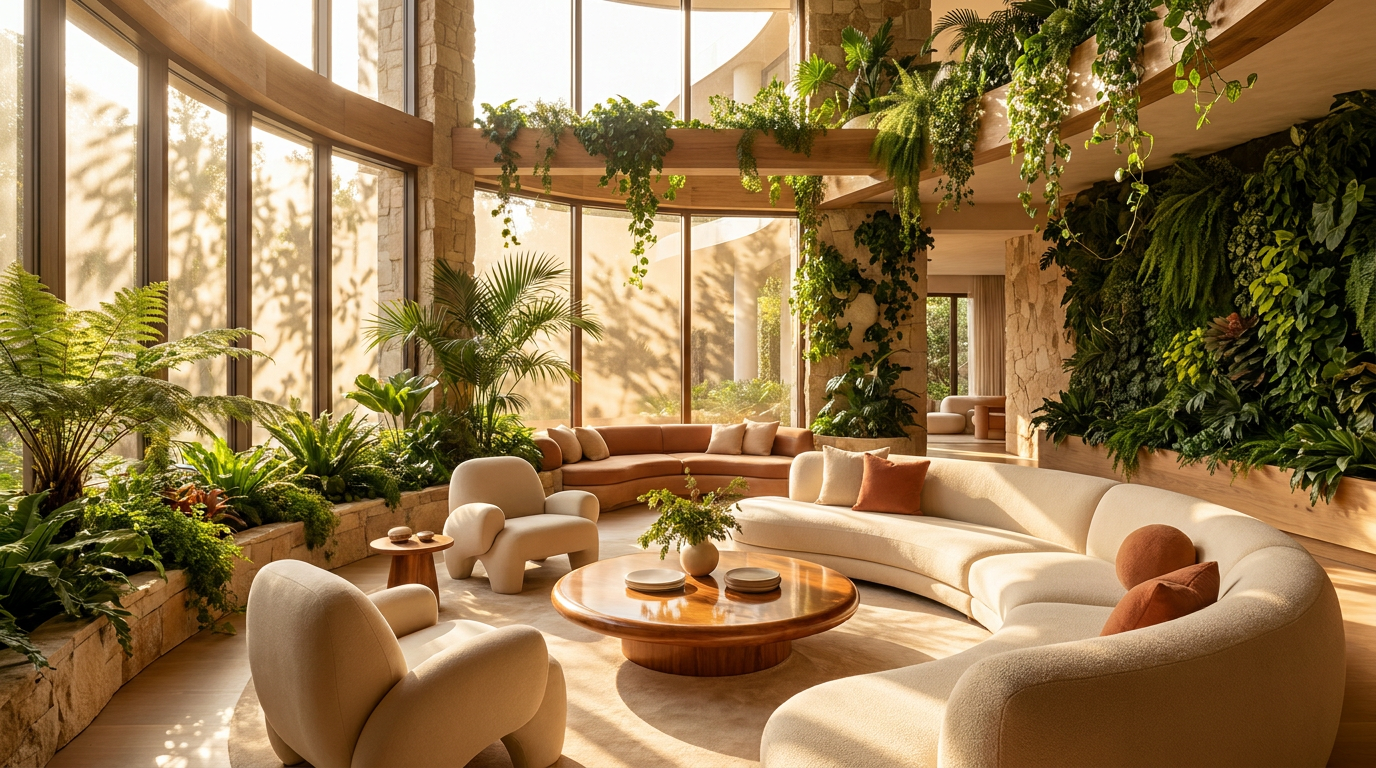
One of the most potent triggers for these positive neurological responses is the geometry of the space itself. Functional imaging studies reveal that the human brain has a strong, hardwired preference for curvilinear lines and organic shapes over sharp angles and rigid grids. Encountering curved furniture, arched doorways, or circular spatial layouts actively stimulates the orbitofrontal cortex, a brain region heavily involved in emotional regulation and the processing of pleasure. In contrast, environments dominated by sharp, jagged edges can subconsciously signal danger, prompting a mild but persistent stress response.[1][6]
Color and lighting exert an equally powerful influence on human neurobiology, directly impacting mood, alertness, and even physical health. Cool hues such as blues and greens have been shown to lower blood pressure and promote relaxation, making them ideal for recovery spaces or bedrooms. Warmer tones like reds and oranges stimulate the nervous system, increasing alertness and fostering social interaction. Beyond color, the presence of natural daylight is critical; it regulates the body's circadian rhythms and drives serotonin production, which supports both daily cognitive performance and long-term mental health.[3][6]
The human brain's deep-seated craving for the natural world—a concept known as biophilia—is perhaps the most heavily researched aspect of neuroarchitecture. Evolutionary neuroaesthetics suggests that because human brains evolved in natural environments, we are biologically predisposed to find nature-mimicking elements soothing. Integrating biophilic design through natural materials like wood, stone, and woven fibers stimulates the somatosensory cortex, producing feelings of warmth and belonging. Even the presence of fractal patterns—complex, repeating geometric shapes found in leaves and branches—can significantly reduce cognitive fatigue.[1][6][8]

The human brain's deep-seated craving for the natural world—a concept known as biophilia—is perhaps the most heavily researched aspect of neuroarchitecture.
Remarkably, the brain does not always require these natural inputs to be literal in order to reap the benefits. Neurological studies indicate that the brain responds positively to representations of nature, such as botanical wallpapers, faux greenery, or synthetic materials that accurately mimic wood grain. This "fake nature" effect allows designers to deploy biophilic principles in sterile commercial environments or subterranean spaces where living plants or natural light might be impossible to maintain, still achieving a measurable reduction in occupant anxiety.[1][8]
Beyond individual elements like shape and texture, the overall composition of a room must strike a delicate neurological balance between "coherence" and "fascination." Coherence refers to the degree of organization in a space—how easily the brain can visually and mentally process the setting without becoming overwhelmed. Fascination represents the curiosity the space arouses through complexity, texture, or artistic interest. A room with too much coherence feels clinical and boring, while a room with too much fascination feels chaotic and exhausting. The most restorative environments masterfully balance the two.[1][9]

These neuroaesthetic principles are rapidly reshaping commercial and workplace interiors, where employee well-being directly correlates with organizational performance. Modern office designs are moving away from the visually noisy, open-plan layouts of the past decade, which often triggered sensory overload and mental fatigue. Instead, evidence-based designers are utilizing acoustic zoning, natural light optimization, and varied textural landscapes to create environments that support sustained focus. Visual Attention Software (VAS) is even being used to predict where an employee's eyes will naturally rest, allowing designers to place calming visual anchors in high-stress zones.[7][8]
In the healthcare sector, the stakes of neuroarchitecture are even higher, with design choices directly impacting patient survival and recovery rates. The application of evidence-based design in hospitals has demonstrated that patients whose rooms feature natural light, sound-absorbing materials, and views of nature require less pain medication and are discharged faster than those in standard clinical rooms. By prioritizing psychological comfort alongside physical hygiene, medical facilities are utilizing spatial design as an active component of the therapeutic process rather than just a backdrop for treatment.[3][6]
As these concepts filter down into residential design, the concept of the home is being fundamentally reframed. Interior design is no longer viewed merely as a pursuit of status or visual perfection, but as a vital form of preventative mental healthcare. Homeowners are increasingly seeking out designers who understand how to manipulate spatial harmony, light diffusion, and tactile engagement to create domestic sanctuaries that actively regulate the nervous system and provide a buffer against the chronic stress of modern life.[1][6]
However, the growing adoption of neuroarchitecture has also highlighted the critical need for neuro-inclusive design. The scientific community increasingly recognizes that sensory processing varies wildly across the population, particularly for neurodivergent individuals. A highly textured, brightly lit biophilic space that feels stimulating and joyful to a neurotypical brain might be deeply overwhelming to someone with autism or sensory processing differences. Consequently, the frontier of the field involves creating adaptable, customizable environments that allow users to control their own sensory inputs.[1][7]

Looking ahead, the integration of wearable technology and artificial intelligence promises to push neuroarchitecture into a new era of real-time responsiveness. Initiatives like "Project WHY" are already using smartwatches and EEG headsets to measure how the public's biometric data fluctuates as they move through different urban and interior environments. In the near future, smart buildings may be able to read an occupant's elevated heart rate and automatically dim the lights, adjust the acoustic dampening, or shift the ambient color temperature to induce calm.[1][5]
Ultimately, the rise of neuroaesthetics serves as a powerful reminder of our profound vulnerability to our surroundings. Modern humans spend the vast majority of their lives indoors, meaning our built environments are continuously, silently shaping our brain chemistry, our emotional resilience, and our physical health. By embracing the science of space, the design industry is gaining the tools to ensure that the buildings we inhabit are not just sheltering us, but actively helping us thrive.[2][3]
How we got here
1984
Early foundational studies demonstrate that hospital patients with views of nature recover faster than those facing brick walls.
1990s
Advancements in fMRI and PET scanning technology allow researchers to measure real-time brain responses to aesthetic stimuli.
2010s
The term 'neuroarchitecture' gains widespread traction as an interdisciplinary academic field bridging science and design.
2020s
The post-pandemic focus on indoor environmental quality accelerates the adoption of evidence-based design in commercial and residential spaces.
Viewpoints in depth
Neuroscience Researchers
Focuses on the empirical validation of aesthetic experiences through biometric data.
For neuroscientists, the value of neuroarchitecture lies in its measurability. Rather than relying on subjective surveys about how a room feels, researchers utilize fMRI scans, EEG headsets, and heart-rate monitors to gather hard data. They focus on mapping exactly which neural pathways—such as the orbitofrontal cortex or the somatosensory system—are activated by specific architectural stimuli. Their goal is to build a robust, peer-reviewed foundation of evidence proving that spatial geometry and light exposure directly alter hormone production and cognitive function.
Evidence-Based Designers
Focuses on translating biometric data into practical architectural choices to improve well-being.
Architects and interior designers in this camp view themselves as practitioners of preventative health. They take the raw data provided by neuroscientists and translate it into actionable design strategies—such as specifying acoustic dampening materials in open offices or integrating circadian lighting systems in homes. For these professionals, a successful design is no longer judged solely by its visual appeal in a magazine, but by its ability to actively lower occupant stress, boost productivity, and foster emotional resilience.
Neuro-Inclusive Advocates
Emphasizes the variability of human sensory processing and the need for adaptable environments.
This perspective cautions against a 'one-size-fits-all' approach to neuroarchitecture. Advocates point out that what constitutes a calming environment for a neurotypical person might be deeply distressing to someone on the autism spectrum or with sensory processing disorder. They argue that true evidence-based design must account for neurological diversity. Consequently, they champion adaptable spaces where individuals can control their own sensory inputs, such as adjustable lighting, modular acoustic barriers, and varied textural zones.
What we don't know
- How to standardize neuroaesthetic design principles across diverse cultural backgrounds that may interpret colors and spatial layouts differently.
- The long-term, multi-generational impacts of living entirely in spaces optimized by artificial intelligence and biometric feedback.
Key terms
- Neuroaesthetics
- A branch of neuroscience that studies how the brain processes and responds to beauty, art, and design.
- Neuroarchitecture
- An interdisciplinary field combining neuroscience and architecture to understand how built environments affect human cognition and well-being.
- Biophilia
- The innate human instinct to connect with nature and other living systems, which designers use to create calming environments.
- Orbitofrontal Cortex
- A region of the brain involved in emotional regulation and decision-making that is highly activated by pleasing, curvilinear spatial designs.
- Coherence and Fascination
- The psychological balance in a room between being orderly enough to understand easily (coherence) and complex enough to hold interest (fascination).
Frequently asked
What is the difference between neuroaesthetics and neuroarchitecture?
Neuroaesthetics is the broader study of how the brain responds to beauty and art. Neuroarchitecture applies those specific scientific findings to the design of buildings and interior spaces to optimize human health.
How does biophilic design affect the brain?
Biophilic design incorporates natural elements like plants, wood, and natural light. Because humans evolved in nature, these elements stimulate the brain's reward centers, lowering heart rates and reducing stress hormones.
Can interior design actually lower stress?
Yes. Studies using brain-imaging technology show that thoughtfully designed spaces can reduce the presence of the stress hormone cortisol by 15 to 20 percent while boosting serotonin.
What is neuro-inclusive design?
Neuro-inclusive design recognizes that people process sensory information differently. It focuses on creating adaptable spaces—with adjustable lighting and acoustics—so that neurodivergent individuals can comfortably navigate the environment.
Sources
Source coverage
9 outlets
3 viewpoints surfaced









[1]Factlen Editorial TeamEvidence-Based Designers
Synthesis by Factlen editorial team
Read on Factlen Editorial Team →[2]MDPINeuroscience Researchers
Neuroarchitecture: A Scoping Review of the Built Environment's Impact on the Human Brain
Read on MDPI →[3]International Journal of Environment, Space and HealthNeuroscience Researchers
Neuroarchitecture, Interior Design, Human Behaviour, Built Environment
Read on International Journal of Environment, Space and Health →[4]Science in DesignEvidence-Based Designers
What is Neuroaesthetics? The Convergence of Neuroscience and Design
Read on Science in Design →[5]Office InsightEvidence-Based Designers
What is neuroarchitecture, and why should the design industry pay attention to it?
Read on Office Insight →[6]Pearl AcademyNeuro-Inclusive Advocates
The Brain, Beauty, and Built Environments
Read on Pearl Academy →[7]ModulyssNeuro-Inclusive Advocates
Neuroaesthetics: Transforming Commercial Spaces Through Thoughtful Design
Read on Modulyss →[8]Studio 10 Interior DesignEvidence-Based Designers
The Relationship Between Neuroaesthetics and Experience Design
Read on Studio 10 Interior Design →[9]Garden on the WallNeuro-Inclusive Advocates
Evidence Based Design Approach to Neuroarchitecture
Read on Garden on the Wall →

Every angle. Every day.
Get lifestyle stories with full source coverage and perspective breakdowns delivered to your inbox.