
The Science of 'Physical Chess': How Martial Arts Rewire the Brain for Longevity
New neuroscientific research reveals that cognitively demanding martial arts like Brazilian Jiu-Jitsu and Tai Chi actively build neural pathways, offering a powerful defense against age-related cognitive decline.
By Factlen Editorial Team
- Clinical Neuroscientists
- Researchers focused on the biochemical and structural changes in the brain.
- Healthy Aging Advocates
- Public health experts prioritizing functional independence and fall prevention.
- Martial Arts Instructors
- Coaches and practitioners focused on stress inoculation and emotional resilience.
What's not represented
- · Physical therapists who adapt martial arts movements for patients with severe mobility limitations.
- · Neurologists treating advanced-stage dementia patients where complex motor learning may no longer be viable.
Why this matters
As the global population ages, finding effective ways to stave off cognitive decline is a critical public health challenge. Understanding how complex movement rewires the brain offers a proactive, accessible tool for maintaining mental sharpness and emotional resilience well into old age.
Key points
- Martial arts like BJJ and Tai Chi trigger the release of BDNF, a protein crucial for neuroplasticity and memory retention.
- The 'physical chess' of grappling forces the brain to solve complex spatial puzzles under pressure, enhancing executive function.
- Controlled breathing during intense physical stress trains the nervous system to shift from a panic state to a relaxed state.
- Studies show older adults practicing martial arts exhibit superior peripheral vision, spatial awareness, and balance.
- The communal nature of martial arts training combats social isolation, a major risk factor for age-related cognitive decline.
For decades, the popular image of martial arts has been dominated by the spectacle of combat—bruised knuckles, shattered boards, and the adrenaline of the cage. But behind the closed doors of dojos and academies, a very different reality is unfolding. Far from being a fast track to physical deterioration, certain martial arts are emerging as some of the most potent interventions available for preserving cognitive health and neurological longevity. As the global population ages and the prevalence of cognitive decline accelerates, neuroscientists and longevity researchers are increasingly turning their attention to the mats. What they are finding is that the complex, high-stakes problem-solving required in disciplines like Brazilian Jiu-Jitsu (BJJ), Judo, and Tai Chi offers a unique cocktail of physical and mental stimuli that traditional exercise simply cannot replicate.
The scientific community has long understood that aerobic exercise benefits the brain by increasing blood flow and reducing inflammation. However, researchers are now drawing a sharp distinction between "mindless" exercise, such as jogging on a treadmill, and "cognitively demanding" movement. Martial arts fall squarely into the latter category. Practitioners are not merely elevating their heart rates; they are actively memorizing intricate sequences, anticipating an opponent's reactions, and adapting their strategies in real time. This dual demand on the cardiovascular and nervous systems creates a compounding effect, forcing the brain to build and reinforce neural pathways at a rate that isolated physical activity rarely achieves.
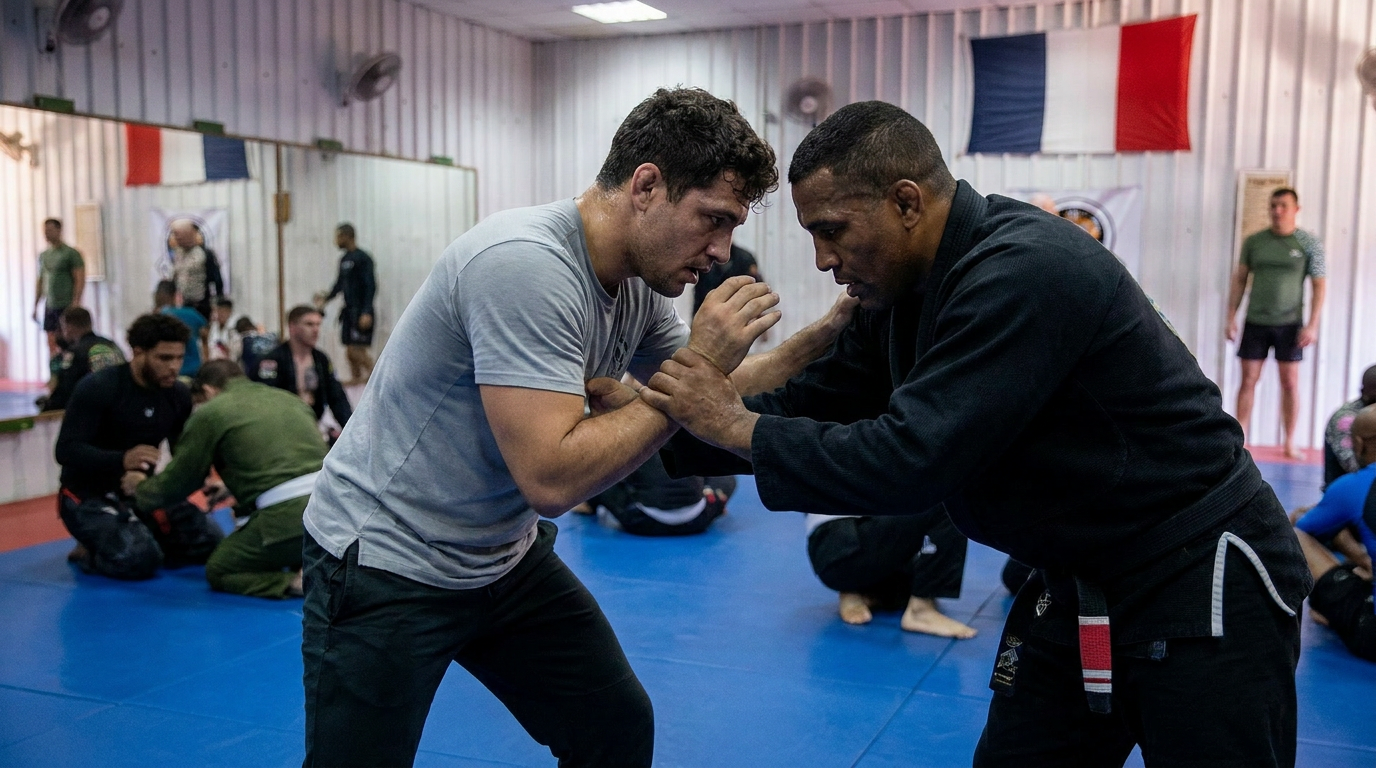
In the grappling world, Brazilian Jiu-Jitsu is frequently referred to as "physical chess." Unlike striking arts that rely heavily on explosive speed and concussive force, BJJ is a game of leverage, geometry, and spatial control. Two practitioners entangled on the mat are constantly presenting and solving dynamic puzzles. If one person shifts their weight to escape a hold, the other must instantly calculate the new center of gravity and adjust their grips accordingly. This relentless requirement for real-time problem-solving under physical duress acts as a high-intensity workout for the brain's executive functions, demanding a level of focus that leaves little room for external distractions.[4][5]
At the biochemical level, the secret to this cognitive armor lies in a protein called Brain-Derived Neurotrophic Factor, or BDNF. Often described by neuroscientists as "Miracle-Gro for the brain," BDNF is crucial for neuronal survival, the growth of new synapses, and overall neuroplasticity—the brain's ability to rewire itself in response to new experiences. Natural BDNF levels typically decline as we age, a drop that is closely associated with memory loss and cognitive impairment. However, recent studies have demonstrated that the complex motor learning inherent in martial arts acts as a powerful trigger for BDNF production, effectively bathing the brain in the very compound it needs to maintain its youthful plasticity.[1][2]

The evidence for this biochemical boost is robust across multiple demographics and martial disciplines. Research conducted on older adults engaging in Judo and Tai Chi—a slow, meditative Chinese martial art—has shown significantly higher peripheral BDNF levels compared to sedentary control groups. Furthermore, these elevated protein levels correlate with measurable structural changes in the brain. Neuroimaging studies have revealed increased gray matter density in the hippocampus, the region responsible for memory formation, and the prefrontal cortex, which governs complex decision-making. By consistently challenging the nervous system with new movement patterns, practitioners are literally building thicker, more resilient brains.[1]
This neurological fortification is heavily dependent on the concept of "embodied cognition," a psychological theory suggesting that our cognitive functions are deeply rooted in our physical, sensorimotor experiences. According to researchers analyzing the socio-emotional impacts of martial arts, the practice offers a rich, multilayered combination of movement flow, attention management, and intersubjective interaction. When a student learns a new throw or submission, they are not just memorizing a list of steps; they are encoding a physical sensation, a balance point, and a timing window into their nervous system. This holistic engagement provides a much broader spectrum of stimuli for neuroplasticity than activities that only engage a single sensory domain.[2]
Beyond structural brain health, the cognitive demands of martial arts translate directly into enhanced executive function. Executive function encompasses the mental skills required to plan, focus attention, remember instructions, and juggle multiple tasks successfully. In a live sparring session, a BJJ practitioner must hold their overarching strategy in their working memory while simultaneously processing the tactile feedback of their opponent's movements and inhibiting the panic response that naturally arises when physically restricted. This constant toggling between macro-strategy and micro-tactics strengthens the neural circuits responsible for cognitive flexibility, allowing practitioners to switch gears more efficiently in all areas of life.[2][5]
Beyond structural brain health, the cognitive demands of martial arts translate directly into enhanced executive function.
Perhaps the most profound psychological benefit of grappling arts is their role in stress inoculation. Modern life is characterized by chronic, low-grade stress—deadlines, financial pressures, and digital overload—which keeps the sympathetic nervous system stuck in a perpetual "fight or flight" loop. BJJ provides a controlled environment to experience acute, intense physical stress, such as being pinned under a heavier opponent. By learning to control their breathing, suppress the panic reflex, and logically work their way out of a compromised position, practitioners are actively training their nervous systems to down-regulate from a state of high alarm back to baseline.[4][6]

This ability to consciously shift from the sympathetic to the parasympathetic (rest and digest) nervous system is a highly transferable skill. From a neuroscience perspective, the controlled breathing and emotional regulation practiced on the mats activate the prefrontal cortex, which in turn sends inhibitory signals to the amygdala, the brain's fear center. Over time, this repeated exposure and regulation lower the body's overall cortisol burden. Practitioners frequently report that the resilience forged during difficult sparring sessions bleeds into their professional and personal lives, making boardroom conflicts or daily frustrations feel significantly more manageable.[4][6]
As practitioners age, the benefits of martial arts extend into critical areas of physical safety, particularly fall prevention and spatial awareness. Aging often brings a decline in proprioception—the body's ability to sense its location, movements, and actions in space. This sensory degradation is a leading cause of falls among the elderly. However, studies tracking adults who practice martial arts have found that they exhibit vastly superior peripheral vision and spatial cognition compared to their sedentary peers. Because martial arts require participants to constantly track moving limbs and adjust their balance dynamically, the neural pathways governing spatial awareness remain sharp and highly responsive.[3]
The empirical data supporting these functional improvements is striking. In a comprehensive five-month study involving men and women with a mean age of 70, participants were assigned to either a specialized karate training group, a standard fitness group, or a control group. The results demonstrated that only the karate group experienced significant improvements in motor reactivity, reactive stress tolerance, and divided attention. The researchers hypothesized that the unique combination of aerobic exertion, balance requirements, and the high cognitive load of remembering martial sequences activated additional areas of the brain, thereby reducing error rates and increasing reaction times in daily tasks.[1]

Furthermore, the socio-emotional circuits engaged during martial arts training play a vital role in cognitive longevity. Aging is frequently accompanied by social isolation, which has been identified as a major risk factor for rapid cognitive decline and dementia. Unlike solitary gym routines, martial arts are inherently communal. Training requires a partner, mutual trust, and a shared commitment to safety and progression. This environment fosters strong social support systems, reducing loneliness and enhancing emotional resilience through shared achievement. The psychological safety of a trusted training room provides the ideal backdrop for the vulnerable process of learning complex new skills.[1][2]
Despite the overwhelming positive indicators, the scientific community acknowledges several areas of uncertainty that require further investigation. Current literature is somewhat limited by the sheer heterogeneity of martial arts styles. The neurological impact of a high-impact striking art like Muay Thai may differ significantly from the slow, deliberate movements of Tai Chi or the isometric grappling of BJJ. Additionally, many existing studies rely on relatively short intervention durations—often spanning only a few months—making it difficult to definitively map the long-term trajectory of cognitive preservation over decades of continuous practice. Researchers emphasize the need to standardize these variables to draw more precise clinical conclusions.[1][7]
There is also a pressing need for more standardized neuroimaging studies specifically isolating the effects of grappling arts. While the BDNF mechanisms of aerobic exercise and Tai Chi are well-documented, the exact neurochemical cascade triggered by the intense, problem-solving nature of live BJJ sparring remains partially theoretical, extrapolated from broader research on complex motor learning and stress regulation. Future research employing advanced biomarker assessments and long-term tracking will be crucial to determining the optimal "dose" of martial arts training required to maximize cognitive benefits without overtaxing the aging body's recovery systems.[1][7]

Nevertheless, the convergence of neuroscience, psychology, and sports medicine points to a clear conclusion: the human brain thrives on complex, physical problem-solving. As we search for sustainable interventions to combat the cognitive toll of aging, the traditional dojo is proving to be a highly effective neurological laboratory. By demanding that practitioners move with purpose, think under pressure, and connect with a community, martial arts offer a holistic blueprint for longevity. It is a compelling reminder that the most effective way to keep the mind sharp is to ensure it remains deeply connected to a challenged, active body.[5][7]
How we got here
Early 2000s
Initial studies establish a strong link between basic aerobic exercise and delayed cognitive decline in aging populations.
2010
Researchers begin isolating the effects of Tai Chi, discovering its specific ability to elevate BDNF levels and increase brain gray matter.
2018
Comparative studies demonstrate that cognitively demanding exercises like martial arts outperform simple aerobic routines in improving executive function.
2024–2026
Modern neuroimaging and psychological research increasingly focus on grappling arts like BJJ for their unique 'physical chess' problem-solving and stress-inoculation benefits.
Viewpoints in depth
Clinical Neuroscientists
Researchers focused on the biochemical and structural changes in the brain.
This camp emphasizes measurable biomarkers like Brain-Derived Neurotrophic Factor (BDNF) and neuroimaging data. They argue that the primary value of martial arts lies in its ability to force the brain to build new neural pathways through complex motor learning. For neuroscientists, the physical exertion is secondary to the cognitive load—the requirement to memorize, adapt, and solve spatial puzzles is what truly staves off age-related cognitive decline.
Healthy Aging Advocates
Public health experts prioritizing functional independence and fall prevention.
Aging advocates view martial arts primarily through the lens of functional longevity. They focus on how practices like Tai Chi and Judo improve proprioception, peripheral vision, and balance. For this group, the most critical metric is not just memory retention, but the prevention of physical frailty and the reduction of fall risks, which are leading causes of mortality and lost independence in older populations.
Martial Arts Instructors
Coaches and practitioners focused on stress inoculation and emotional resilience.
Those on the mats emphasize the psychological and emotional transformations that occur through consistent training. They point to the concept of 'physical chess' and the controlled exposure to physical adversity as the ultimate tools for stress management. For instructors, the ability to remain calm while being physically pinned translates directly to emotional regulation in everyday life, offering a profound antidote to modern chronic stress.
What we don't know
- The exact 'minimum effective dose' of martial arts training required to trigger long-term neuroplasticity.
- How the cognitive benefits of high-intensity grappling (like BJJ) directly compare to low-intensity internal arts (like Tai Chi) in side-by-side longitudinal studies.
- The specific long-term neuroimaging changes in practitioners who train exclusively in Brazilian Jiu-Jitsu over multiple decades.
Key terms
- BDNF (Brain-Derived Neurotrophic Factor)
- A protein that promotes the survival, growth, and maintenance of neurons, essential for learning and memory.
- Neuroplasticity
- The brain's ability to reorganize itself by forming new neural connections in response to learning or experience.
- Executive Function
- A set of mental skills that include working memory, flexible thinking, and self-control, used to manage daily life.
- Proprioception
- The body's subconscious ability to sense its movement, action, and location in space, crucial for balance.
- Parasympathetic Nervous System
- The network of nerves that relaxes your body after periods of stress or danger, often called the 'rest and digest' system.
Frequently asked
Does Brazilian Jiu-Jitsu cause brain damage?
Unlike striking arts that involve concussive blows to the head, BJJ is a grappling art focused on leverage and submissions. When practiced safely, it carries a very low risk of traumatic brain injury while providing high cognitive stimulation.
Am I too old to start martial arts for brain health?
No. Research specifically highlights the benefits of martial arts for older adults, with studies showing significant cognitive and balance improvements in populations well into their 70s and 80s, particularly through low-impact arts like Tai Chi.
How is this different from running or lifting weights?
Traditional exercise primarily benefits the brain through increased blood flow. Martial arts add a heavy cognitive load—requiring real-time problem-solving, memory, and spatial awareness—which triggers higher levels of neuroplasticity.
Do I have to spar to get the cognitive benefits?
While live sparring offers unique stress-inoculation benefits, simply learning and drilling the complex movements of martial arts is enough to trigger BDNF release and improve neuroplasticity.
Sources
Source coverage
7 outlets
3 viewpoints surfaced







[1]National Institutes of HealthClinical Neuroscientists
Martial arts exercise and cognitive vitality among older adults
Read on National Institutes of Health →[2]Psychology TodayClinical Neuroscientists
How Martial Arts Training Drives Neuroplastic Change
Read on Psychology Today →[3]BJJ Eastern EuropeHealthy Aging Advocates
How Martial Arts Training Reduces The Effects Of Aging
Read on BJJ Eastern Europe →[4]Inverted Gear AcademyMartial Arts Instructors
Problem-Solving Under Pressure: The Mental Health Benefits of BJJ
Read on Inverted Gear Academy →[5]The Jiu-Jitsu FoundryMartial Arts Instructors
The Neuroscience of Grappling: More Than Just a Workout
Read on The Jiu-Jitsu Foundry →[6]Gracie AcademyMartial Arts Instructors
How BJJ Rewires the Brain for Resilience
Read on Gracie Academy →[7]Factlen Editorial TeamHealthy Aging Advocates
Synthesis by Factlen editorial team
Read on Factlen Editorial Team →

Every angle. Every day.
Get fitness stories with full source coverage and perspective breakdowns delivered to your inbox.