
The Science of No-Dig Gardening: Why Leaving Soil Alone Produces Better Plants
A quiet revolution is overturning centuries of horticultural dogma as gardeners abandon their spades. The 'no-dig' method relies on preserving the microscopic fungal networks and bacteria that naturally feed plants and sequester carbon.
By Factlen Editorial Team
- No-Dig Advocates
- Argue that eliminating tillage is the most effective way to reduce labor while maximizing garden health.
- Soil Scientists & Agronomists
- Focus on the microscopic and environmental impacts of soil disturbance.
- Traditional Horticulturists
- Maintain that targeted digging still has a practical role in specific gardening scenarios.
What's not represented
- · Commercial Fertilizer Manufacturers
- · Large-Scale Industrial Farmers
Why this matters
Understanding the soil microbiome allows home gardeners to grow healthier, more resilient food with significantly less physical labor. It also turns the average backyard into an active carbon sink, contributing to broader environmental health.
Key points
- The 'no-dig' gardening method involves leaving the soil undisturbed and layering organic matter on the surface.
- Tilling destroys the soil microbiome, specifically the delicate mycorrhizal fungal networks that help plants absorb water and nutrients.
- Undisturbed soil acts as a carbon sink, whereas digging exposes organic matter to oxygen and releases carbon dioxide.
- Gardeners can start a no-dig bed over existing grass by using the 'lasagne method' of overlapping cardboard topped with compost.
For generations, the quintessential image of a dedicated gardener has been someone leaning heavily on a spade, turning over dark clods of earth to prepare for spring planting. Cultivating the soil was considered an absolute necessity to aerate the ground, bury persistent weeds, and mix in essential nutrients. But a quiet, science-backed revolution is overturning centuries of horticultural dogma. The 'no-dig' or 'no-till' movement is rapidly gaining ground across both backyard plots and commercial farms, promising higher crop yields, significantly fewer weeds, and a drastic reduction in back-breaking labor.[1][3]
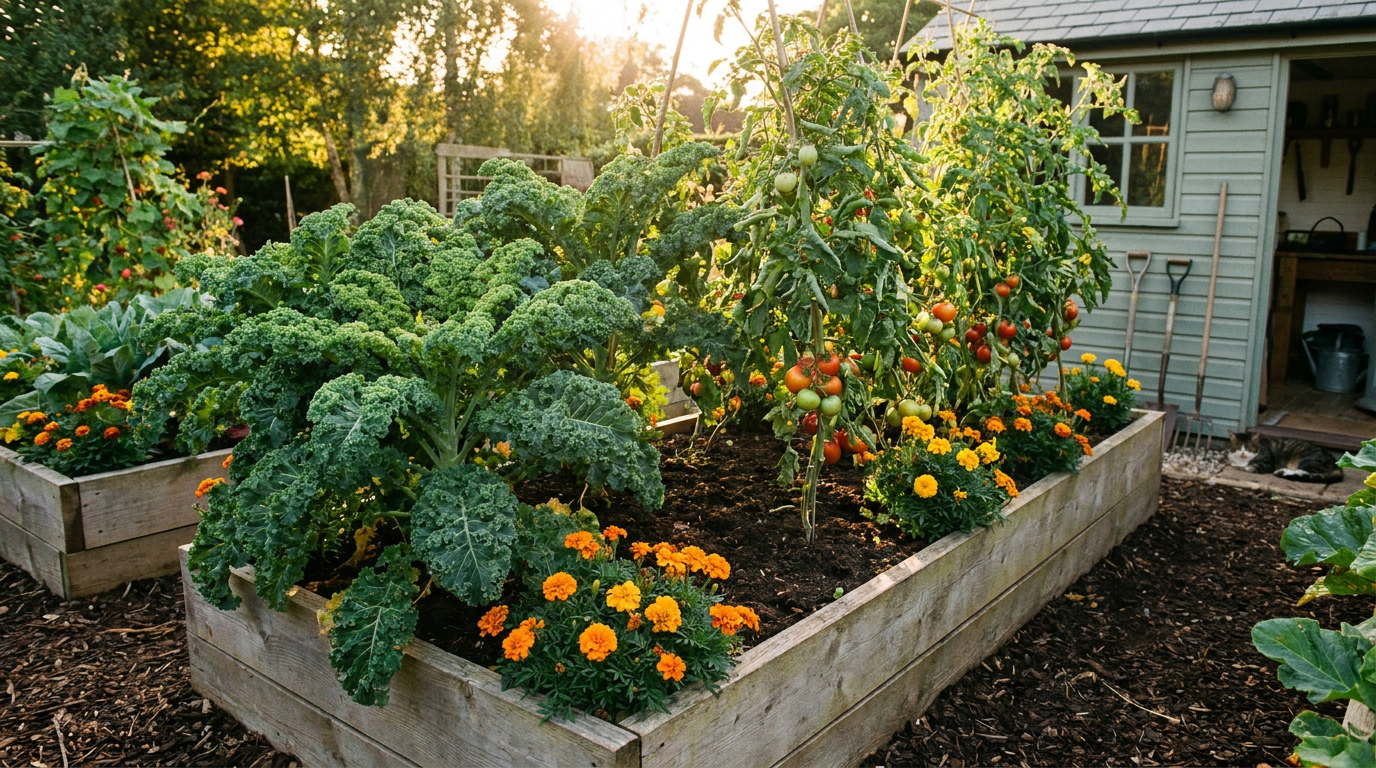
The core premise of no-dig gardening is exactly what it sounds like: leaving the ground as undisturbed as physically possible. Instead of breaking up the earth with heavy forks or motorized rototillers, gardeners simply layer organic matter—such as municipal compost, leaf mold, or well-rotted manure—directly onto the soil's surface. Plants and seeds are then grown straight into this nutrient-dense top layer. The approach directly mimics natural woodland ecosystems, where autumn leaves fall, slowly decompose, and feed the earth from the top down without any mechanical intervention.[1][2]
While it might sound like a convenient shortcut for lazy gardeners, the practice is deeply rooted in complex soil science. The secret to its success lies in the soil microbiome, a bustling subterranean metropolis composed of bacteria, fungi, protozoa, and nematodes. According to researchers at the Ohio State University Extension, healthy, undisturbed soils contain up to 15 tons of these microscopic organisms per acre. This living biological web is entirely responsible for breaking down organic matter and converting it into bioavailable nutrients that plant roots can actually absorb.[5]
When a gardener thrusts a metal spade into the earth and flips it over, they are effectively dropping a bomb on this microscopic city. Mechanical tilling destroys the delicate soil aggregates—the glue-like clusters formed by bacterial exudates that hold soil particles together and create vital pore space for water retention and oxygen flow. It also exposes dormant, light-sensitive microbes to lethal doses of ultraviolet radiation and rapidly dries out the ambient moisture they desperately need to survive and reproduce.[5][8]

The most devastating casualty of traditional digging, however, is the mycorrhizal fungal network. These highly specialized fungi have existed for over 500 million years, forming an intricate symbiotic relationship with the roots of roughly 90 percent of all land plants. The fungi attach themselves to plant roots and send out microscopic, thread-like branching filaments called hyphae, which effectively act as a massive, highly efficient secondary root system for the host plant. This network is the true engine of a healthy garden.[2][7]
This subterranean fungal web can reach into tiny soil cavities that thick plant roots simply cannot access, mining the earth for water and essential minerals like phosphorus and nitrogen. In exchange for delivering these vital nutrients, the host plant feeds the fungi liquid carbon—sugars produced through the process of photosynthesis. Every pass of a spade or a rototiller slices these delicate fungal networks to ribbons, forcing the plants to rely solely on their own limited root systems and whatever synthetic fertilizers the gardener provides.[2][7]

The biological benefits of leaving these networks intact are highly measurable. Recent research published in the journal npj Sustainable Agriculture analyzed the soil microbiomes of 85 organic farms to track the impact of cultivation methods. The study found that sustainable practices, specifically no-till farming, were directly associated with increased levels of jasmonic acid in crops—a key hormone that boosts a plant's natural defense mechanisms against pests and diseases. By preserving the microbiome, growers effectively upgrade their plants' innate immune systems without chemical pesticides.[6]
The biological benefits of leaving these networks intact are highly measurable.
Beyond microscopic plant health, the no-dig method offers a massive, highly visible advantage in weed control, which is often the absolute bane of a home gardener's existence. Traditional digging inevitably brings dormant weed seeds from deep underground up to the surface, where sudden exposure to sunlight triggers their rapid germination. By leaving the soil completely undisturbed and capping it with a thick layer of dark compost, those seeds remain buried in the dark. The few weeds that do manage to sprout in the loose surface compost are easily pulled out by hand.[2][7]
From a broader environmental perspective, the shift away from tilling is emerging as a crucial tool for global carbon sequestration. Soil is one of the planet's largest natural carbon sinks. When the earth is turned over, buried organic matter is suddenly exposed to unnaturally high levels of oxygen. This triggers a rapid bacterial feeding frenzy that oxidizes the stored carbon, releasing it into the atmosphere as carbon dioxide. Research indicates that tilled plots can lose up to 50 percent more carbon annually than their undisturbed, no-till counterparts.[5][8]
So, how does a home gardener actually transition a traditional plot to a no-dig system? The most popular and accessible technique for converting an existing lawn or a heavily weedy patch is affectionately known as 'lasagne gardening.' The process begins by slashing down any existing vegetation as close to the ground level as possible. The entire area is then covered with a double layer of plain, unwaxed brown cardboard, making absolutely sure the edges overlap significantly so that no sunlight can penetrate the barrier.[1][2]

The cardboard acts as a highly effective, biodegradable weed barrier, completely smothering the grass and persistent weeds below. On top of the cardboard, the gardener adds a thick layer—roughly four to six inches—of organic matter, such as municipal compost, leaf mold, or well-rotted manure. If the seasonal timing is right, seeds or seedling plugs can be planted directly into this compost layer immediately. Over the course of a few months, the cardboard rots away entirely, and earthworms naturally mix the surface compost into the native soil below.[1][2]
Maintaining the garden bed in subsequent years requires even less physical effort. Because the soil structure is never inverted or broken apart, the gardener simply adds a one-to-two-inch 'top-up' layer of fresh compost each autumn or early spring. This minimal annual mulch replenishes the specific nutrients consumed by the previous season's crops, insulates the fragile soil ecosystem against extreme winter temperatures, and provides a continuous, slow-release food source for the subterranean workforce. This cycle creates a permanently self-sustaining environment.[1][3]
Despite the overwhelming scientific consensus on the biological benefits of undisturbed soil, traditional horticulturists caution that no-dig is not a flawless magic wand for every single scenario. The National Allotment Society points out that traditional single-digging still has a highly practical role, particularly when establishing a brand-new plot on severely compacted, heavy clay ground that has been driven over by heavy machinery. In these extreme cases, an initial mechanical loosening may be strictly required before a no-dig system can be successfully implemented.[4]

Furthermore, the initial transition to a no-dig framework can be highly resource-intensive. Sourcing enough high-quality compost to cover a large backyard garden with a six-inch layer can be financially expensive and logistically challenging, especially for urban gardeners without easy access to bulk agricultural deliveries. However, advocates strongly argue that this is a one-time upfront investment that pays massive dividends in drastically reduced fertilizer costs, significantly lower water usage, and countless hours of saved labor in the years that follow.[4][8]
Ultimately, the rapid rise of no-dig gardening represents a profound paradigm shift in how humanity interacts with the earth. For centuries, agriculture and horticulture have been fundamentally based on the premise of feeding the plant directly through synthetic chemical inputs and brute mechanical force. The no-dig philosophy entirely flips this equation: feed the soil, fiercely protect its microscopic inhabitants, and let the complex, ancient ecosystem do the heavy lifting. The result is a garden that works with nature, rather than constantly fighting against it.[3][8]
How we got here
500M Years Ago
Mycorrhizal fungi evolve a symbiotic relationship with the roots of early land plants.
1940s
Early organic pioneers begin questioning the necessity of deep plowing and tilling in agriculture.
1981
Horticulturist Charles Dowding begins formalizing and popularizing the modern 'no-dig' method for vegetable gardens.
2020s
Major institutions like the Royal Horticultural Society officially adopt and promote no-dig practices in their demonstration gardens.
Viewpoints in depth
No-Dig Advocates
Argue that eliminating tillage is the most effective way to reduce labor while maximizing garden health.
This camp, which includes organic farming pioneers and modern lifestyle gardeners, views digging as an outdated and destructive practice. They emphasize the practical benefits for the home gardener: drastically reduced weeding, less physical strain, and improved water retention. By mimicking natural forest floor decomposition through surface mulching, they argue that gardeners can achieve higher yields with a fraction of the ongoing effort.
Soil Scientists & Agronomists
Focus on the microscopic and environmental impacts of soil disturbance.
Researchers view the soil not as inert dirt, but as a complex, living super-organism. Their focus is on the preservation of the soil microbiome—specifically the delicate mycorrhizal fungal networks and bacterial aggregates that are pulverized by mechanical tilling. This perspective highlights the broader environmental stakes, noting that undisturbed soil acts as a vital carbon sink, whereas tilling oxidizes organic matter and releases carbon dioxide into the atmosphere.
Traditional Horticulturists
Maintain that targeted digging still has a practical role in specific gardening scenarios.
While increasingly supportive of minimal-disturbance methods, traditional gardening bodies caution against treating no-dig as an absolute dogma. They point out that single-digging remains a highly effective tool for initially breaking up severely compacted, heavy clay soils or for incorporating organic matter deep into dead, neglected plots. They view digging as a situational tool to 'reset' a bed, rather than an inherently evil practice.
What we don't know
- Exactly how long it takes for a severely degraded, chemically-treated plot to fully rebuild its native mycorrhizal network without inoculation.
- The precise threshold at which the cost of importing bulk compost outweighs the carbon sequestration benefits of the no-dig method.
Key terms
- Soil Microbiome
- The community of microorganisms, including bacteria, fungi, and nematodes, that live in the soil and break down organic matter.
- Mycorrhizal Fungi
- A type of beneficial fungus that attaches to plant roots, acting as an extended root system to gather water and nutrients.
- Hyphae
- The microscopic, thread-like branching filaments that make up the network of a fungus.
- Soil Aggregates
- Clumps of soil particles bound together by microbial glues, creating essential pore space for air and water.
- Lasagne Gardening
- A method of starting a no-dig bed by layering cardboard over weeds, followed by a thick layer of compost.
Frequently asked
Can I start a no-dig garden directly on top of grass?
Yes. By laying down overlapping sheets of plain cardboard directly over the grass and covering it with four to six inches of compost, the grass is smothered and eventually decomposes into the soil.
Do I need to buy a massive amount of compost every year?
No. While the initial setup requires a thick layer of compost to establish the bed, subsequent years only require a thin one-to-two-inch 'top-up' layer to maintain fertility.
Will no-dig work if I have heavy clay soil?
Yes, though it takes time. The surface compost encourages earthworms to travel up and down, naturally aerating the clay and improving its drainage structure without the need for mechanical digging.
How does no-dig gardening prevent weeds?
Most weed seeds require light to germinate. By not turning the soil, dormant seeds remain buried in the dark, and the thick compost mulch prevents new seeds from easily taking root.
Sources
Source coverage
8 outlets
3 viewpoints surfaced








[1]Royal Horticultural SocietyTraditional Horticulturists
No-Dig Gardening | RHS Advice
Read on Royal Horticultural Society →[2]Soil AssociationNo-Dig Advocates
No-dig gardening: benefits, how it works and how to get started
Read on Soil Association →[3]HuffPost UKNo-Dig Advocates
No-Dig Is The Effortless New Gardening Trend To Try This Spring
Read on HuffPost UK →[4]The National Allotment SocietyTraditional Horticulturists
To Dig or Not to Dig? A Balanced Guide
Read on The National Allotment Society →[5]Ohio State University ExtensionSoil Scientists & Agronomists
Understanding Soil Microbes and Nutrient Recycling
Read on Ohio State University Extension →[6]npj Sustainable AgricultureSoil Scientists & Agronomists
Sustainable soil management practices are associated with increases in crop defense through soil microbiome changes
Read on npj Sustainable Agriculture →[7]SagaNo-Dig Advocates
Is a no dig garden better for the environment?
Read on Saga →[8]Factlen Editorial TeamSoil Scientists & Agronomists
Synthesis by Factlen editorial team
Read on Factlen Editorial Team →
Every angle. Every day.
Get home stories with full source coverage and perspective breakdowns delivered to your inbox.