
The Physical Real Estate Behind the AI Boom: How Data Center REITs Work
As artificial intelligence drives unprecedented demand for computing power, specialized Real Estate Investment Trusts (REITs) are funding the massive physical infrastructure required. Here is how retail investors are participating in the physical foundation of the digital economy.
By Factlen Editorial Team
- Real Estate Yield Investors
- Focuses on the predictable cash flow, long-term triple-net leases, and the mandatory 90% dividend distribution that REITs offer.
- Tech Infrastructure Analysts
- Views data centers primarily as the critical bottleneck for AI development, focusing on power density, liquid cooling, and technological shifts.
- Sustainability & Grid Advocates
- Highlights the massive strain these facilities place on local power grids and advocates for aggressive renewable energy partnerships.
What's not represented
- · Local municipalities facing grid strain
- · Hardware manufacturers designing the servers
Why this matters
Understanding data center REITs allows everyday investors to look beyond high-flying tech stocks and see how the physical infrastructure of the internet is funded, built, and monetized.
Key points
- Data center REITs own and operate the physical buildings that house the servers powering the internet and AI.
- REITs are required by law to distribute at least 90% of their taxable income to shareholders as dividends.
- The AI boom is forcing data centers to upgrade their infrastructure to handle significantly higher power and cooling demands.
- Access to electricity from local power grids has become the primary bottleneck and competitive advantage in the industry.
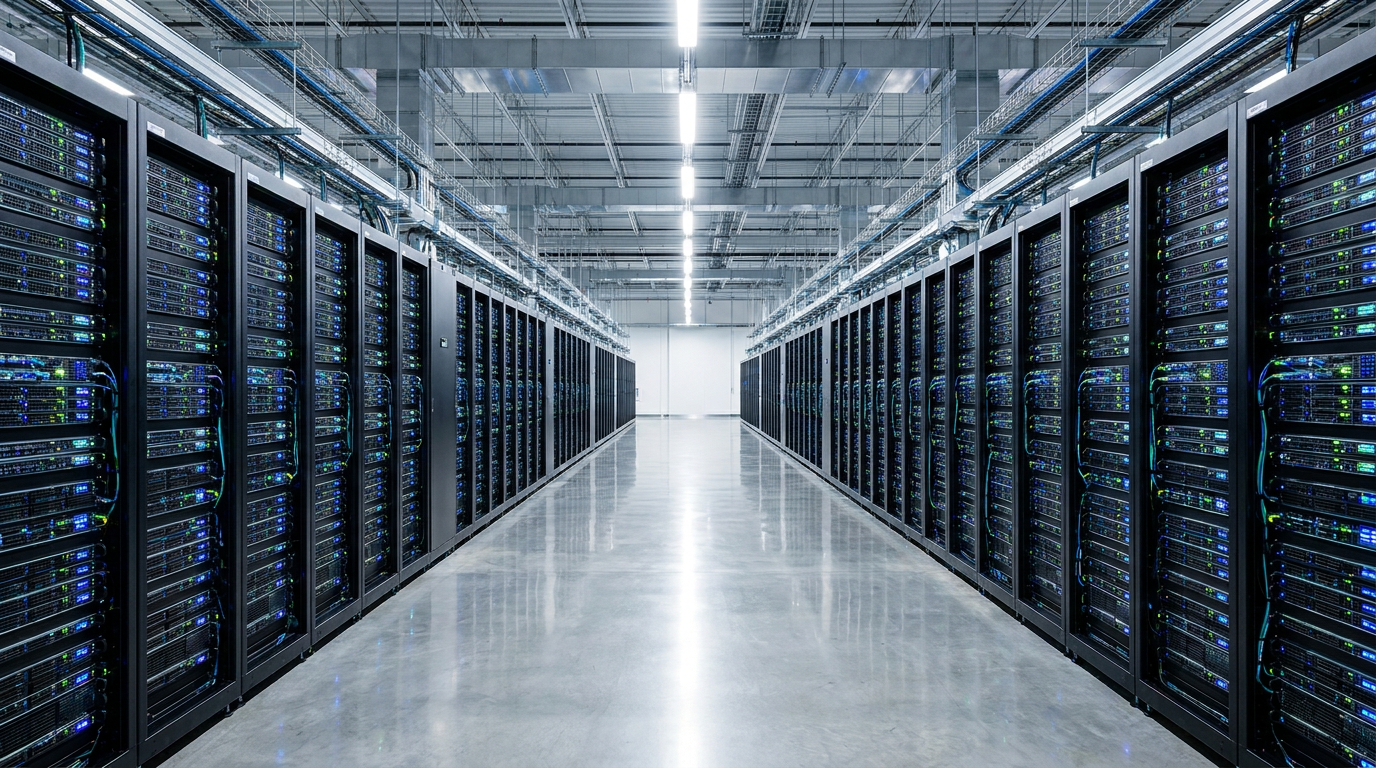
The "cloud" is not a nebulous entity floating in the sky; it is a collection of massive, heavily fortified, and power-hungry physical buildings. Every time a user streams a movie, saves a photo, or queries an artificial intelligence model, physical servers in a highly secure facility process that request.[6]
Building and maintaining these colossal structures requires billions of dollars in capital. Tech giants like Amazon, Google, and Microsoft—often referred to as "hyperscalers"—build many of their own facilities, but they also rely heavily on third-party real estate developers to meet their insatiable demand for space.[3][4]
This is where Data Center Real Estate Investment Trusts (REITs) step in. A REIT is a specialized corporate structure that owns, operates, or finances income-producing real estate. By law, a company must distribute at least 90% of its taxable income to shareholders in the form of dividends to qualify as a REIT.[2]
For the everyday investor, REITs democratize access to commercial real estate. Instead of needing millions of dollars to buy a skyscraper or a warehouse, an investor can buy shares of a REIT on a public stock exchange, earning a proportionate share of the rental income generated by the properties.[2][5]

Data center REITs operate on a unique business model compared to traditional office or residential real estate. They do not just lease square footage; they lease access to massive amounts of electricity, industrial-grade cooling systems, and high-speed fiber optic network connections.[1][6]
The relationship between the REIT and the tenant is highly symbiotic. In many cases, data center REITs sign "triple-net leases" with hyperscalers. Under this arrangement, the tenant is responsible for paying the property taxes, insurance, and maintenance costs, providing the REIT with a highly predictable and stable stream of rental income over a 10-to-15-year period.[1][5]
The relationship between the REIT and the tenant is highly symbiotic.
The recent explosion of generative artificial intelligence has fundamentally altered the landscape for these real estate operators. Traditional cloud computing data centers were built to handle steady, predictable workloads. AI training and inference, however, require specialized hardware, primarily Graphics Processing Units (GPUs), which run incredibly hot and consume vast amounts of electricity.[4]
To put this in perspective, a standard server rack in a traditional cloud data center might draw 5 to 10 kilowatts (kW) of power. A single rack packed with the latest AI-specific GPUs can demand 30 to 50 kW, or even more. This exponential increase in power density means that older data centers often cannot support modern AI workloads without massive retrofitting.[3][4]

Consequently, data center REITs are racing to build next-generation facilities designed specifically for high-density AI computing. These new buildings feature reinforced floors to handle heavier equipment and advanced liquid cooling systems, which are far more efficient at dissipating heat than traditional forced-air HVAC systems.[4][6]
However, the biggest bottleneck for data center REITs today is not capital or tenant demand; it is access to electricity. In major data center hubs like Northern Virginia, Silicon Valley, and Frankfurt, the local power grids are struggling to keep up with the sheer volume of energy these facilities require.[3]
This power constraint has created a massive competitive "moat" for established data center REITs. A company that already owns a facility with a secured, high-capacity power purchase agreement from a local utility holds an incredibly valuable asset, as securing new grid connections can now take years.[1][3]
To address grid limitations and corporate sustainability goals, data center REITs are increasingly partnering with renewable energy providers. Many are signing long-term contracts to fund the construction of new solar and wind farms, aiming to match their massive energy consumption with clean power generation.[4][6]

While the sector enjoys massive tailwinds, it is not without risks. The rapid pace of technological change means that a state-of-the-art facility built today could face obsolescence if server architecture shifts dramatically. Furthermore, as capital-intensive businesses, REITs are sensitive to interest rate fluctuations, which dictate their cost of borrowing for new construction.[2][5]
Despite these challenges, data center REITs remain one of the most direct ways for public market investors to participate in the physical build-out of the digital economy. As artificial intelligence continues to integrate into every facet of modern life, the physical real estate housing the "brain" of the internet will only grow in critical importance.[1][6]
How we got here
1960
The US Congress establishes the REIT structure to democratize commercial real estate investing.
1990s
The first data center REITs emerge to house the infrastructure of the early consumer internet.
2010s
The massive shift to cloud computing drives a decade of rapid hyperscale data center construction.
2023–2026
The generative AI boom forces a complete architectural rethink of data centers to handle extreme power densities.
Viewpoints in depth
Real Estate Yield Investors
Focuses on the dividend aspect, triple-net leases, and predictable cash flow.
For traditional real estate investors, the appeal of data center REITs lies in their financial structure rather than the technology they house. Because these REITs often utilize triple-net leases, the massive tech companies renting the space are responsible for property taxes, insurance, and maintenance. This shields the REIT from unexpected operational costs and ensures a highly predictable stream of rental income over a 10-to-15-year period, which is then passed on to shareholders through the mandatory 90% dividend distribution.
Tech Infrastructure Analysts
Focuses on the technological shift, the need for liquid cooling, and how AI is driving unprecedented demand.
Technology analysts view data center REITs as the critical bottleneck in the AI arms race. They argue that software advancements are currently outpacing physical infrastructure capabilities. Because AI workloads require power densities of 30 to 50 kW per rack—far exceeding the 5 to 10 kW standard of traditional cloud computing—analysts closely monitor which REITs are successfully retrofitting their facilities with advanced liquid cooling and reinforced structural support to accommodate the next generation of hardware.
Sustainability & Grid Advocates
Focuses on the massive energy and water consumption of these facilities, pushing for renewable energy partnerships.
Environmental advocates and grid operators are increasingly concerned about the sheer volume of resources data centers consume. In major hubs, the rapid expansion of these facilities is straining local power grids and utilizing vast amounts of water for cooling systems. This camp advocates for stricter efficiency standards and praises REITs that actively fund new solar and wind projects to offset their footprint, arguing that the AI boom must not come at the expense of local grid stability or climate goals.
What we don't know
- How quickly local power grids will be able to upgrade to meet the exponential demand from new AI data centers.
- Whether future advancements in AI chip efficiency will eventually reduce the extreme power density requirements currently driving data center design.
Key terms
- Hyperscaler
- Massive technology companies, like Amazon, Google, and Microsoft, that dominate the cloud computing and AI industries.
- Triple-Net Lease
- A real estate agreement where the tenant promises to pay all the expenses of the property, including real estate taxes, building insurance, and maintenance.
- Colocation
- A data center model where multiple different companies rent space, power, and cooling within the same physical building.
- Power Density
- The amount of electricity consumed by a single server rack, usually measured in kilowatts (kW).
Frequently asked
Do I need a lot of money to invest in a data center REIT?
No. Because REITs trade on public stock exchanges just like regular companies, you can invest by purchasing a single share.
Why don't tech companies just build all their own data centers?
While they do build many, the demand for space is so high that they rely on specialized REITs to quickly scale their physical footprint without tying up all their own capital.
How does a REIT avoid paying corporate income tax?
By law, a REIT must distribute at least 90% of its taxable income to its shareholders as dividends, shifting the tax burden to the individual investors.
Why do AI servers need so much more power?
AI relies on specialized Graphics Processing Units (GPUs) that perform thousands of calculations simultaneously, drawing significantly more electricity and generating far more heat than traditional computer processors.
Sources
Source coverage
6 outlets
3 viewpoints surfaced






[1]NareitTech Infrastructure Analysts
Data Center REITs: Infrastructure for the Digital Economy
Read on Nareit →[2]InvestopediaReal Estate Yield Investors
Real Estate Investment Trust (REIT): How They Work and How to Invest
Read on Investopedia →[3]CBRE ResearchTech Infrastructure Analysts
Global Data Center Market Trends
Read on CBRE Research →[4]JLL Real Estate InsightsTech Infrastructure Analysts
AI and the Future of Data Center Real Estate
Read on JLL Real Estate Insights →[5]The Motley FoolReal Estate Yield Investors
Investing in Data Center REITs
Read on The Motley Fool →[6]Factlen Editorial TeamSustainability & Grid Advocates
Synthesis by Factlen editorial team
Read on Factlen Editorial Team →
Every angle. Every day.
Get real estate stories with full source coverage and perspective breakdowns delivered to your inbox.