
The Science of Neuroaesthetics: How Interior Design Physically Alters the Brain
Emerging research in neuroarchitecture reveals that our built environments do more than look good—they actively regulate our nervous systems, lower cortisol, and reshape our cognitive health.
By Factlen Editorial Team
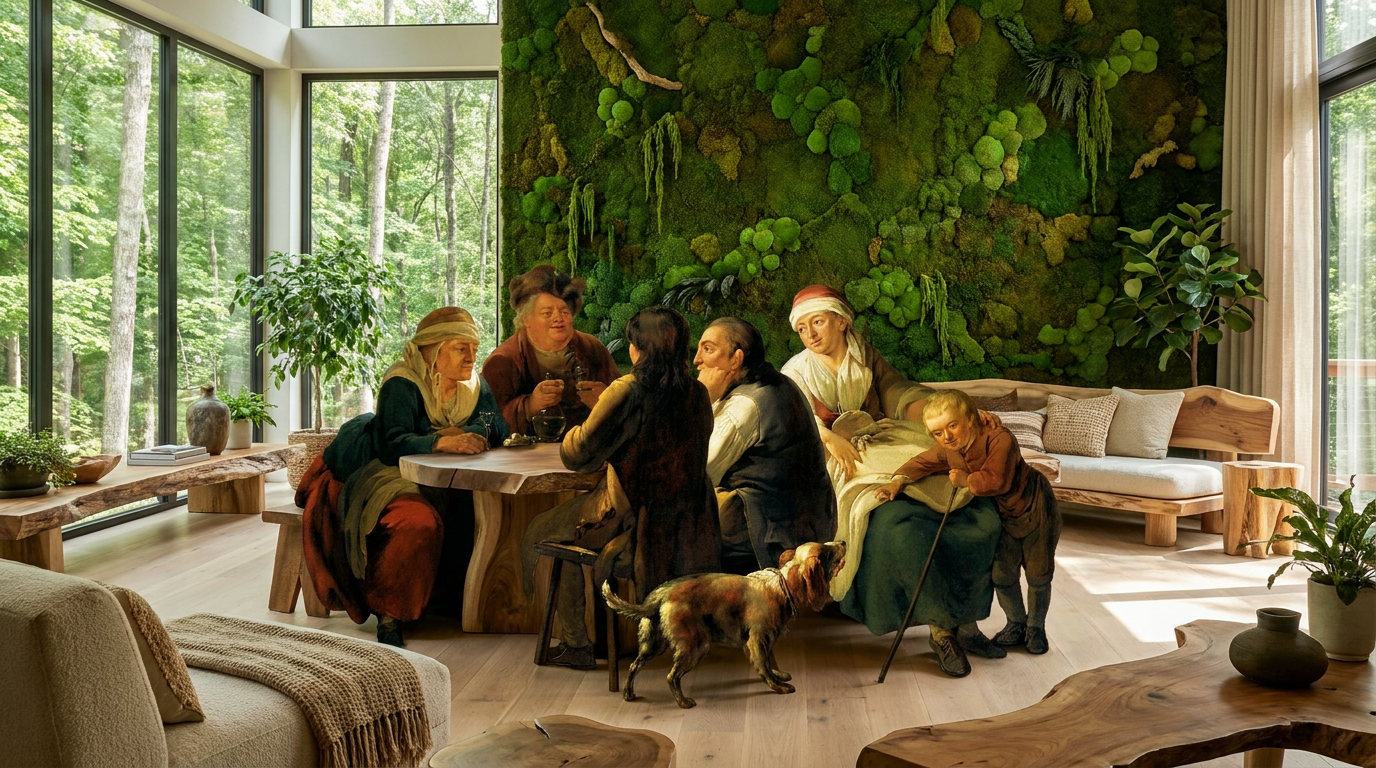
- Neuroarchitecture Researchers
- Scientists mapping the exact biological mechanisms between spatial design and brain chemistry.
- Evidence-Based Designers
- Architects and interior designers applying clinical research to commercial and residential spaces.
- Public Health Advocates
- Experts viewing the built environment as a critical component of population-level health.
What's not represented
- · Real Estate Developers balancing the upfront costs of biophilic architecture against standard construction methods.
- · Neurodivergent individuals whose sensory processing needs may differ from the baseline neuroaesthetic models.
Why this matters
Humans spend an estimated 90% of their lives indoors. Understanding how room shapes, lighting, and textures directly manipulate our stress hormones allows us to design homes and workspaces that actively heal rather than quietly exhaust us.
Key points
- Neuroaesthetics is the scientific study of how our brains and nervous systems respond to built environments.
- Biophilic design uses natural light, organic materials, and fractal patterns to lower cortisol and induce a mild meditative state.
- Research shows biophilic environments can increase workplace productivity by 15% and significantly reduce hospital recovery times.
- The brain responds positively even to artificial representations of nature, making these benefits accessible in urban spaces.
The feeling of walking into a room is often dismissed as a subjective "vibe." You step into a stark, fluorescent-lit waiting room and your shoulders tense; you enter a sunlit, wood-paneled library and your breathing slows. For decades, interior design was treated purely as an aesthetic discipline—a matter of taste, trends, and color theory. But a rapidly growing body of scientific research is proving that our built environments do much more than look good. They actively manipulate our brain chemistry.
This intersection of brain science and spatial design is known as neuroaesthetics, or neuroarchitecture. It operates on a simple evolutionary premise: the human nervous system evolved over millions of years in the natural world, not inside enclosed, right-angled boxes. When we inhabit spaces that mimic the conditions of nature, our brains release dopamine and endorphins. When we inhabit spaces that contradict those conditions, our bodies enter a low-level state of "high alert."
The biological mechanism is immediate and subconscious. Within milliseconds of entering a room, the brain's limbic system—the center for emotion and memory—processes spatial stimuli like light, texture, and geometry. Functional magnetic resonance imaging (fMRI) studies reveal that aesthetically pleasing, nature-aligned spaces directly stimulate the orbitofrontal cortex, the brain region responsible for emotional regulation and decision-making.[2]
Conversely, environments dominated by sharp angles, harsh glare, and visual clutter trigger the release of cortisol, the body's primary stress hormone. The brain interprets these harsh, unnatural environments as inherently unsafe, forcing the nervous system to expend continuous energy scanning for threats. This chronic, low-grade environmental stress is a hidden driver of modern fatigue.

To combat this, architects and designers are increasingly turning to "biophilic design," a framework that intentionally incorporates natural elements, patterns, and processes into the built environment. Biophilia—a term popularized by biologist Edward O. Wilson—describes the innate human instinct to connect with nature. In interior design, this goes far beyond simply placing a potted plant in the corner of a room.[1]
True biophilic design operates on multiple sensory levels. It involves maximizing dynamic natural daylight, which regulates our circadian rhythms and improves sleep quality. It utilizes natural materials like wood and stone, whose visible grains and textures have been shown to relax the autonomic nervous system. It also incorporates "fractals"—the complex, repeating geometric patterns found in leaves, snowflakes, and ocean waves.[5]
It involves maximizing dynamic natural daylight, which regulates our circadian rhythms and improves sleep quality.
Research in neuroaesthetics suggests that visual exposure to these fractal-rich environments can slow the heart rate and induce a mild meditative state. The brain processes natural fractals with remarkable ease, reducing cognitive load and allowing the mind to wander without becoming overwhelmed. This state of "soft fascination" is critical for sustained attention and creative problem-solving.

The empirical evidence supporting these design interventions is striking, particularly in high-stress environments like healthcare facilities. A 2024 systematic review published in Frontiers in Built Environment analyzed over a decade of data on biophilic hospital design. The findings were definitive: patients in rooms with abundant natural light and views of nature experienced reduced hospitalization times, lower mortality rates, and required less pain medication.[3]
The benefits extend equally to the workplace. In an era where burnout is a pervasive corporate challenge, environmental design is emerging as a tangible solution. Studies compiled by environmental consulting firm Terrapin Bright Green indicate that employees working in biophilic offices report a 15% increase in productivity and a 47% boost in overall well-being.[4]

The concept of designing for the brain is not entirely new; it has historical roots in landmark architectural projects. In the 1950s, when Dr. Jonas Salk was developing the polio vaccine, he partnered with architect Louis Kahn to design the Salk Institute in California. Salk explicitly wanted a facility that would stimulate creativity and collaboration among scientists, laying the early groundwork for what would eventually become the Academy of Neuroscience for Architecture (ANFA).[2]
Today, the principles championed by ANFA are trickling down from elite research institutes into everyday residential and commercial design. Designers are prioritizing "coherence"—how easily the brain can visually process a room's layout—and "hominess," the subtle cues that signal safety and belonging. This translates to floor plans that offer both open vistas (for a sense of prospect) and cozy, enclosed nooks (for a sense of refuge).
Interestingly, the brain does not always require literal nature to reap these neurological benefits. Neuroaesthetic research indicates that the brain responds positively even to the representation of nature. Artificial plants, botanical wallpapers, and synthetic materials that convincingly mimic natural textures can still trigger the same calming neurological pathways as the real thing, making these interventions accessible even in dense urban environments.

As urbanization accelerates and humans spend an estimated 90% of their lives indoors, the stakes for interior design have never been higher. We are beginning to understand that our homes and offices are not just containers for our belongings; they are active participants in our biological health.
By bridging the gap between art and neuroscience, the design industry is shifting its fundamental purpose. It is moving away from the superficial pursuit of trend-driven aesthetics and toward a profound new responsibility: treating the built environment as a vital form of preventative mental healthcare.[6]
How we got here
1964
Psychologist Erich Fromm first introduces the concept of 'biophilia,' describing the human psychological orientation toward all that is alive.
1984
Biologist Edward O. Wilson publishes the book Biophilia, popularizing the hypothesis that humans possess an innate tendency to seek connections with nature.
2002
The Academy of Neuroscience for Architecture (ANFA) is founded in San Diego to promote research linking brain science to the built environment.
2014
Terrapin Bright Green publishes the '14 Patterns of Biophilic Design,' creating a standardized framework for architects and designers.
2024
A landmark systematic review in Frontiers in Built Environment definitively links biophilic hospital design to reduced patient mortality and faster recovery times.
Viewpoints in depth
Neuroarchitecture Researchers
Scientists mapping the exact biological mechanisms between spatial design and brain chemistry.
This camp focuses on empirical data gathered through fMRI scans, EEG readings, and biometric sensors. They argue that our response to architecture is not subjective taste, but an evolutionary hardwiring. Their research aims to quantify exactly how specific wavelengths of light, acoustic frequencies, and geometric patterns alter cortisol and dopamine levels in real-time.
Evidence-Based Designers
Architects and interior designers applying clinical research to commercial and residential spaces.
For these practitioners, neuroaesthetics provides a measurable ROI for their clients. They utilize frameworks like the '14 Patterns of Biophilic Design' to justify investments in better lighting, natural materials, and optimized floor plans. They argue that good design is a functional necessity that pays for itself through increased employee productivity, faster patient recovery times, and enhanced daily well-being.
Public Health Advocates
Experts viewing the built environment as a critical component of population-level health.
This perspective treats interior design as a matter of public health equity. Since humans spend up to 90% of their lives indoors, these advocates argue that access to natural light, clean air, and restorative spaces should not be a luxury reserved for high-end corporate offices or wealthy homeowners. They push for updated building codes and urban planning policies that mandate biophilic principles in public housing, schools, and civic buildings.
What we don't know
- The exact 'dosage' or duration of exposure to natural elements required to trigger measurable, long-lasting neurological benefits.
- How individual neurodivergence, such as ADHD or autism, alters baseline physiological responses to specific spatial stimuli.
Key terms
- Neuroaesthetics
- The scientific study of how the brain processes and responds to beauty, art, and spatial environments.
- Biophilic Design
- An architectural framework that intentionally incorporates natural elements, materials, and light to satisfy the human instinct to connect with nature.
- Fractals
- Complex, repeating geometric patterns found in nature (like fern leaves or snowflakes) that the human brain processes with minimal cognitive effort.
- Orbitofrontal Cortex
- A region in the frontal lobes of the brain involved in cognitive processing, decision-making, and emotional regulation, which is stimulated by pleasing environments.
- Autonomic Nervous System
- The part of the nervous system responsible for regulating involuntary body functions, such as heart rate, blood pressure, and digestion.
Frequently asked
Do artificial plants provide the same mental health benefits?
Yes, to a significant degree. Neuroaesthetic research shows that the brain responds positively to the representation of nature, meaning artificial greenery and botanical patterns can still lower stress hormones.
What is the easiest way to apply neuroaesthetics at home?
Maximizing natural light is the most impactful first step. Beyond that, introducing visible wood grains, adding soft, curved furnishings instead of sharp angles, and incorporating indoor plants can immediately shift a room's psychological profile.
Is biophilic design more expensive than traditional design?
While installing large architectural features like skylights or living green walls can be costly, the core principles—rearranging furniture for better light, decluttering, and using natural textures—can be applied on any budget.
Sources
Source coverage
6 outlets
3 viewpoints surfaced






[1]Global Wellness InstitutePublic Health Advocates
Biophilic Design Positively Impacts the Physical and Mental Wellbeing
Read on Global Wellness Institute →[2]Academy of Neuroscience for ArchitectureNeuroarchitecture Researchers
Neuroscience Research in Architecture
Read on Academy of Neuroscience for Architecture →[3]Frontiers in Built EnvironmentNeuroarchitecture Researchers
Biophilic hospital design reduces stress and enhances health
Read on Frontiers in Built Environment →[4]Terrapin Bright GreenEvidence-Based Designers
14 Patterns of Biophilic Design
Read on Terrapin Bright Green →[5]Journal of Clinical Sleep MedicineNeuroarchitecture Researchers
Impact of windows and daylight exposure on overall health
Read on Journal of Clinical Sleep Medicine →[6]Factlen Editorial TeamEvidence-Based Designers
Synthesis by Factlen editorial team
Read on Factlen Editorial Team →

Every angle. Every day.
Get lifestyle stories with full source coverage and perspective breakdowns delivered to your inbox.