
The Rise of 'New Collar' Green Jobs: How Vocational Training is Powering the Energy Transition
As demand for renewable energy infrastructure surges, a new generation of skills-based vocational programs and apprenticeships is rapidly training workers for the fastest-growing jobs in the country.
By Factlen Editorial Team
- Clean Energy Employers
- Focuses on the urgent need to close the skills gap through rapid, skills-based hiring and targeted recruitment of safety-conscious workers like veterans.
- Vocational Educators
- Emphasizes the agility of community colleges and trade schools in developing accelerated, industry-aligned curricula to meet immediate workforce demands.
- Labor & Workforce Advocates
- Prioritizes job quality, ensuring that the energy transition provides family-sustaining wages, benefits, and equitable access for marginalized communities.
What's not represented
- · Traditional fossil fuel workers transitioning to green energy
- · High school guidance counselors advising on career paths
Why this matters
The shift toward skills-based green jobs offers a lucrative, debt-free alternative to the traditional four-year college path, providing long-term career stability while directly addressing the labor bottlenecks slowing global climate goals.
Key points
- Wind turbine technicians and solar installers are projected to be among the fastest-growing U.S. occupations through 2034.
- Employers are shifting to 'skills-first' hiring, bypassing four-year degree requirements in favor of certifications and hands-on experience.
- Community colleges are launching accelerated 4-to-6 week programs to train technicians for the rapidly expanding EV charging network.
- The renewable energy sector is reviving the apprenticeship model, allowing workers to earn a wage while completing their training.
- Military veterans are highly sought after for these roles due to their experience with strict safety protocols and austere environments.
- Because they require physical dexterity and on-site problem-solving, green-collar trades are highly resistant to AI automation.
The global transition to renewable energy is often framed as a technological or financial challenge, but on the ground, it is fundamentally a labor challenge. As billions of dollars flow into wind, solar, and electric vehicle infrastructure, the most pressing bottleneck is not a shortage of capital or silicon, but a shortage of skilled hands. This demand is quietly reshaping the American workforce, driving a resurgence in vocational education and creating a booming market for what industry leaders call "new collar" green jobs. These roles offer high wages, long-term stability, and a direct hand in building the next generation of infrastructure, all without the debt burden of a traditional four-year university degree.[1][6]
The term "new collar," originally coined by former IBM CEO Ginni Rometty, describes a category of work that prioritizes specialized technical skills, industry certifications, and hands-on experience over academic pedigree. In the context of the clean energy transition, this concept is bridging the historical divide between blue-collar manual labor and white-collar engineering. Today's renewable energy technicians must combine physical dexterity with advanced digital literacy, using diagnostic software to troubleshoot high-voltage systems before climbing a 300-foot turbine or wiring a commercial solar array.[1][4]
The sheer scale of the demand is reflected in federal labor data. According to the U.S. Bureau of Labor Statistics, wind turbine service technicians and solar photovoltaic installers are projected to be among the fastest-growing occupations in the country over the next decade. Employment for wind technicians is expected to surge by 50 percent by 2034, while solar installer roles are projected to grow by 42 percent. These growth rates dramatically outpace the national average for all occupations, triggering a bidding war for qualified talent and forcing employers to rethink how they recruit and train their workforces.[2][7]

In response to this skills gap, the renewable energy sector is rapidly moving toward skills-first hiring. Rather than filtering applicants through the rigid sieve of bachelor's degrees, companies are partnering with trade schools, community colleges, and unions to build direct talent pipelines. This shift is particularly vital because the industry cannot afford to wait four years for new workers to graduate. Accelerated certificate programs and employer-sponsored training allow individuals to enter the field and start earning in a matter of months, making the sector highly attractive to career switchers and young adults disillusioned with the rising cost of traditional higher education.[1][6]
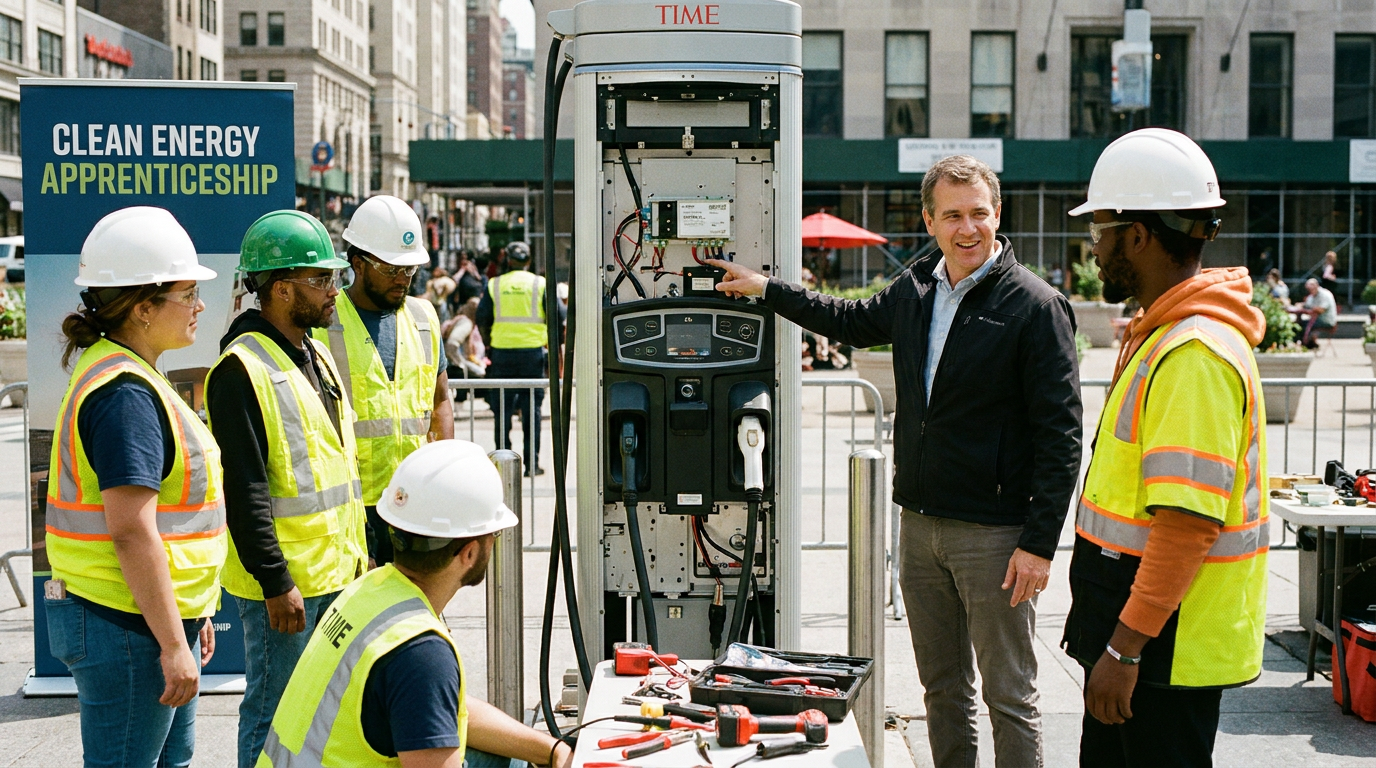
The electric vehicle (EV) sector provides a stark example of this dynamic. As the adoption of electric cars accelerates, the rollout of public and private charging stations has struggled to keep pace—not just in manufacturing, but in maintenance. A broken EV charger is a complex piece of high-voltage equipment that requires specialized knowledge to repair safely. Recognizing that the demand for Electric Vehicle Supply Equipment (EVSE) technicians was vastly outstripping supply, educational institutions have had to invent entirely new curricula from scratch.[1][3]
Community colleges are at the forefront of this rapid educational adaptation. In North Carolina, Wake Technical Community College recently launched a pioneering statewide pilot program to train EVSE field technicians. Funded by the Siemens Foundation, the accelerated six-week, non-degree course combines online theory with hands-on mechanical instruction. Students learn electrical safety, charging station configuration, communication systems troubleshooting, and site inspection. Graduates leave prepared to sit for national credentialing, stepping immediately into a market desperate for their specific skill set.[3]
Alongside community college certificates, the clean energy boom is driving a renaissance in the apprenticeship model. Long associated primarily with traditional trades like plumbing and carpentry, the "earn as you learn" framework is being adapted for the complexities of modern grid infrastructure. The Interstate Renewable Energy Council (IREC) has been instrumental in developing national guidelines for registered apprenticeships in the solar industry, ensuring that training standards keep pace with rapidly evolving photovoltaic technology and building codes.[4]

Alongside community college certificates, the clean energy boom is driving a renaissance in the apprenticeship model.
These modern apprenticeships are breaking new ground in how vocational education is delivered. For example, ReVision Energy recently launched the nation's first employer-based electrical apprenticeship program designed specifically to provide the academic training required for renewable energy professionals to earn their electrical licensure. By integrating classroom instruction directly into the paid workday, these programs remove the financial barriers that often prevent lower-income workers from pursuing advanced technical qualifications.[4]
Despite the high-tech nature of the equipment, green-collar work remains physically demanding and rigorously procedural. Solar crews spend long hours on sun-baked rooftops or in open fields, while wind technicians must be comfortable scaling massive towers in variable weather conditions. The work involves strict adherence to safety protocols, including lockout/tagout procedures, fall protection, and confined space regulations. This reality requires a workforce that is not only technically proficient but deeply disciplined and safety-conscious.[6][8]
Because of these specific demands, military veterans have become one of the most highly sought-after demographics in the renewable energy labor pool. Veterans are already accustomed to working in austere environments, following strict procedural checklists, and prioritizing team safety above all else. The mechanical and electrical skills acquired in branches like the Navy and Air Force translate seamlessly to the maintenance of turbines and inverters, making veterans an ideal fit for the physical and mental rigors of the energy transition.[8]

As the sector expands, labor advocates are pushing to ensure that these new green jobs translate into high-quality, long-term careers. The goal is to avoid the pitfalls of the gig economy by establishing family-sustaining wages, comprehensive benefits, and clear avenues for upward mobility. In 2024, the median annual wage for wind turbine technicians sat at over $62,000, with top earners making significantly more. Advocates argue that maintaining these wage standards is essential for achieving a "just transition" that benefits workers as much as it benefits the climate.[2][4]
There is also a concerted effort to ensure that the wealth generated by the energy transition reaches historically marginalized communities. Initiatives like the ChargerHelp! training program in Detroit are specifically designed to recruit adults with little to no prior technical experience, providing them with free training to become nationally certified EVSE technicians. By removing tuition barriers and focusing on local recruitment, these programs aim to build a diverse workforce that reflects the communities where the infrastructure is being deployed.[3][4]
The surge in green-collar employment is a global phenomenon. Worldwide, the renewable energy sector employed an estimated 16.6 million people in 2024, with solar PV accounting for nearly half of those roles. From offshore wind farms in the North Sea to massive solar installations in Rajasthan, the demand for skilled technicians is universal. This global expansion is driving international standardization in training, such as the Global Wind Organisation's safety certifications, allowing skilled workers to increasingly treat their credentials as a global passport.[5]

Crucially, these new collar trades offer a high degree of protection against the looming threat of artificial intelligence. While generative AI is poised to disrupt many white-collar administrative and analytical roles, it cannot turn a wrench, navigate a cramped nacelle, or physically wire a transformer. In the skilled trades, AI is being deployed as a diagnostic assistant—software that sits on a tablet to help identify a fault faster—rather than a replacement for the human worker on the ladder.[1]
The primary uncertainty facing the sector is whether the vocational training infrastructure can scale fast enough to meet aggressive 2030 and 2035 climate targets. While pilot programs and apprenticeships are proving successful, they currently produce graduates in the hundreds or thousands, whereas the industry needs tens of thousands of new workers annually. Scaling these programs requires massive investment in training facilities, qualified instructors, and public awareness campaigns to overcome the lingering cultural stigma against non-degree career paths.[1][4]
Ultimately, the rise of new collar green jobs represents a profound shift in how society values and rewards technical skill. By offering accessible, high-paying career pathways that directly contribute to solving a global crisis, the renewable energy sector is redefining what a successful career looks like in the 21st century. For a generation of workers seeking both economic stability and a sense of purpose, the vocational route is no longer a backup plan—it is the frontline of the future.[1][6]
How we got here
2021
Clean energy employers begin reporting severe bottlenecks in skilled labor availability as infrastructure projects scale up.
Aug 2022
Passage of the Inflation Reduction Act injects billions into U.S. clean energy, dramatically accelerating labor demand.
2024
Global renewable energy employment reaches a record 16.6 million jobs, driven heavily by the solar PV sector.
Jun 2026
The Bureau of Labor Statistics projects wind and solar technicians to remain among the fastest-growing U.S. occupations through 2034.
Viewpoints in depth
Clean Energy Employers
Focuses on the urgent need to close the skills gap through rapid, skills-based hiring and targeted recruitment.
For companies building the grid of the future, the primary existential threat is a lack of qualified personnel. Employers argue that the traditional four-year university system is too slow and often misaligned with the practical realities of infrastructure deployment. By shifting to a 'skills-first' hiring model, they can tap into a much broader talent pool. These companies place a premium on candidates who demonstrate mechanical aptitude, a strong work ethic, and a rigorous commitment to safety—which is why they heavily target military veterans and graduates of intensive, hands-on apprenticeship programs.
Vocational Educators
Emphasizes the agility of community colleges and trade schools in developing accelerated, industry-aligned curricula.
Educators at community colleges and technical institutes view the green energy boom as a vindication of the vocational education model. They argue that higher education must become more modular and responsive to local economic needs. By partnering directly with industry giants like Siemens and local utilities, these institutions are abandoning rigid semester schedules in favor of 4-to-6 week intensive bootcamps. Their goal is to provide students with immediate, debt-free pathways into the middle class, proving that a bachelor's degree is not the only route to a lucrative, technology-driven career.
Labor & Workforce Advocates
Prioritizes job quality, ensuring that the energy transition provides family-sustaining wages and equitable access.
While celebrating the sheer volume of new jobs, labor advocates and equity organizations caution that job quantity must not overshadow job quality. They argue that the clean energy transition will only be 'just' if it replaces high-paying fossil fuel jobs with equally secure, union-backed, or high-wage green roles. Furthermore, these groups are pushing to ensure that training programs are physically located in, and actively recruit from, historically marginalized communities. They view employer-paid apprenticeships as a critical tool for removing the financial barriers that typically prevent lower-income workers from accessing advanced technical training.
What we don't know
- Whether the current vocational training infrastructure can scale rapidly enough to produce the tens of thousands of technicians needed annually to meet 2030 climate targets.
- How quickly rural and underserved areas will gain access to localized training centers for advanced green tech.
Key terms
- New Collar Job
- A role that requires specialized technical skills and hands-on experience rather than a traditional four-year college degree.
- EVSE (Electric Vehicle Supply Equipment)
- The technical industry term for electric vehicle charging stations and their associated infrastructure.
- Apprenticeship
- A workforce training model combining paid on-the-job experience with classroom instruction, often leading to professional licensure.
- Photovoltaic (PV) Installer
- A specialized technician who assembles, sets up, and maintains systems that convert sunlight into electrical energy.
Frequently asked
Do I need a college degree to work in renewable energy?
No. Many of the fastest-growing roles, such as wind turbine technicians and solar installers, require vocational training, certifications, or apprenticeships rather than a four-year degree.
How long does it take to get certified for EV charger repair?
Accelerated programs, such as the EVSE Field Technician Certificate, can take as little as four to six weeks of hybrid online and hands-on instruction.
Are skilled trades in renewable energy safe from AI automation?
Yes. These roles require physical dexterity, spatial reasoning, and on-site problem-solving that current AI cannot replicate. AI is largely used as a diagnostic assistant rather than a replacement.
Sources
Source coverage
8 outlets
3 viewpoints surfaced








[1]Factlen Editorial TeamClean Energy Employers
Synthesis by Factlen editorial team
Read on Factlen Editorial Team →[2]Bureau of Labor StatisticsLabor & Workforce Advocates
Fastest growing occupations, 2024 and projected 2034
Read on Bureau of Labor Statistics →[3]Wake Technical Community CollegeVocational Educators
Wake Tech launches state's first EV charging station technician program
Read on Wake Technical Community College →[4]Interstate Renewable Energy CouncilLabor & Workforce Advocates
National Guidelines for Apprenticeship Standards for the Solar Industry
Read on Interstate Renewable Energy Council →[5]Green Fuel JournalLabor & Workforce Advocates
What Are Renewable Energy Jobs? The Rise of the Green-Collar Worker
Read on Green Fuel Journal →[6]Diversity EmploymentLabor & Workforce Advocates
Green-Collar Jobs: High-Growth Renewable Energy Jobs and What They Pay
Read on Diversity Employment →[7]Staffing Industry AnalystsClean Energy Employers
Solar installers, wind turbine techs top list of fastest-growing occupations: BLS
Read on Staffing Industry Analysts →[8]BestMilitaryResumeVocational Educators
Why Veterans Are the Perfect Fit for the Renewable Energy Boom
Read on BestMilitaryResume →

Every angle. Every day.
Get education stories with full source coverage and perspective breakdowns delivered to your inbox.