
The Rise of 'Coolcationing': How Climate Shifts are Rewriting the Summer Travel Map
As extreme heatwaves increasingly disrupt traditional Mediterranean holidays, travelers are flocking to Scandinavia, the Baltics, and the Alps in search of temperate climates and breathable air.
By Factlen Editorial Team
- Climate-Adaptive Travelers
- Vacationers actively seeking comfort, outdoor activity, and wellness away from extreme heat.
- Northern Tourism Boards
- Municipalities welcoming the economic boom but strictly managing capacity to avoid overtourism.
- Environmental Researchers
- Scientists warning about the climate paradox where northern ecosystems are fragile and warming rapidly.
- Industry Analysts
- Travel experts tracking the structural shift in booking algorithms and consumer psychology.
What's not represented
- · Local residents in newly popular northern towns
- · Aviation emissions researchers
Why this matters
As global temperatures rise, the traditional summer holiday is fundamentally changing. Understanding this shift helps travelers plan safer, more comfortable trips while highlighting how northern economies are adapting to a new influx of climate-aware tourism.
Key points
- Rising global temperatures are driving a mass migration of summer travelers away from the Mediterranean and toward northern Europe.
- Destinations like Norway, Finland, and the Swiss Alps are seeing unprecedented surges in summer bookings.
- Travelers are prioritizing thermal comfort, clean air, and uncrowded nature over traditional sun-and-sand resorts.
- Northern tourism boards are deploying 'selective growth' strategies to prevent the overtourism that plagues southern hotspots.
- Traditional warm-weather destinations are adapting by heavily promoting spring and autumn 'shoulder season' travel.
The traditional European summer holiday—defined for decades by sun loungers, crowded Mediterranean beaches, and sweltering August afternoons—is undergoing a profound geographical realignment. As global temperatures climb and intense, prolonged heatwaves become the seasonal norm across southern Europe, a mass migration of leisure travelers is heading north. For generations, the travel industry operated on a foundational model of southern European sun-and-sand leisure, treating northern destinations primarily as winter sports hubs or niche adventure outposts. Today, that paradigm is flipping. Travelers are systematically prioritizing temperate climates, clean air, and uncrowded spaces over high-temperature beach resorts, fundamentally altering the map of global tourism.[1]
This structural shift has given rise to the 'coolcation,' a travel trend where vacationers deliberately bypass high-temperature resorts in favor of temperate climates, high altitudes, and uncrowded natural spaces. What began just a few years ago as a niche preference for outdoor enthusiasts and climate-conscious early adopters has rapidly matured into a dominant market strategy for the 2026 summer season. The concept is simple but revolutionary: instead of enduring 40-degree Celsius days in crowded city centers, travelers are choosing destinations where the air is crisp, the evenings require a light sweater, and outdoor exploration is comfortable at any hour of the day.[1][3]
The data backing this northward migration is striking and consistent across the industry. According to recent surveys from the European Travel Commission, more than half of European travelers now actively seek out less popular or off-the-beaten-track destinations specifically to avoid extreme heat and the crushing weight of overtourism. This represents a massive shift in consumer psychology. Vacationers are no longer willing to sacrifice their physical comfort or risk heat exhaustion just to capture a classic summer photograph. Instead, they are redefining what a successful holiday looks like, placing a premium on wellness, tranquility, and reliable weather.[5]
The mechanism driving this shift is rooted in what industry analysts call the Perception of Climate Index. Travelers are no longer just looking at picturesque landscapes in brochures; they are rigorously evaluating destinations based on thermal comfort, breathable air, and the practical viability of outdoor activities. When families plan their summer breaks, the deciding factor is increasingly whether they can actually spend the day outside without seeking air-conditioned refuge by noon. This heightened sensitivity to extreme weather is forcing travel agents and tour operators to completely rethink how they package and sell the summer season.[1]

A recent study from the Massachusetts Institute of Technology quantified this phenomenon by tracking 'outdoor days'—a climatological measure of days with weather conditions comfortable and safe enough for prolonged outside activity. The study projects a significant, permanent latitudinal shift in global leisure. Northern European states are actively gaining outdoor days as their climates mild, while southern regions are rapidly losing them to extreme heat. This scientific reality validates the anecdotal experiences of millions of tourists who have found themselves trapped indoors during recent Mediterranean heatwaves, accelerating the demand for climate-resilient alternatives.[4][6]
This climate-driven reallocation is fundamentally altering booking algorithms, travel agency portfolios, and airline route planning. Luxury travel networks and global booking platforms have reported massive, sustained surges in demand for cooler climates. In recent seasons, agencies have seen staggering growth, including a 150 percent increase in American bookings to Finland and near-doubling of interest in Iceland and Canada. These are not incremental changes; they represent a wholesale pivot by high-net-worth travelers and experience-driven demographics who are willing to pay a premium for guaranteed comfort and unique, nature-based itineraries.[2]
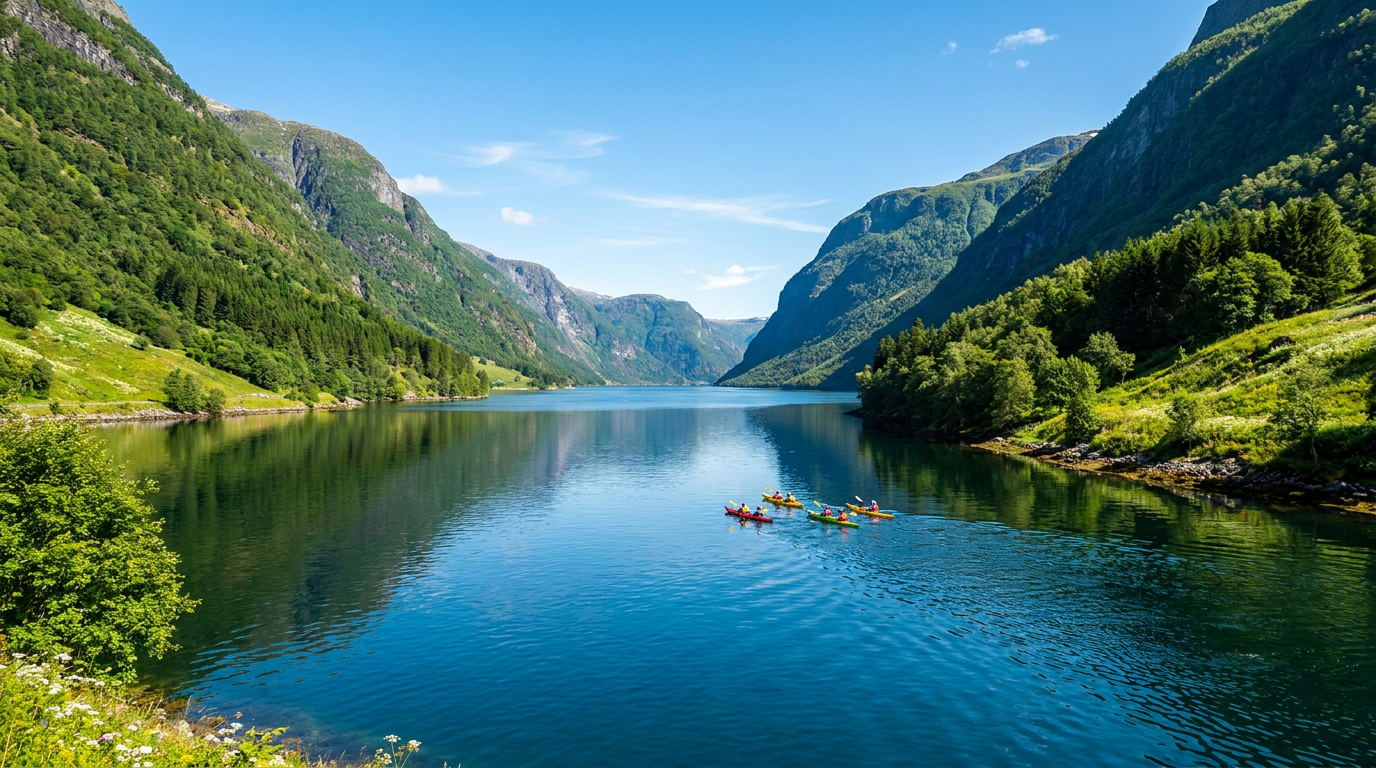
Norway, in particular, has emerged as the premier coolcation destination, capturing the imagination of the global market. The appeal lies in its stark, refreshing contrast to the Mediterranean status quo. Travelers are eagerly trading crowded beach clubs for guided glacier hikes, and sprawling mega-resorts for quiet, deep-water fjords surrounded by towering green cliffs. The country offers a built-in natural air-conditioning system, alongside a cultural emphasis on 'friluftsliv'—the Nordic concept of open-air living—which perfectly aligns with the modern tourist's desire for wellness, digital detoxing, and authentic connection with nature.[3]
The economic impact on these northern communities is substantial and, in some cases, overwhelming. Online travel agencies report that tour and activity bookings across Scandinavia are skyrocketing, with some remote Norwegian villages seeing demand exceed pre-pandemic levels by more than five times. Local restaurants, boutique hotels, and outdoor guide services are experiencing unprecedented summer windfalls. However, this sudden influx is also testing the limits of local infrastructure, transforming quiet winter towns into bustling summer hubs and forcing municipalities to rapidly adapt to a year-round tourism economy.[4]

The economic impact on these northern communities is substantial and, in some cases, overwhelming.
But the coolcation trend is not limited to the Nordic countries or coastal fjords. High-altitude alpine regions are also experiencing a massive summer renaissance. Destinations like Zermatt in Switzerland, Obergurgl in Austria, and Cortina d'Ampezzo in Italy are marketing themselves as the ultimate high-elevation refuges. These mountain towns, traditionally reliant on winter ski revenues, are now seeing their summer seasons rival their winter peaks, offering active travelers a pristine environment of turquoise lakes, blooming meadows, and dramatic peaks.[1]
The meteorological math behind the alpine boom is simple but highly effective: for every 1,000 meters of elevation gained, the ambient temperature drops by approximately 6.5 degrees Celsius. This natural lapse rate makes the Alps an ideal, built-in sanctuary for hikers, mountain bikers, and wellness seekers looking to escape the stifling, stagnant heat of the continent's lower valleys. Even in the middle of July, high-altitude resorts offer crisp mornings, comfortable afternoons, and the kind of deep, restorative sleep that is increasingly difficult to find in sweltering southern cities.[1]
To accommodate this geographic shift, the aviation and hospitality industries are rapidly adjusting their multi-billion-dollar infrastructure investments. Airlines are launching new, direct summer routes to previously winter-focused or highly remote destinations. For example, major carriers are initiating unprecedented direct flights from the United States to Nuuk, Greenland, anticipating a surge in demand for untouched, cool-weather frontiers. This logistical pivot ensures that destinations once considered too difficult to reach for a casual summer holiday are now highly accessible to the mainstream market.[2]
Meanwhile, high-end hospitality brands are investing heavily in climate-resilient properties across the north. From luxury fjord-side resorts in Norway to off-grid eco-lodges in the Scottish Highlands, developers are building spaces that emphasize wellness, nature immersion, and sustainable practices. These properties are designed to blend seamlessly into their environments, offering high-paying guests a sense of isolation and tranquility. The focus has shifted from massive swimming pools and beach access to floor-to-ceiling windows, private saunas, and direct access to pristine wilderness trails.[1][3]

However, the sudden, explosive surge in northern tourism presents a complex administrative challenge: how to manage this economic windfall without replicating the destructive overtourism that currently plagues southern Europe. Nordic tourism boards are acutely aware of this risk. They have watched cities like Venice and Barcelona struggle under the weight of mass tourism, and they are actively deploying a 'selective growth' model to protect their fragile ecosystems and maintain the high quality of life for their local residents.[1]
Rather than chasing sheer volume and record-breaking arrival numbers, destinations like Sweden, Finland, and Denmark are prioritizing high-value, low-impact tourism. This strategy involves heavily promoting off-peak travel, dispersing visitors across lesser-known rural regions, and focusing on sustainable, community-based experiences that keep tourist dollars within the local economy. By limiting cruise ship docks, capping short-term rental permits, and requiring strict eco-certifications for tour operators, these northern municipalities are attempting to engineer a sustainable tourism model that benefits both the visitor and the host without degrading the landscape.[1]
There is also an underlying, unavoidable environmental paradox to the coolcation boom. While millions of travelers head north to escape the punishing heat of the mid-latitudes, the Arctic and sub-Arctic regions are actually warming at a significantly faster rate than the global average. The very pristine, icy landscapes that tourists are flocking to see are among the most vulnerable ecosystems on the planet, creating a tension between the desire to experience these environments and the carbon footprint required to reach them.[1][3]

Glaciers in Norway and Switzerland are retreating at visible rates, and historic snow seasons are becoming increasingly unpredictable. A coolcation in Scandinavia may be vastly cooler and more comfortable than a July afternoon in Rome, but it is not immune to the broader, systemic realities of climate change. Environmental researchers warn that the influx of aviation traffic and human footfall in these fragile northern habitats could inadvertently accelerate the degradation of the very natural wonders that define the coolcation experience.[3]
Ultimately, the rapid rise of the coolcation represents a fundamental maturation of the global traveler. It is a decisive shift away from the passive consumption of sun and sand toward a more intentional, climate-aware approach to leisure. Travelers are recognizing that their vacation choices must adapt to a changing planet, and they are finding profound joy and rejuvenation in the quiet forests, deep fjords, and crisp mountain air of the north. This evolution in consumer preference is forcing the entire travel ecosystem to elevate its offerings, prioritizing sustainability and genuine well-being over sheer volume.[1]
As the travel industry continues to adapt to a warming world, the definition of a perfect summer holiday is being permanently rewritten. The era of defaulting to the Mediterranean coast is giving way to a more diverse, geographically expansive understanding of summer leisure. By trading the relentless, exhausting heat of the south for the crisp, breathable air of the north, travelers are not just escaping the weather—they are pioneering a more sustainable, comfortable, and deeply rewarding way to explore the globe.[1]
How we got here
Summer 2022
Post-pandemic travel surges, but record-breaking heatwaves in southern Europe begin to frustrate vacationers.
2023
The term 'coolcation' first enters mainstream travel media as a niche trend among outdoor enthusiasts.
Summer 2024
Europe records its hottest summer to date, prompting a measurable, data-backed spike in bookings to Scandinavia and Canada.
Early 2025
Major airlines and luxury travel networks announce new routes and dedicated itineraries specifically targeting cool-climate destinations.
June 2026
Coolcationing transitions from a niche trend into a dominant structural shift in the global summer travel market.
Viewpoints in depth
Northern Destination Planners
Prioritizing selective, sustainable growth over mass tourism volume.
Tourism boards in Scandinavia and the Baltics are acutely aware of the risks of overtourism. Rather than maximizing raw visitor numbers, they are implementing 'High Value, Low Volume' strategies. This includes promoting off-peak travel, dispersing visitors to rural areas, and investing in eco-certified accommodations to protect their fragile natural assets.
Traditional Southern Resorts
Adapting to extreme heat by pivoting to shoulder-season travel.
Mediterranean destinations are not emptying out, but they are fundamentally restructuring their appeal. Facing intense July and August heatwaves, tourism operators in Greece, Italy, and Spain are heavily marketing the 'shoulder seasons' of May, September, and October. During peak summer, they are shifting focus to sunrise excursions, shaded retreats, and water-based wellness rather than midday beach lounging.
Climate Researchers
Highlighting the paradox of warming northern ecosystems.
Environmental scientists point out a critical irony in the coolcation boom: the Arctic and sub-Arctic are warming up to four times faster than the global average. While these regions offer a temporary reprieve for overheated tourists, their glaciers are retreating and their ecosystems are highly vulnerable to increased foot traffic, raising questions about the long-term viability of this northward migration.
What we don't know
- How long northern infrastructure can sustain year-over-year double-digit growth without degrading the natural environment.
- Whether the economic boost to Scandinavia will offset the potential long-term losses in southern Europe's peak summer tourism revenues.
- How quickly the 'climate paradox'—the rapid warming of the Arctic and sub-Arctic—will begin to impact the very appeal of these northern refuges.
Key terms
- Coolcationing
- The practice of traveling to cooler, temperate climates during the summer to avoid extreme heatwaves and overcrowded traditional resorts.
- Shoulder Season
- The travel periods just before and after the peak summer season—typically May, September, and October—when weather is milder and crowds are thinner.
- Perception of Climate Index (PCI)
- A metric used by the travel industry to gauge how travelers' decisions are influenced by their expectations of extreme weather and thermal comfort.
- Selective Growth Tourism
- A destination management strategy that prioritizes attracting fewer, higher-spending visitors who engage in sustainable practices, rather than maximizing sheer tourist volume.
- Outdoor Days
- A climatological measure of days per year where local weather conditions are comfortable and safe enough for prolonged outdoor leisure activities.
Frequently asked
What exactly is a coolcation?
A coolcation is a vacation deliberately planned in a temperate, northern, or high-altitude destination to escape the extreme heat and crowds of traditional summer hotspots.
Which destinations are seeing the biggest coolcation boom?
Scandinavia (particularly Norway and Sweden), Finland, Iceland, the Scottish Highlands, and high-altitude Alpine villages in Switzerland and Austria are leading the trend.
Are traditional spots like Italy and Greece losing tourists?
Not necessarily losing them entirely, but traveler behavior is shifting. Many are choosing to visit the Mediterranean during the cooler 'shoulder seasons' of spring and autumn instead of peak summer.
Is coolcationing environmentally sustainable?
It depends on the execution. While northern destinations heavily promote eco-tourism and sustainable practices, the increased aviation traffic and strain on fragile sub-Arctic ecosystems remain significant environmental concerns.
Sources
Source coverage
6 outlets
4 viewpoints surfaced






[1]Factlen Editorial TeamIndustry Analysts
Synthesis by Factlen editorial team
Read on Factlen Editorial Team →[2]Business InsiderClimate-Adaptive Travelers
Europe's hottest summer on record didn't stop tourists from visiting en masse. Some luxury travel agents say more vacationers are seeking summer trips to cooler climates.
Read on Business Insider →[3]ForbesClimate-Adaptive Travelers
Coolcations Are Vacations To Cooler Climates
Read on Forbes →[4]SkiftNorthern Tourism Boards
Scandinavia Is Seeing a Summer Tourism Boom
Read on Skift →[5]European Travel CommissionIndustry Analysts
Monitoring Sentiment for Domestic and Intra-European Travel
Read on European Travel Commission →[6]Massachusetts Institute of TechnologyEnvironmental Researchers
Global shifts in outdoor days due to climate change
Read on Massachusetts Institute of Technology →
Every angle. Every day.
Get travel stories with full source coverage and perspective breakdowns delivered to your inbox.