
The Rise of 'Build-to-Rent': Why Single-Family Rental Communities Are Reshaping Housing
Purpose-built neighborhoods of single-family rental homes are booming across the U.S., offering the space of a house with the convenience of an apartment.
By Factlen Editorial Team
- BTR Developers & Investors
- Focus on the sector's high occupancy, stable yields, and ability to meet structural housing demand.
- Lifestyle Renters
- Value the flexibility, modern amenities, and maintenance-free living of a single-family home.
- Housing Market Analysts
- Track the macroeconomic shift from homeownership to long-term renting due to affordability constraints.
What's not represented
- · Traditional Homebuyers
- · Local Zoning Boards
Why this matters
As homeownership becomes increasingly unaffordable, Build-to-Rent communities offer a high-quality, maintenance-free alternative that allows families to enjoy suburban living without a mortgage. Understanding this trend is crucial for renters seeking more space and flexibility in today's housing market.
Key points
- Build-to-Rent (BTR) communities are purpose-built neighborhoods of single-family homes designed exclusively for renters.
- The sector is booming, with a record 113,000 units completed in 2024, accounting for 16% of all new rental housing.
- BTR offers the space, privacy, and yard of a traditional house without the financial burden of a mortgage or maintenance costs.
- The demographic is surprisingly affluent, with 50% of BTR tenants earning over $100,000 annually.
- High occupancy rates and low tenant turnover have made BTR a highly stable and attractive asset class for institutional investors.
The traditional American Dream of homeownership is undergoing a profound and structural revision across the country. For decades, the expected progression was entirely linear: young adults would rent an apartment in their twenties, diligently save for a down payment, and eventually buy a single-family home in the suburbs. But as housing affordability reaches historic lows and mortgage rates remain elevated, a powerful new asset class has emerged to bridge the gap. 'Build-to-Rent' (BTR) communities are rapidly reshaping the residential real estate landscape, offering the space, privacy, and neighborhood feel of a traditional house without the daunting financial anchor of a thirty-year mortgage.[7]
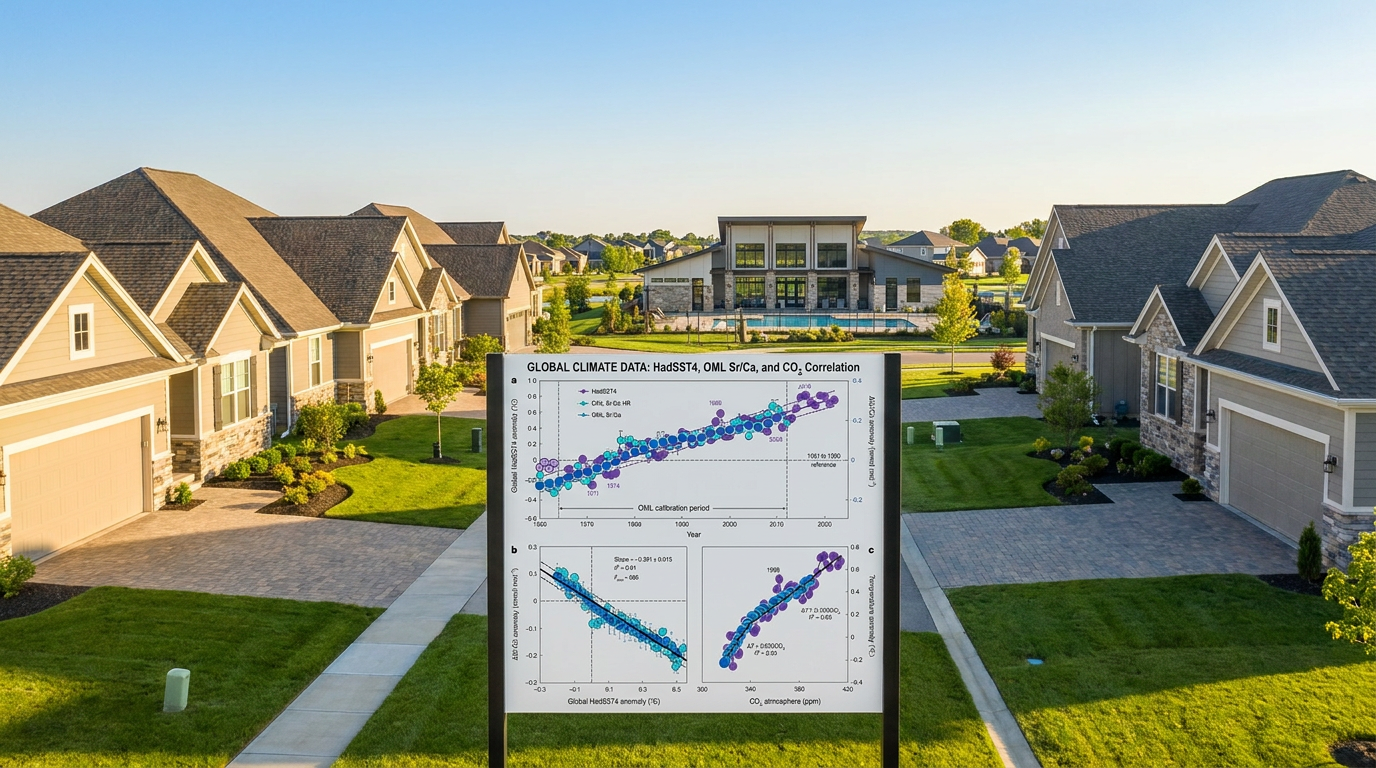
Often referred to within the real estate industry as 'horizontal apartments,' BTR developments are purpose-built neighborhoods consisting of single-family homes, townhouses, or cottages designed exclusively for long-term renters. Unlike traditional scattered-site rentals—where an individual landlord leases out a secondary property or investment home—BTR communities are owned entirely by institutional investors and operated by professional property management companies. They ingeniously combine the physical footprint and privacy of suburban living with the turnkey convenience and centralized maintenance of a luxury apartment complex, creating a hybrid housing model that appeals to a wide variety of modern lifestyles.[5][7]
The sheer scale of this shift toward purpose-built rental homes is unprecedented in modern real estate history. According to comprehensive data from the Harvard Joint Center for Housing Studies, single-family rental completions hit an all-time record of 113,000 units in 2024. Remarkably, single-family homes built specifically as rentals accounted for a staggering 16% of all new rental units delivered that year. What initially began as a niche, localized response to pandemic-era space requirements has rapidly matured into a foundational, highly capitalized pillar of the broader American housing market.[1]

Even as the broader residential construction market normalizes throughout 2025 and early 2026, purpose-built rentals have maintained a historically robust development pipeline. Recent market analysis from Arbor Realty Trust indicates that BTR projects accounted for 7.2% of all single-family housing starts over the past year. While this represents a slight stabilization from peak pandemic highs, it remains significantly above the trailing five-year average. This sustained construction volume signals that major developers view the sector as a durable, long-term operational strategy rather than a fleeting demographic trend.[4]
The primary catalyst fueling the ongoing BTR boom is a stark macroeconomic reality: the widening disconnect between what American households desire in a living space and what they can actually afford to buy. Elevated mortgage rates, record-high home prices, and a chronic, years-long shortage of resale inventory have effectively locked millions of prospective buyers out of the purchase market. Realtor.com notes that in major Sunbelt hubs, the annual income required to comfortably afford a typical starter home has surged well past six figures, leaving many high-earning professionals actively searching for high-quality rental alternatives.[5]
The financial math currently heavily favors the rental model, fundamentally altering how families approach their housing budgets. Research compiled by John Burns Research and Consulting reveals that, on average, the monthly cost of homeownership is currently 39% higher than renting in a comparable BTR community. For many households, the decision to rent a newly built house is no longer viewed as a compromise or a failure to achieve a milestone. Instead, it has become a strategic financial choice that preserves liquid capital while still delivering the desired suburban lifestyle.[2]

The financial math currently heavily favors the rental model, fundamentally altering how families approach their housing budgets.
Beyond simple economics, the core appeal of the Build-to-Rent model lies in its highly attractive hybrid amenity structure. Residents gain immediate access to private, fenced-in backyards, attached personal garages, and extra bedrooms perfectly suited for remote work, while simultaneously enjoying shared community perks. Modern BTR developments frequently feature resort-style swimming pools, state-of-the-art fitness centers, dedicated co-working spaces, and expansive dog parks. Crucially, tenants are entirely insulated from the hidden financial costs and physical labor of homeownership, as on-site property managers handle everything from routine landscaping to emergency HVAC repairs.[5][7]
This unique, low-stress value proposition is attracting a surprisingly affluent and established demographic. While traditional apartment buildings often serve as transitional housing for younger, lower-income renters, the BTR tenant profile skews noticeably older and wealthier. Industry data shows that fully 50% of BTR tenants currently earn a household income exceeding $100,000 annually. The sector is successfully drawing a diverse mix of millennial families seeking access to better school districts, remote workers requiring dedicated home office space, and downsizing baby boomers who desire maintenance-free living without the burden of sharing walls with neighbors.[2]
Because these purpose-built communities cater heavily to established households looking to put down roots, they experience significantly lower resident turnover than standard multifamily apartment complexes. The annual turnover rate for BTR properties consistently hovers between 35% and 40%, compared to the 40% to 50% churn typical of traditional apartments. Furthermore, nearly 60% of BTR tenants report that they plan to remain in their current rental home for at least three years, providing community operators with highly predictable, stable revenue streams that lower overall management costs.[2]

That remarkable tenant stability has transformed Build-to-Rent into a darling asset class for institutional investors and pension funds. Despite a massive wave of new supply entering the market over the past two years, consumer demand continues to absorb the inventory at an impressive rate. Yardi Matrix reports that U.S. single-family BTR occupancy held exceptionally strong at 94.9% through late 2025. For institutional investors, this sustained high occupancy rate proves that the demand is deeply structural, holding up beautifully even as nominal rent growth normalizes across the broader commercial real estate sector.[3]
Geographically, the Build-to-Rent boom is highly concentrated in regions experiencing rapid job growth, corporate relocations, and strong inbound domestic migration. The Sunbelt and Southwest are unequivocally leading the charge, with vast tracts of developable suburban land allowing for the construction of sprawling, master-planned rental communities. Markets like Phoenix, Atlanta, Houston, and Charlotte have seen their single-family rental sectors skyrocket over the past five years. In fact, some of these high-growth cities have registered staggering triple-digit percentage growth in their dedicated BTR inventory since 2019, fundamentally altering their local housing ecosystems.[5]
However, the sector's rapid and highly visible expansion has not been entirely without friction. The massive influx of institutional capital into single-family housing has recently drawn intense legislative scrutiny at both the state and federal levels. As Forbes reports, recent congressional bills have attempted to restrict large investors from purchasing existing single-family homes to convert into rentals. Yet, purpose-built BTR developments are frequently exempted from these strict legislative restrictions, as policymakers increasingly recognize that constructing brand-new rental communities actively adds to the nation's overall housing supply rather than depleting existing starter-home inventory.[6]

There are also emerging operational headwinds for property managers to navigate as the sector matures. While consumer demand remains incredibly robust, pricing power has reached a natural affordability ceiling in certain highly saturated submarkets. BTR homes typically command a 15% to 25% rent premium over traditional apartments, and operators are increasingly relying on temporary leasing concessions to maintain their high occupancy rates. Furthermore, rising operational expenses—driven largely by soaring insurance premiums and escalating local property taxes—are beginning to squeeze profit margins for developers across the country.[2][7]
Despite these localized operational challenges, the long-term trajectory of the Build-to-Rent sector is abundantly clear. It has successfully carved out a permanent, highly desirable middle ground in the American housing market, offering a pragmatic and high-quality solution for a generation caught between the desire for suburban space and the harsh realities of modern affordability. As long as the financial barriers to traditional homeownership remain steep, purpose-built rental communities will continue to thrive, fundamentally redefining what it means to settle down and build a life in the suburbs.[1][7]
How we got here
2012
Institutional investors begin experimenting with single-family rentals following the foreclosure crisis.
2020–2021
The pandemic triggers a surge in demand for space and private yards, accelerating purpose-built rental development.
2024
BTR completions hit a record 113,000 units, capturing 16% of the new rental market.
2025–2026
The sector matures, maintaining high occupancy and attracting affluent renters despite a cooling broader housing market.
Viewpoints in depth
BTR Developers & Investors
Focus on the sector's high occupancy, stable yields, and ability to meet structural housing demand.
Institutional investors and developers view BTR as a low-risk, high-reward asset class that solves a fundamental market inefficiency. They argue that by building net-new housing specifically for renters, they are alleviating the national housing shortage without competing with individual homebuyers for existing inventory. The combination of low tenant turnover and high occupancy rates justifies the massive capital expenditure required to build these communities from the ground up.
Lifestyle Renters
Value the flexibility, modern amenities, and maintenance-free living of a single-family home.
For a growing demographic of high-earning millennials and downsizing baby boomers, renting a house is no longer viewed as a failure to achieve the American Dream. This camp prioritizes mobility and lifestyle over equity accumulation. They highlight the benefits of having a private yard for pets, extra space for remote work, and community amenities like pools and gyms, all without the unpredictable financial burdens of property taxes, roof repairs, or fluctuating mortgage rates.
Housing Market Analysts
Track the macroeconomic shift from homeownership to long-term renting due to affordability constraints.
Economists and housing researchers contextualize the BTR boom as a symptom of a broken for-sale market. They point out that while BTR provides a necessary and high-quality housing alternative, its rise is fundamentally driven by the fact that homeownership is 39% more expensive than renting. Analysts warn that while these communities offer excellent living conditions, they also represent a generational shift away from the traditional wealth-building mechanism of home equity.
What we don't know
- Whether the premium rental rates for BTR homes will hold up if traditional mortgage rates drop significantly.
- How local municipalities will adjust zoning laws long-term to accommodate the 'horizontal apartment' model.
Key terms
- Build-to-Rent (BTR)
- Purpose-built residential communities consisting of single-family homes designed exclusively for long-term renting rather than individual sale.
- Horizontal Apartments
- An industry nickname for BTR communities, reflecting that they offer apartment-style amenities and management but are spread out as detached homes.
- Single-Family Rental (SFR)
- Any standalone house that is rented out, which includes both scattered individual properties and dedicated BTR communities.
- Occupancy Rate
- The percentage of available rental units in a property or market that are currently leased to tenants.
Frequently asked
What is a Build-to-Rent community?
It is a neighborhood of newly constructed single-family homes that are entirely owned by a single company and leased to tenants, much like an apartment complex.
Do Build-to-Rent homes have private yards?
Yes, most BTR homes feature private, fenced-in backyards, which is a major draw for pet owners and families.
Are BTR communities more expensive than apartments?
Typically, yes. Because they offer more square footage, private garages, and yards, BTR homes generally command a 15% to 25% rent premium over traditional apartments.
Who handles maintenance in a BTR home?
Just like in a traditional apartment, the property management company handles all maintenance, including landscaping and appliance repairs, at no extra cost to the renter.
Sources
Source coverage
7 outlets
3 viewpoints surfaced







[1]Harvard Joint Center for Housing StudiesHousing Market Analysts
State of the Nation's Housing: Single-Family Rental Trends
Read on Harvard Joint Center for Housing Studies →[2]John Burns Research and ConsultingBTR Developers & Investors
Build-to-Rent Market Fundamentals and Outlook
Read on John Burns Research and Consulting →[3]Yardi MatrixHousing Market Analysts
U.S. Single-Family Build-to-Rent Occupancy and Rent Growth
Read on Yardi Matrix →[4]Arbor Realty TrustBTR Developers & Investors
SFR/BTR Construction Activity Normalizes
Read on Arbor Realty Trust →[5]Realtor.comLifestyle Renters
Affordability woes fueling growth of BTR developments
Read on Realtor.com →[6]ForbesHousing Market Analysts
Build-To-Rent Expected To Benefit From Rewritten Bill
Read on Forbes →[7]Factlen Editorial TeamLifestyle Renters
Synthesis by Factlen editorial team
Read on Factlen Editorial Team →
Every angle. Every day.
Get real estate stories with full source coverage and perspective breakdowns delivered to your inbox.