
The Quiet Revival of the 'Third Place' in Modern Urban Culture
Driven by a desire for real-world connection, young adults are logging off and rebuilding physical community spaces to combat the loneliness of the digital age.
By Factlen Editorial Team
- Urban Planners & Civic Leaders
- Focuses on the physical infrastructure of cities, advocating for walkable neighborhoods and accessible public goods.
- Gen Z Community Builders
- Prioritizes logging off and creating intentional, IRL gatherings centered around shared hobbies and active participation.
- Mental Health Professionals
- Views third places primarily as a buffer against anxiety and loneliness, emphasizing the psychological benefits of 'weak ties'.
- Equity & Access Advocates
- Warns against the commercialization of social spaces and the use of hostile architecture that excludes marginalized groups.
- Cultural Analysts
- Examines the broader societal shift from digital consumption back to physical community building.
What's not represented
- · Rural residents with limited physical infrastructure
- · Elderly populations facing mobility barriers
Why this matters
As digital fatigue and screen-induced loneliness reach critical levels, the resurgence of physical community spaces offers a tangible blueprint for improving mental health and civic engagement. Understanding how to find and fund these spaces is essential for building resilient, connected neighborhoods.
Key points
- The 'third place'—a social environment distinct from home and work—is experiencing a cultural revival.
- Gen Z and millennials are actively seeking offline connections to combat screen-induced loneliness.
- Modern third places are shifting from geographic hubs to interest-based groups like run clubs and hobby spaces.
- Commercialization threatens accessibility, pricing lower-income residents out of community life.
- Urban planners are designing 'hybrid' public spaces to provide free, accessible gathering spots.
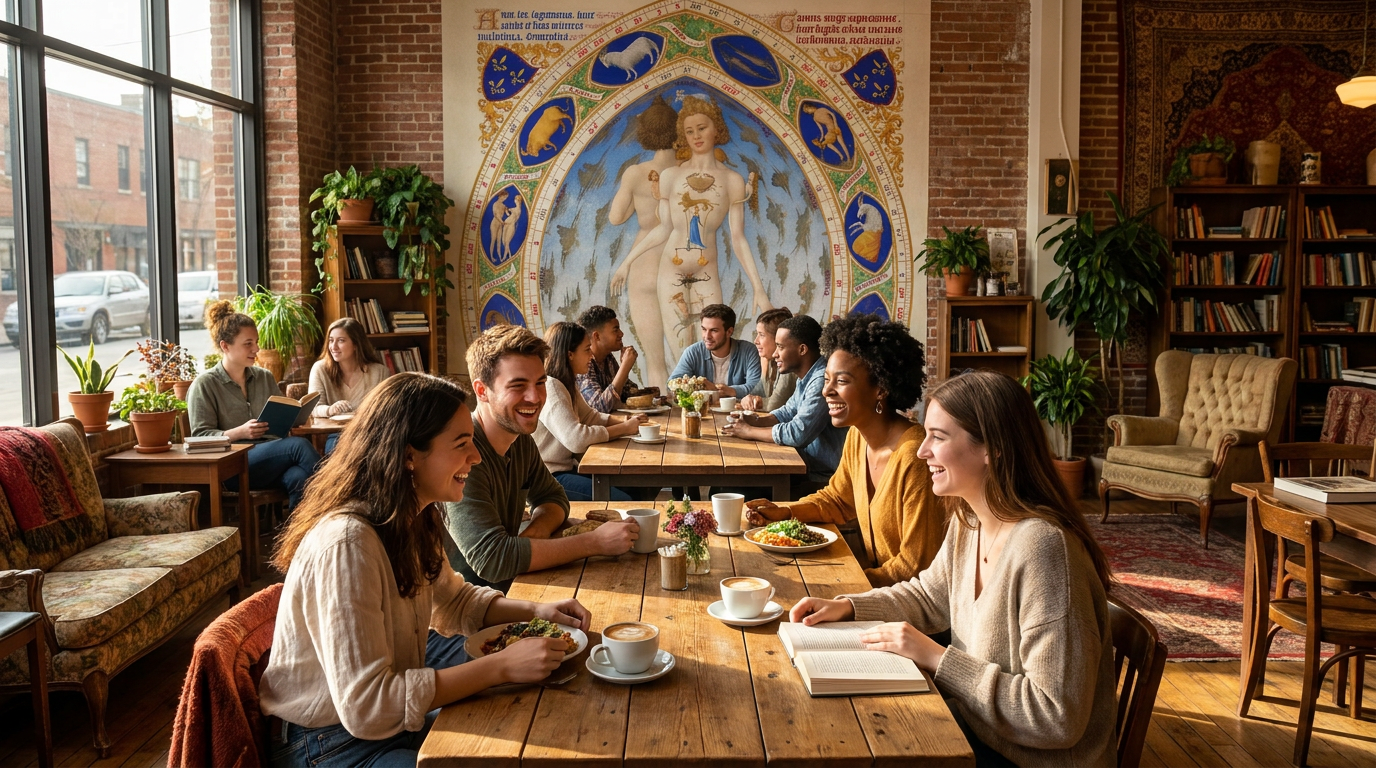
For a generation that came of age during global lockdowns and digital-first friendships, the novelty of the online world has worn thin. Across major cities, a quiet but powerful counter-current is pulling young adults back to the physical world. Tired of atomized, screen-mediated lives, people are actively seeking out spaces where they can simply exist alongside others without the pressure of productivity or performance. This is the post-pandemic crisis of connection, and the solution taking root isn't a new app or a virtual metaverse—it is the revival of the "third place."[1][7]
The concept of the third place was popularized by urban sociologist Ray Oldenburg in his 1989 book, The Great Good Place. If the "first place" is home, where we rest and manage domestic duties, and the "second place" is work or school, where we perform and produce, the third place is the neutral ground. It is the informal public gathering space—the local cafe, the public park, the library, or the neighborhood pub. These spaces are defined by their low barrier to entry, their lack of formal obligation, and the presence of "regulars" who help foster a sense of belonging and civic identity.[5][8]
Historically, these spaces were the crucibles of community life. Mid-20th-century America was rich with diners, bowling alleys, VFW halls, and church basements. But over the past several decades, a combination of suburban sprawl, car-centric urban planning, and the rise of big-box retail hollowed out these human-scale spaces. Neighborhoods were increasingly designed for privacy and commuting rather than spontaneous gathering. Public plazas were often built as sterile technical concessions for corporate developers rather than genuine social destinations, leaving communities physically fractured.[5][6]
The statistical reality of this decline is stark. According to the 2024 American Social Capital Survey, our relationship to shared public spaces has fundamentally changed. Sixty-three percent of Americans reported that they seldom or never visited a public library in the past year, and half said the same about public parks. Even before the pandemic accelerated the isolation, the fabric of casual socialization was fraying; between 2014 and 2019, the average time Americans spent with friends dropped by 37 percent.[5]

As physical third places vanished, the internet promised to fill the void. Early social media platforms and digital forums were heralded as the ultimate, borderless third places—spaces where anyone could find their tribe. For a time, especially during the height of COVID-19 lockdowns, digital networks functioned as de facto community centers. But as the internet matured into an algorithmic, highly monetized ecosystem, the promise of genuine connection gave way to performative personal branding and passive consumption.[1][6]
The failure of the digital third place has had profound psychological consequences. Young adults today spend an average of seven to ten hours daily on screens, substituting the rich, multi-sensory experience of physical community for the dopamine hits of endless scrolling. Mental health professionals note that this digital substitution has driven alarming rates of loneliness and anxiety. Recognizing this deficit, a cultural shift is underway. Global social media use, which peaked in 2022, has reportedly declined by 10 percent as users increasingly recognize that virtual spaces cannot replace the biological need for face-to-face interaction.[1][3]
In response, Gen Z and younger millennials are leading an IRL (in real life) rebellion. They are consciously swapping the fleeting dopamine of digital validation for the oxytocin of real-world social connection. This demographic is logging off and linking up, driving a proliferation of in-person experiences designed to foster socially organic connections. It is a transition from a consumer mindset—passively absorbing content—to a participant mindset, where individuals actively co-create their community experiences.[1][7]
In response, Gen Z and younger millennials are leading an IRL (in real life) rebellion.
This revival is taking new, creative forms. While traditional diners and bowling alleys may be fewer in number, they are being replaced by run clubs, listening bars, community gardens, and curated supper clubs. Hobbyism is a major driver of this trend; people are gathering around shared interests like street skating, crafting, or book reading, often with strict "no phones" policies. These modern third places provide a welcome alternative to dating apps and networking events, emphasizing presence and shared activity over transactional socializing.[1][6][7]

The psychological benefits of these spaces are immense. Regular participation in a third place creates a powerful buffer against daily stressors. Psychologists emphasize the importance of "weak ties"—the casual, low-stakes relationships we have with the barista, the person on the next yoga mat, or the regular at the dog park. These interactions provide emotional support, diverse perspectives, and a sense of belonging that supports autonomy and mental well-being, particularly for young adults navigating the transition to independence.[3]
Urban planners are increasingly recognizing that third places are not just lifestyle amenities; they are critical civic infrastructure. The concept of the "15-minute city"—where residents can access work, home, and social spaces within a short walk or bike ride—relies heavily on the presence of third places. Proximity breeds familiarity. When people interact with their neighbors daily in a local courtyard or cafe, natural accountability and mutual care arise, transforming mere thoroughfares into resilient ecosystems of belonging.[4]
However, the modern revival of the third place faces significant hurdles, chief among them being commercialization and cost. As public funding for civic spaces has dwindled, private entities have stepped in to fill the void. Today, the most accessible third places are often commercial—coffee shops, boutique gyms, and specialized hobby spaces. In major cities, where a single latte can cost upwards of six dollars, these spaces are becoming prohibitively expensive for regular, casual visits, effectively pricing out lower-income residents from community life.[2][6]
This commercialization exacerbates existing urban inequalities. When third places require a financial transaction to exist within them, they cease to be true levelers of social status. Furthermore, the physical design of public spaces often discourages free, unstructured gathering. The rise of hostile architecture—such as public benches with armrest dividers designed to prevent sleeping, or the removal of public restrooms—deliberately excludes marginalized groups, particularly those experiencing housing instability, from participating in the civic landscape.[2]

There is also a structural shift in who these new spaces serve. Traditional third places, like the neighborhood park or local diner, served geographic communities. They were inherently diverse because they drew everyone from the immediate area, forcing cross-cultural interaction. Modern third places, by contrast, increasingly serve communities of interest—niche groups gathered around specific hobbies or identities. While this strengthens bonds between like-minded individuals, sociologists warn it may reduce the broad, pluralistic exposure that Oldenburg originally championed.[6]
To combat these challenges, civic leaders and urban designers are pioneering "hybrid third places." These initiatives seek to blend the appeal of commercial spaces with the accessibility of public goods. Examples include "library parks" that integrate outdoor green spaces with lending kiosks and cultural events, or neighborhood pocket parks designed with seating and water features to invite both planned and spontaneous interactions. By reimagining existing infrastructure, cities can create welcoming environments that don't require a purchase to participate.[4]
On an individual level, community organizers advocate for a "Third Place Reset"—a conscious effort to build a social life without lifestyle inflation. The goal is to find one or two spots that naturally fit into a weekly routine without becoming a financial burden. Guidelines suggest keeping the cost of a third place to under one or two percent of a monthly budget, perhaps by utilizing free community centers, volunteering, or simply capping cafe spending. The emphasis is on sustainable, repeated proximity rather than expensive, one-off events.[8]
Ultimately, the revival of the third place is a testament to the enduring human need for shared physical presence. It is a quiet revolution against the isolation of the digital age, proving that the most valuable interactions cannot be measured in likes or follows. By reclaiming the spaces between home and work, a new generation is discovering that connection doesn't require a grand plan or a perfect algorithm—it simply requires a place to show up, week after week, and belong.[7][8]
How we got here
1989
Sociologist Ray Oldenburg coins the term 'Third Place' in his book The Great Good Place.
2014–2019
Time spent with friends drops by 37% in the U.S. as digital substitution accelerates.
2020–2022
The COVID-19 pandemic forces the closure of physical gathering spaces, spiking global loneliness.
2022
Global social media usage peaks before beginning a gradual 10% decline.
2025–2026
A cultural resurgence of IRL community spaces takes hold, led by Gen Z's push for offline connection.
Viewpoints in depth
Urban Planners & Civic Leaders
Advocating for the integration of social spaces into daily city infrastructure.
This camp argues that third places are not mere lifestyle amenities but essential civic infrastructure. They champion the '15-minute city' model, where residents can access work, home, and social spaces without relying on a car. By prioritizing public goods like library parks and community gardens, they believe cities can foster natural accountability, reduce isolation, and build resilient neighborhoods that support daily, spontaneous interactions.
Mental Health Professionals
Focusing on the psychological necessity of casual, in-person interactions.
For psychologists and health experts, the revival of the third place is a critical public health intervention. They point to the alarming rates of screen-induced loneliness and anxiety, arguing that digital networks fail to provide the oxytocin generated by face-to-face contact. This perspective emphasizes the value of 'weak ties'—casual relationships with acquaintances that provide a low-stakes buffer against daily stressors and foster a vital sense of belonging.
Equity & Access Advocates
Highlighting the dangers of commercializing community spaces.
While celebrating the return to physical gathering, this group warns that modern third places are becoming increasingly exclusionary. They point out that when the primary social hubs are six-dollar-a-latte cafes or boutique gyms, lower-income residents are priced out of community life. Furthermore, they actively campaign against hostile architecture—such as divided benches—that deliberately prevents marginalized populations from utilizing free public spaces.
What we don't know
- Whether the current surge in hobby-based third places will endure long-term or fade as a post-pandemic fad.
- How municipal governments will fund the creation and maintenance of free public spaces in an era of tightening city budgets.
- The long-term sociological impact of shifting from geographically diverse third places to niche, interest-based communities.
Key terms
- Third Place
- An informal public gathering space, distinct from home and work, where people can connect and build community.
- First Place
- A person's home and primary residence, associated with rest and domestic duties.
- Second Place
- A person's workplace or school, associated with productivity, performance, and formal obligations.
- Hostile Architecture
- Urban design strategies, such as divided benches, intended to restrict how public spaces are used, often targeting the homeless.
- 15-Minute City
- An urban planning concept where most daily necessities and services are located within a 15-minute walk or bike ride.
- Weak Ties
- Casual, low-stakes acquaintanceships—like knowing a local barista—that contribute significantly to a person's sense of belonging.
- Social Capital
- The networks of relationships among people who live and work in a particular society, enabling that society to function effectively.
Frequently asked
What exactly is a third place?
A third place is a neutral, informal gathering spot outside of home and work, such as a cafe, park, or library, where people go to socialize and relax.
Why did traditional third places disappear?
Suburban sprawl, car-centric urban planning, and the rise of digital social networks gradually replaced physical community spaces over the last few decades.
How is Gen Z changing the third place?
Young adults are leading a shift away from screen time, creating new physical communities centered around shared activities like run clubs, supper clubs, and hobby groups.
What is a hybrid third place?
It is a space that blends different community functions to increase accessibility, such as a public park integrated with a library or a community garden.
How can I find a third place on a budget?
Experts recommend seeking out free public spaces like libraries or parks, or capping spending at commercial venues, keeping the cost under 1-2% of your monthly budget.
Sources
Source coverage
8 outlets
5 viewpoints surfaced








[1]Seen & UnseenGen Z Community Builders
The Quiet Revival of Third Places
Read on Seen & Unseen →[2]Urban InstituteEquity & Access Advocates
The Decline of Third Places and the Impact on Urban Equity
Read on Urban Institute →[3]Newport HealthcareMental Health Professionals
How Communities Can Create and Support Third Places for Young Adults
Read on Newport Healthcare →[4]Congress for the New UrbanismUrban Planners & Civic Leaders
Fighting loneliness with parks and third places
Read on Congress for the New Urbanism →[5]Washington MonthlyUrban Planners & Civic Leaders
Bowling Alone, Still: How to Revive Third Spaces
Read on Washington Monthly →[6]ArchDailyEquity & Access Advocates
The Evolution of Third Places in Architecture
Read on ArchDaily →[7]Young HollywoodGen Z Community Builders
The Third Place Takes Over
Read on Young Hollywood →[8]Factlen Editorial TeamCultural Analysts
Synthesis by Factlen editorial team
Read on Factlen Editorial Team →
Every angle. Every day.
Get lifestyle stories with full source coverage and perspective breakdowns delivered to your inbox.