
How Mushroom Leather and EU Regulations Are Rewiring Luxury Fashion
As the European Union prepares to mandate Digital Product Passports by 2027, luxury houses are rapidly scaling up their use of lab-grown mycelium leather to meet strict new transparency and emissions standards.
By Factlen Editorial Team
- Biotech Innovators
- Startups focused on scaling bio-fabricated materials to commercial volumes.
- Heritage Luxury Houses
- Legacy brands balancing sustainability mandates with uncompromising quality standards.
- EU Regulators & Compliance Experts
- Policymakers and analysts enforcing transparency and ending greenwashing in the fashion industry.
What's not represented
- · Traditional livestock farmers and tanneries facing disrupted supply chains.
- · Fast-fashion manufacturers struggling to afford the transition to bio-materials.
Why this matters
The incoming EU Digital Product Passport will force fashion brands to prove their sustainability claims with hard data. Mycelium leather offers a scalable, low-emission alternative to animal hides, fundamentally changing how high-end goods are manufactured and authenticated.
Key points
- The EU will require Digital Product Passports (DPPs) for textiles by 2027, forcing brands to disclose their environmental footprint.
- To meet these strict transparency mandates, luxury houses are replacing animal hides with lab-grown mycelium leather.
- Mycelium leather is cultivated from fungal root networks in under two weeks using agricultural waste.
- The bio-fabricated material uses up to 99% less water and emits 95% less CO2 than traditional bovine leather.
- Heritage brands like Hermès and Stella McCartney are already integrating the material into their high-end collections.
The traditional landscape of luxury fashion, long reliant on premium calfskin and exotic animal hides, is meeting a hard regulatory wall in Europe. For decades, sustainability in high fashion was often relegated to limited-edition capsule collections or vague marketing pledges. Today, the industry is undergoing a structural rewiring as impending legislation forces heritage brands to fundamentally rethink their material supply chains.[4][5]
The primary catalyst for this shift is the European Union's Ecodesign for Sustainable Products Regulation (ESPR), which mandates a Digital Product Passport (DPP) for textiles. While the overarching framework entered into force in 2024, the specific data requirements for apparel and footwear are expected to become strictly mandatory by 2027.[5][7]
Under this new directive, brands must attach a scannable QR code or NFC tag to every item sold within the EU. This digital passport will reveal the product's exact material composition, country of origin, chemical compliance, and comprehensive environmental footprint. If a brand cannot verify its supply chain data, it risks market withdrawal and severe financial penalties.[4][7]

Faced with these uncompromising transparency rules, luxury houses are rapidly pivoting away from resource-heavy animal agriculture and petroleum-based synthetic plastics. The breakout solution capturing the industry's attention is mycelium—the intricate, root-like vegetative network of fungi.[1][2]
What was once viewed as a science-fair curiosity has officially transitioned into a runway reality. Biotech startups have successfully engineered methods to grow mycelium into a dense material that mimics the buttery, supple feel and durability of premium calfskin, catching the eye of the world's most exclusive design houses.[2][6]
The cultivation mechanism is remarkably efficient and entirely circular. Fungal spores are fed agricultural byproducts—such as sawdust, corn stalks, or hemp hurds—and placed in dark, climate-controlled vertical trays. The controlled environment allows the fungi to thrive without the need for vast tracts of arable land.[2][6]
Within seven to fourteen days, the mycelium knits itself into a thick, flexible mat. It is then harvested, dried, and tanned using plant-based dyes. Crucially, this process entirely avoids the toxic chromium chemicals that are standard in traditional leather processing, ensuring the final product is fully biodegradable.[2]

The environmental mathematics make mycelium highly attractive to brands preparing for the incoming digital passports. Producing mushroom leather requires up to 99 percent less water than raising livestock for bovine leather, a staggering reduction that immediately improves a brand's ecological metrics.[2]
The environmental mathematics make mycelium highly attractive to brands preparing for the incoming digital passports.
Furthermore, the bio-fabrication process generates roughly 95 percent fewer carbon dioxide emissions. When the EU's digital passports begin exposing the true climate cost of every garment to regulators and consumers, mycelium's footprint will look exceptionally clean compared to traditional alternatives.[2][4]

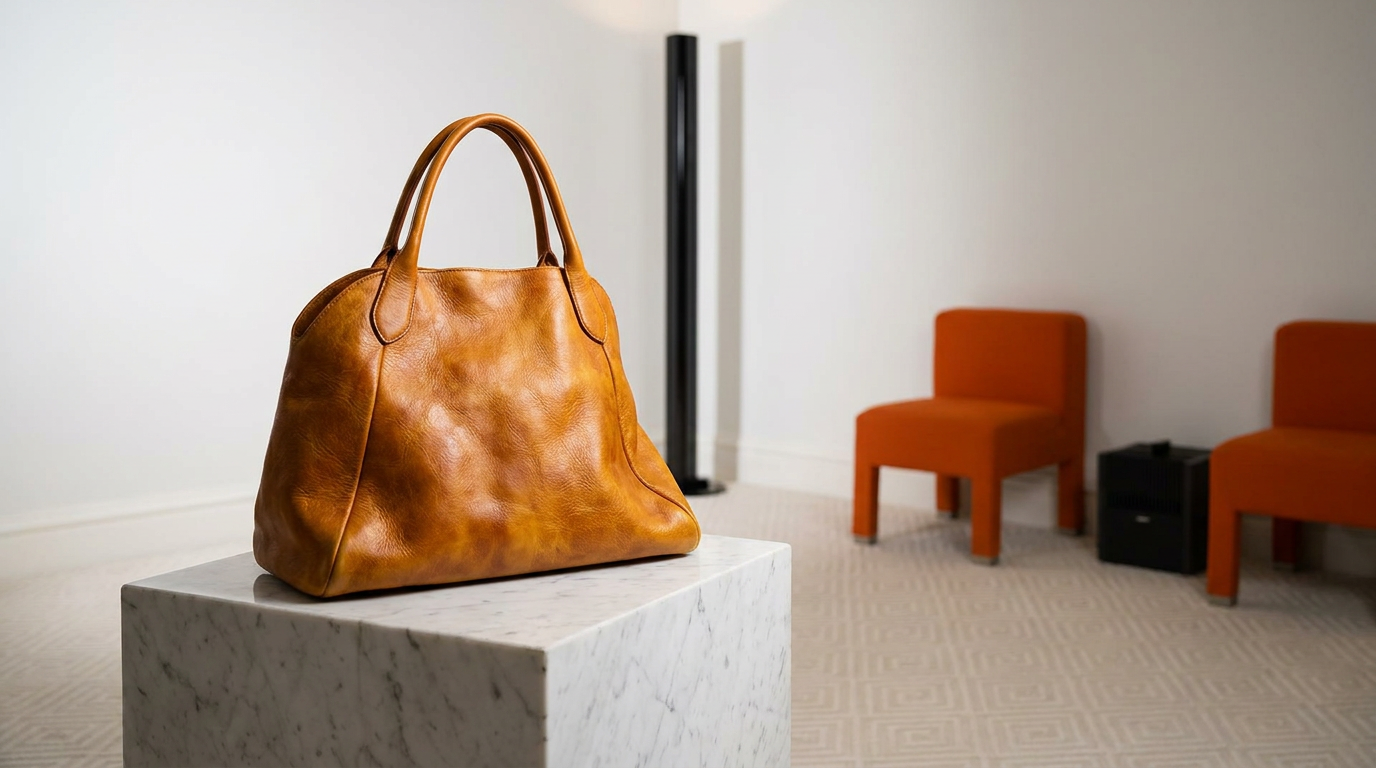
Heritage brands are already integrating the material at the highest levels of craftsmanship. Hermès, a maison globally renowned for its uncompromising leather standards, partnered with the California-based startup MycoWorks to develop an exclusive amber-hued mycelium material called Sylvania.[3][6]
This bespoke bio-material has been used to reimagine the iconic Hermès Victoria travel bag. The collaboration proved to the broader industry that bio-fabricated textiles can meet the rigorous durability, aging, and aesthetic demands of a legacy luxury house.[3][6]
Stella McCartney, a long-time pioneer in cruelty-free fashion, has similarly expanded her use of the technology. After early experiments with Bolt Threads' Mylo material, she has recently partnered with the startup Hydefy to develop new luxury handbags that stand shoulder-to-shoulder with animal leather.[1][3]
The financial backing for these biotech innovators is substantial, reflecting the urgent commercial demand. Startups like MycoWorks, Ecovative, and Bolt Threads have raised hundreds of millions of dollars to build commercial-scale facilities capable of supplying global fashion conglomerates.[1][5]
Ecovative, for instance, recently launched a line of hide-like panels and foam replacements, while Berlin-based Spora Biotech has optimized its growth cycles to under nine days, proving that the technology can scale rapidly to meet tight production schedules.[2]
Market analysts project that the mycelium leather sector, which was valued at just $12 million in 2024, will surge to $336 million by 2033 as adoption accelerates and production costs continue to drop.[1]

For consumers, this shift represents a new era of verifiable luxury. The incoming digital passports will ensure that sustainability is no longer hidden in fine print or obscured by clever marketing campaigns.[3][4]
How we got here
2021
Hermès unveils a prototype of its Victoria travel bag reimagined with Sylvania, an exclusive mycelium leather developed with MycoWorks.
2022
Stella McCartney launches the Frayme Mylo bag, becoming one of the first designers to commercially release a luxury handbag made from mushroom leather.
July 2024
The EU's Ecodesign for Sustainable Products Regulation (ESPR) officially enters into force, setting the stage for mandatory digital tracking.
2026
Biotech startups rapidly scale commercial production facilities as fashion brands pilot their Digital Product Passport systems.
2027
The anticipated deadline for mandatory Digital Product Passport compliance for textiles sold within the European Union.
Viewpoints in depth
Biotech Innovators
Startups focused on scaling bio-fabricated materials to commercial volumes.
Companies like MycoWorks, Ecovative, and Bolt Threads view mycelium not as a synthetic compromise, but as a superior, programmable material. By controlling the growth environment, they can customize the thickness, flexibility, and texture of the leather before it is even harvested. Their primary challenge is scaling production facilities rapidly enough to meet the massive volume demands of global luxury conglomerates while driving down the per-square-foot cost.
Heritage Luxury Houses
Legacy brands balancing sustainability mandates with uncompromising quality standards.
For historic fashion houses, the adoption of alternative materials carries reputational risk. Brands like Hermès and Stella McCartney emphasize that any new textile must stand shoulder-to-shoulder with traditional calfskin in terms of durability, hand-feel, and aging. They view mycelium as a way to future-proof their supply chains against climate volatility and incoming EU regulations, without sacrificing the exclusivity and craftsmanship their clients expect.
EU Regulators
Policymakers enforcing transparency and ending greenwashing in the fashion industry.
European regulators driving the Ecodesign for Sustainable Products Regulation (ESPR) argue that voluntary sustainability pledges have failed. By mandating the Digital Product Passport, they aim to force brands to compete on verifiable environmental metrics rather than marketing narratives. Regulators see the shift toward low-impact materials like mycelium as proof that strict compliance rules can successfully spur industrial innovation.
What we don't know
- Whether biotech startups can scale production fast enough to meet the volume demands of the broader fashion industry.
- How traditional tanneries and agricultural supply chains will adapt to the rising dominance of bio-fabricated materials.
- The exact technical specifications and data requirements the EU will finalize for the 2027 Digital Product Passport rollout.
Key terms
- Mycelium
- The thread-like, vegetative part of a fungus, consisting of a network of fine white filaments that can be grown into solid materials.
- Digital Product Passport (DPP)
- An upcoming EU regulatory requirement that mandates a digital record (accessible via QR or NFC) detailing a product's material composition, origin, and environmental impact.
- Ecodesign for Sustainable Products Regulation (ESPR)
- The overarching European Union framework designed to make products sold in the EU more durable, reusable, repairable, and energy-efficient.
- Bio-fabrication
- The process of using living cells, microorganisms, or biological systems to grow materials, such as cultivating fungi to produce leather alternatives.
Frequently asked
What is mycelium leather made from?
It is grown from mycelium, the root-like vegetative network of fungi. The fungi are fed agricultural waste, such as sawdust or hemp hurds, and grow into a dense mat that is then tanned and finished.
When does the EU Digital Product Passport take effect?
The overarching regulation entered into force in 2024, with mandatory compliance for textiles and footwear expected to begin rolling out in 2027.
Does mushroom leather feel like real leather?
Yes. When properly processed, mycelium leather mimics the supple, buttery texture and durability of premium animal hides, which is why top luxury brands are adopting it.
Is mycelium leather biodegradable?
Yes. Unlike synthetic 'pleather' made from petroleum-based plastics like polyurethane, pure mycelium leather is fully compostable at the end of its lifecycle.
Sources
Source coverage
7 outlets
3 viewpoints surfaced





[1]TrellisBiotech Innovators
Hèrmes and Stella McCartney embrace a leather alternative: fungus
Read on Trellis →[2]California Fashion WeekBiotech Innovators
Mushroom Leather Is Having a Moment – And It Might Just Save Fashion
Read on California Fashion Week →[3]OrzylaHeritage Luxury Houses
Mushroom leather: the new standard for luxury?
Read on Orzyla →[4]Istituto MarangoniEU Regulators & Compliance Experts
What the EU Digital Product Passport Means for Fashion Brands
Read on Istituto Marangoni →[5]TrusTraceEU Regulators & Compliance Experts
The EU Digital Product Passport: A Guide for Fashion Brands
Read on TrusTrace →[6]Harper's Bazaar SingaporeHeritage Luxury Houses
Why Luxury Brands Are Betting Big On Mycelium Leather
Read on Harper's Bazaar Singapore →[7]Portugal Clothing FactoryEU Regulators & Compliance Experts
The Digital Product Passport Timeline for Textiles
Read on Portugal Clothing Factory →

Every angle. Every day.
Get lifestyle stories with full source coverage and perspective breakdowns delivered to your inbox.