
The Cloud is Out: Why Local Control is the Biggest Smart Home Upgrade of 2026
Frustrated by lag and internet outages, consumers are abandoning cloud-dependent smart devices in favor of local hubs. Powered by the Matter protocol, the new era of home automation prioritizes speed, privacy, and offline reliability.
By Factlen Editorial Team
- Open-Source Advocates
- Prioritize absolute privacy, data ownership, and subscription-free local execution.
- Mainstream Tech Consumers
- Value reliability, instant response times, and 'it just works' simplicity.
- Interoperability Standards
- Focus on unifying the fragmented market through shared protocols like Matter.
What's not represented
- · Cloud Service Providers
- · Legacy Hardware Manufacturers
Why this matters
Moving your smart home to local control means your lights, locks, and security systems will respond instantly and continue working even when your internet goes down. It also ensures your daily habits and private data stay inside your house rather than being sold or analyzed on corporate cloud servers.
Key points
- Local control processes smart home commands inside the house, eliminating cloud lag.
- The Matter protocol mandates local communication over Wi-Fi and Thread.
- Local hubs keep automations running even during internet outages.
- Edge AI now allows local hubs to process camera feeds and voice commands privately.
- Open-source platforms like Home Assistant have reached millions of mainstream users.
The early promise of the smart home was a frictionless utopia, but the reality was often a frustrating web of cloud dependencies. For years, asking a voice assistant to turn on the living room lights meant the command had to travel from your house to a corporate server hundreds of miles away, process the logic, and travel all the way back just to flip a switch. This architecture was inherently flawed, creating a system that was only as reliable as your internet provider.[1]
This cloud-first approach introduced noticeable lag, mounting privacy concerns, and a glaring vulnerability: if your Wi-Fi dropped, your house effectively stopped working. In 2026, the industry is undergoing a massive architectural shift to solve this exact problem. The new standard is "local control," a paradigm where the brain of the smart home lives entirely within the physical walls of the house, severing the reliance on remote servers.[1][5]
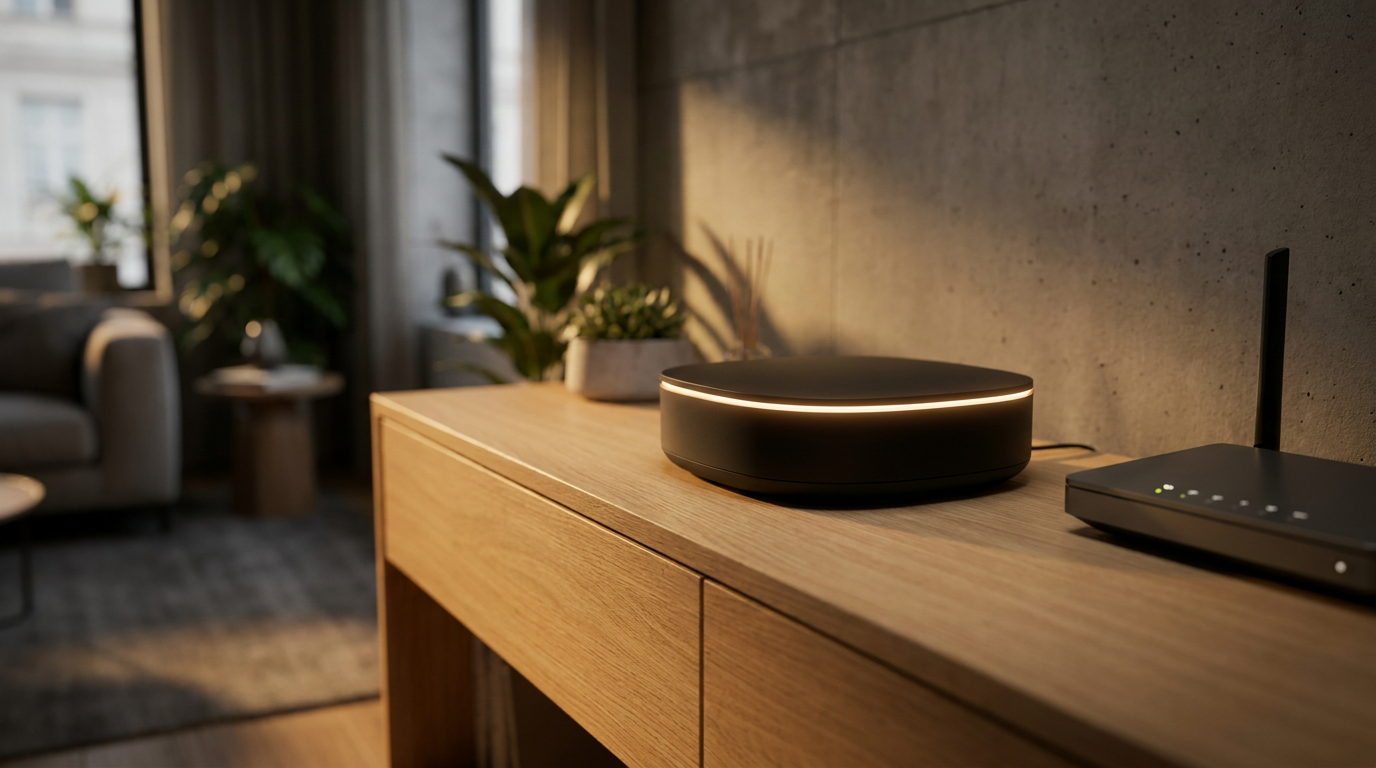
Local control means that smart devices communicate directly with a central hub operating on your own home network. When a motion sensor detects movement in the hallway, it sends a signal straight to that local hub, which instantly triggers the lights. The result is a system that responds in milliseconds rather than seconds, creating an experience that finally feels as immediate as flipping a traditional analog switch.[3][6]

The push for local execution is being driven by a combination of consumer fatigue with subscription models and a growing awareness of digital privacy. Major tech companies have faced intense regulatory scrutiny over their data practices, and users are increasingly reluctant to hand over the intimate details of their daily routines—when they wake up, when they leave, and which rooms they occupy—to third-party data brokers.[1][4]
The Matter protocol has been the crucial catalyst for this local revolution. Originally launched in late 2022 and heavily refined through subsequent updates, Matter was designed by an unprecedented alliance of tech giants to unify the deeply fragmented smart home market. But its most important feature wasn't just cross-brand interoperability; it was the strict mandate for local communication.[3][6]
Under the Matter standard, devices are required to communicate locally over Wi-Fi, Ethernet, or Thread—a low-power mesh networking technology designed specifically for the smart home. This means that a Matter-certified smart plug from one brand can talk directly to a Matter hub from a competing brand without ever pinging the open internet, ensuring that your data never leaves your property.[2][3]
As local control becomes the gold standard, open-source platforms have surged from hobbyist niches to mainstream powerhouses. Home Assistant, the leading open-source smart home operating system, surpassed 2 million active households by the end of 2025, proving that consumers are eager to take ownership of their home's digital infrastructure.[2]

As local control becomes the gold standard, open-source platforms have surged from hobbyist niches to mainstream powerhouses.
Platforms like Home Assistant Green, Hubitat, and Homey Pro now offer users a "plug-and-play" local hub experience that requires no coding knowledge. These devices process 100% of core automations locally. If a severe storm knocks out the neighborhood's internet connection, the home's security routines, climate control, and lighting schedules continue to function flawlessly.[3][5]
This offline reliability is no longer just a luxury convenience; it is an absolute necessity as homes become more complex. Modern setups integrate critical infrastructure like HVAC systems, smart locks, water leak detectors, and energy management panels. Relying on a remote cloud server to unlock your front door or manage your solar battery is increasingly viewed by experts as an unacceptable security risk.[4][5]
The shift away from the cloud is also fundamentally changing the economics of the smart home. For years, manufacturers sold cheap hardware and subsidized the costs by locking users into monthly cloud subscriptions for basic features like video storage or advanced automations. Local hubs flip this model, requiring a slightly higher upfront hardware investment but entirely eliminating ongoing monthly fees.[1][5]
Even artificial intelligence, the defining technology of the decade, is being localized. Early smart home AI relied on massive cloud-based large language models to parse voice commands or analyze security camera footage. Now, advances in edge computing allow local hubs to run lightweight, highly capable AI models directly on the device itself.[2][4]

These local AI agents can proactively suggest automations based on household behavior or analyze camera feeds for package detection without uploading a single frame of video to the internet. This provides the intelligence and adaptability of modern AI with the ironclad privacy of a closed, offline network.[2][6]
However, the transition to a fully local smart home is not entirely without friction. While Matter has smoothed out many compatibility issues, users still face a learning curve when migrating from simple, cloud-dependent smartphone apps to comprehensive local dashboards that manage the entire home's logic.[1][6]
Furthermore, some legacy devices simply cannot be updated to support local protocols, forcing homeowners to either replace perfectly good hardware or maintain a hybrid system where some devices still rely on the cloud. Bridging older infrared and radio-frequency appliances into a modern local ecosystem remains a technical hurdle for those unwilling to upgrade.[3][5]

Despite these transitional challenges, the trajectory of the smart home is clear. The era of the cloud-dependent house is ending, replaced by systems that prioritize speed, privacy, and resilience. By bringing the brain of the home back inside the house, technology is finally delivering on the promise of a truly smart, self-sufficient living space.[1][6]
How we got here
2014
Amazon launches the Echo, kicking off the era of cloud-dependent, voice-controlled smart homes.
October 2022
The Matter 1.0 standard is officially released, introducing a unified framework for local device communication.
March 2025
Major tech companies begin deprecating local voice processing on older smart speakers, pushing users toward cloud-only models.
Late 2025
Open-source local platform Home Assistant surpasses 2 million active households globally.
2026
Local control becomes the dominant consumer demand, with manufacturers prioritizing offline reliability and edge AI.
Viewpoints in depth
Open-Source Advocates
Prioritize absolute privacy, data ownership, and subscription-free local execution.
This camp, heavily represented by the Home Assistant community, argues that a home's infrastructure should never rely on external corporate servers. They view cloud-dependent smart devices as rented hardware that can be bricked or monetized at any time. For these advocates, local control is not just about speed; it is a fundamental digital rights issue, ensuring that users own their data and their automations in perpetuity.
Mainstream Tech Consumers
Value reliability, instant response times, and 'it just works' simplicity.
For the average homeowner, the appeal of local control is purely practical. They are frustrated by the noticeable lag of cloud-routed commands and the annoyance of lights failing to turn on during an internet outage. This group welcomes local hubs that offer plug-and-play simplicity, prioritizing a seamless, frictionless living experience over the ideological purity of open-source software.
Interoperability Standards
Focus on unifying the fragmented market through shared protocols like Matter.
Industry alliances and hardware manufacturers emphasize that local control is only useful if devices can actually talk to each other. They champion the Matter protocol as the critical bridge that allows competing brands to coexist on the same local network. From their perspective, the true breakthrough is creating a standardized language that makes local execution viable for mass-market adoption without requiring deep technical knowledge.
What we don't know
- How quickly legacy cloud-only devices will be phased out of the market entirely.
- Whether major tech giants will attempt to introduce new subscription models for advanced local AI features.
- How seamlessly older homes with complex radio-frequency setups will be able to bridge into Matter-only environments.
Key terms
- Matter Protocol
- A universal smart home standard that allows devices from different brands to communicate securely and locally.
- Thread
- A low-power, wireless mesh networking technology designed specifically for smart home devices to talk to each other without relying on Wi-Fi.
- Edge Computing
- Processing data directly on a local device (like a smart hub) rather than sending it to a distant cloud server.
- Zigbee
- An older, widely used wireless protocol for smart home devices that also operates locally but lacks the cross-brand interoperability of Matter.
- Local Hub
- A physical device inside your home that acts as the central brain for your smart devices, processing rules and automations.
Frequently asked
What does 'local control' mean in a smart home?
It means your smart devices communicate directly with a hub inside your house, rather than sending commands to a remote cloud server over the internet.
Will my smart home work if the internet goes down?
Yes. If your system is built on local control and the Matter protocol, your core automations, lights, and sensors will continue to function without an internet connection.
Do I need to replace all my old smart devices?
Not necessarily. Many local hubs can act as bridges to connect older Wi-Fi or Zigbee devices, though upgrading to Matter-certified devices ensures the best local performance.
Is local control more secure?
Yes. Because your data and daily routines are processed entirely within your home network, there is significantly less risk of remote hacking or corporate data harvesting.
Sources
Source coverage
6 outlets
3 viewpoints surfaced





[1]ForbesMainstream Tech Consumers
The 2026 Smart Home: Why Going Local Is The Best Upgrade
Read on Forbes →[2]Home AssistantOpen-Source Advocates
The Age of the Open Home: Making Home Assistant Truly Smart
Read on Home Assistant →[3]HomeyInteroperability Standards
Matter and Local Control: Why Your Smart Home is Getting Faster
Read on Homey →[4]Repenic Smart Home InsightsMainstream Tech Consumers
Future Smart Home Trends Forecast 2026
Read on Repenic Smart Home Insights →[5]LinknLinkOpen-Source Advocates
Choosing a Local Gateway in 2026: Speed, Privacy, and Offline Reliability
Read on LinknLink →[6]Factlen Editorial TeamInteroperability Standards
Synthesis by Factlen editorial team
Read on Factlen Editorial Team →

Every angle. Every day.
Get home stories with full source coverage and perspective breakdowns delivered to your inbox.