
Reversing Brain Aging: How Gut Microbes from Young Mice Restored Neuroplasticity
A groundbreaking study reveals that transplanting the gut microbiome of young mice into older ones can reopen critical windows of brain plasticity, offering new clues for treating age-related cognitive decline.
By Factlen Editorial Team
- Microbiome Researchers
- Argues that the gut-brain axis is a primary driver of systemic aging and a master key to restoring neuroplasticity.
- Translational Skeptics
- Urges extreme caution in extrapolating controlled mouse data to the highly complex human microbiome.
- Future Therapeutics Advocates
- Looks beyond raw fecal transplants toward precision medicine and isolated postbiotic therapies.
What's not represented
- · Regulatory agencies evaluating the safety of microbiome-based anti-aging therapies
- · Geriatricians managing the practical realities of cognitive decline in human patients
Why this matters
Cognitive decline is one of the most feared aspects of aging. Discovering that the brain's flexibility can be restored by altering gut bacteria opens an entirely new frontier for non-invasive treatments targeting dementia, memory loss, and neurological repair.
Key points
- Transplanting gut microbes from young mice to older mice restores lost brain plasticity.
- The procedure allowed older mice to overcome a visual deficit typically only treatable in childhood.
- Young microbiomes reduce systemic inflammation and tighten the gut barrier in older recipients.
- The transplants also improved grip strength, metabolic health, and reduced anxiety-like behaviors.
- Scientists warn against human DIY treatments, as the human microbiome is vastly more complex.
- Future therapies will likely focus on isolating specific beneficial bacteria or their chemical byproducts.
Aging is traditionally viewed as a one-way street of cellular decline, particularly in the brain, where the loss of adaptability leads to memory deficits and cognitive slowing. But a growing body of evidence is challenging this paradigm from an unexpected origin point: the gastrointestinal tract.[7]
A recent breakthrough highlighted by New Scientist demonstrates that the aging brain's lost flexibility might not be permanent. Researchers found that transplanting the fecal microbiome of young mice into older mice fundamentally rewires the aging brain, restoring a youthful level of adaptability.[1]
The core of this discovery centers on "brain plasticity"—the nervous system's ability to reorganize its structure, function, and connections in response to new stimuli. In youth, the brain is highly plastic, but this malleability steadily hardens with age.[1][7]
To prove that the young microbiome restored this plasticity, scientists tested the older mice on a neurological condition similar to amblyopia, commonly known as lazy eye. In both humans and mice, this visual deficit is typically only treatable during a critical, highly plastic window in early childhood.[1]
Remarkably, the older mice that received the gut microbiomes of younger animals were able to overcome the condition. The microbial transplant effectively reopened a window of neuroplasticity that had been closed since adolescence, allowing their adult brains to rewire and correct the visual impairment.[1]

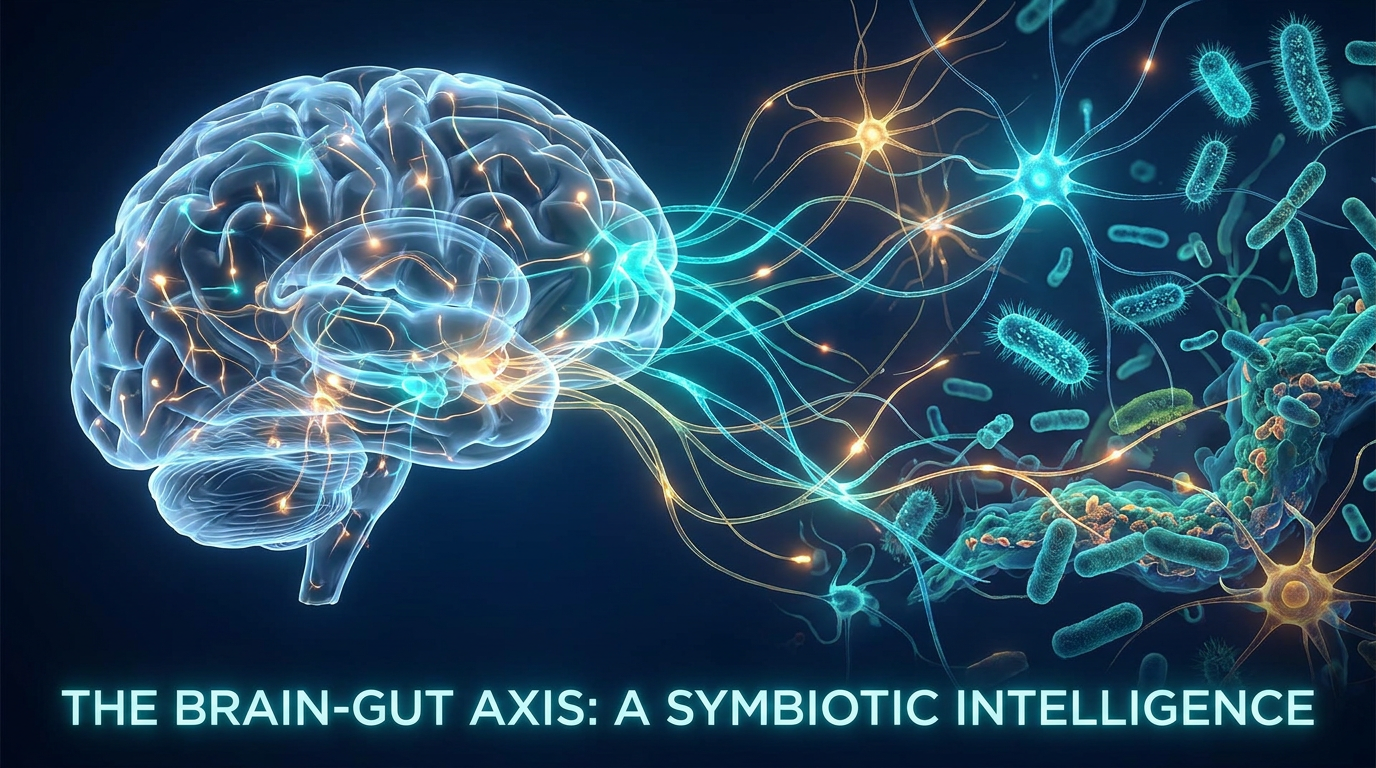
How does biological matter in the colon alter the neural architecture of the brain? The answer lies in the gut-brain axis, a bidirectional communication superhighway connecting the enteric nervous system to the central nervous system.[2][7]
The gut microbiome acts as a microscopic pharmacy. Beneficial bacteria ferment dietary fibers to produce short-chain fatty acids (SCFAs), such as butyrate and valerate. These metabolites cross the intestinal barrier, enter the bloodstream, and can influence gene expression and inflammation levels directly in the brain.[2]
Beneficial bacteria ferment dietary fibers to produce short-chain fatty acids (SCFAs), such as butyrate and valerate.
As mammals age, their gut microbiome loses diversity, and the intestinal lining becomes fragile and "leaky." This allows inflammatory bacterial toxins to spill into the bloodstream—a chronic, low-grade inflammatory state scientists call "inflammaging."[5][6]
Transplanting a young microbiome halts this process. Research published in Aging and Disease found that fecal microbiota transplantation (FMT) from young, physically trained mice into older mice significantly reduced gut permeability. This tightened barrier lowered systemic inflammation and upregulated synaptic plasticity modulators, like PSD-95, in the hippocampus.[2]
The rejuvenation extends beyond the brain. A study in mSystems demonstrated that young microbiota transplants improved the overall metabolic health of older mice. The recipients exhibited reduced frailty, increased grip strength, and a marked decrease in anxiety-like and depressive behaviors, driven by a reprogramming of lipid and amino acid metabolism.[3]

Furthermore, the gut itself undergoes a physical restoration. According to findings in Stem Cell Reports, the introduction of younger microbes boosts the activity of intestinal stem cells. These cells are responsible for rebuilding the inner wall of the intestine, allowing the aging gut lining to heal faster and function like a younger organ.[6]
This recent wave of discoveries builds on foundational work from the early 2020s. In 2021, a landmark study published in Nature Aging by neurobiologist John Cryan and his team first proved that young FMTs could reverse cognitive deficits, showing that geriatric rodents given young microbiomes could navigate mazes faster and remember layouts better than their untreated peers.[4][5]
Despite the profound implications, researchers urge extreme caution regarding human translation. A laboratory mouse lives in a highly controlled environment with a standardized diet, making its microbiome relatively simple to manipulate.[5][7]
The human microbiome, by contrast, is vastly more complex—shaped by decades of varied diets, antibiotic use, environmental exposures, and genetics. Scientists warn that a fecal microbiota transfer is a complex biological procedure involving whole communities of microbes, and the exact combinations that are safe and effective over time remain unknown.[6][7]

Consequently, experts stress that these findings are not a green light for do-it-yourself anti-aging treatments, which carry severe risks of transferring dangerous pathogens if not rigorously screened.[6]
The ultimate goal of this research is not to perform whole-stool transplants for anti-aging, but to identify the specific bacterial strains—such as Akkermansia or Odoribacter—and the exact metabolites they produce. Once isolated, these could be developed into safe, pharmaceutical-grade "postbiotic" therapies, offering a targeted way to keep the aging brain flexible, resilient, and young.[2][7]
How we got here
Early 2000s
Scientists begin mapping the human microbiome, discovering its vast influence on digestion and immunity.
2010s
The concept of the "gut-brain axis" gains traction as studies link gut bacteria to mood, anxiety, and neurological conditions in animal models.
August 2021
A landmark study in Nature Aging demonstrates that fecal transplants from young mice can reverse cognitive deficits and improve maze navigation in older mice.
December 2024
Research in Aging and Disease details the specific mechanisms, showing how young microbiomes reduce neuroinflammation and boost synaptic plasticity modulators.
June 2026
New studies reveal that young microbiomes can reopen closed windows of neuroplasticity, allowing older mice to overcome visual deficits typically only treatable in childhood.
Viewpoints in depth
Microbiome Researchers
Argues that the gut-brain axis is a primary driver of systemic aging and a master key to restoring neuroplasticity.
This camp views the gut as the master regulator of aging. They argue that systemic decline is not just a cellular inevitability but is heavily driven by the degradation of the microbiome. By pointing to the rapid restoration of neuroplasticity and metabolic health in animal models, these researchers suggest that targeting the gut could be the most effective, upstream method to treat age-related cognitive diseases like Alzheimer's and general dementia.
Translational Skeptics
Urges extreme caution in extrapolating controlled mouse data to the highly complex human microbiome.
This perspective highlights that laboratory mice live in sterile, controlled environments with identical diets, making their microbiomes relatively simple to manipulate. In contrast, the human microbiome is a chaotic ecosystem shaped by decades of varied diets, antibiotics, and environmental factors. Skeptics warn that whole-stool transplants in humans carry significant risks of transferring undetected pathogens or unintended metabolic traits, making clinical application premature.
Future Therapeutics Advocates
Looks beyond raw fecal transplants toward precision medicine and isolated postbiotic therapies.
Rather than transferring whole communities of bacteria, this camp focuses on isolating the specific beneficial strains (like Akkermansia) or the exact postbiotic chemicals (like specific short-chain fatty acids) they produce. Their goal is to develop safe, standardized, and patentable pills that mimic the rejuvenating effects of a young microbiome without the biological risks and unpredictability of a raw fecal transplant.
What we don't know
- Whether the neuroplasticity benefits seen in mice will safely and effectively translate to the vastly more complex human brain and microbiome.
- Which specific bacterial strains, or combinations of strains, are primarily responsible for reopening the windows of brain plasticity.
- How long the rejuvenating effects of a young microbiome transplant last before the aging host environment degrades the new bacterial community.
- Whether these treatments could be effective in late-stage neurological diseases like Alzheimer's, or if they only work as a preventative measure.
Key terms
- Gut-Brain Axis
- The bidirectional communication network that links the enteric nervous system of the gut with the central nervous system of the brain.
- Neuroplasticity
- The brain's ability to reorganize itself by forming new neural connections throughout life, crucial for learning and memory.
- Short-Chain Fatty Acids (SCFAs)
- Metabolites produced by beneficial gut bacteria during the fermentation of dietary fiber, known to reduce inflammation and support brain health.
- Inflammaging
- A chronic, low-grade systemic inflammation that develops with advanced age, believed to accelerate physical and cognitive decline.
- Amblyopia
- A neurodevelopmental disorder of the visual cortex, commonly known as lazy eye, which is typically only correctable during a critical window of high brain plasticity in childhood.
Frequently asked
What is a fecal microbiota transplant (FMT)?
It is a biological procedure that transfers the entire community of gut bacteria and other microbes from a healthy donor into the gastrointestinal tract of a recipient to restore a healthy microbiome.
Does this mean I can get a fecal transplant to stop aging?
No. Researchers strongly warn against DIY or premature treatments. The human microbiome is highly complex, and scientists still need to identify which specific bacterial strains are safe and effective for long-term use.
How do gut bacteria affect the brain?
Gut bacteria produce chemical byproducts, such as short-chain fatty acids, which enter the bloodstream and travel to the brain. These chemicals can influence inflammation, gene expression, and the brain's ability to form new neural connections.
What is brain plasticity?
Brain plasticity, or neuroplasticity, is the brain's ability to adapt, learn, and rewire its connections in response to new experiences or injuries. This ability is high in childhood but naturally declines with age.
Sources
Source coverage
7 outlets
3 viewpoints surfaced







[1]New ScientistMicrobiome Researchers
Faecal transplant makes the brains of old mice act young again
Read on New Scientist →[2]Aging and DiseaseMicrobiome Researchers
Fecal Microbiota Transplantation from Young-Trained Donors Improves Cognitive Function in Old Mice Through Modulation of the Gut-Brain Axis
Read on Aging and Disease →[3]mSystemsMicrobiome Researchers
Young gut microbiota transplantation improves the metabolic health of old mice
Read on mSystems →[4]Nature AgingMicrobiome Researchers
Microbiota from young mice reverses aging-associated differences in cognitive and immune functions in the brain
Read on Nature Aging →[5]Smithsonian MagazineTranslational Skeptics
Fecal Transplants May Reverse Brain Aging in Mice
Read on Smithsonian Magazine →[6]Stem Cell ReportsTranslational Skeptics
Young microbiota rejuvenates intestinal stem cell function in aged mice
Read on Stem Cell Reports →[7]Factlen Editorial TeamFuture Therapeutics Advocates
Synthesis by Factlen editorial team
Read on Factlen Editorial Team →



Every angle. Every day.
Get science stories with full source coverage and perspective breakdowns delivered to your inbox.