
The Password Era Ends: Passkeys Reach 5 Billion Active Users in 2026
Driven by major tech platforms and federal security mandates, passkeys have officially overtaken traditional passwords as the baseline for digital authentication.
By Factlen Editorial Team
- Security Practitioners
- View passkeys as the ultimate defense against phishing and credential stuffing, focusing on enterprise rollout and deprecating legacy MFA.
- Identity Providers
- See passkeys as a competitive differentiator, racing to offer the most seamless syncing and recovery experiences to capture enterprise and consumer markets.
- Consumer Privacy Advocates
- Appreciate the local-only biometric storage but raise concerns about ecosystem lock-in and the security of fallback recovery methods.
What's not represented
- · Small-to-Medium Business (SMB) IT Administrators
- · Non-smartphone users in developing regions
Why this matters
For decades, the burden of digital security has fallen on users forced to memorize complex passwords, leaving them vulnerable to data breaches and phishing. The mainstream adoption of passkeys permanently shifts this burden to cryptography, neutralizing the internet's most common cyber threats and making logging in both faster and mathematically secure.
Key points
- An estimated 5 billion passkeys are now in active use globally, marking a definitive shift away from traditional passwords.
- Passkeys utilize public-key cryptography, ensuring that no shared secret is ever transmitted or stored on a vulnerable server.
- Because passkeys are mathematically bound to specific domains, they are inherently resistant to phishing and credential stuffing attacks.
- Federal agencies like CISA and NIST now mandate phishing-resistant authentication for privileged enterprise accounts.
- Major identity providers, including Microsoft and Google, are actively deprecating legacy fallback methods like security questions.
- Account recovery remains the primary challenge, as fallback mechanisms can still be targeted by social engineering.
For decades, the cybersecurity industry has offered the same futile advice: create long, complex passwords, never reuse them, and change them frequently. This reliance on human memory to secure digital infrastructure created a multi-billion-dollar shadow economy of credential stuffing and phishing. But in 2026, the industry has reached a definitive tipping point. The password is no longer the default mechanism for digital identity.[7]
The transition is being driven by the mass adoption of passkeys, a technology built on the FIDO2 and WebAuthn standards. On World Passkey Day in May 2026, the FIDO Alliance announced that an estimated 5 billion passkeys are now in active use worldwide. This represents a staggering acceleration from just two years prior, moving the technology from a niche security feature to the operational baseline of the internet.[1]
Consumer awareness has mirrored this technical rollout. According to the FIDO Alliance's 2026 State of Passkeys report, 90% of consumers are now familiar with the technology, and 75% have enabled a passkey on at least one of their accounts. The friction of typing complex strings of characters is rapidly being replaced by the familiar biometric prompts—Face ID, Touch ID, or Windows Hello—that users already employ to unlock their devices.[1][6]
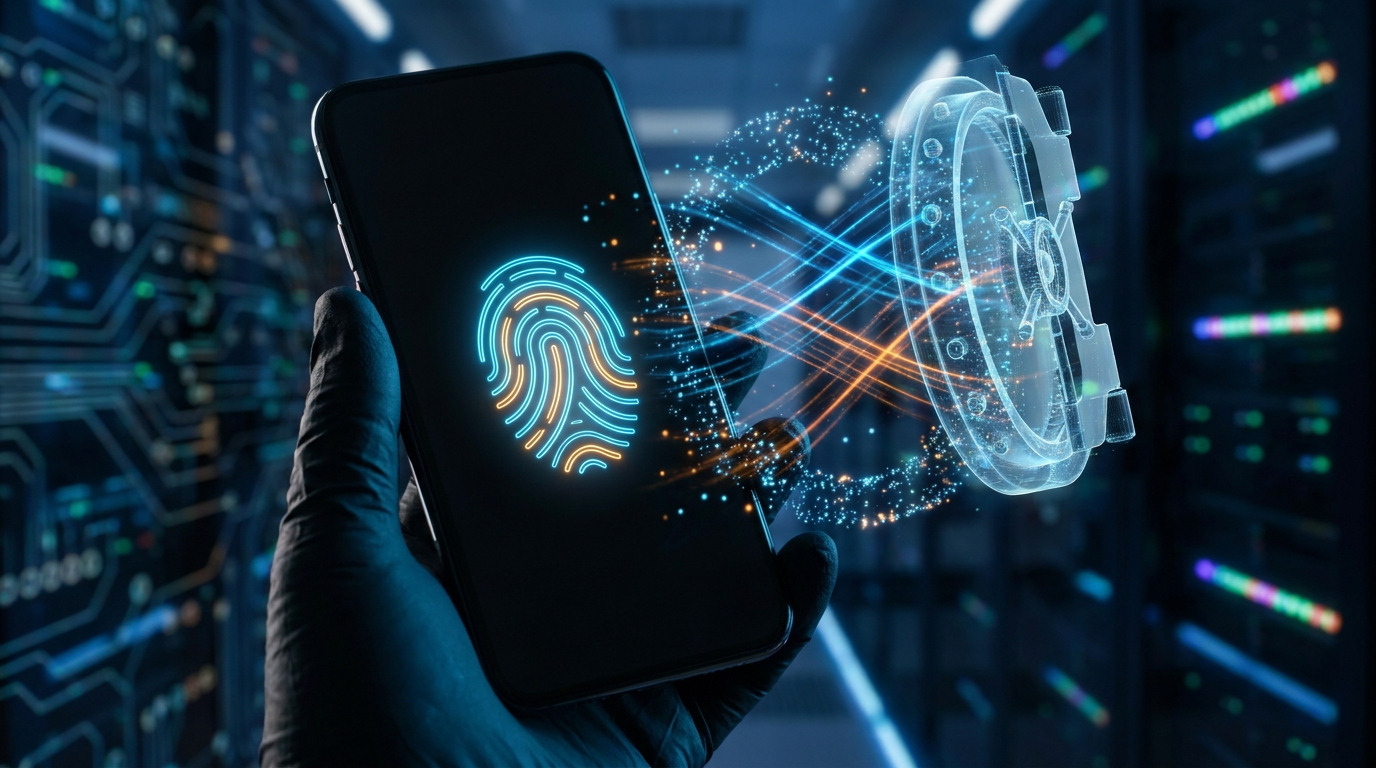
The fundamental shift lies in the underlying architecture. A traditional password is a "shared secret"—both the user and the server must know it to verify identity. If the server is breached, the secret is compromised. Passkeys, by contrast, utilize asymmetric public-key cryptography. When a user registers a passkey, their device generates a unique pair of cryptographic keys.[3][6]

The public key is sent to the website's server, where it is stored like a padlock. The private key remains securely stored in the secure enclave of the user's physical device—such as a smartphone or laptop—and never leaves it. When the user attempts to log in, the server sends a cryptographic challenge. The device uses the private key to sign the challenge, proving identity without ever transmitting the secret itself.[3][6]
This architecture neutralizes the two most common vectors of cyberattack: server breaches and phishing. Because the server only holds public keys, a data breach yields nothing of value to hackers; public keys cannot be used to log in. More importantly, passkeys are strictly bound to the specific domain where they were created.[3][6]
If a user is tricked into visiting a convincing replica of their bank's website, the passkey authentication will simply fail. The device recognizes the domain mismatch and refuses to sign the challenge. This domain-binding makes passkeys inherently "phishing-resistant," a standard now heavily pushed by federal agencies to combat increasingly sophisticated cyber espionage.[3][5]
If a user is tricked into visiting a convincing replica of their bank's website, the passkey authentication will simply fail.
The Cybersecurity and Infrastructure Security Agency (CISA) and the National Institute of Standards and Technology (NIST) have elevated phishing-resistant authentication from a recommendation to a strict requirement for privileged administrative accounts. The urgency is compounded by the rise of generative AI, which has industrialized the creation of flawless phishing lures and voice clones, rendering traditional security awareness training increasingly ineffective.[2][5]
The enterprise sector is responding aggressively to these mandates. The FIDO Alliance reports that 68% of organizations with over 500 employees are currently deploying or piloting passkeys for workforce authentication. For IT departments, the shift is not just about security; it is an operational imperative to reduce the massive helpdesk costs associated with password resets and account lockouts.[1]

Major identity providers are forcing the issue by deprecating legacy fallback methods. Microsoft, for instance, announced that starting in January 2027, it will remove security questions as a password reset option in Microsoft Entra ID, citing their vulnerability to social engineering. Microsoft's consumer and enterprise ecosystems now default to passkey-preferred authentication, prompting users with the strongest available method first.[2]
Google has seen similar success, reporting that passkey sign-ins surpassed one billion per month in late 2025. Internal data from the tech giant indicates that accounts utilizing passkeys experience a 99.9% lower compromise rate compared to those relying on traditional passwords. The friction of adoption is also being smoothed over by third-party password managers.[3]
Companies like Dashlane and 1Password are implementing "automatic passkey upgrades." When a user logs into a supported website using a traditional password, the password manager and the site perform a background handshake, prompting the user to create a passkey with a single click. This seamless transition eliminates the manual setup hurdle, accelerating the deprecation of legacy credentials.[4]
Despite the overwhelming momentum, the transition is not without friction. The primary challenge in 2026 remains account recovery. Because a passkey is tied to a physical device or a synced cloud ecosystem (like Apple iCloud or Google Password Manager), losing access to that ecosystem presents a significant hurdle for the end user.[7]

If a user loses all their devices, they must rely on fallback recovery methods—typically email links or SMS codes. These fallback mechanisms remain vulnerable to the very phishing and SIM-swapping attacks that passkeys were designed to eliminate. Security practitioners emphasize that an authentication stack is only as strong as its weakest recovery path.[7]
Furthermore, the ecosystem remains somewhat fragmented. While the FIDO Alliance's Credential Exchange protocols are improving, moving passkeys between competing ecosystems—such as migrating from an iPhone to an Android device—can still introduce friction for non-technical users who are accustomed to simple password copy-pasting.[4][7]
Nevertheless, the evidence is conclusive: the password era is ending. As passkeys become the ubiquitous standard, the economics of cybercrime will be forced to shift. Attackers will likely pivot away from automated credential stuffing toward more complex session hijacking and endpoint malware. But for the average consumer and enterprise, the baseline of digital security has been permanently and significantly raised.[7]
How we got here
2022
FIDO Alliance, Apple, Google, and Microsoft announce expanded support for the FIDO standard to accelerate passwordless sign-ins.
October 2022
Google rolls out synced passkeys for Android and Chrome via Google Password Manager.
2024
GitHub makes passkeys available to all 100 million users, pushing developer adoption.
Late 2025
Google reports that passkey sign-ins have surpassed one billion per month across its services.
May 2026
The FIDO Alliance announces that an estimated 5 billion passkeys are in active use globally.
January 2027
Microsoft is scheduled to remove security questions as a password reset option in Entra ID to force stronger authentication.
Viewpoints in depth
Security Practitioners
View passkeys as the ultimate defense against phishing and credential stuffing.
For cybersecurity professionals and federal agencies like CISA, passkeys represent the holy grail of identity management: phishing resistance. Because the cryptographic exchange is bound to the specific domain of the website, it is mathematically impossible for a user to be tricked into handing their passkey over to a fake site. This camp is aggressively pushing for the deprecation of all legacy multi-factor authentication methods, such as SMS codes and authenticator apps, which can still be intercepted by sophisticated attackers.
Identity Providers
Focus on the user experience and ecosystem integration to capture enterprise and consumer markets.
Tech giants like Microsoft, Google, and Apple, alongside password managers like Dashlane, view passkeys as a massive competitive differentiator. Their primary goal is to reduce the friction of adoption through "automatic upgrades" and seamless cross-device syncing. By making the passwordless experience invisible and intuitive, these providers aim to lock users into their respective ecosystems, ensuring that their platform becomes the definitive vault for a user's digital identity.
Consumer Privacy Advocates
Appreciate the local biometric storage but raise concerns about ecosystem lock-in and recovery.
Privacy advocates celebrate the fact that passkeys do not transmit biometric data to servers, keeping fingerprints and face scans strictly on the local device. However, they express caution regarding the "walled gardens" created by major tech ecosystems. If a user wants to migrate their digital life from Apple to Android, moving passkeys can still be a cumbersome process. Furthermore, this camp highlights that if a user loses their device, the fallback recovery methods—often email resets—remain vulnerable to traditional hacking techniques.
What we don't know
- How quickly smaller, legacy websites with limited development resources will be able to implement WebAuthn standards.
- Whether cross-ecosystem credential exchange will become entirely frictionless for non-technical users.
- How attackers will adapt their strategies once credential stuffing and mass phishing are no longer economically viable.
Key terms
- Passkey
- A digital credential that replaces a password with a cryptographic key pair, allowing users to sign in using their device's biometrics or PIN.
- Public-Key Cryptography
- A security system that uses two different keys—a public key stored on a server and a private key kept secret on a device—to verify identity without sharing a secret.
- Phishing-resistant
- An authentication method that cannot be intercepted or tricked by a fake website, as the credential is mathematically bound to the legitimate domain.
- FIDO2
- An open standard developed by the FIDO Alliance that enables passwordless authentication across websites and devices.
- Credential Stuffing
- A cyberattack where hackers use lists of compromised passwords from one breach to attempt to log into other unrelated services.
Frequently asked
What happens to my passkeys if I lose my phone?
If your passkeys are synced to a cloud account like iCloud or Google Password Manager, you can recover them on a new device by signing into that account. If not, you will need to use the service's fallback recovery method, such as an email reset link.
Are my fingerprints or face scans sent to the website?
No. Your biometric data never leaves your physical device. It is only used locally to unlock the secure enclave that holds your private cryptographic key.
Can a passkey be stolen in a data breach?
No. Websites only store your public key, which is mathematically useless to hackers without the corresponding private key that remains securely on your device.
Do I still need a password manager?
Yes. Password managers now act as secure vaults for your passkeys, allowing you to sync them across different devices and platforms seamlessly.
Sources
Source coverage
7 outlets
3 viewpoints surfaced







[1]FIDO AllianceConsumer Privacy Advocates
The State of Passkeys 2026: Global Consumer and Workforce Report
Read on FIDO Alliance →[2]MicrosoftIdentity Providers
Passkeys for Microsoft Entra External ID
Read on Microsoft →[3]GoogleIdentity Providers
Passkeys are Your New Best Friend
Read on Google →[4]DashlaneIdentity Providers
Passkeys in 2026: Five Innovations Changing How the World Logs In
Read on Dashlane →[5]CISASecurity Practitioners
Mobile Communications Best Practice Guidance
Read on CISA →[6]AtWorkStudioSecurity Practitioners
World Password Day 2026: the end of the password era
Read on AtWorkStudio →[7]Factlen Editorial TeamSecurity Practitioners
Synthesis by Factlen editorial team
Read on Factlen Editorial Team →

Every angle. Every day.
Get technology stories with full source coverage and perspective breakdowns delivered to your inbox.