
The Solid-State Battery Revolution Has Finally Left the Lab
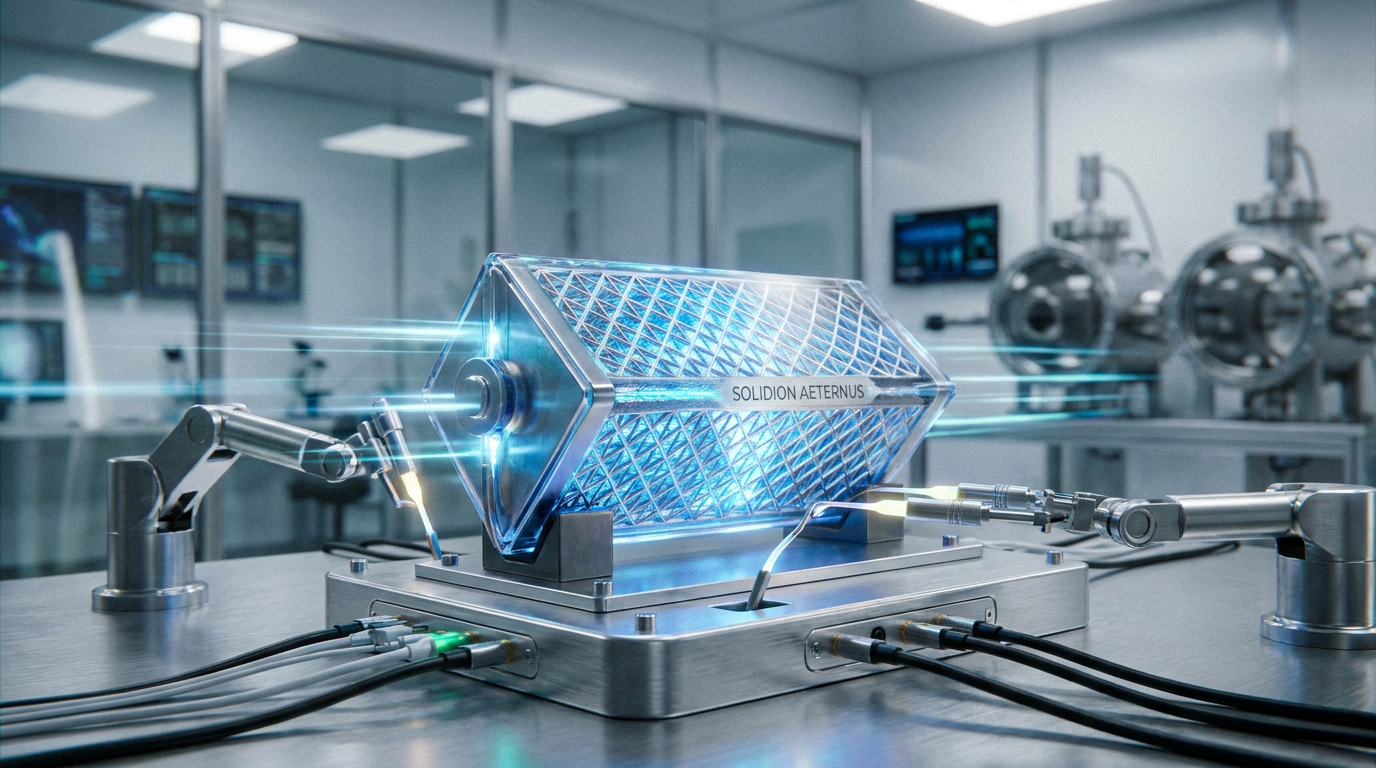
After years of delays, the automotive industry has crossed a major threshold in 2026, with solid-state electric vehicle batteries moving from laboratory experiments to real-world road tests and pilot production lines.
By Factlen Editorial Team
- Legacy Automakers
- Established car brands viewing solid-state tech as the strategic reset needed to compete with current EV market leaders.
- Battery Innovators
- Startups focused on proving that their proprietary solid-state architectures are ready for pilot scaling.
- Industry Realists
- Analysts cautioning that while the tech works, mass-market affordability and scale are still years away.
What's not represented
- · Raw Material Suppliers
- · EV Consumers awaiting affordable models
Why this matters
Solid-state batteries are the 'holy grail' of electric vehicles, promising to double driving range, cut charging times to 10 minutes, and eliminate battery fire risks. Their transition into real-world testing means the next generation of vastly superior EVs is now a tangible reality, not just a laboratory concept.
Key points
- Stellantis has begun testing solid-state battery prototypes on North American roads.
- Honda signed a major joint research agreement to scale QuantumScape's solid-state technology.
- Solid-state cells replace flammable liquid electrolytes with stable solid materials.
- The technology promises to boost EV range past 600 miles and cut charging times to 12 minutes.
- While prototypes are testing in 2026, mass-market commercialization is expected between 2028 and 2030.
For a decade, solid-state batteries have been the fusion power of the automotive world—a miraculous technology that always seemed to be five years away. But in the summer of 2026, the timeline abruptly compressed.[1][2]
Across the globe, next-generation energy storage is finally migrating from sterile laboratory environments to public roads and pilot production lines, marking a definitive shift from theoretical chemistry to industrial manufacturing.[1][5]
In June, Stellantis officially began testing Dodge Charger Daytona prototypes equipped with solid-state cells on North American highways. Days later, Honda signed a sweeping joint research agreement to scale QuantumScape’s lithium-metal architecture, following rigorous internal testing of the startup's pilot cells.[1][2]
To understand why the automotive industry is pouring billions into this transition, one must look inside the cells powering today's electric vehicles.
Conventional lithium-ion batteries rely on a liquid electrolyte—a chemical soup that shuttles ions back and forth between the cathode and anode during charging and discharging.[4]
While effective, this liquid is inherently flawed. It is heavy, prone to degradation over thousands of cycles, and, crucially, highly flammable if the battery is punctured in an accident or overheats during rapid charging.[4]
Solid-state batteries replace this volatile liquid with a stable, solid material. Depending on the manufacturer, this separator is typically made from an advanced ceramic, a sulfide compound, or a specialized polymer.[4]

This single substitution unlocks a cascade of engineering advantages, starting with energy density. Because the solid separator is highly stable, engineers can swap the traditional heavy graphite anode for one made of pure lithium metal.[3]
The results are staggering. Factorial Energy’s cells, currently being tested by Stellantis, achieve an energy density of 375 watt-hours per kilogram (Wh/kg)—roughly 50% higher than the best lithium-ion packs on the market today.[1]

In practical terms, this allows automakers to either build a vehicle with 600 to 700 miles of range, or shrink the battery pack entirely, shedding hundreds of pounds of weight to improve handling, efficiency, and tire wear.[1][6]
Then there is the charging speed. QuantumScape’s QSE-5 pilot cells, which Honda recently evaluated, demonstrated the ability to charge from 10% to 80% in just 12.2 minutes, effectively bridging the convenience gap between EVs and internal combustion engines.[3]
Safety is the final pillar. Without a flammable liquid core, solid-state cells are virtually immune to thermal runaway, easily surviving severe puncture tests that would cause a traditional battery to erupt in flames.[4]
Yet, moving from a flawless laboratory prototype to a mass-manufactured automotive component has been a brutal engineering challenge.
The primary villain has been "dendrites"—microscopic, needle-like structures of lithium that grow through the electrolyte over time, eventually short-circuiting the cell and killing the battery.[4]
Companies have spent the last decade inventing proprietary coatings and manufacturing techniques to suppress dendrite growth. Nissan, for example, is pioneering a "dry electrode" process that eliminates toxic solvents and massive drying ovens, drastically cutting factory costs to make the technology commercially viable.[6]

Despite the flurry of 2026 milestones, industry analysts caution against expecting a solid-state revolution in showrooms tomorrow.[4]
Current road-going vehicles boasting "solid-state" technology are largely using semi-solid or hybrid electrolytes. True all-solid-state commercial batteries remain confined to pilot-scale testing due to a massive production cost premium.[4]
The consensus roadmap points to 2027 and 2028 for the first small-batch, premium vehicles equipped with true solid-state packs, with mass-market affordability arriving closer to 2030.[4][6]

But the threshold has undeniably been crossed. The fundamental science is no longer in question; the race is now purely one of industrial scaling and supply chain optimization.[5]
How we got here
2010s
Early laboratory research intensifies into solid electrolytes to replace flammable lithium-ion liquids.
Dec 2022
QuantumScape ships its first 'A0' prototype solid-state cells to automotive manufacturers for testing.
Jan 2025
Nissan opens a pilot solid-state production line at its Yokohama plant in Japan.
Jun 2026
Stellantis begins public road testing of Factorial's solid-state cells in Dodge Charger prototypes.
2027-2028
Projected launch window for the first commercial premium electric vehicles equipped with solid-state batteries.
Viewpoints in depth
Battery Innovators
Startups focused on proving that their proprietary solid-state architectures are ready for pilot scaling.
Companies like QuantumScape and Factorial Energy argue that the fundamental science of solid-state batteries is now solved. Having successfully suppressed dendrite growth and achieved thousands of stable charging cycles in the lab, these innovators are focused on proving manufacturability. They point to 2026 milestones—like shipping B-samples and initiating road tests—as evidence that the technology is ready to transition from a scientific curiosity to a commercial product.
Legacy Automakers
Established car brands viewing solid-state tech as the strategic reset needed to compete with current EV market leaders.
For traditional automakers like Nissan, Honda, and Stellantis, solid-state batteries represent a chance to leapfrog the current lithium-ion dominance held by competitors like Tesla and BYD. By targeting 2028 for mass production, these legacy brands are betting that consumers will wait for a vastly superior product—one that charges in 10 minutes and offers 600 miles of range—rather than settling for today's incremental EV improvements. They are heavily investing in manufacturing breakthroughs, like dry electrode processing, to ensure these batteries can be built profitably.
Industry Realists
Analysts cautioning that while the tech works, mass-market affordability and scale are still years away.
Battery analysts and supply chain experts acknowledge the engineering triumphs of 2026 but warn against consumer hype. They emphasize the massive gulf between building a few thousand flawless cells on a pilot line and manufacturing millions of them cheaply enough to put in a $35,000 family car. Realists note that the first vehicles to feature true solid-state batteries will be ultra-premium luxury cars, and that widespread, affordable adoption is unlikely to occur until 2030 or beyond.
What we don't know
- The exact price premium solid-state batteries will carry when they first hit the commercial market.
- Which specific solid electrolyte material (sulfide, ceramic, or polymer) will ultimately dominate the industry standard.
- How quickly global supply chains can pivot to source the massive amounts of pure lithium metal required for the new anodes.
Key terms
- Solid-state battery
- A battery that uses a solid electrolyte instead of a liquid one to shuttle ions, improving safety and energy capacity.
- Electrolyte
- The medium inside a battery that allows electrical charge to flow between the cathode and anode.
- Lithium-metal anode
- An advanced battery component that replaces traditional graphite with pure lithium, vastly increasing energy storage.
- Dendrites
- Microscopic, needle-like structures that can grow inside batteries and cause short circuits, a major hurdle in solid-state development.
- Energy density
- The amount of energy a battery can store relative to its weight, typically measured in watt-hours per kilogram (Wh/kg).
Frequently asked
Can I buy a car with a solid-state battery today?
Not yet. While some vehicles use semi-solid batteries, true all-solid-state EVs are currently in the prototype testing phase and won't hit the market until 2027 or 2028.
How fast will solid-state batteries charge?
Pilot tests show next-generation solid-state cells can charge from 10% to 80% in roughly 10 to 15 minutes, rivaling the time it takes to pump gas.
Are solid-state batteries safer?
Yes. Because they replace flammable liquid electrolytes with stable solid materials, they are highly resistant to catching fire, even if damaged in a crash.
Sources
Source coverage
6 outlets
3 viewpoints surfaced






[1]ElectrekBattery Innovators
Factorial, Stellantis test solid-state EV batteries in real life
Read on Electrek →[2]QuantumScapeBattery Innovators
QuantumScape Announces Agreement with Honda on Solid-State Battery Technology
Read on QuantumScape →[3]ElectriveLegacy Automakers
QuantumScape signs Honda as solid-state battery partner
Read on Electrive →[4]Bonnen BatteriesIndustry Realists
Don't Get Fooled by Solid-State Hype: In 2026, Only Semi-Solid Batteries Are Hitting the Road!
Read on Bonnen Batteries →[5]Engineer LiveIndustry Realists
Solid-state batteries transition from lab to road
Read on Engineer Live →[6]CarsGuideLegacy Automakers
Nissan is edging closer towards installing solid-state batteries in its electric vehicles
Read on CarsGuide →
Every angle. Every day.
Get automotive stories with full source coverage and perspective breakdowns delivered to your inbox.