
US and Iran Begin High-Stakes Talks in Switzerland as Strait of Hormuz Remains Closed
US and Iranian delegations have arrived in Switzerland for indirect negotiations aimed at reopening the Strait of Hormuz and securing a broader regional ceasefire. The talks commence as the ongoing blockade sends global oil prices to multi-year highs and threatens international supply chains.
By Factlen Editorial Team
- US & Western Allies
- Focused on restoring freedom of navigation, stabilizing global energy markets, and containing Iran's regional influence without sparking a direct war.
- Iranian Leadership
- Viewing the strait closure as legitimate leverage to force the lifting of crippling economic sanctions and secure regional security guarantees.
- Global Markets & Importers
- Deeply alarmed by the economic fallout, prioritizing an immediate resolution to the blockade to prevent a global recession driven by energy inflation.
What's not represented
- · Crews of commercial vessels currently stranded or rerouted
- · Citizens in developing nations facing disproportionate impacts from sudden energy inflation
Why this matters
The Strait of Hormuz is the world's most critical oil chokepoint, handling roughly 20% of global petroleum consumption. A prolonged closure threatens to trigger a global energy crisis, spike inflation, and severely disrupt international supply chains.
Key points
- US and Iranian officials are holding indirect talks in Switzerland mediated by Swiss diplomats.
- The primary catalyst is the ongoing closure of the Strait of Hormuz, which has spiked global oil prices.
- The US delegation, led by JD Vance, is pushing for a Lebanon ceasefire and nuclear progress alongside maritime security.
- Iran is demanding sanctions relief and regional security guarantees before lifting the blockade.
- Brent crude has surged past $128 per barrel as the standoff enters its second week.
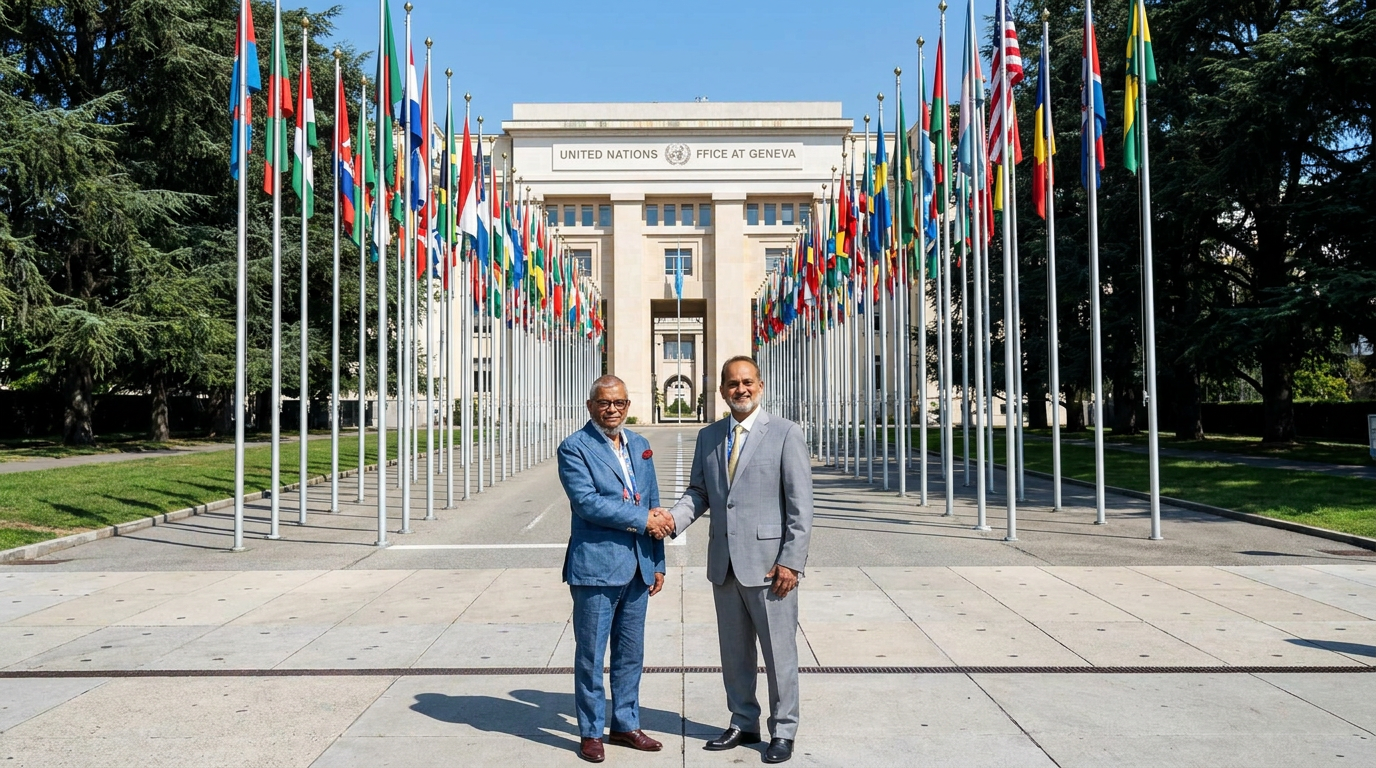
High-stakes indirect negotiations between the United States and Iran have officially commenced in Switzerland, convened under the shadow of a mounting global economic crisis. The emergency summit, mediated by Swiss diplomats, aims to address the ongoing closure of the Strait of Hormuz, a critical maritime chokepoint that has effectively paralyzed a significant portion of the world's energy trade. The US delegation, led by Vice President JD Vance, arrived in Geneva with a mandate to restore freedom of navigation while simultaneously pushing for progress on a fragile ceasefire in Lebanon and broader nuclear concerns. The talks represent the most significant diplomatic engagement between Washington and Tehran in recent years, driven by the immediate necessity of averting a wider regional conflict and stabilizing volatile global markets.[1][3][7]
The diplomatic urgency is entirely dictated by the situation in the Persian Gulf, where Iranian naval forces have maintained a strict blockade on commercial transit through the Strait of Hormuz for the past two weeks. This narrow waterway, measuring just 21 miles wide at its narrowest point, is the sole sea passage from the Persian Gulf to the open ocean. In standard conditions, roughly 20 percent of the world's petroleum consumption and a quarter of global liquefied natural gas trade pass through this corridor. The sudden severing of this artery has sent shockwaves through international supply chains, forcing massive oil tankers to drop anchor or attempt costly, weeks-long detours around the Cape of Good Hope.[2][5]
For Tehran, the closure of the strait serves as its most potent geopolitical leverage. Iranian officials have explicitly linked the reopening of the waterway to demands for substantial relief from crippling Western economic sanctions and guarantees regarding regional security architecture. Iranian state media and regional analysts indicate that Tehran views the blockade not as an act of unprovoked aggression, but as a necessary countermeasure to what it describes as an economic siege orchestrated by Washington. The Iranian delegation in Geneva is reportedly demanding concrete, verifiable economic concessions before it will authorize the resumption of normal maritime traffic, setting the stage for a tense and complex negotiation process.[4][6]

The economic fallout from the standoff is already materializing across global markets. Brent crude, the international benchmark for oil prices, surged past $128 per barrel on Monday morning, marking its highest level in over a year. Energy analysts warn that if the blockade persists through the end of the month, prices could easily breach the $150 threshold, triggering a cascade of inflationary pressures across the global economy. Asian markets, which rely heavily on Middle Eastern crude exports, have been hit particularly hard, with major importers in China, Japan, and South Korea scrambling to secure alternative supplies from the Atlantic basin at steep premiums.[2][5]
The format of the Geneva talks reflects the deep-seated mistrust between the two nations. US and Iranian officials are not meeting face-to-face; instead, they are engaged in "proximity talks." Swiss diplomats, who have long represented US interests in Iran, are physically shuttling documents and proposals between separate hotels housing the respective delegations. This cumbersome process slows the pace of negotiations but provides both sides with the political cover necessary to engage without appearing to capitulate to domestic hardliners. The Swiss foreign ministry has confirmed its role as a neutral facilitator, emphasizing the critical need for a rapid de-escalation.[1][7]
The format of the Geneva talks reflects the deep-seated mistrust between the two nations.
Vice President Vance’s presence in Geneva underscores the high priority the Trump administration has placed on resolving the crisis. According to administration officials, Vance's objective is to secure an interim agreement that immediately reopens the strait while laying the groundwork for more comprehensive discussions regarding Iran's nuclear program and its support for regional proxy groups, particularly in Lebanon. However, the administration faces intense pressure from domestic political factions and regional allies like Israel to avoid offering any concessions that could be interpreted as rewarding Tehran's aggressive maritime tactics. Balancing these competing pressures while preventing a global recession is the central challenge facing the US negotiating team.[1][3]

Regional dynamics are further complicating the talks. Gulf Arab states, including Saudi Arabia and the United Arab Emirates, find themselves in a precarious position. While they share Washington's concerns about Iranian regional influence, their economies are fundamentally dependent on the free flow of oil exports through the Strait of Hormuz. These nations have engaged in frantic back-channel diplomacy, urging both Washington and Tehran to exercise restraint and find a face-saving off-ramp. The prospect of a direct military confrontation in the Gulf is viewed in Riyadh and Abu Dhabi as a worst-case scenario that would devastate regional infrastructure.[4][7]
The linkage between the maritime blockade and the ongoing conflict in Lebanon adds another layer of complexity to the Geneva summit. US negotiators are attempting to use the talks to solidify a fragile ceasefire between Israel and Hezbollah, an Iranian-backed militant group. Tehran, however, has historically resisted efforts to bundle disparate regional conflicts into a single negotiation framework, preferring to compartmentalize issues to maximize its leverage. Whether the US can successfully extract concessions on the Lebanese front in exchange for economic relief related to the maritime standoff remains one of the biggest unknowns of the summit.[1][6]
As the talks enter their crucial first 48 hours, the international community is watching with bated breath. European leaders have issued statements supporting the diplomatic initiative, warning that a prolonged energy shock could derail the continent's fragile economic recovery and severely impact industrial output. Meanwhile, major shipping conglomerates have suspended all transit through the region indefinitely, citing uninsurable risks to their vessels and crews. The longer the diplomatic deadlock persists, the more entrenched the economic damage becomes, raising the stakes for every hour the delegations spend in their separate Geneva hotels.[2][5]

Ultimately, the success or failure of the Switzerland talks will hinge on whether both sides can identify a mutually acceptable sequence of reciprocal steps. The US requires a verifiable cessation of Iranian naval interference in the Strait of Hormuz, while Iran demands immediate, tangible sanctions relief that allows it to freely export its own oil and access frozen international assets. If the proximity talks collapse, military analysts warn that the US and its allies may face immense pressure to organize a multinational naval escort mission to force the strait open—a move that carries an extraordinarily high risk of triggering a direct, kinetic conflict in the world's most vital energy corridor.[1][3][4]
How we got here
Early June 2026
Tensions escalate in the Middle East, leading to Iran restricting commercial transit through the Strait of Hormuz.
Mid-June 2026
Global oil prices surge past $120 per barrel as shipping companies reroute vessels around Africa.
June 20, 2026
US and Iranian delegations agree to emergency indirect talks brokered by Switzerland.
June 21, 2026
Negotiations officially commence in Geneva via Swiss intermediaries.
Viewpoints in depth
US Administration's View
Seeking to restore freedom of navigation without committing to a direct military conflict.
Washington views the blockade as an unacceptable threat to global economic stability and international law. The US delegation's primary goal is to secure an immediate reopening of the strait, but they are also attempting to use the diplomatic opening to address broader regional concerns, including securing a ceasefire in Lebanon and curbing Iran's nuclear advancements. The administration faces intense domestic pressure not to offer sanctions relief that could be seen as rewarding hostile actions.
Iran's View
Viewing the strait closure as legitimate leverage against crippling sanctions and regional adversaries.
Tehran argues that it cannot be expected to guarantee the free flow of global commerce while its own economy is suffocated by Western sanctions. Iranian officials frame the blockade as a defensive countermeasure rather than an offensive escalation. They are demanding concrete, verifiable economic relief—such as the unfreezing of international assets and the ability to freely export oil—before they will agree to lift the maritime restrictions.
Energy Importers' View
Deeply alarmed by the price spikes, urging both sides to reach an immediate interim agreement.
For nations heavily reliant on imported energy, particularly in Asia and Europe, the geopolitical nuances of the US-Iran rivalry are secondary to the immediate economic threat. These countries are warning that a prolonged closure of the strait will trigger severe inflation, disrupt industrial output, and potentially force a global recession. They are aggressively lobbying both Washington and Tehran through back channels to find a face-saving compromise.
What we don't know
- Whether Iran is willing to decouple the Strait of Hormuz issue from broader regional conflicts like Lebanon.
- How long global energy markets can absorb the current price shock before triggering widespread inflation.
- The exact concessions the US administration is prepared to offer regarding existing economic sanctions.
Key terms
- Strait of Hormuz
- A narrow waterway between the Persian Gulf and the Gulf of Oman, serving as the world's most important oil transit chokepoint.
- Indirect Talks
- A diplomatic format where opposing delegations do not meet face-to-face, instead relying on a third-party mediator to shuttle messages between them.
- Brent Crude
- A major global price benchmark for Atlantic basin crude oils, used to price two-thirds of the world's internationally traded crude oil supplies.
Frequently asked
Why is the Strait of Hormuz so important?
It is the only sea passage from the Persian Gulf to the open ocean, making it a critical chokepoint for roughly 20% of the world's oil consumption and a quarter of global LNG trade.
Are US and Iranian officials meeting face-to-face?
No. The negotiations are 'proximity talks,' meaning Swiss diplomats are shuttling messages and proposals between the two delegations, who are staying in separate locations.
How is this affecting global gas prices?
The disruption has caused global crude oil prices to spike past $128 per barrel, which typically translates to significantly higher prices at the pump for consumers worldwide within weeks.
Sources
Source coverage
7 outlets
3 viewpoints surfaced





[1]The GuardianUS & Western Allies
US-Iran talks in Switzerland to get under way as strait of Hormuz remains closed
Read on The Guardian →[2]ReutersGlobal Markets & Importers
Oil prices surge as Strait of Hormuz closure drags on ahead of US-Iran Geneva summit
Read on Reuters →[3]Fox NewsUS & Western Allies
Vance leads high-stakes talks in Switzerland as Iranian blockade threatens global economy
Read on Fox News →[4]Al JazeeraIranian Leadership
Iran demands lifting of sanctions as Switzerland talks begin
Read on Al Jazeera →[5]BloombergGlobal Markets & Importers
Brent crude tops $128 as Hormuz blockade enters second week
Read on Bloomberg →[6]Tehran TimesIranian Leadership
Iran stands firm on regional security demands ahead of Geneva talks
Read on Tehran Times →[7]CNNUS & Western Allies
US and Iran begin indirect talks in Switzerland to avert wider Middle East conflict
Read on CNN →
Every angle. Every day.
Get news politics stories with full source coverage and perspective breakdowns delivered to your inbox.