
The End of Range Anxiety: How EV Road Trips Actually Work in 2026
With the widespread adoption of a universal charging standard and the expansion of 400-mile battery ranges, the great electric road trip has transitioned from a stressful puzzle to a seamless reality.
By Factlen Editorial Team
- EV Adopters & Analysts
- Celebrate the seamless tech and cost savings of modern electric travel.
- Infrastructure Developers
- Focus on scaling the network, NEVI funding, and maintaining high uptime.
- Automotive Industry
- Prioritize customer experience through NACS adoption and longer battery ranges.
- Pragmatic Planners
- Highlight remaining challenges with towing, cold weather, and rural charging gaps.
What's not represented
- · Gas station operators transitioning to EV charging
- · Grid operators managing local power loads
Why this matters
As electric vehicles become mainstream, understanding the reality of modern charging infrastructure empowers drivers to make informed purchasing decisions and plan long-distance travel without the fear of being stranded.
Key points
- The adoption of the North American Charging Standard (NACS) has unified the fragmented charging network.
- The US surpassed 250,000 public EV charging ports in early 2026, driven by federal NEVI funding.
- Modern EVs routinely exceed 300 miles of range, with top models entering the 400-mile club.
- 800-volt architectures allow vehicles to charge from 10% to 80% in under 25 minutes.
- In-car software dynamically routes drivers to available chargers, eliminating the need for manual trip planning.
The first long electric vehicle road trips were exercises in anxiety and spreadsheet management. Early adopters would map out routes on napkins, praying that the single 50-kilowatt charger behind a rural diner was actually operational. Drivers would turn off their climate control, pin the cruise control at 62 miles per hour, and watch the battery percentage drop with a knot in their stomachs. Range anxiety—the pervasive fear of being stranded on the side of a highway with a dead battery—was the defining psychological barrier to EV adoption. It was a valid concern in an era of fragmented networks, unpredictable hardware, and vehicles that struggled to break 200 miles on a single charge.[8]
By the summer of 2026, that landscape has fundamentally shifted. The great electric road trip has transitioned from a stressful puzzle to a seamless, everyday reality. Range anxiety is rapidly fading into a psychological relic, replaced by a new era of "range confidence." This transformation wasn't driven by a single miracle battery breakthrough, but by a confluence of compounding victories: the standardization of charging hardware, a massive influx of federal infrastructure funding, aerodynamic vehicle design, and software that completely removes the cognitive load of route planning. For the modern driver, the question is no longer whether an EV can make the journey, but simply how comfortable they want the ride to be.[7][9]
The single biggest catalyst for this frictionless travel experience was the resolution of the industry's charging standard war. For years, the North American market was bitterly divided. Tesla operated its proprietary, highly reliable Supercharger network exclusively for its own vehicles, while every other automaker relied on the Combined Charging System (CCS)—a standard plagued by fragmented networks, clunky payment apps, and notoriously spotty reliability. This division meant that a driver in a Ford or a Hyundai could be parked next to an empty bank of pristine Tesla chargers, completely unable to use them while waiting for a broken CCS unit to reboot.[4]
That paradigm shattered when Ford CEO Jim Farley and Tesla CEO Elon Musk announced a landmark agreement to adopt Tesla's plug, officially rebranded as the North American Charging Standard (NACS). The move created an immediate domino effect. Within months, General Motors, Rivian, Volvo, Hyundai, and nearly every other major automaker conceded the plug war and committed to NACS. By standardizing the physical connection, the industry effectively unified the continent's charging infrastructure, instantly multiplying the number of reliable fast-charging locations available to the average driver.[4]

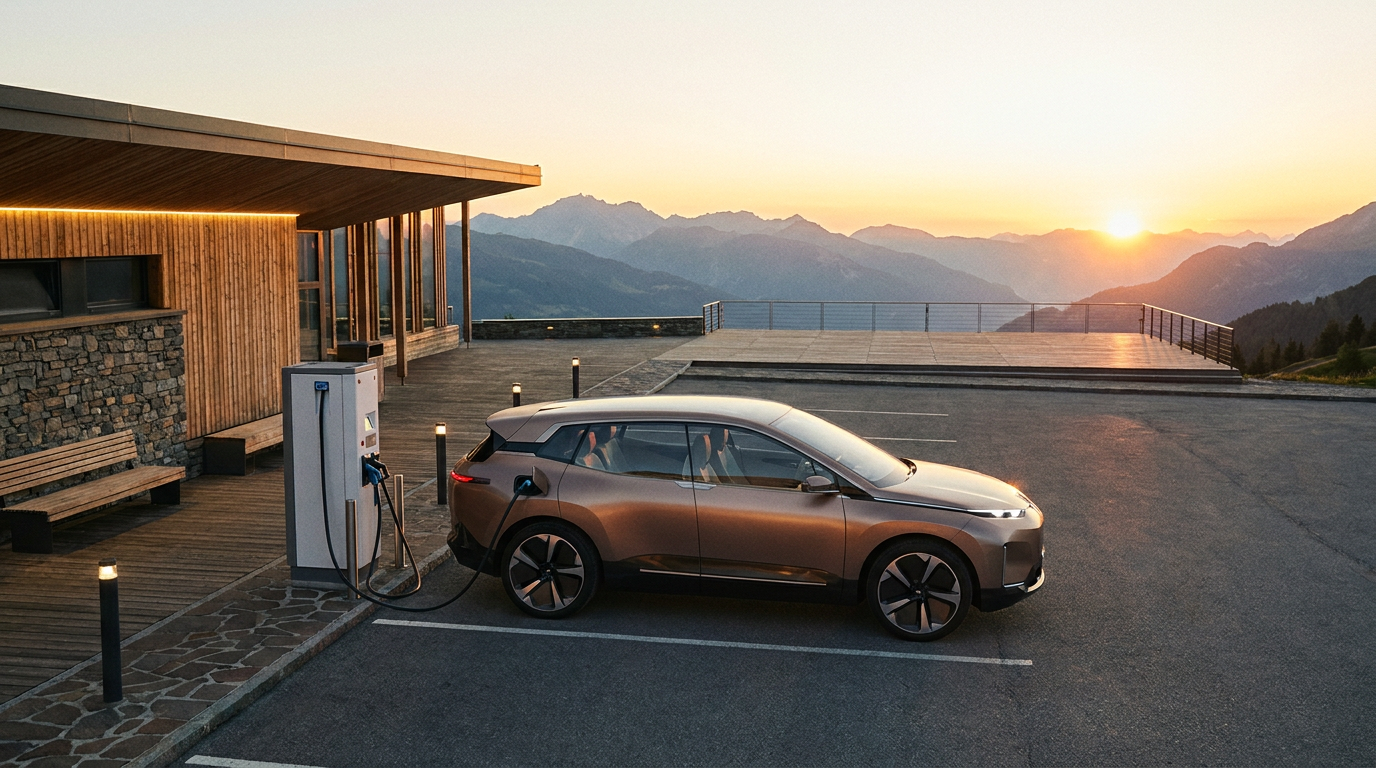
In 2026, the fruits of that standardization are fully visible on the highway. Most new non-Tesla electric vehicles now ship with either a native NACS port or an automaker-provided adapter that seamlessly unlocks the Supercharger network. Companies like Rivian have even begun retrofitting their own exclusive Adventure Network stations with NACS cables, ensuring that 97% of their chargers are open to the broader public. For the driver, this means pulling up to a station, plugging in, and walking away—no fumbling with multiple RFID cards, no downloading a dozen different proprietary apps, and no wondering if the handshake between the car and the charger will fail.[2][3]
Beyond the unification of the plug, the sheer volume of available public chargers has exploded to meet rising demand. In March 2026, the United States officially surpassed a massive milestone: 250,000 public EV charging ports. This network now comprises over 73,000 DC fast chargers and 180,000 Level 2 destination chargers spread across more than 80,000 station locations. In a single month this spring, the network added over 1,400 new fast-charging stalls, reflecting a shift toward larger, multi-stall charging hubs rather than isolated single-charger installations that create bottlenecks during holiday travel weekends.[5]
This rapid physical expansion is being heavily subsidized by the National Electric Vehicle Infrastructure (NEVI) Formula Program, a $5 billion federal initiative that is finally hitting its stride. For the first few years of its existence, the NEVI program was tangled in bureaucratic red tape, planning requirements, and strict federal compliance rules, resulting in a painfully slow rollout. But following updated guidance and court rulings in late 2025, the dam broke. The federal government unlocked the remaining obligated funds, and states are now aggressively deploying hundreds of millions of dollars to build out high-speed charging corridors.[6]
But following updated guidance and court rulings in late 2025, the dam broke.
Crucially, the updated NEVI guidelines gave states unprecedented flexibility in where they place these new stations. Previously, funds were strictly bound to major interstate highways, requiring a station every 50 miles. Now, states that have certified their primary corridors as "fully built out" are redirecting federal money to rural roads, secondary highways, and community charging hubs. This shift is systematically eliminating the remaining "charging deserts" in the American heartland, ensuring that road-trippers can venture off the beaten path to national parks and remote destinations without fear of being stranded.[6]

While the infrastructure has caught up, the vehicles themselves have evolved to require fewer stops in the first place. The automotive industry has officially entered the era of the "400-mile club." Vehicles that can realistically approach or exceed 400 miles on a single charge under mixed real-world conditions are no longer exclusive, six-figure luxury anomalies. This benchmark means that a driver can comfortably cover over 300 miles even in suboptimal conditions—such as cold weather or high-speed highway cruising—drastically reducing the number of mandatory pit stops on a cross-country journey.[7]
Automakers have achieved these staggering ranges not simply by stuffing heavier, more expensive battery packs into their chassis, but through relentless optimization. Aerodynamics has become the new horsepower. Because aerodynamic drag is the silent enemy of highway range, vehicles with ultra-low drag coefficients consistently outperform heavier competitors with larger batteries. Combined with advancements in battery chemistry, intelligent thermal management systems, and highly efficient heat pumps, modern EVs are squeezing unprecedented mileage out of every kilowatt-hour, making long-distance travel a baseline expectation rather than a premium feature.[7]
But on a road trip, the speed at which a vehicle can ingest power matters just as much as its total battery capacity. The widespread adoption of 800-volt electrical architectures has fundamentally altered the cadence of electric travel. Older 400-volt systems often required drivers to sit at a charger for an hour or more to regain meaningful range. Today, vehicles equipped with 800-volt systems, such as the Hyundai Ioniq 5, can pull power at massive rates, effectively doubling the charging speed of previous generations and turning a charging session into a brief restroom and coffee break.[1]
When connected to a 350-kilowatt DC fast charger, an 800-volt vehicle can take its battery from 10% to 80% capacity in a blistering 24 minutes. This rapid replenishment aligns perfectly with the natural rhythm of human travel. By the time a family unbuckles, uses the facilities, grabs a snack, and stretches their legs, the car is ready for the next three hours of highway driving. This technological leap has effectively neutralized the argument that EVs force drivers to waste hours of their vacation sitting idle in parking lots.[1]
This rapid charging capability highlights the "20-80% rule," a core tenet of modern EV road-tripping. Because lithium-ion batteries charge fastest in the middle of their capacity and slow down significantly past 80% to protect the cells from heat degradation, experienced drivers rarely charge to 100% on the road. Instead of waiting an extra 30 minutes to squeeze in the last 20% of power, drivers are learning to take shorter, more frequent stops. This "splash and dash" strategy keeps the battery in its optimal charging curve, minimizing total wait time and making the journey highly predictable.[8]

The cognitive load of executing this strategy has been entirely outsourced to software. Drivers no longer need to calculate distances or guess their energy consumption. Modern in-car navigation systems and dedicated apps like RadiusMapper dynamically route vehicles to available chargers, factoring in real-time battery consumption, elevation changes, ambient temperature, and even the live operational status of the charging stalls. If a station is full or offline, the car automatically reroutes to the next best option, preconditioning the battery along the way so it is at the perfect temperature to accept maximum power upon arrival.[3][8]
Beyond the convenience, the economics of the electric road trip remain highly compelling, even as public charging networks introduce premium pricing. A hypothetical 1,000-mile journey in an efficient EV like the Ioniq 5 costs roughly $120 in electricity when relying exclusively on public fast chargers. In contrast, driving the same distance in a comparable gas-powered SUV would cost upwards of $150, and significantly more in states like California where gasoline prices routinely spike. When drivers factor in the ability to charge overnight at a hotel for free, the cost savings of electric travel become even more pronounced.[1]

Despite these massive leaps forward, a few edge cases require careful management. Towing heavy loads—such as a camper or a boat—still severely depletes an EV's range, often cutting it in half and requiring more frequent stops at pull-through charging stations. Additionally, extreme cold weather can reduce battery efficiency by up to 20%, necessitating a larger energy buffer when traveling through freezing climates. However, as battery densities improve and charging stations become as ubiquitous as gas pumps, even these extreme scenarios are becoming manageable inconveniences rather than trip-canceling roadblocks.[8][9]
Ultimately, the story of the 2026 electric road trip is one of normalized innovation. The infrastructure has matured, the hardware has standardized, and the software has rendered the underlying complexity invisible to the user. Range anxiety has been replaced by the quiet satisfaction of gliding down the highway, powered by a unified grid. For the vast majority of drivers, the barriers have fallen completely. The electric road trip is no longer an extreme sport reserved for early adopters and tech enthusiasts; it is simply a road trip, ready for anyone willing to take the wheel.[9]
How we got here
May 2023
Ford announces it will adopt Tesla's charging plug, kicking off an industry-wide shift.
June 2023
General Motors follows suit, cementing NACS as the future North American standard.
Late 2025
Updated federal guidance unlocks billions in NEVI funding for state-level charger deployment.
March 2026
The United States officially surpasses 250,000 public EV charging ports.
Viewpoints in depth
EV Adopters & Enthusiasts
Focus on the seamless experience and technological advancements.
For early adopters and daily EV drivers, the narrative has shifted entirely from survival to optimization. They view the current landscape as a triumph of software and engineering, where features like automatic battery preconditioning and real-time routing have eliminated the mental math of road-tripping. This camp advocates for the 'splash and dash' charging method and emphasizes that the superior driving dynamics and lower operational costs of EVs make them the ultimate road trip vehicles.
Infrastructure Developers
Focus on deployment speed, grid integration, and uptime reliability.
Network operators and state transportation officials are focused on the logistics of scaling. While they celebrate the 250,000-port milestone, their primary concern is maintaining 97% uptime across the network and ensuring that local power grids can handle multi-megawatt charging hubs. They view the unlocking of NEVI funds as a critical turning point, allowing them to finally build out the rural and secondary highway corridors necessary to support mass adoption.
Rural Drivers & Skeptics
Focus on remaining charging gaps, towing limitations, and cold-weather performance.
Drivers in highly rural areas and those who frequently tow heavy loads remain cautious. They point out that while interstate travel is largely solved, venturing deep into agricultural regions or mountainous terrain still requires careful planning. This camp highlights the severe range penalties associated with towing campers or boats, arguing that until pull-through charging stations become as ubiquitous as gas stations, EVs cannot fully replace heavy-duty combustion trucks for certain lifestyles.
What we don't know
- How quickly rural and secondary highway charging gaps will be filled as states deploy their remaining NEVI funds.
- When pull-through charging stations will become common enough to fully alleviate range anxiety for drivers towing heavy trailers.
Key terms
- NACS (North American Charging Standard)
- The universal charging plug design, originally developed by Tesla, now adopted by nearly all major automakers.
- DC Fast Charging
- High-speed public charging stations that can replenish an EV battery in minutes rather than hours.
- 800-Volt Architecture
- An advanced electrical system in newer EVs that allows them to accept power at significantly faster rates.
- NEVI Program
- A $5 billion federal initiative designed to build a unified, high-speed EV charging network across the United States.
- Charging Curve
- The rate at which a battery accepts power, which is fastest in the middle percentages and slows down as the battery nears 100%.
Frequently asked
Do I need an adapter to use a Tesla Supercharger?
If you drive a non-Tesla EV built before 2025, you will likely need an automaker-provided NACS adapter. Newer models are increasingly shipping with the NACS port built-in.
Why shouldn't I charge my EV to 100% on a road trip?
Batteries charge much slower after reaching 80% to protect their health. Stopping more frequently to charge from 20% to 80% is significantly faster than waiting for a full 100% charge.
Is it cheaper to road trip in an EV than a gas car?
Yes. A typical 1,000-mile road trip in an efficient EV costs about $120 in public charging, compared to $150 or more for a comparable gas-powered vehicle.
What happens if a charging station is broken?
Modern in-car navigation systems monitor the live status of charging stations and will automatically reroute you to the next available, functioning charger before you arrive.
Sources
Source coverage
9 outlets
4 viewpoints surfaced








[1]Kelley Blue BookAutomotive Industry
How to Take an EV Road Trip
Read on Kelley Blue Book →[2]EV InfoPragmatic Planners
Rivian's Charging Network Is Growing Fast, and Makes a Great EV Road Trip
Read on EV Info →[3]RadiusMapperPragmatic Planners
EV Trip Planner: How I Plan a Long EV Road Trip (And Actually Enjoy It)
Read on RadiusMapper →[4]TeslaratiAutomotive Industry
How Tesla's NACS won the EV charging standard war
Read on Teslarati →[5]EV Infrastructure NewsInfrastructure Developers
The US has passed 250,000 public EV charging ports
Read on EV Infrastructure News →[6]Civic IQInfrastructure Developers
Why 2026 Is the Biggest Year Yet for Government EV Charging
Read on Civic IQ →[7]One EV GroupEV Adopters & Analysts
The 400-Mile Club: Every EV Making Range Anxiety History in 2026
Read on One EV Group →[8]DriveSparkEV Adopters & Analysts
EV Road Trips: Essential Planning Tips to Master Range Anxiety
Read on DriveSpark →[9]Factlen Editorial TeamEV Adopters & Analysts
Synthesis by Factlen editorial team
Read on Factlen Editorial Team →
Every angle. Every day.
Get automotive stories with full source coverage and perspective breakdowns delivered to your inbox.