
How to Navigate Japan's Strict New Tourism Rules in 2026
From Mount Fuji hiker caps to Kyoto photography bans and a revamped tax-free shopping system, Japan has implemented sweeping new regulations to combat overtourism. Here is how the new rules work and what travelers need to know.
By Factlen Editorial Team
- Sustainable Tourism Advocates
- Argue that strict rules and taxes are necessary to preserve cultural integrity and shift the industry's focus from volume to value.
- Local Municipalities
- Emphasize the urgent need to protect daily life, resident privacy, and local infrastructure from the overwhelming influx of foreign visitors.
- International Travelers
- Focus on the practical friction of the new rules, the need for advance planning, and the financial impact of the new taxes and refund systems.
What's not represented
- · Retailers adjusting to the new airport-refund tax system
- · Rural hospitality businesses preparing for regional dispersion
Why this matters
Japan remains one of the world's most sought-after destinations, but the era of frictionless, unregulated travel is over. Understanding these new fees, booking requirements, and behavioral laws is essential to avoid heavy fines and ensure a seamless trip.
Key points
- Mount Fuji now requires a ¥4,000 fee, a 4,000-person daily cap, and enforces overnight gate closures.
- Kyoto has banned tourists from private alleys in the Gion district, imposing a ¥10,000 fine for violations.
- Japan's international departure tax triples to ¥3,000 in July 2026 to fund environmental infrastructure.
- Tax-free shopping transitions to an airport refund system in November 2026 to prevent illegal domestic resale.
- Oversized luggage on the Shinkansen requires advance reservations to avoid onboard penalty fees.
- The government is pushing 'regional dispersion' to move tourists off the crowded Tokyo-Kyoto-Osaka route.
Japan's tourism sector has fully rebounded from pandemic-era closures, welcoming a record-breaking 36.8 million visitors in recent tallies. But the neon-lit streets of Tokyo and the ancient temples of Kyoto are now grappling with the consequences of their own popularity. In response, the Japanese Cabinet approved the New Tourism Nation Promotion Basic Plan in March 2026, marking a decisive pivot away from chasing sheer visitor volume.[2][4]
The new national framework prioritizes sustainable value and regional revitalization over unrestricted access. For international travelers planning a trip in 2026, this philosophical shift translates into a web of concrete new rules, taxes, and behavioral guidelines designed to protect local communities and fragile ecosystems from the crushing weight of overtourism.[2][6]
Nowhere is this shift more visible than on Mount Fuji. The iconic stratovolcano, a UNESCO World Heritage site, has long suffered from overcrowding and environmental degradation. To combat this, authorities implemented strict regulations on the popular Yoshida Trail. Climbers must now pay a ¥4,000 trail fee and secure one of the 4,000 daily hiker slots in advance.[1][5]
The mechanism relies on physical infrastructure to enforce the rules. A gate on the Yoshida Trail now closes entirely between 2:00 AM and 3:00 PM during the summer climbing season. This specific window targets the dangerous practice of "bullet climbing"—where tourists attempt to summit overnight without proper equipment or acclimatization—ensuring that only prepared, permitted hikers access the peak.[1][5]

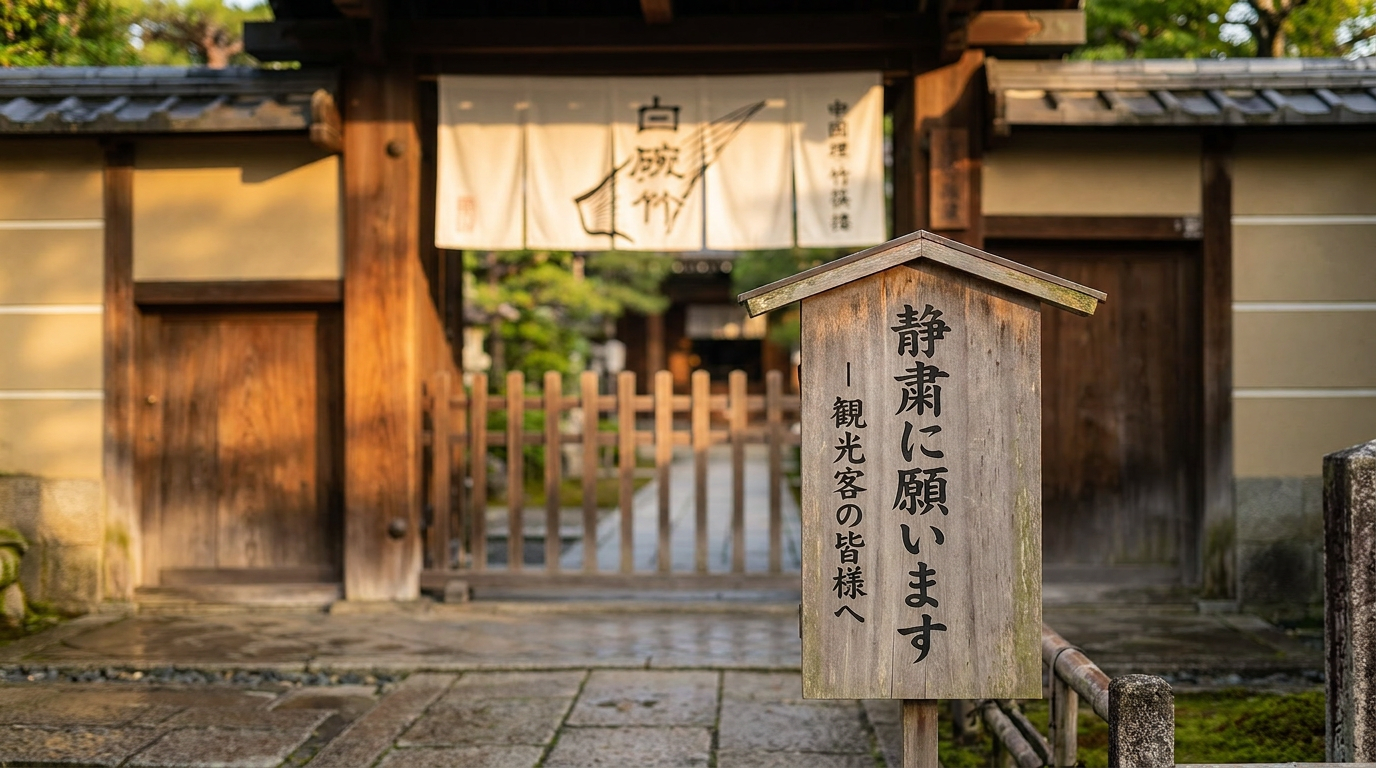
In Kyoto, the focus is on preserving the daily lives of residents in historic districts. The city's Gion neighborhood, famous for its traditional teahouses and geisha entertainers, has become a flashpoint for bad tourist behavior. Reports of visitors trespassing on private property and harassing performers led local officials to ban tourists from specific private alleys entirely.[1][5]
Multilingual signs now clearly mark these restricted zones, and violating the ban carries a strict ¥10,000 fine. While main thoroughfares like Hanamikoji Street remain open to the public, the private alleys where maiko and geiko live and work are now legally protected spaces, signaling that cultural preservation supersedes a visitor's desire for an authentic photograph.[1][5]
Kyoto is also utilizing economic levers to manage its visitor load. In March 2026, the city significantly increased its accommodation tax. While budget stays see a modest bump, travelers booking luxury hotels priced over ¥100,000 per night now face a surcharge of up to ¥10,000 per night. City officials argue this revenue is essential for maintaining historic sites and upgrading public transit strained by tourist use.[5][6]
Kyoto is also utilizing economic levers to manage its visitor load.
The financial recalibration extends to the national level. Beginning in July 2026, Japan's international departure tax—collected automatically via airline tickets—triples from ¥1,000 to ¥3,000 per person. The government has pledged to funnel this revenue directly into environmental infrastructure, conservation programs, and the management of high-traffic destinations.[2][5]

Shopping, a major draw for international visitors, is also undergoing a fundamental systemic change. For years, tourists enjoyed instant tax-free discounts at the register. However, to close loopholes involving the illegal domestic resale of tax-free goods, Japan is transitioning to a European-style refund system starting November 1, 2026.[5][6]
Under the new mechanism, visitors will pay the full price—including the 10% consumption tax—at the point of sale. They must then present their goods and receipts at the airport to claim a refund before departure. Furthermore, the previous ¥500,000 purchase limit has been removed, but transactions exceeding ¥1 million now require stores to register the serial numbers of the purchased items.[5][6]
Transit etiquette has also been formalized into enforceable rules. On the Tokaido Shinkansen, which connects Tokyo, Nagoya, and Osaka, the number of non-reserved cars has been reduced, making advance booking nearly mandatory during peak hours. Additionally, travelers with oversized luggage must reserve specific seats with designated storage space; failing to do so incurs a ¥1,000 penalty fee onboard.[5][6]

Local municipalities are increasingly empowered to enact their own behavioral ordinances. Osaka, for example, implemented a city-wide street smoking ban that carries a ¥1,000 fine, expanding on localized ward rules in Tokyo. Meanwhile, the national government is actively debating the implementation of dual pricing at state-run museums and heritage sites, which would charge foreign tourists higher entry fees to subsidize the rising costs of multilingual guides and visitor services.[5][6]
The overarching goal of these interconnected policies is "regional dispersion." By making the heavily trafficked Golden Route of Tokyo, Kyoto, and Osaka more expensive and tightly regulated, the Japan National Tourism Organization hopes to steer travelers toward lesser-known regions like Shikoku, Tohoku, and the Noto Peninsula.[2][3]
This strategy aligns with the Japan Sustainable Tourism Standard for Destinations (JSTS-D), a framework guiding rural municipalities in eco-management. By encouraging longer stays in rural areas, the government aims to distribute the economic benefits of tourism more evenly while alleviating the pressure on urban infrastructure.[2][4]

Ultimately, Japan's 2026 tourism rules are not designed to deter visitors, but to filter for those willing to respect the country's cultural and environmental boundaries. The era of frictionless, volume-driven travel has ended, replaced by a model that demands more planning, higher financial contribution, and a deeper awareness of the local ecosystem.[2][6]
How we got here
March 2026
Kyoto significantly increases its accommodation tax, and the national government approves the New Tourism Nation Promotion Basic Plan.
July 2026
Japan's international departure tax triples from ¥1,000 to ¥3,000 per person.
November 2026
Japan transitions its tax-free shopping program to an airport refund system.
Viewpoints in depth
Sustainable Tourism Advocates
Emphasize the necessity of shifting the industry's focus from volume to value.
Proponents of the New Tourism Nation Promotion Basic Plan argue that Japan's cultural and environmental assets are finite resources that cannot sustain infinite visitor growth. By implementing the Japan Sustainable Tourism Standard for Destinations (JSTS-D), advocates believe the country can protect fragile ecosystems like Mount Fuji while ensuring that tourism revenue directly funds conservation. They view the increased departure taxes and regional dispersion strategies not as deterrents, but as essential tools to build a shock-proof, sustainable travel economy.
Local Municipalities
Focus on the daily reality of overtourism and the need to protect resident privacy.
For local governments in hotspots like Kyoto and Osaka, the influx of tourists has transitioned from an economic boon to a civic burden. Municipal leaders point to strained public transit, excessive litter, and the harassment of traditional performers in districts like Gion as proof that strict behavioral boundaries are required. The introduction of steep fines for trespassing and localized bans on street smoking are seen as necessary interventions to reclaim the livability of these cities for the people who actually reside there.
International Travelers
Highlight the increased friction and financial cost of navigating the new regulations.
While many visitors understand the environmental rationale behind the new rules, the practical reality is a more expensive and logistically complex trip. Travel guides and international tourists note that the combination of higher accommodation taxes, tripled departure fees, and the upcoming shift to an airport tax-refund system significantly alters travel budgets. Furthermore, the strict advance booking requirements for Mount Fuji and Shinkansen luggage space remove much of the spontaneity that once characterized backpacking through Japan.
What we don't know
- Whether the shift to an airport tax-refund system will cause significant bottlenecks at major departure hubs like Narita and Haneda.
- If the national government will officially approve dual pricing for foreign tourists at state-run museums and heritage sites.
- How effectively the 'regional dispersion' strategy will actually move tourists away from the Golden Route to rural prefectures.
Key terms
- Bullet Climbing
- The dangerous practice of attempting to summit a mountain overnight without resting or acclimatizing to the altitude, which Mount Fuji's new gate closures aim to prevent.
- Golden Route
- The heavily trafficked tourist itinerary connecting Tokyo, Kyoto, and Osaka, which the government is now trying to de-emphasize to reduce overcrowding.
- JSTS-D
- The Japan Sustainable Tourism Standard for Destinations, a national framework guiding local governments in eco-management and responsible tourism.
- Regional Dispersion
- The strategy of directing tourists away from overcrowded major cities toward rural or lesser-known prefectures to distribute economic benefits and reduce infrastructure strain.
Frequently asked
Do I need a visa to visit Japan in 2026?
Visa-free entry remains unchanged for eligible nationals, including citizens of the US, UK, Canada, and the EU. A rumored electronic authorization system (JESTA) will not launch until 2029.
How does the new tax-free shopping system work?
Starting November 1, 2026, tourists must pay the full price—including the 10% consumption tax—at the store. They can then claim a refund at the airport before departure by presenting their goods and receipts.
Can I still take photos in Kyoto?
Yes, photography is permitted on main public streets like Hanamikoji. However, entering and photographing in the private alleys of the Gion district is strictly banned and carries a ¥10,000 fine.
What happens if I bring oversized luggage on the Shinkansen?
You must reserve a specific seat with designated luggage space in advance. Failing to do so will result in a ¥1,000 penalty fee charged by the conductor onboard.
Sources
Source coverage
6 outlets
3 viewpoints surfaced






[1]AfarLocal Municipalities
Popular Japan Attractions Restrict Visitors in Effort to Curb Bad Tourist Behavior
Read on Afar →[2]Hospitality Asia MediaSustainable Tourism Advocates
Japan's 2026 Sustainable Tourism Pivot: A Policy-Driven Transformation
Read on Hospitality Asia Media →[3]Japan National Tourism OrganizationSustainable Tourism Advocates
Visitor Statistics and Sustainable Destination Guidelines 2026
Read on Japan National Tourism Organization →[4]Japan Cabinet OfficeSustainable Tourism Advocates
New Tourism Nation Promotion Basic Plan
Read on Japan Cabinet Office →[5]Self Guide JapanInternational Travelers
Japan Tourist Rules 2026: Taxes, Fines, and Fees Explained
Read on Self Guide Japan →[6]Factlen Editorial TeamInternational Travelers
Synthesis by Factlen editorial team
Read on Factlen Editorial Team →
Every angle. Every day.
Get travel stories with full source coverage and perspective breakdowns delivered to your inbox.