
The Legal Framework of the Right to Repair: How 2026 Laws Are Changing Device Ownership
A wave of new legislation across the US and EU is dismantling manufacturer monopolies, granting consumers the legal right to fix their own electronics, appliances, and machinery.
By Factlen Editorial Team
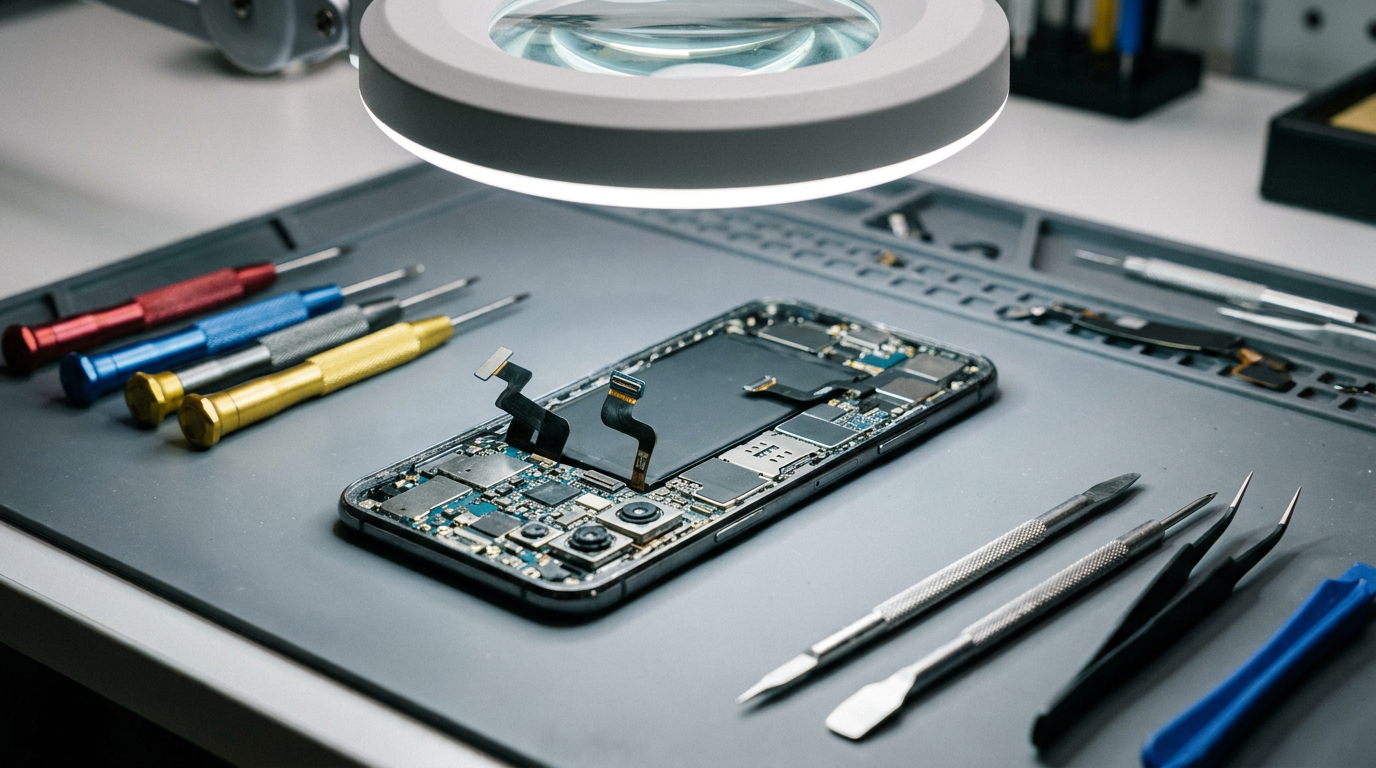
- Consumer Advocates & Independent Repairers
- Argue that true ownership requires the ability to repair, modify, and maintain products without manufacturer interference.
- Government Enforcement & Policy
- Utilize legislative and agency power to break up repair monopolies and enforce fair market competition.
- Legal & Regulatory Analysts
- Focus on the complex interplay between state laws, federal warranty enforcement, and antitrust litigation.
- Environmental & Sustainability Watchdogs
- View repairability mandates as a critical mechanism to reduce global e-waste and promote a circular economy.
What's not represented
- · Small independent repair shop owners facing immediate local competition
- · Authorized dealer networks losing exclusive service revenue
Why this matters
For decades, consumers have been forced to rely on expensive, manufacturer-authorized repair networks when their devices break. These new laws legally guarantee your ability to buy affordable parts, access repair manuals, and choose independent mechanics, saving money and extending the life of the products you own.
Key points
- New laws in the US and EU are forcing manufacturers to provide consumers and independent shops with repair manuals, tools, and parts.
- The EU's directive, effective July 2026, extends a product's warranty by 12 months if a consumer chooses to repair it rather than replace it.
- Eight US states have passed comprehensive electronics repair laws, with Washington, Colorado, and Texas laws taking effect in 2026.
- States like Oregon and Colorado have explicitly banned 'parts pairing,' preventing companies from using software to block third-party components.
- The FTC is aggressively enforcing the Magnuson-Moss Warranty Act to prevent companies from illegally voiding warranties over independent repairs.
For decades, the unwritten rule of modern consumer electronics and heavy machinery was simple: if it breaks, the manufacturer dictates how, when, and for how much it gets fixed. But in 2026, a sweeping legal transformation is fundamentally rewriting the rules of ownership. Across the United States and the European Union, new "Right to Repair" laws are taking effect, dismantling the monopolies that original equipment manufacturers have long held over the repair aftermarket.[7]
The core premise of the right to repair movement is that purchasing a product should grant the owner full control over its maintenance. Historically, companies have restricted access to diagnostic software, proprietary tools, and official replacement parts, forcing consumers into authorized repair networks that often charge premium prices or push for full device replacement. The new legal frameworks mandate that manufacturers provide independent repair shops and everyday consumers with the exact same resources available to their own technicians, on fair and reasonable terms.[2][5]
The most significant international shift arrives on July 31, 2026, when the European Union's Right to Repair Directive officially takes effect across all member states. The directive covers a broad spectrum of consumer goods, including smartphones, tablets, washing machines, and refrigerators. Crucially, it introduces a novel legal mechanism to incentivize sustainability: if a European consumer chooses to repair a defective product rather than replace it under the seller's liability framework, their legal guarantee is automatically extended by an additional twelve months.[3]
In the United States, the legal landscape is being driven aggressively at the state level. As of 2026, eight states—California, Colorado, Connecticut, Minnesota, New York, Oregon, Washington, and Texas—have passed comprehensive consumer electronics repair laws. Washington and Colorado's laws went into effect in January 2026, while Texas's legislation, which covers electronics valued over fifty dollars, becomes enforceable in September.[2][6]

Because these states represent a massive portion of the American consumer market, manufacturers are finding it logistically impossible to create state-specific hardware. Consequently, the legal requirements in places like California and New York are effectively becoming the de facto national standard for device design and parts availability, forcing a nationwide shift in how products are built and supported.[4]
The legislative push extends far beyond smartphones and laptops. Agricultural machinery has become a major battleground. Modern tractors are essentially rolling computers, and manufacturers have historically locked farmers out of the engine control units, requiring an authorized dealer to clear simple error codes before the machine can operate. New laws in states like Colorado specifically target agricultural equipment, ensuring farmers have the software access necessary to fix their own machinery during critical harvest windows.[2][4]
Similarly, the medical device and mobility industries are facing new scrutiny. Colorado, Nevada, and Oregon have enacted specific right-to-repair laws for motorized wheelchairs, preventing users from being stranded for weeks waiting for an authorized technician to perform a basic battery or joystick replacement.[6]
Similarly, the medical device and mobility industries are facing new scrutiny.
The most sophisticated legal battles of 2026 center on a practice known as "parts pairing." This is a digital rights management technique where a manufacturer uses software to cryptographically link a specific component—like a screen or a battery—to the device's motherboard. If a consumer or independent shop replaces the screen with an identical, genuine part salvaged from another phone, the software detects the mismatched serial number and disables features or bombards the user with warning messages.[5]
Lawmakers are now actively outlawing this practice. Oregon and Colorado recently became the first jurisdictions to explicitly ban parts pairing in their right-to-repair statutes. Under these laws, manufacturers are legally prohibited from using software to degrade the performance of a device or display misleading alerts simply because an independent repair provider installed an aftermarket or salvaged component.[2][6]

At the federal level, the United States Federal Trade Commission (FTC) is utilizing existing consumer protection laws to enforce repair rights. The agency has aggressively deployed the Magnuson-Moss Warranty Act, a 1975 federal law that governs consumer product warranties. Under this act, it is illegal for a company to void a consumer's warranty simply because they used an independent mechanic or a third-party replacement part, unless the manufacturer provides those parts and services completely free of charge.[1]
The FTC has issued numerous warning letters to companies whose warranty documentation implies that third-party repairs will void coverage. Furthermore, the agency, alongside state attorneys general, has launched antitrust lawsuits against major agricultural and tech manufacturers, alleging that restricting access to diagnostic software constitutes an illegal monopoly over the repair aftermarket.[1][4]
Manufacturers have consistently pushed back against these legislative efforts, citing three primary concerns: intellectual property, cybersecurity, and physical safety. Industry lobbying groups argue that forcing companies to release diagnostic software could expose proprietary source code to competitors or malicious actors. They also contend that allowing untrained consumers to handle volatile components, such as high-capacity lithium-ion batteries, poses a severe fire risk.[4][5]
However, consumer advocates and regulators have largely dismissed these defenses. A landmark FTC report to Congress found "scant evidence" to support the claim that independent repairs pose greater safety or cybersecurity risks than authorized repairs. Lawmakers have structured the new 2026 statutes to explicitly protect trade secrets, requiring manufacturers to share only the specific schematics and tools necessary for repair, not the underlying source code.[1][2]
The environmental stakes of this legal shift are massive. Electronic waste is the fastest-growing waste stream globally, with millions of tons of repairable devices discarded annually. By breaking down the artificial barriers to repair, governments are attempting to force a transition toward a circular economy, where the lifespan of consumer electronics is measured in decades rather than years.[3][7]

The corporate response has been a reluctant but undeniable pivot. Anticipating the wave of 2026 legislation, major technology companies that once fiercely lobbied against the right to repair have begun launching their own self-service repair programs. While advocates argue these programs often price parts too high to be truly competitive, the mere existence of public repair manuals and official parts stores represents a total reversal of a decade-old corporate strategy.[5]
Looking ahead, the ultimate goal for advocates is a unified federal law. In the United States, the bipartisan REPAIR Act, which focuses heavily on motor vehicle telematics and diagnostic data, continues to advance through congressional committees. Until a comprehensive federal standard is achieved, the patchwork of state laws and FTC enforcement actions will continue to drive the market.[4][6]
What is clear in 2026 is that the legal framework surrounding ownership has permanently shifted. The era of the disposable device is being legislated out of existence, replaced by a system that empowers consumers, supports local repair economies, and reasserts a fundamental principle: if you cannot fix it, you do not truly own it.[7]
How we got here
2012
Massachusetts passes the first automotive right-to-repair law, setting a precedent for consumer access to diagnostic data.
2021
The FTC issues a policy statement committing to aggressive action against unfair repair restrictions imposed by manufacturers.
2024
The European Union adopts the Right to Repair Directive, aiming to reduce e-waste and promote a circular economy.
Jan 2026
Comprehensive consumer electronics repair laws officially take effect in Washington and Colorado.
July 2026
The EU Right to Repair Directive becomes enforceable across all member states.
Viewpoints in depth
The Consumer Rights View
Advocates argue that true ownership requires the unhindered ability to repair and maintain products.
Consumer advocacy groups like iFixit argue that the transition to sealed, unrepairable devices was a deliberate corporate strategy to force consumers into shorter upgrade cycles. They maintain that if a consumer purchases a physical good, they should have the absolute right to open it, modify it, and fix it using whatever parts they choose. To these advocates, software locks like parts pairing are not security features, but artificial monopolies designed to extract aftermarket revenue.
The Manufacturer & Security View
Original equipment manufacturers argue that repair restrictions are necessary to protect intellectual property and consumer safety.
Industry lobbying groups representing tech and agricultural giants contend that modern devices are highly complex and potentially dangerous if mishandled. They argue that releasing diagnostic software could expose proprietary source code to competitors. Furthermore, they warn that allowing untrained individuals to replace volatile components, such as high-capacity lithium-ion batteries, poses severe fire and physical safety risks, and that authorized networks exist to ensure quality control.
The Environmental View
Sustainability watchdogs view repairability as the most effective tool to combat the global e-waste crisis.
Environmental organizations emphasize that electronic waste is the fastest-growing waste stream on the planet. They argue that recycling alone is insufficient to address the environmental impact of manufacturing new devices. By legally mandating repairability, these groups believe society can transition to a circular economy, drastically reducing the carbon footprint associated with mining rare earth metals and manufacturing replacement electronics.
The Regulatory View
Government agencies are utilizing antitrust and consumer protection laws to break up repair monopolies.
Regulators like the FTC view repair restrictions through the lens of market competition. When a manufacturer controls both the primary product market and the secondary repair market, they can artificially inflate prices and harm consumers. Regulators argue that enforcing laws like the Magnuson-Moss Warranty Act ensures a free market where independent mechanics can compete fairly with authorized dealers, ultimately driving down costs for the end user.
What we don't know
- Whether the US Congress will successfully pass a unified federal right-to-repair law to replace the current patchwork of state legislation.
- How aggressively manufacturers will attempt to find new legal or technical loopholes to circumvent the bans on parts pairing.
- The exact impact these laws will have on the pricing of official replacement parts sold directly to consumers.
Key terms
- Parts Pairing
- A digital rights management practice where a manufacturer uses software to cryptographically link a specific hardware component to a device, preventing the use of third-party replacement parts.
- Magnuson-Moss Warranty Act
- A 1975 US federal law that governs consumer product warranties, making it illegal to condition a warranty on the use of authorized parts or services.
- Telematics
- The technology used to send, receive, and store information relating to remote objects, heavily used in modern vehicles and tractors for diagnostic data.
- Circular Economy
- An economic model focused on minimizing waste and making the most of resources by repairing, refurbishing, and recycling products rather than discarding them.
- Original Equipment Manufacturer (OEM)
- The company that originally manufactured the product, such as Apple, John Deere, or Samsung, which historically controlled the authorized repair networks.
Frequently asked
Does fixing my own device void the manufacturer's warranty?
Under the federal Magnuson-Moss Warranty Act, it is illegal for a manufacturer to void your warranty simply because you used an independent repair shop or a third-party part, unless they provide those parts and services for free.
What is 'parts pairing' and why is it being banned?
Parts pairing is a software lock that links a specific component (like a screen) to the device's motherboard, triggering warnings or disabling features if a third-party part is installed. States like Oregon and Colorado have banned this practice to ensure fair competition.
Do these laws only apply to smartphones and computers?
No. While consumer electronics are a major focus, various state laws also cover agricultural equipment like tractors, motorized wheelchairs, and household appliances.
When does the European Union's repair directive take effect?
The EU's Right to Repair Directive becomes enforceable across all member states on July 31, 2026, and includes a provision that extends a product's warranty by 12 months if the consumer chooses repair over replacement.
Sources
Source coverage
7 outlets
4 viewpoints surfaced







[1]Federal Trade CommissionGovernment Enforcement & Policy
FTC Enforcement on Right to Repair and Magnuson-Moss Warranty Act
Read on Federal Trade Commission →[2]National Conference of State LegislaturesLegal & Regulatory Analysts
Right to Repair Legislation Tracker 2026
Read on National Conference of State Legislatures →[3]European CommissionGovernment Enforcement & Policy
Directive (EU) 2024/1799: Common rules promoting the repair of goods
Read on European Commission →[4]Husch Blackwell LLPLegal & Regulatory Analysts
The 'Right to Repair' Landscape: Federal and State Enforcement
Read on Husch Blackwell LLP →[5]iFixitConsumer Advocates & Independent Repairers
The Right to Repair Legal Framework
Read on iFixit →[6]Waste DiveEnvironmental & Sustainability Watchdogs
Right-to-repair laws take effect in multiple states in 2026
Read on Waste Dive →[7]Factlen Editorial TeamConsumer Advocates & Independent Repairers
Synthesis by Factlen editorial team
Read on Factlen Editorial Team →

Every angle. Every day.
Get law justice stories with full source coverage and perspective breakdowns delivered to your inbox.