
How AI Drone Swarms Are Rewriting the Brutal Math of Landmine Clearance
Humanitarian organizations are deploying multi-spectrum drones and machine learning to detect unexploded ordnance, achieving over 96% accuracy in recent field tests and drastically accelerating the pace of land reclamation.
By Factlen Editorial Team
- Humanitarian Deminers
- Focused on the practical application of technology to save lives and return land to communities.
- Defense Tech Developers
- Focused on pushing the boundaries of sensor fusion, machine learning, and autonomous drone capabilities.
- Field Researchers
- Focused on rigorous testing, identifying limitations, and solving the false-positive problem.
What's not represented
- · Local farmers waiting to reclaim contaminated land
- · Manufacturers of traditional metal detection equipment
Why this matters
Clearing landmines manually is a slow, deadly process that leaves agricultural communities in post-conflict zones impoverished for decades. By automating detection from the air, this technology is returning safe land to farmers exponentially faster while keeping human deminers out of the blast radius.
Key points
- AI-powered drone swarms are replacing slow, dangerous manual sweeps in humanitarian mine clearance.
- Sensor fusion combines RGB, LiDAR, and thermal imaging to detect unexploded ordnance from the air.
- Recent field studies show deep learning models achieving over 96% accuracy in identifying landmines via thermal signatures.
- The technology acts as a diagnostic tool to shrink suspected hazardous areas, though human verification is still required.
- False positives from vegetation and scrap metal remain a challenge for current machine learning models.
The mathematics of landmine warfare have always heavily favored the instigator. A standard anti-personnel mine costs between $3 and $30 to manufacture and deploy. Clearing that same mine, using traditional manual methods, costs between $300 and $1,000, while putting human operators at severe risk of death or dismemberment. For decades, the pace of contamination has vastly outstripped the pace of remediation, leaving vast tracts of agricultural land unusable across post-conflict zones from Angola to Ukraine.[1][6]
But a significant shift is underway in humanitarian mine action, driven by the convergence of commercial drone technology and advanced artificial intelligence. Rather than relying solely on human deminers sweeping fields with handheld metal detectors—a process plagued by false positives from harmless scrap metal—organizations are deploying autonomous drone swarms equipped with multi-spectrum sensors to map and analyze contaminated zones from the air.[5][6]
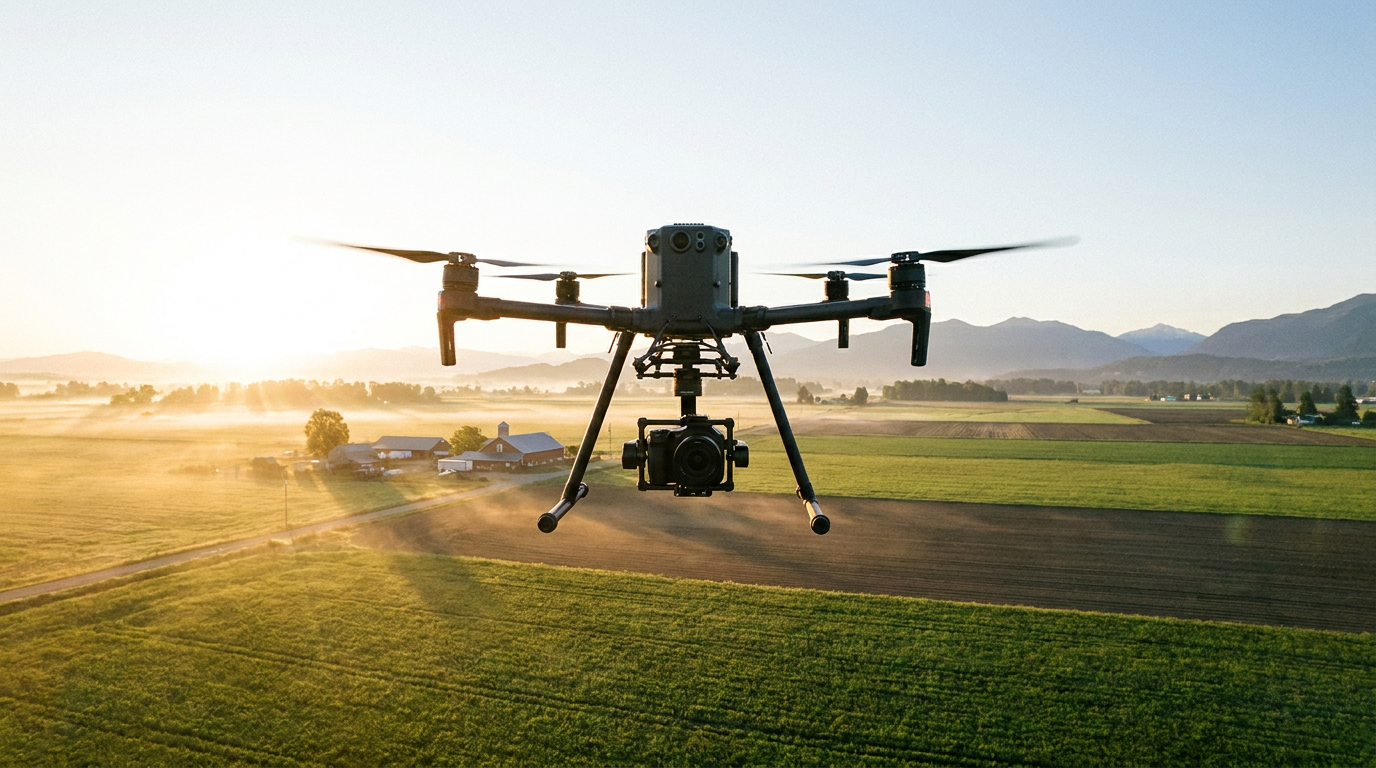
The core mechanism relies on "sensor fusion." Commercial off-the-shelf drones are outfitted with high-resolution RGB cameras, LiDAR, and thermal infrared sensors. As these drones fly over a suspected minefield, they capture thousands of overlapping images. These massive datasets are then fed into machine learning algorithms trained specifically to recognize the visual and thermal signatures of unexploded ordnance (UXO).[2][4]

The evidence for this approach's efficacy is mounting rapidly. In Ukraine, which has become a primary testing ground for these technologies, the AI software company Safe Pro AI has processed over 1.66 million drone images across 6,705 hectares of land—an area roughly the size of Manhattan. Their proprietary AI models, which can identify more than 150 different types of explosive threats including cluster munitions and anti-tank mines, successfully located over 28,000 threats.[2]
The HALO Trust, the world's largest humanitarian landmine clearance organization, has integrated these AI-powered drone systems into their daily operations. According to the organization's research and development division, the software allows them to recognize landmines from drone imagery in a fraction of the time it would take a human operator, acting as a massive force multiplier for their ground teams.[5]
The most compelling recent data comes from the application of thermal imaging. Because explosives and their casings absorb and radiate heat differently than surrounding soil and vegetation, they create distinct thermal anomalies. A 2025 peer-reviewed study evaluated a deep learning model utilizing drones equipped with Zenmuse XT infrared cameras. The researchers achieved a staggering 96.14% test accuracy in identifying landmines from thermal images, demonstrating the model's ability to generalize across different terrains.[3]
The most compelling recent data comes from the application of thermal imaging.
Similarly, joint research between Waseda University and the International Committee of the Red Cross (ICRC) has utilized thermal sensing to detect buried landmines. In controlled field tests in Denmark and Jordan, their machine learning system correctly predicted the location of landmines with near-perfect accuracy based on infrared brightness values.[4]

However, the evidence pack also reveals clear limitations and areas of uncertainty. While AI excels at identifying surface-lain mines and recently deployed ordnance, deeply buried legacy mines remain a significant challenge. Thermal imaging can only detect temperature differentials close to the surface, meaning older mines buried deep in the soil still require ground-penetrating radar or traditional detection methods.[4][6]
False positives also remain a persistent hurdle. The Waseda University researchers noted that while their system successfully found the mines, it occasionally assigned low confidence scores to real threats and mistakenly identified surrounding vegetation or sun-baked rocks as landmines. In a real-world demining scenario, every false positive must be treated as a live threat and investigated by a human or robot, which slows down the overall clearance rate.[4]
Furthermore, the technology is locked in a continuous arms race with mine manufacturers. The United Nations Mine Action Service (UNMAS) reports that modern conflict zones are seeing the deployment of "high-tech" landmines equipped with seismic, acoustic, or magnetic sensors. These devices are designed to detonate when they detect the specific magnetic field of a drone or the vibration of an approaching demining robot, turning the detection equipment itself into a trigger.[1]
Because of these limitations, experts emphasize that AI and drones are a diagnostic tool, not a complete solution. The current consensus in the humanitarian sector is that AI shrinks the "suspected hazardous area" dramatically. By processing volumes of data in seconds, AI can confidently declare certain areas free of surface threats, reducing a suspected zone the size of a football pitch down to a few square meters.[1][6]

To restore full confidence for civilians, these high-tech diagnostics are being paired with brute-force mechanical methods. For example, once an AI drone swarm declares an agricultural field largely clear, heavy armored mine rollers can be driven through the area to detonate any deeply buried remnants, providing the final layer of assurance needed for farmers to safely return to their tractors.[1]
Looking ahead, the next frontier is coupling AI detection with remote robotic neutralization. Researchers envision a workflow where a drone swarm maps the threats, and ground-based robots—operating similarly to remote surgical robots—are deployed to defuse or detonate the ordnance without a human ever stepping foot in the blast radius.[6]
While full end-to-end automation of mine clearance remains years away, the integration of AI into the detection phase is already saving lives and limbs. By removing humans from the initial reconnaissance phase and accelerating the mapping process, this technology is slowly tilting the brutal mathematics of mine warfare back in favor of the humanitarians.[5][6]
How we got here
Pre-2020
Humanitarian demining relies almost entirely on manual sweeps with handheld metal detectors and animal detection.
2022-2023
The conflict in Ukraine creates the largest heavily mined area in the modern world, prompting a surge in defense tech innovation.
2024
Commercial drone swarms equipped with AI are deployed at scale in conflict zones, mapping thousands of hectares.
2025-2026
Peer-reviewed studies confirm thermal AI detection accuracy exceeding 96%, validating the technology for widespread humanitarian use.
Viewpoints in depth
Humanitarian Deminers
Focused on the practical application of technology to save lives and return land to communities.
For organizations like The HALO Trust and the UN, the primary metric of success is safety and speed. They view AI not as a replacement for human expertise, but as a vital diagnostic tool that shrinks the 'suspected hazardous area.' By quickly ruling out safe zones, they can concentrate their human resources on confirmed threat areas, drastically reducing the time it takes to return agricultural land to local farmers.
Defense Tech Developers
Focused on pushing the boundaries of sensor fusion, machine learning, and autonomous drone capabilities.
Technology companies and defense contractors emphasize the scalability of their solutions. By utilizing commercial off-the-shelf drones and cloud-based AI processing, they argue that demining can be democratized and deployed rapidly without waiting for specialized military hardware. Their focus is on expanding the datasets to recognize hundreds of different munitions and improving the algorithms to process millions of images in near real-time.
Field Researchers
Focused on rigorous testing, identifying limitations, and solving the false-positive problem.
Academic researchers and field scientists provide a necessary check on technological optimism. While their studies validate high accuracy rates in controlled environments, they highlight the persistent challenges of false positives caused by vegetation, rocks, and scrap metal. They caution that until AI can reliably distinguish between a sun-baked rock and a shallowly buried mine 100% of the time, human verification remains a dangerous necessity.
What we don't know
- How quickly AI models can adapt to newly invented 'high-tech' mines designed to evade drone detection.
- When fully autonomous robotic neutralization will be reliable enough to deploy without human oversight.
Key terms
- UXO
- Unexploded ordnance; explosive weapons like bombs, shells, and landmines that did not explode when they were deployed and still pose a risk.
- Sensor Fusion
- The process of combining data from multiple different sensors (like cameras, thermal imaging, and radar) to create a more accurate understanding of an environment.
- Thermal Anomaly
- A localized difference in temperature compared to the surrounding area, often used to spot buried objects that absorb heat differently than soil.
- Ground-Penetrating Radar (GPR)
- A geophysical method that uses radar pulses to image the subsurface, necessary for finding deeply buried objects.
Frequently asked
Can AI drones actually disarm the landmines?
No. Currently, AI drones are only used for detection and mapping. Human deminers or specialized ground robots are still required to safely neutralize or detonate the explosives.
Does this technology work on buried landmines?
It works well for surface-scattered mines and shallowly buried ordnance using thermal imaging, but deeply buried legacy mines still require ground-penetrating radar or traditional methods.
Why is thermal imaging used instead of regular cameras?
Explosives and their metal or plastic casings absorb and radiate heat differently than natural soil and vegetation, making them glow distinctly on thermal cameras even if they are camouflaged.
Sources
Source coverage
6 outlets
3 viewpoints surfaced






[1]United NationsHumanitarian Deminers
Drone use a tool, not a solution: AI as a booster for mine action
Read on United Nations →[2]Business InsiderDefense Tech Developers
Safe Pro AI Surpasses 1.6 Million Drone Images Analyzed in Ukraine
Read on Business Insider →[3]ResearchGateField Researchers
Deep Learning-Based Landmine Detection Using UAV Thermal Imaging
Read on ResearchGate →[4]Waseda UniversityField Researchers
Detecting buried landmines using drones and AI
Read on Waseda University →[5]The HALO TrustHumanitarian Deminers
Pioneering Technology in Mine Clearance
Read on The HALO Trust →[6]Factlen Editorial TeamField Researchers
Synthesis by Factlen editorial team
Read on Factlen Editorial Team →
Every angle. Every day.
Get defense security stories with full source coverage and perspective breakdowns delivered to your inbox.