
U.S. and Iran Begin High-Stakes Peace Talks in Switzerland Amid Strait of Hormuz Standoff
Delegations led by U.S. Vice President JD Vance and Iranian Parliament Speaker Mohammad Bagher Ghalibaf have arrived in Switzerland to negotiate a permanent end to the 2026 war, though the talks face immediate hurdles over the closure of the Strait of Hormuz.
By Factlen Editorial Team
- U.S. Administration
- Focuses on containing Iran's nuclear program and ensuring the Strait of Hormuz remains open to free global trade.
- Iranian Leadership
- Demands the lifting of economic sanctions, control over the Strait, and an end to Israeli operations in Lebanon.
- Global Energy Markets
- Prioritizes the swift reopening of maritime trade routes to stabilize oil prices and prevent further economic damage.
- Regional Mediators
- Seeks to de-escalate tensions and facilitate dialogue to prevent the conflict from engulfing the broader Middle East.
What's not represented
- · Israeli Government
- · Lebanese Civilians
- · European Naval Commands
Why this matters
The outcome of these 60-day negotiations will determine whether the global economy can recover from the most severe energy supply shock in modern history. With 20% of the world's oil trade hanging in the balance, a failure to secure the Strait of Hormuz could trigger a renewed spike in global inflation and fuel shortages.
Key points
- U.S. and Iranian delegations have begun 60 days of technical peace talks in Switzerland.
- Iran has kept the Strait of Hormuz closed, citing Israeli strikes in Lebanon as a ceasefire violation.
- The U.S. delegation aims to make progress on the Lebanon conflict and Iran's nuclear program.
- The Strait's closure previously disrupted 20% of global oil trade, causing a worldwide fuel crisis.
- President Trump threatened to impose U.S. tolls on the Strait if a final deal is not reached.
- Mediators from Qatar and Pakistan are facilitating the high-stakes negotiations.
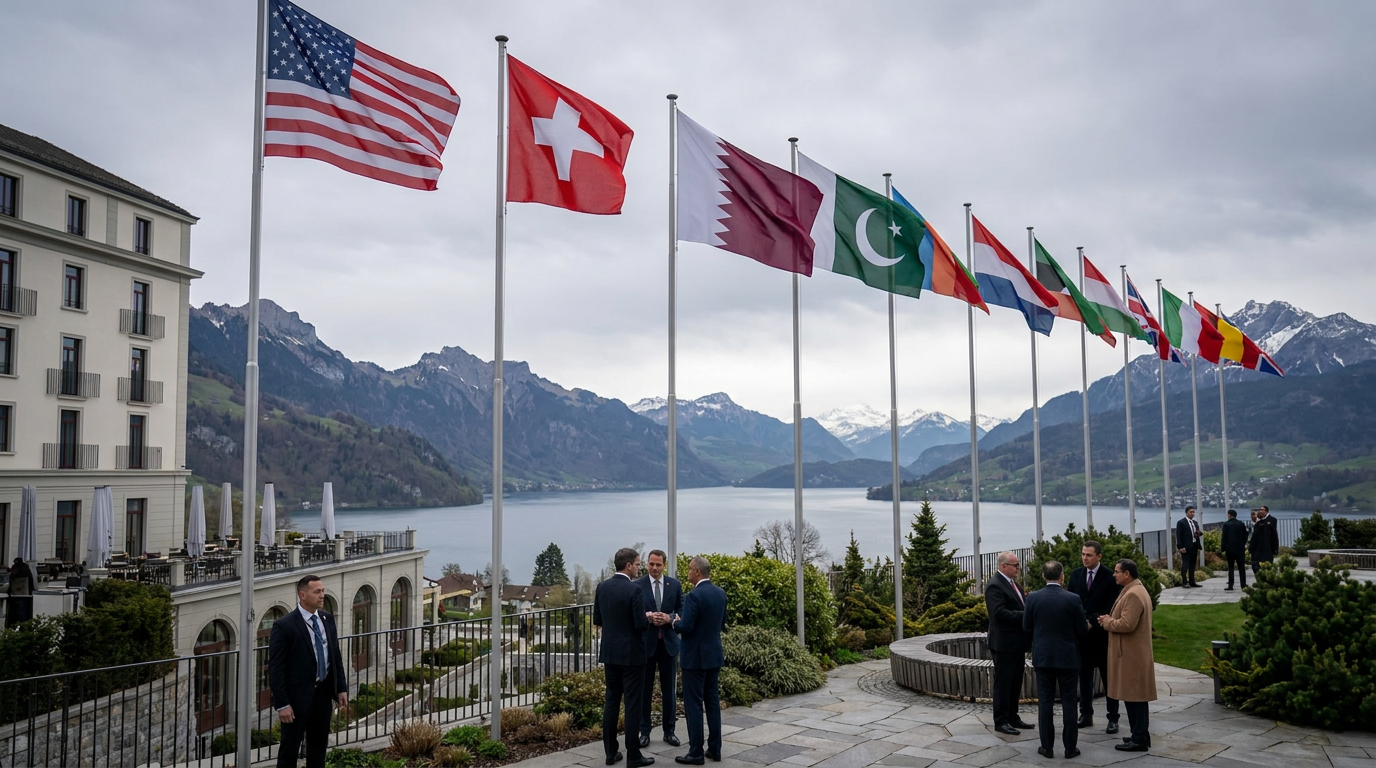
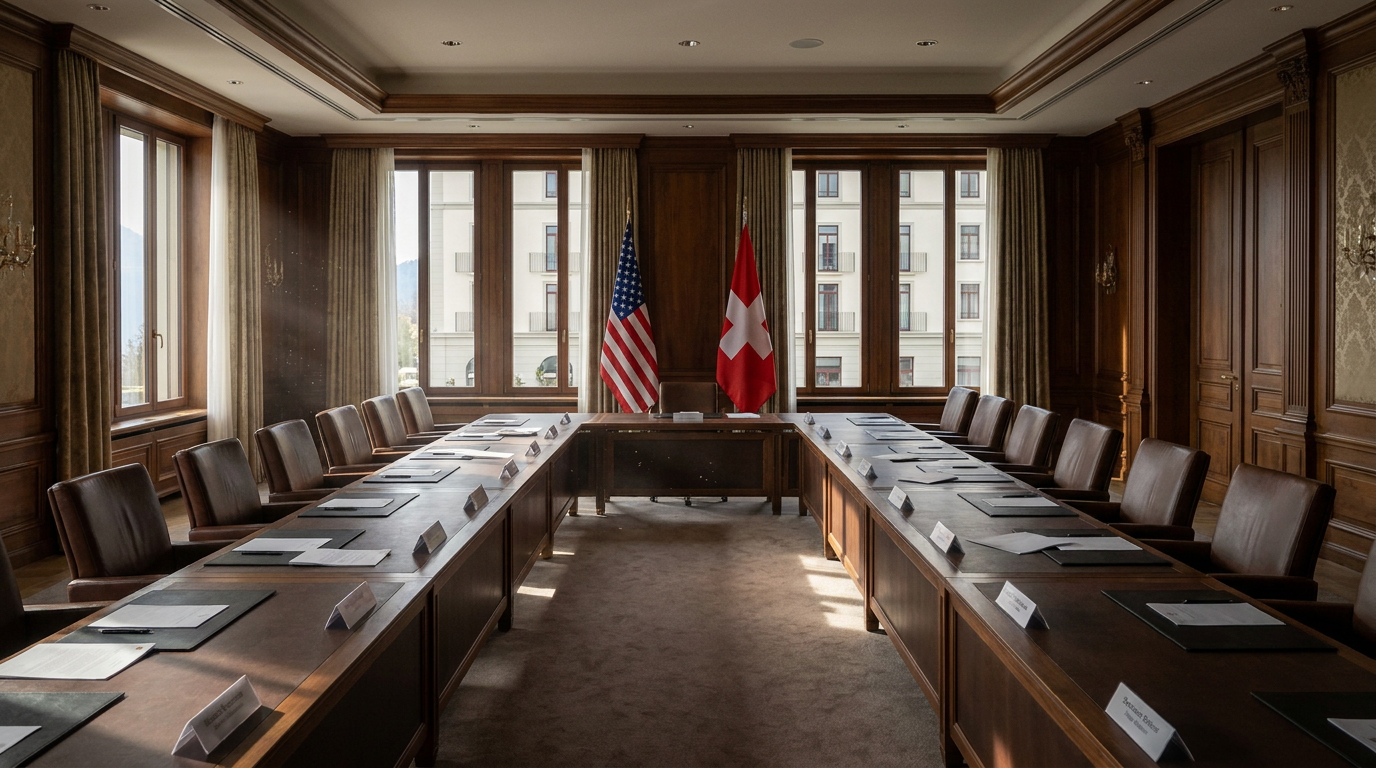
High-level delegations from the United States and Iran have convened at the Bürgenstock luxury resort in Switzerland, marking the start of critical negotiations aimed at securing a permanent end to the four-month war that began in February 2026. The U.S. delegation is led by Vice President JD Vance, while the Iranian team is headed by Parliament Speaker Mohammad Bagher Ghalibaf. The talks are designed to implement the technical details of a 14-point memorandum of understanding (MOU) recently signed by U.S. President Donald Trump and Iranian President Masoud Pezeshkian.[1][2][4]
However, the diplomatic summit faces an immediate crisis before technical discussions can even begin. Iran's Islamic Revolutionary Guard Corps (IRGC) announced over the weekend that it is keeping the vital Strait of Hormuz closed to commercial shipping. Tehran claims the closure is a necessary retaliation against ongoing Israeli military strikes in Lebanon, which Iranian officials argue constitute a blatant violation of the newly established ceasefire.[1][4][5]
The conflict in Lebanon has become the primary sticking point threatening the fragile peace process. The first clause of the U.S.-Iran MOU explicitly requires a ceasefire on all fronts, including the volatile border between Israel and Lebanon. While Iran insists that the agreement mandates a full withdrawal of Israeli troops from southern Lebanese territory, Israel maintains that it must preserve a security buffer zone to protect its northern communities from Hezbollah attacks.[1][2][3]
This disagreement prompted an emergency session on the Israel-Hezbollah conflict to be added to the first day of the Switzerland talks. Vice President Vance acknowledged the urgency of the situation before departing Joint Base Andrews, stating that making progress on both the Lebanon ceasefire and Iran's nuclear program are the two primary focuses for the U.S. delegation. Allowing Iran to introduce the Israel-Hezbollah conflict into bilateral negotiations marks a notable shift in the diplomatic framework.[2][3][4]
The stakes of these negotiations extend far beyond the Middle East, directly impacting the global economy through the mechanism of the Strait of Hormuz. The Strait is a narrow maritime chokepoint connecting the Persian Gulf to the Gulf of Oman and the open ocean. Before the outbreak of the war, approximately 20% of the world's seaborne oil trade and 20% of its liquefied natural gas (LNG) passed through this critical artery.[1][6][7]

The stakes of these negotiations extend far beyond the Middle East, directly impacting the global economy through the mechanism of the Strait of Hormuz.
The prolonged closure of the Strait has triggered what energy analysts describe as a historic logistical supply shock. The disruption caused Brent crude oil prices to surge dramatically earlier in the year, peaking at over $126 per barrel and igniting a worldwide fuel crisis characterized by inflation, supply shortages, and panic buying in heavily import-dependent nations.[6][7]
Financial markets experienced a brief reprieve following the announcement of the MOU, with crude oil prices dropping by roughly 10% and U.S. domestic gas prices dipping below $4 a gallon for the first time since March. Shipping companies cautiously began moving LNG vessels back toward the region. However, energy experts warn that even if the Strait reopens immediately, it could take months for global supply chains and gas prices to fully return to pre-war levels due to the backlog and damage to regional infrastructure.[6][7]

Complicating the economic recovery is a brewing dispute over the future administration of the waterway. Iranian officials have announced plans to introduce a system of maritime fees for ships transiting the Strait of Hormuz once the 60-day negotiation period concludes. Tehran claims this measure is necessary to cover the costs of managing the strait and asserts that European naval escort missions will not be permitted.[1][5]
President Trump swiftly countered Iran's proposal with a threat of his own. In a social media post, the U.S. president declared that if a final, comprehensive deal is not reached within the 60-day window, the United States will impose its own tolls on vessels using the Strait. Trump stated that the collected funds would serve as compensation for "services rendered as the Guardian Angel" to the Middle East, underscoring the deep mistrust regarding freedom of navigation.[1][5]

To navigate these volatile disputes, the Switzerland talks rely heavily on international mediation. Delegations from Qatar and Pakistan, including Pakistani Prime Minister Shehbaz Sharif and military chief Asim Munir, are present at the Bürgenstock resort to facilitate dialogue between Washington and Tehran. These mediators previously helped broker the initial MOU during talks in Islamabad and are now tasked with keeping the technical negotiations on track.[2][3][5]
If the mediators can successfully de-escalate the standoff over Lebanon and the Strait, the core of the 60-day technical talks will pivot to Iran's nuclear program and the lifting of U.S. sanctions. The presence of Iran's deputy oil minister and central bank governor in Switzerland indicates Tehran's urgent desire to unfreeze overseas assets and resume normalized oil exports, which have been severely restricted by the U.S. blockade.[1][2]
For now, the global economy remains in a holding pattern. The 60-day window provides a structured timeline for diplomacy, but the interconnected crises—from the battlefields of southern Lebanon to the shipping lanes of the Persian Gulf—mean that any single miscalculation could collapse the fragile interim agreement and plunge energy markets back into chaos.[1][3][6]
How we got here
Feb 2026
The U.S.-Israel coalition and Iran engage in direct conflict, leading Iran to close the Strait of Hormuz.
Mar-May 2026
The closure triggers a historic global energy shock, with Brent crude prices surging past $126 per barrel.
Mid-June 2026
The U.S. and Iran sign a 14-point memorandum of understanding to halt the war and begin a 60-day negotiation period.
June 20, 2026
Iran announces the Strait will remain closed in protest of Israeli strikes in Lebanon, prompting U.S. threats of maritime tolls.
June 21, 2026
Delegations arrive in Switzerland to begin the technical talks mediated by Qatar and Pakistan.
Viewpoints in depth
U.S. Administration's view
The U.S. prioritizes nuclear containment and guaranteed freedom of navigation in the Persian Gulf.
For the U.S. delegation, the primary goals of the 60-day talks are to secure binding commitments that prevent Iran from developing a nuclear weapon and to permanently reopen the Strait of Hormuz to international shipping. The administration views the interim agreement as a mechanism to stabilize global energy markets while maintaining leverage. President Trump's threat to impose American tolls on the waterway reflects a hardline stance that the U.S. will not allow Tehran to dictate the terms of global maritime trade or use the Strait as a geopolitical weapon.
Iranian Leadership's view
Tehran seeks the immediate lifting of economic sanctions and an end to Israeli military operations in Lebanon.
Iran approaches the negotiations demanding the unfreezing of its overseas assets and the removal of U.S. sanctions that have crippled its oil exports. Iranian negotiators argue that the U.S. must force Israel to halt its strikes in Lebanon and withdraw from southern Lebanese territory, viewing these actions as a direct violation of the ceasefire clause in the MOU. Furthermore, Tehran asserts sovereign control over the Strait of Hormuz, arguing that it has the right to manage the waterway and collect maritime fees from transiting vessels.
Global Energy Markets' view
Energy analysts and shipping firms are focused entirely on the logistical supply shock and the timeline for recovery.
Market analysts view the diplomatic wrangling with deep concern, noting that the physical closure of the Strait of Hormuz overrides any political agreements signed on paper. Even with the MOU in place, shipping companies remain hesitant to send vessels into the region due to the risk of mines and sudden military escalations. Economists warn that the damage to regional energy infrastructure and the massive backlog of delayed shipments mean that consumers will likely face elevated fuel and commodity prices for months, regardless of what happens in Switzerland.
What we don't know
- Whether Israel will agree to halt its military operations in southern Lebanon to satisfy Iran's demands.
- If Iran will actually attempt to enforce maritime fees on international shipping after the 60-day window.
- How quickly global oil and gas prices will normalize if the Strait of Hormuz is permanently reopened.
Key terms
- Strait of Hormuz
- A narrow waterway between the Persian Gulf and the Gulf of Oman that serves as the world's most important oil transit chokepoint.
- Memorandum of Understanding (MOU)
- A formal, non-binding agreement outlining the broad terms of a peace deal before technical details are finalized.
- Brent Crude
- A major trading classification of sweet light crude oil that serves as a benchmark price for purchases of oil worldwide.
- Liquefied Natural Gas (LNG)
- Natural gas that has been cooled to a liquid state for easier and safer storage and transport across oceans.
Frequently asked
Why are the U.S. and Iran meeting in Switzerland?
The two nations are holding 60 days of technical talks to finalize a permanent peace deal following a four-month war, building on a recently signed memorandum of understanding.
Why is the Strait of Hormuz closed?
Iran closed the waterway to commercial shipping in retaliation for the conflict, and recently refused to reopen it, accusing Israel of violating the ceasefire with strikes in Lebanon.
How does the conflict in Lebanon affect the deal?
The U.S.-Iran agreement requires a ceasefire on all fronts. Iran insists this means Israel must withdraw from southern Lebanon, making it a major sticking point in the negotiations.
Will gas prices go down now that talks have started?
Prices dropped slightly after the initial agreement was signed, but analysts warn it could take months for global supply chains to fully recover from the disruption.
Sources
Source coverage
7 outlets
4 viewpoints surfaced







[1]The GuardianIranian Leadership
US-Iran talks in Switzerland to get under way as strait of Hormuz remains closed
Read on The Guardian →[2]Al JazeeraIranian Leadership
US-Iran talks in Switzerland: Is Lebanon top of agenda; who is attending?
Read on Al Jazeera →[3]CBS NewsU.S. Administration
Emergency session on Israel-Hezbollah conflict added to Switzerland peace talks, source says
Read on CBS News →[4]Channel News AsiaU.S. Administration
US, Iran set for peace talks in Switzerland as Strait of Hormuz dispute simmers
Read on Channel News Asia →[5]The HinduRegional Mediators
U.S. and Iran to talk in Switzerland as Tehran says it closed Strait of Hormuz again
Read on The Hindu →[6]TIMEGlobal Energy Markets
Gas Prices Could Take Months to Return to Pre-War Levels Even After U.S.-Iran Deal
Read on TIME →[7]Fitch RatingsGlobal Energy Markets
Oil Market Will Return to Oversupply Once Hormuz Reopens
Read on Fitch Ratings →
Every angle. Every day.
Get news politics stories with full source coverage and perspective breakdowns delivered to your inbox.