
How Spinning Cones and Reverse Osmosis Are Engineering a Better Non-Alcoholic Wine
Advanced dealcoholization technologies are transforming non-alcoholic wine from glorified grape juice into a multi-billion-dollar market, allowing consumers to moderate without sacrificing complexity.
By Factlen Editorial Team
- Dealcoholization Technologists
- Argue that wine is a chemical matrix that can be precisely deconstructed and reassembled without alcohol.
- Mindful Consumers
- Prioritize health and social inclusion, viewing non-alcoholic wine as a necessary evolution for modern drinking habits.
- Traditional Winemakers
- Value minimal intervention and terroir, expressing concern that mechanical dealcoholization strips away the natural soul of the vintage.
What's not represented
- · Addiction recovery advocates
- · Grape growers adapting to lower-brix harvests
Why this matters
As the 'sober curious' movement expands, understanding the technology behind non-alcoholic wine helps consumers navigate a rapidly growing market and make informed choices about what they drink.
Key points
- The global non-alcoholic wine market is projected to reach $5.3 billion by 2033, driven largely by consumers who alternate between alcoholic and zero-proof beverages.
- Unlike grape juice, modern non-alcoholic wine undergoes full fermentation to develop complex flavors before the alcohol is mechanically removed.
- Vacuum distillation lowers the boiling point of alcohol, allowing it to evaporate without applying destructive heat that would ruin the wine's flavor.
- Advanced spinning cone columns use a two-pass system to first extract and save delicate aroma compounds before removing the alcohol.
- Replicating the viscosity and mouthfeel of alcohol remains a challenge, making crisp whites and sparkling wines more successful than heavy reds.
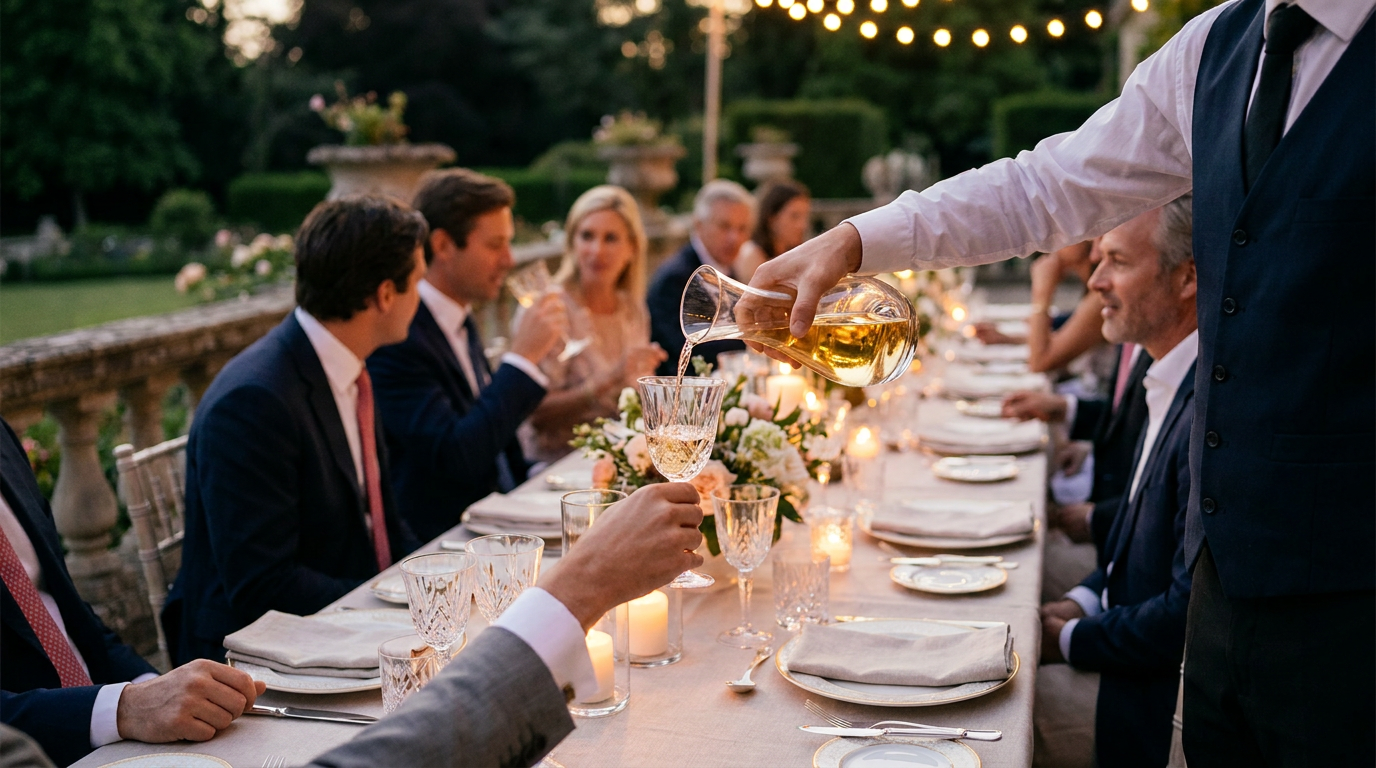
For decades, the non-alcoholic wine option at a dinner party was little more than an afterthought—a bottle of glorified grape juice offered out of polite obligation. It sat on the periphery of wine culture, dismissed by sommeliers and endured by designated drivers. But the landscape of the modern dinner table is shifting rapidly. Driven by a broader cultural movement toward mindful drinking and wellness, consumers are demanding sophisticated, zero-proof alternatives that deliver the ritual and complexity of a fine vintage without the intoxicating effects. In response, the wine industry has turned to advanced molecular engineering to solve one of oenology's most difficult puzzles: how to remove the alcohol from wine without destroying its soul.[6]
The financial stakes behind this scientific endeavor are massive. While traditional wine sales have softened in recent years—with total U.S. wine volume slipping by roughly two percent annually—the non-alcoholic sector is experiencing explosive growth. Global market valuations for non-alcoholic wine reached $2.5 billion in 2025 and are projected to surge past $5.3 billion by 2033, expanding at a compound annual growth rate of ten percent. This surge is not limited to niche wellness boutiques; it is reshaping the portfolios of major international vineyards and commanding premium shelf space in mainstream retail outlets.[1][4]
Crucially, this market expansion is not being driven solely by teetotalers or those in recovery. Industry data reveals a fundamental shift in consumer behavior: the rise of the "blender." According to market analysts, an estimated 76 percent of consumers who purchase non-alcoholic wine also regularly buy full-strength alcoholic beverages. These buyers are not abandoning alcohol entirely; rather, they are moderating their intake, alternating between high-proof and zero-proof options depending on the occasion, the day of the week, or the hour of the night. This demographic demands a product that can stand shoulder-to-shoulder with a traditional Cabernet or Chardonnay.[3][5]

Meeting that demand requires overcoming a troubled history. America’s first foray into alcohol-free wine sidestepped the winemaking process entirely. In 1869, a New Jersey dentist named Thomas Welch pasteurized unfermented Concord grape juice to serve as a non-intoxicating communion wine. While it launched a massive fruit juice industry, it cemented a fatal flaw in the public's understanding of non-alcoholic wine: the assumption that it is simply unfermented juice. Unfermented grape juice is inherently sweet, lacking the sharp acidity, drying tannins, and aromatic complexity that only yeast and time can create.[2]
The modern paradigm of non-alcoholic winemaking corrects this historical error by embracing fermentation. Today’s premium zero-proof wines begin their lives exactly like their traditional counterparts. Grapes are harvested at optimal ripeness, crushed, and fermented using specialized yeast strains. The wine is aged in stainless steel tanks or oak barrels, allowing the complex chemical reactions that define a wine's character to fully develop. Only after the wine is completely finished—boasting an alcohol by volume (ABV) of 12 to 14 percent—does the technological intervention begin.[2][6]
The challenge of dealcoholization is a matter of physics. Ethanol, the primary alcohol in wine, is deeply integrated into the liquid's chemical matrix. It acts as a solvent, holding onto the delicate, volatile compounds that give wine its distinct aromas of blackberry, citrus, or vanilla. Historically, removing alcohol meant boiling the wine, a brute-force thermal process that effectively cooked the liquid, destroying its delicate esters and leaving behind a flat, jammy, and unrecognizable beverage. Modern winemakers have had to find ways to extract the ethanol without applying destructive heat.[2]
One of the foundational technologies used today is vacuum distillation. By placing the finished wine inside a sealed chamber and significantly reducing the atmospheric pressure, engineers can manipulate the physical properties of the liquid. Under a vacuum, the boiling point of ethanol drops from its standard 172 degrees Fahrenheit (78 degrees Celsius) down to a gentle 104 to 118 degrees Fahrenheit (40 to 48 degrees Celsius). This allows the alcohol to vaporize and be whisked away while keeping the wine cool enough to prevent the "cooked" flavors that plagued earlier non-alcoholic attempts.[2]

One of the foundational technologies used today is vacuum distillation.
For premium vintages, many producers turn to a more advanced, aerospace-grade technology known as the spinning cone column. Often described as the Ferrari of dealcoholization, this towering stainless-steel apparatus uses centrifugal force to separate the wine into its constituent parts. Inside the column, the wine flows downward over a series of alternating stationary and rotating cones. The rapid spinning spreads the liquid into a micro-thin film, vastly increasing its surface area while a cool vacuum is applied.[2][6]
The brilliance of the spinning cone column lies in its two-pass system. During the first pass, the machine is calibrated to extract only the ultra-light, highly volatile aroma compounds—the ethereal molecules that give a Sauvignon Blanc its grassy nose or a Pinot Noir its floral notes. This "aroma essence" is condensed and safely stored. On the second pass, the machine targets and removes the ethanol. Finally, the preserved aroma essence is blended back into the dealcoholized liquid, resulting in a zero-proof wine that retains a startling amount of its original sensory profile.[2]
A third method, reverse osmosis, borrows from water purification technology to achieve dealcoholization without any heat at all. In this process, the wine is forced under high pressure against a semi-permeable membrane featuring microscopic pores. The membrane acts as a molecular sieve, allowing only water and ethanol molecules to pass through, while trapping the larger flavor compounds, pigments, and tannins on the other side. The alcohol is then distilled out of the water-ethanol mixture, and the pure water is recombined with the flavor concentrate.[2][6]

Despite these technological marvels, removing alcohol leaves an undeniable sensory void. Ethanol is not just an intoxicant; it provides weight, viscosity, and a subtle sweetness that balances a wine's natural acidity. It also triggers the trigeminal nerve in the mouth, creating the warming sensation that drinkers expect. When the alcohol is stripped away, the resulting liquid can feel thin, watery, and overly acidic on the mid-palate. Rebuilding this structural "hole" is the final, and arguably most difficult, step in the production process.[1][6]
To restore the mouthfeel, winemakers employ a variety of natural additives and blending techniques. Some introduce unfermented grape must or natural botanical extracts to add viscosity and a touch of sweetness to counterbalance the acidity. Others use specialized oak tannins or green tea extracts to replicate the astringent bite and structural backbone that alcohol typically provides. Emerging technologies are even utilizing specialized resin columns to capture and reintroduce aromatic compounds that might have been lost during the initial filtration, pushing the boundaries of flavor recovery.[6]
The success of these interventions varies significantly by grape variety. Currently, the technology shines brightest with sparkling wines and crisp, aromatic whites. The effervescence of a non-alcoholic sparkling wine naturally provides texture and bite, masking the absence of alcohol, while the high acidity of a Sauvignon Blanc or Pinot Grigio translates well to a zero-proof format. Heavy, full-bodied red wines, such as Cabernet Sauvignon or Syrah, remain the final frontier. Because these wines rely so heavily on the interplay between high alcohol, dense tannins, and rich fruit, replicating their weight without ethanol remains a profound chemical challenge.[1][5]

As consumer demand accelerates, the capital flowing into dealcoholization infrastructure is transforming the industry. Wineries are investing millions of dollars into proprietary spinning-cone and reverse-osmosis facilities, moving the technology out of specialized laboratories and into the heart of traditional wine country. This scale is driving down costs and allowing smaller, boutique vineyards to experiment with zero-proof line extensions, further diversifying the options available to the sober-curious consumer.[1][4]
The era of non-alcoholic wine as a punitive compromise has definitively ended. Through a combination of traditional agricultural patience and cutting-edge molecular engineering, the industry has created a standalone beverage category that honors the complexity of the grape. While the perfect zero-proof heavy red may still be on the horizon, the current generation of dealcoholized wines offers a genuine, sophisticated alternative—proving that the ritual of raising a glass does not have to rely on the presence of alcohol.[1][6]
How we got here
1869
Thomas Welch pasteurizes unfermented grape juice, creating the first widely distributed non-intoxicating communion wine.
Early 1900s
Carl Jung patents a vacuum distillation process in Germany to remove alcohol from wine.
2010s
The 'sober curious' movement begins to gain mainstream traction, driving demand for better alcohol alternatives.
2020
Global sales of no- and low-alcohol beverages surge by 30% in the U.S. during the pandemic as consumers focus on wellness.
2025
The global non-alcoholic wine market reaches a valuation of $2.5 billion, with major traditional vineyards launching zero-proof lines.
Viewpoints in depth
Dealcoholization Technologists
Argue that wine is a chemical matrix that can be precisely deconstructed and reassembled without alcohol.
For food scientists and dealcoholization engineers, wine is ultimately a complex solution of water, ethanol, acids, tannins, and volatile aromatics. They view the removal of alcohol not as a degradation of the product, but as an advanced form of molecular refinement. By utilizing aerospace-grade technologies like spinning cone columns and reverse osmosis, technologists argue they can isolate and preserve the exact compounds that give a specific vintage its character. In this view, the future of winemaking lies in the laboratory just as much as the vineyard, where flavor profiles can be perfectly reconstructed without the physiological drawbacks of ethanol.
Traditional Winemakers
Value minimal intervention and terroir, expressing concern that mechanical dealcoholization strips away the natural soul of the vintage.
Many traditional vintners approach dealcoholization with deep skepticism, rooted in the philosophy that wine is a living agricultural product. They argue that terroir—the unique environmental factors of a vineyard—and natural fermentation are compromised when a wine is subjected to high-pressure membranes or centrifugal vacuums. For these purists, alcohol is not merely an additive but a fundamental structural pillar that integrates tannins and carries aromatics. While some acknowledge the commercial necessity of offering zero-proof options, they caution that heavily engineered non-alcoholic wines risk becoming manufactured beverages rather than authentic expressions of the grape.
Mindful Consumers
Prioritize health and social inclusion, viewing non-alcoholic wine as a necessary evolution for modern drinking habits.
The driving force behind the non-alcoholic boom is a demographic of consumers who prioritize wellness but refuse to be excluded from social rituals. These "blenders" do not view zero-proof wine as a punitive measure or a strict substitute, but rather as an expansion of their choices. They argue that the ritual of opening a bottle, pouring a glass, and pairing it with food is culturally significant and should not require intoxication. For this camp, the technological advancements in dealcoholization are a welcome liberation, allowing them to participate fully in wine culture while maintaining their health and lifestyle goals.
What we don't know
- Whether technological advancements will ever allow non-alcoholic heavy red wines to perfectly replicate the mouthfeel and structural weight of their full-ABV counterparts.
- How impending regulatory changes regarding the labeling of 'trace alcohol' (under 0.5% ABV) might impact consumer trust and market growth.
- The long-term impact of the non-alcoholic boom on traditional grape growers, and whether vineyards will begin cultivating specific varietals exclusively for dealcoholization.
Key terms
- Dealcoholization
- The mechanical or chemical process of removing ethanol from a fully fermented alcoholic beverage.
- Vacuum Distillation
- A process that lowers the atmospheric pressure inside a chamber, allowing alcohol to boil and evaporate at much lower temperatures to prevent heat damage to flavors.
- Spinning Cone Column
- A high-tech separation device that uses centrifugal force and a vacuum to gently extract volatile aroma compounds and alcohol from wine in separate passes.
- Reverse Osmosis
- A filtration method that forces wine through a microscopic membrane at high pressure, separating water and alcohol from the larger flavor and color molecules.
- Trigeminal Nerve
- The nerve responsible for sensations in the face and mouth, which is triggered by alcohol to create a characteristic warming or burning sensation.
- ABV (Alcohol by Volume)
- The standard measure of how much alcohol is contained in a given volume of an alcoholic beverage.
Frequently asked
Does non-alcoholic wine contain any alcohol at all?
Most non-alcoholic wines contain trace amounts of alcohol, typically less than 0.5% ABV, which is similar to the amount naturally found in a ripe banana or kombucha.
Is non-alcoholic wine just fancy grape juice?
No. Grape juice is unfermented, making it very sweet. Non-alcoholic wine goes through the full fermentation process to develop complex flavors before the alcohol is mechanically removed.
Why are non-alcoholic red wines harder to get right than whites?
Red wines rely heavily on alcohol for their weight, viscosity, and the integration of tannins. Removing the alcohol often leaves reds feeling thin or overly acidic on the palate.
How long does non-alcoholic wine last after opening?
Because it lacks alcohol, which acts as a natural preservative, non-alcoholic wine spoils faster than traditional wine and should typically be refrigerated and consumed within two to three days of opening.
Sources
Source coverage
6 outlets
3 viewpoints surfaced






[1]ForbesTraditional Winemakers
Why Non-Alcoholic Wine Is Booming As Traditional Wine Sales Decline
Read on Forbes →[2]Smithsonian MagazineMindful Consumers
The Science of Non-Alcoholic Wine
Read on Smithsonian Magazine →[3]IWSRMindful Consumers
Opportunities in No- and Low-Alcohol Wine 2025
Read on IWSR →[4]Grand View ResearchDealcoholization Technologists
Non-Alcoholic Wine Market Size & Trends
Read on Grand View Research →[5]Shanken News DailyTraditional Winemakers
Non-Alcohol Wines Keep Growing From A Small Base
Read on Shanken News Daily →[6]Factlen Editorial TeamDealcoholization Technologists
Synthesis by Factlen editorial team
Read on Factlen Editorial Team →
Every angle. Every day.
Get food drink stories with full source coverage and perspective breakdowns delivered to your inbox.