
How AI and Edge Computing Are Accelerating Humanitarian Demining
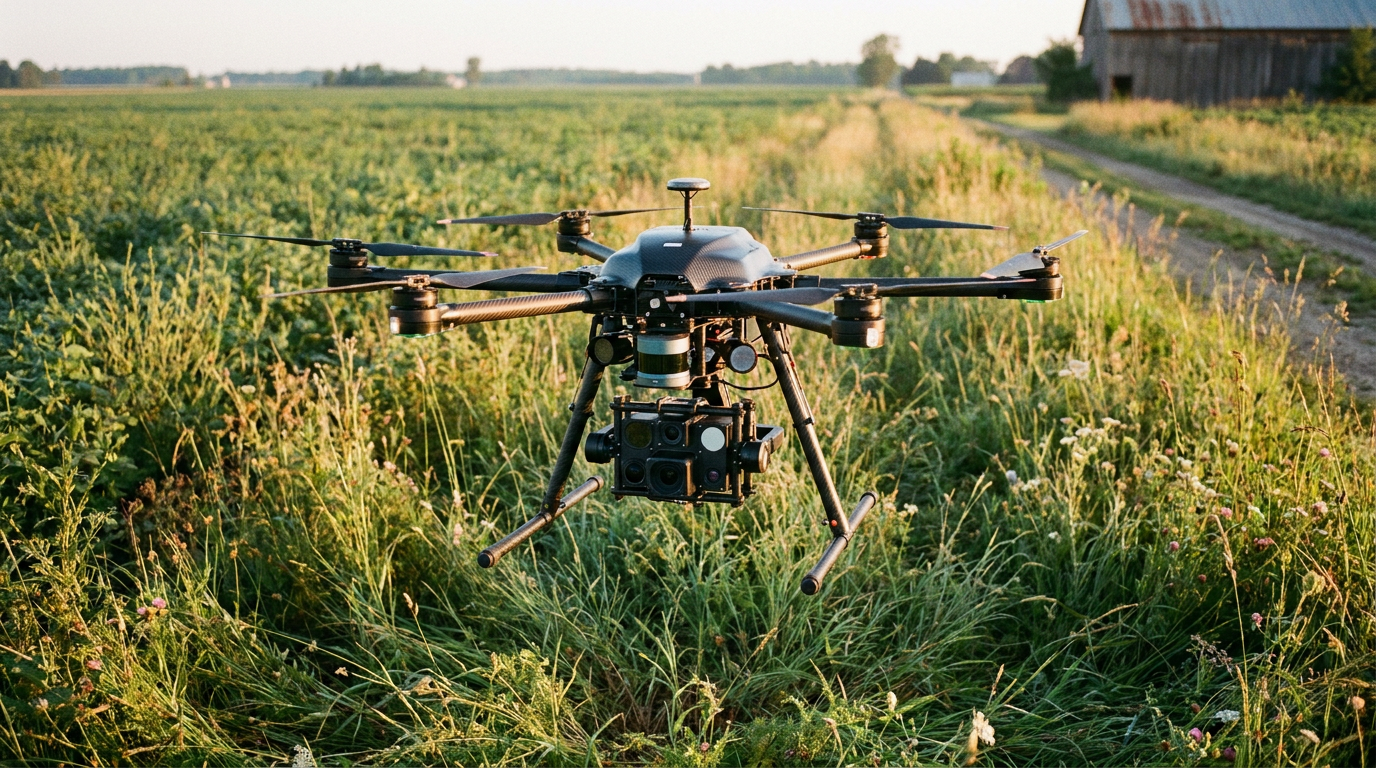
New artificial intelligence models and edge-computing drones are drastically speeding up the detection of surface landmines, offering a high-tech lifeline to heavily contaminated post-conflict zones.
By Factlen Editorial Team
- Humanitarian Technologists
- Advocates who believe AI and drones are essential force multipliers for clearing vast minefields quickly.
- Mine Action Skeptics
- Veterans of the demining sector who warn against relying on unproven algorithms for safety-critical tasks.
- Hardware Innovators
- Engineers focused on physical robotics and edge computing to overcome software limitations.
What's not represented
- · Local farmers and civilians waiting to reclaim contaminated agricultural land.
- · Manufacturers of the explosive devices who are actively developing counter-detection technologies.
Why this matters
Landmines and unexploded ordnance render vast tracts of agricultural land unusable and kill thousands of civilians annually. By automating the detection process, AI and robotics promise to drastically accelerate the reclamation of post-conflict zones, saving lives and restoring local economies.
Key points
- Ukraine is currently the most heavily mined country in the world, with up to 180,000 square kilometers of contaminated territory.
- AI models trained on drone imagery can now identify surface-level explosive hazards with up to 85% accuracy.
- Edge AI chips are enabling drones to process threat data locally, bypassing the need for internet connectivity in remote areas.
- Detecting buried and non-metallic landmines remains a major vulnerability for current AI systems.
- New robotic systems use compressed air to safely excavate hidden landmines in under 90 seconds without triggering them.
The global crisis of explosive remnants of war has reached a critical inflection point, driven by the unprecedented scale of contamination in modern conflict zones. In Ukraine alone, an estimated 170,000 to 180,000 square kilometers of territory—roughly half the size of Germany—is currently classified as potentially mined. Traditional humanitarian demining relies heavily on manual probing, a painstakingly slow and inherently dangerous process where human operators inch forward with metal detectors and prods. At the current pace, clearing these regions could take decades and cost thousands of lives. In response, a coalition of defense technologists, humanitarian organizations, and software engineers has accelerated the development of autonomous detection systems. The primary claim driving this new sector is that artificial intelligence, paired with advanced drone sensors, can fundamentally transform the speed and safety of mine action.[2][4][7]
The most robust evidence supports the claim that AI can rapidly and accurately map surface-level and semi-surfaced explosives. During the recent AI Data Jam hackathon in Kyiv, backed by the United Nations Development Programme, teams of engineers trained neural networks on tens of thousands of real-world field images containing soil, metal, and vegetation. The winning models demonstrated a profound ability to identify explosive hazards from aerial imagery without human intervention. Commercial implementations are already scaling this capability; Ukrainian firm UADamage has deployed drones equipped with RGB cameras, infrared sensors, and magnetometers that can autonomously survey up to 10,000 square meters of contaminated territory in a single day.[1][3]
Field data from organizations like SubSphere corroborates these high success rates for visible threats. Their AI-enhanced systems currently identify surface or abundant mines correctly 85 percent of the time. By processing high-resolution aerial data through machine learning algorithms, these platforms can shrink a suspected minefield from the size of a football pitch down to a highly specific danger zone. This capability acts as a massive force multiplier, allowing human deminers to bypass safe zones and focus exclusively on confirmed threat coordinates, thereby drastically reducing the time required to return agricultural land to local farmers.[2][4][7]
A secondary claim asserts that edge computing will solve the logistical nightmare of deploying AI in remote, infrastructure-poor environments. The evidence for this is emerging but highly promising. Traditional drone surveillance systems rely on transmitting massive volumes of high-resolution sensor data to remote cloud servers for processing. In post-conflict zones where cellular networks and internet infrastructure have been destroyed, this cloud dependency renders AI systems useless. Furthermore, transmitting data introduces latency that can be fatal in active clearance operations.[6]

To address this vulnerability, hardware developers are engineering specialized edge AI chips designed specifically for autonomous threat detection. Companies like Volt AI are pioneering architectures that process complex threat recognition algorithms directly on the drone's onboard computer. By eliminating the need for network connectivity, these edge-processing units allow drones to identify landmines and explosive threats in real-time, completely isolated from external servers. While still in the early stages of mass deployment, edge AI represents a critical technological bridge that makes autonomous demining viable in the world's most austere environments.[6]
To address this vulnerability, hardware developers are engineering specialized edge AI chips designed specifically for autonomous threat detection.
However, the evidence remains remarkably weak regarding the claim that AI can reliably detect buried landmines and novel improvised explosive devices. Skeptics within the humanitarian mine action community warn against the dangerously uncritical promotion of unproven technologies. While a drone can easily spot a standard anti-tank mine resting on the grass, achieving near-perfect detection for unknown, buried mine types across a wide range of soil compositions, humidity levels, and temperatures is a monumental scientific challenge. Ground Penetrating Radar is being integrated into newer drones to provide subsurface imaging, but the data is notoriously noisy and difficult for algorithms to parse accurately.[3][5][7]
Experts writing in the Journal of Conventional Weapons Destruction highlight the lethal risk of "AI hallucinations"—instances where a machine learning system confidently provides a false but plausible-sounding result. In the context of humanitarian demining, a false negative means a civilian or a clearance worker will step on an active explosive. Critics argue that current AI systems lack the necessary audit trails to determine why an algorithm failed, making it impossible to guarantee safety. Until standardized training data and universally agreed-upon success criteria are established, relying on AI to declare a field completely safe remains a dangerous gamble.[5]
The complexity of detection is further compounded by the rapidly evolving nature of the explosives themselves. Modern landmines are no longer simple pressure-plate devices; they are increasingly high-tech weapons designed to actively hunt deminers. Some newly deployed mines are equipped with advanced seismic or magnetic sensors that can detect the approach of a human footstep, a vehicle, or even the magnetic field emitted by a clearance drone. This creates a deadly paradox where the very technology used to find the mine may inadvertently trigger its detonation, forcing engineers into a constant arms race against the munitions they are trying to neutralize.[4]

Beyond detection, a fourth major claim suggests that robotic extraction can safely neutralize confirmed threats without risking human lives. The evidence supporting this is strong, particularly in controlled environments and specialized terrain. While large, bulldozer-style flail machines have been used for decades to churn up minefields, they are useless in dense forests, on steep slopes, or in areas heavily contaminated with anti-tank mines that would destroy the vehicle. To fill this gap, engineers are developing nimble, remote-controlled rovers capable of delicate excavation.[8]
The United Nations Industrial Development Organization is currently evaluating a novel Demining Robot that utilizes compressed air to expose hidden landmines. Instead of applying physical force to the ground, the robot blows away the topsoil, revealing the explosive device without applying the pressure required to trigger a detonation. This system can excavate a potentially mined area in 60 to 90 seconds, vastly outpacing the speed of a human operator gently prodding the dirt with a stick. Once exposed, the mine can be safely detonated in place or neutralized by specialized explosive ordnance disposal teams.[8]
The integration of these disparate technologies—aerial AI mapping, edge computing, and robotic extraction—points toward a hybrid future for humanitarian mine action. Rather than replacing human expertise, these tools are designed to absorb the most dangerous and time-consuming aspects of the work. Drones will map the surface threats and define the exact boundaries of the danger zones, while agile ground robots handle the physical excavation of suspected anomalies.[4][7]

Ultimately, the evidence indicates that while artificial intelligence is not a silver bullet capable of instantly sanitizing the globe's minefields, it is an indispensable evolution in clearance methodology. The technology is already proving its worth by accelerating non-technical surveys and reducing the sheer volume of land that humans must manually search. As sensor fusion improves and edge processing becomes ubiquitous, the humanitarian sector is slowly gaining the upper hand in the generational effort to reclaim contaminated lands and restore safety to post-conflict communities.[1][2]
How we got here
2020–2023
Traditional manual probing and animal detection remain the primary methods for humanitarian demining.
2024
The massive scale of contamination in conflict zones like Ukraine prompts emergency investment in automated clearance tech.
July 2025
The AI Data Jam hackathon in Kyiv yields highly accurate neural networks for detecting explosives in drone imagery.
Early 2026
Edge AI chips and compressed-air demining robots enter field testing to address connectivity and extraction challenges.
Viewpoints in depth
Humanitarian Technologists
Advocates who believe AI and drones are essential force multipliers for clearing vast minefields quickly.
This camp, comprising software engineers, drone manufacturers, and forward-looking government ministries, argues that traditional manual demining is mathematically incapable of addressing the current scale of global contamination. They point to the success of neural networks in identifying surface threats with 85% accuracy as proof of concept. For these technologists, the immediate goal is not perfect autonomy, but rather rapid triage—using AI to quickly rule out safe areas so human experts can focus their limited time on confirmed danger zones.
Mine Action Skeptics
Veterans of the demining sector who warn against relying on unproven algorithms for safety-critical tasks.
Skeptics emphasize that in humanitarian demining, a 99% success rate is a failure, because a single false negative results in a lost life. They argue that the tech industry's 'move fast and break things' ethos is fundamentally incompatible with explosive ordnance disposal. This camp frequently highlights the danger of AI hallucinations and the extreme difficulty of detecting buried, non-metallic mines in varied soil conditions. They demand rigorous, standardized testing and transparent audit trails before any AI system is trusted to declare land safe for civilian use.
Hardware Innovators
Engineers focused on physical robotics and edge computing to overcome software limitations.
Rather than relying solely on computer vision to spot hidden threats, this group focuses on the physical interaction with the environment. They champion the development of edge AI chips that eliminate the need for cloud connectivity, ensuring drones can operate in austere environments. Furthermore, they advocate for robotic extraction methods—such as using compressed air to gently blow away soil—arguing that the safest way to handle a minefield is to remove the human physical presence entirely, regardless of how good the detection software becomes.
What we don't know
- It remains unclear when, or if, Ground Penetrating Radar (GPR) and AI will achieve the near-perfect accuracy required to detect deeply buried, non-metallic mines.
- The legal liability framework for an AI system that falsely declares a minefield safe has not yet been established.
- It is unknown how quickly these advanced robotic systems can be manufactured and scaled to meet the massive global demand.
Key terms
- Ground Penetrating Radar (GPR)
- A sensor technology that transmits radar pulses into the ground to detect hidden objects and cavities beneath the surface.
- Edge AI
- Artificial intelligence algorithms processed locally on a device's hardware rather than relying on a remote cloud server.
- AI Hallucination
- A phenomenon where an artificial intelligence model confidently generates a false or incorrect result.
- Unexploded Ordnance (UXO)
- Explosive weapons such as bombs, shells, and grenades that did not explode when they were employed and still pose a lethal risk.
Frequently asked
Can AI detect buried landmines?
Currently, AI struggles with buried mines, achieving high accuracy only for surface or semi-surfaced explosives. Researchers hope for breakthroughs using Ground Penetrating Radar (GPR), but the technology is not yet fully reliable.
What is edge AI in demining?
Edge AI refers to processing data directly on the drone's computer chip rather than sending it to a cloud server. This is crucial for operating in remote post-conflict areas without internet access.
How do robots physically clear the mines?
Some new robots use compressed air to blow away soil and expose the mine without applying the physical pressure that would trigger a detonation. Once exposed, explosive ordnance teams can safely neutralize it.
Sources
Source coverage
9 outlets
3 viewpoints surfaced









[1]United Nations Development ProgrammeHumanitarian Technologists
AI Data Jam: IT engineers develop AI model to detect explosive hazards
Read on United Nations Development Programme →[2]Euromaidan PressHumanitarian Technologists
Ukrainian developers create algorithms to detect explosives from drone imagery
Read on Euromaidan Press →[3]MilitarnyiHumanitarian Technologists
Ukraine Develops AI Drone for Mine Detection
Read on Militarnyi →[4]UN NewsMine Action Skeptics
Artificial Intelligence, a booster for mine action
Read on UN News →[5]The Journal of Conventional Weapons DestructionMine Action Skeptics
The Dangers of Uncritical AI Promotion in Mine Action
Read on The Journal of Conventional Weapons Destruction →[6]Volt AIHardware Innovators
Edge AI Chips for Drone Landmine Detection
Read on Volt AI →[7]SubSphereHumanitarian Technologists
AI has the potential to fundamentally transform demining
Read on SubSphere →[8]UNIDOHardware Innovators
Robot to clear landmines safely and efficiently
Read on UNIDO →[9]Factlen Editorial TeamHumanitarian Technologists
Synthesis by Factlen editorial team
Read on Factlen Editorial Team →
Every angle. Every day.
Get defense security stories with full source coverage and perspective breakdowns delivered to your inbox.