
US-Iran Talks Begin in Switzerland as Tehran Claims Closure of the Strait of Hormuz
High-stakes diplomatic talks between the US and Iran have opened in Switzerland against the backdrop of a major escalation, with Tehran claiming it has closed the Strait of Hormuz in response to Israeli strikes in Lebanon.
By Factlen Editorial Team
- Iranian Leadership
- Views the closure threat as necessary leverage to force the US to restrain Israeli operations in Lebanon and secure economic concessions.
- US Administration
- Prioritizes freedom of navigation, preventing a global energy shock, and containing the conflict ahead of a vulnerable midterm election.
- Energy & Shipping Sector
- Focused entirely on risk mitigation, rerouting vessels, and pricing in the catastrophic potential of a sustained physical blockade.
What's not represented
- · Asian oil importers
- · Lebanese civilians
Why this matters
The Strait of Hormuz facilitates roughly 20% of global oil consumption. A sustained closure would trigger immediate spikes in global energy prices, disrupt international shipping, and potentially force direct military intervention by the United States.
Key points
- Iran claims to have closed the Strait of Hormuz in retaliation for Israeli strikes in Lebanon.
- The announcement coincides with high-stakes US-Iran diplomatic talks at a resort in Switzerland.
- Global oil markets reacted instantly, with Brent crude spiking to $128 per barrel.
- The US Fifth Fleet maintains a presence in the region, raising the risk of direct military confrontation if a physical blockade is enforced.
- The crisis threatens to impact the US midterm elections by driving up domestic gasoline prices.
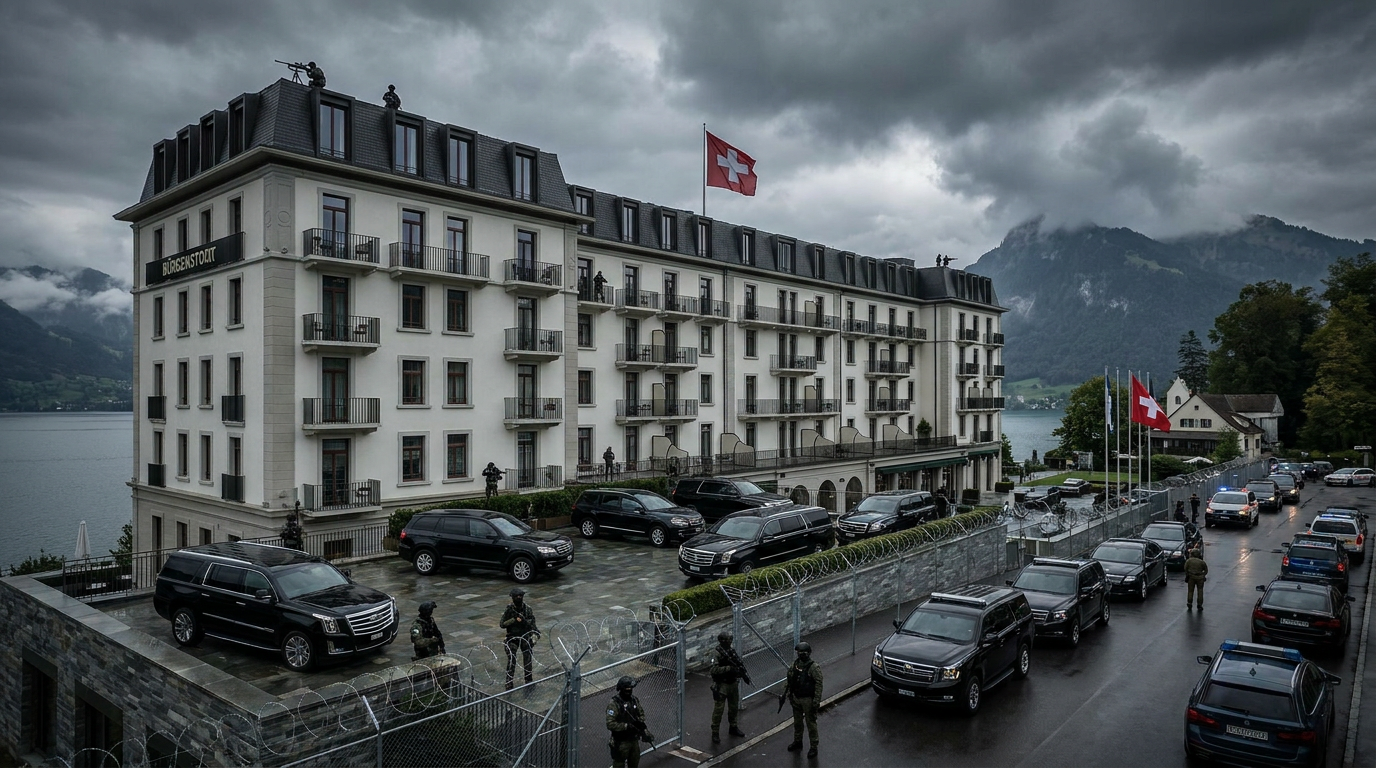
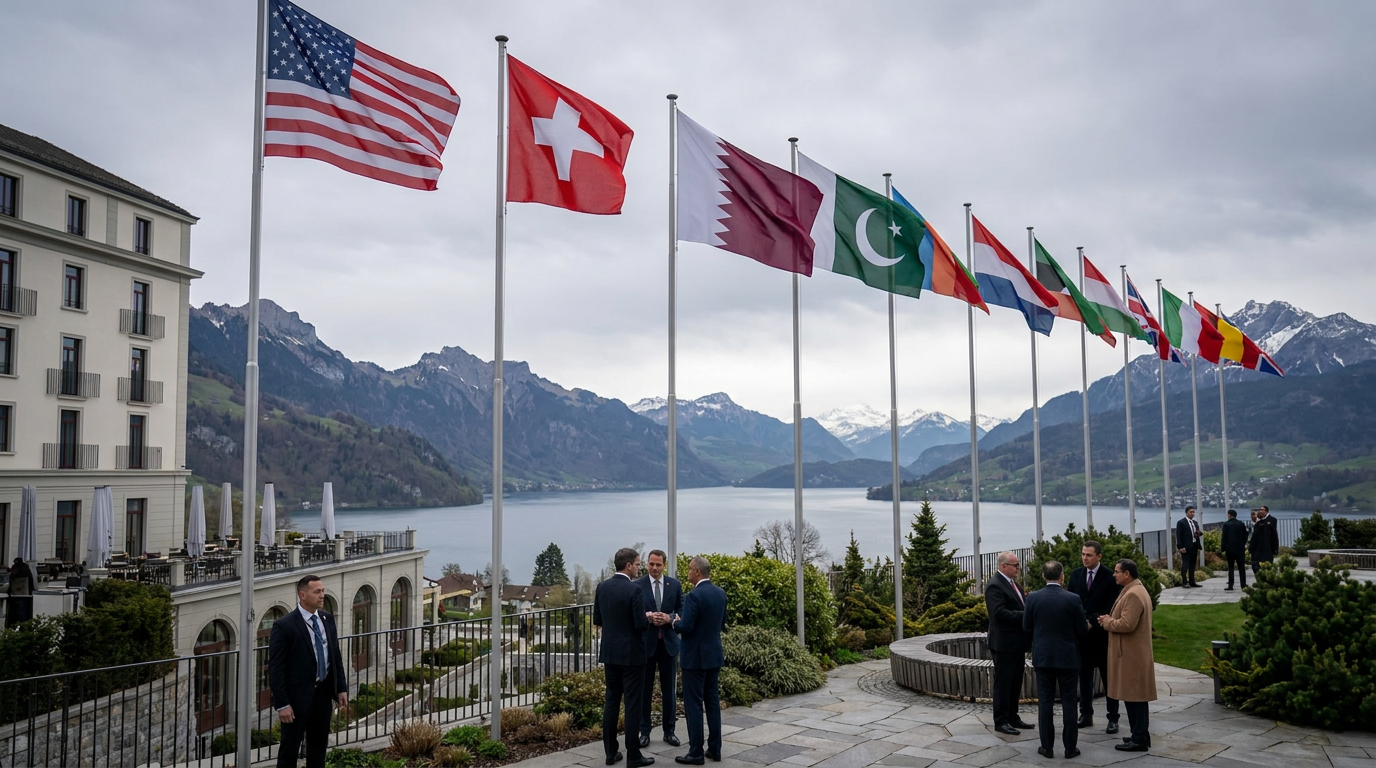
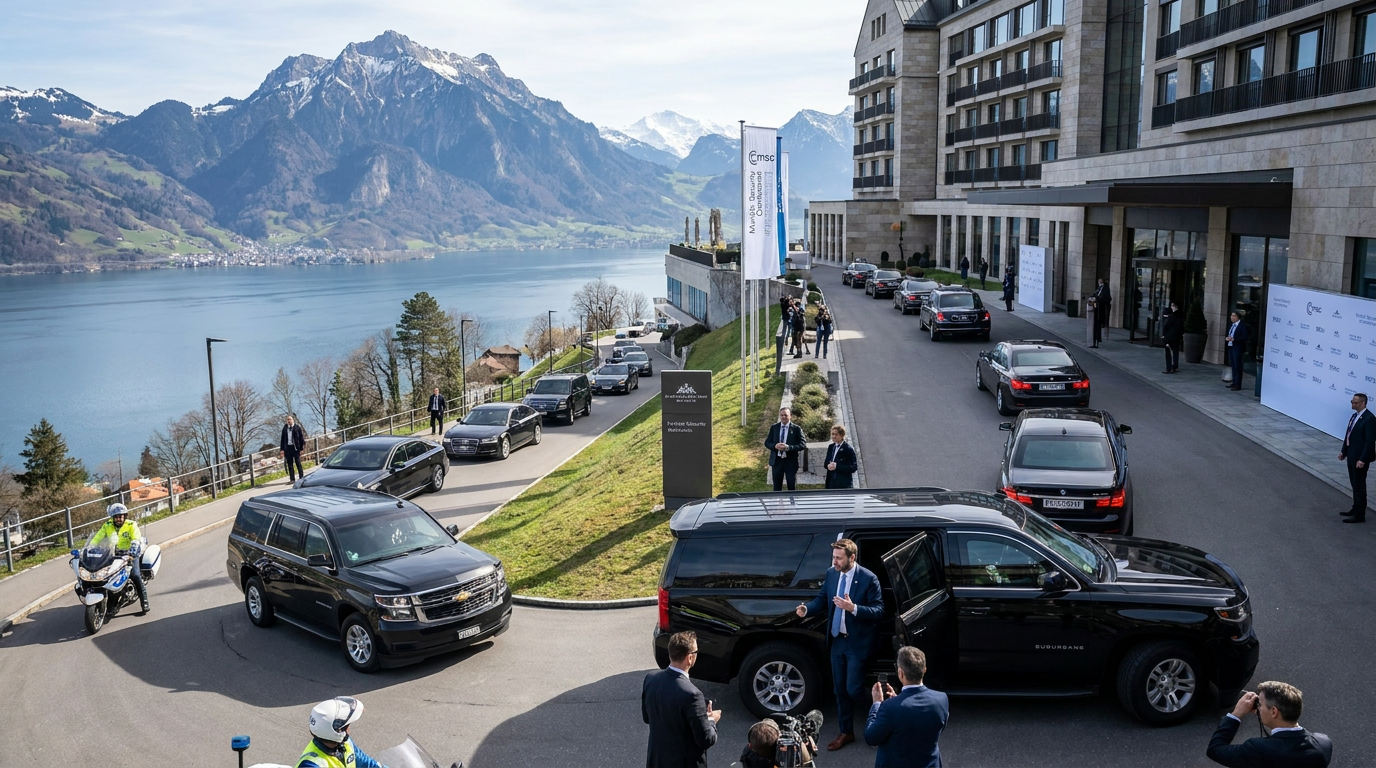
The serene backdrop of Switzerland’s Bürgenstock Resort stands in stark contrast to the geopolitical shockwave dominating the agenda inside its halls. As US and Iranian delegations arrived for high-stakes talks on Sunday, Tehran announced it had closed the Strait of Hormuz, the world’s most critical oil transit chokepoint.[1][2]
The dramatic declaration, which sent immediate tremors through global energy markets, was framed by Iranian officials as a direct retaliation for renewed Israeli military strikes in southern Lebanon. The escalation threatens to upend a fragile memorandum of understanding between Washington and Tehran, transforming a scheduled diplomatic check-in into a crisis summit.[1][3][4]
To understand the gravity of Tehran's claim, one must look at the geography and economics of the Strait of Hormuz. Shaped like an inverted V between Oman and Iran, the waterway connects the Persian Gulf to the Gulf of Oman and the Arabian Sea, serving as the primary artery for Middle Eastern energy exports.[7]
At its narrowest point, the strait is just 21 miles wide, but the deep-water shipping lanes accommodating massive crude carriers are only two miles wide in either direction. Through this narrow maritime corridor flows roughly 21 million barrels of oil every single day—accounting for approximately 20% of global petroleum liquids consumption.[7]

The immediate market reaction to Iran's announcement was violent. Brent crude, the international benchmark, spiked to $128 per barrel in early trading, reflecting a massive risk premium being priced in by traders anticipating severe supply chain disruptions.[5]
However, a critical distinction remains between a political declaration of closure and a physical blockade. While Tehran claims the strait is shut, satellite imagery and maritime tracking data indicate that some commercial vessels are still attempting the transit, albeit with extreme caution and skyrocketing insurance premiums.[6]

However, a critical distinction remains between a political declaration of closure and a physical blockade.
The US Navy’s Fifth Fleet, headquartered in nearby Bahrain, maintains a robust presence in the region specifically to guarantee freedom of navigation. Naval analysts note that while Iran possesses a vast arsenal of anti-ship missiles, fast attack craft, and naval mines capable of severely disrupting traffic, a total, sustained blockade would almost certainly trigger a direct military confrontation with the United States.[8]
This military reality suggests that Iran’s announcement may be a calculated leverage play designed to maximize pressure at the negotiating table in Switzerland. By demonstrating its capacity to hold the global economy hostage, Tehran aims to force Washington to restrain Israeli operations against Hezbollah in Lebanon.[1][3]

The talks at the Bürgenstock Resort were originally intended to address the unfreezing of Iranian funds and the parameters of Iran's oil sales under a fragile, unwritten agreement brokered by the Trump administration. That agreement is now facing its most severe stress test.[2][4]
For the US administration, the stakes extend far beyond the Middle East. The diplomatic crisis arrives in the thick of a contentious midterm election cycle. A sustained spike in gasoline prices driven by a Hormuz disruption would inflict severe economic pain on American consumers, a vulnerability that both Democratic and Republican strategists are acutely aware of.[4]
The Iranian delegation, meanwhile, is operating under its own domestic and regional pressures. Tehran’s leadership views the defense of Hezbollah in Lebanon as a core pillar of its regional security strategy. Failing to respond to Israeli strikes would project weakness, but overplaying their hand in the Strait of Hormuz risks a devastating conventional war.[3]
European and Asian allies are watching the Swiss summit with mounting anxiety. Asian economies, particularly China, Japan, and South Korea, are overwhelmingly dependent on Middle Eastern crude flowing through Hormuz. A prolonged disruption would force these manufacturing powerhouses to tap strategic reserves and scramble for alternative, more expensive energy sources.[6][7]

As diplomats sit down behind closed doors in Lucerne, the immediate priority is de-escalation. US negotiators are expected to demand an immediate retraction of the Hormuz closure order and a cessation of harassment of commercial shipping in the Persian Gulf.[2][8]
In return, Iran is likely to demand concrete US guarantees regarding Israeli military restraint in Lebanon and accelerated access to previously frozen financial assets. Whether the serene Swiss Alps can foster a compromise that pulls the global economy back from the brink remains the defining question of the week.[3]
How we got here
Recent Months
The US and Iran operate under a fragile, unwritten memorandum of understanding regarding oil sales and frozen funds.
Last Week
Renewed Israeli military strikes target Hezbollah positions in southern Lebanon.
Sunday Morning
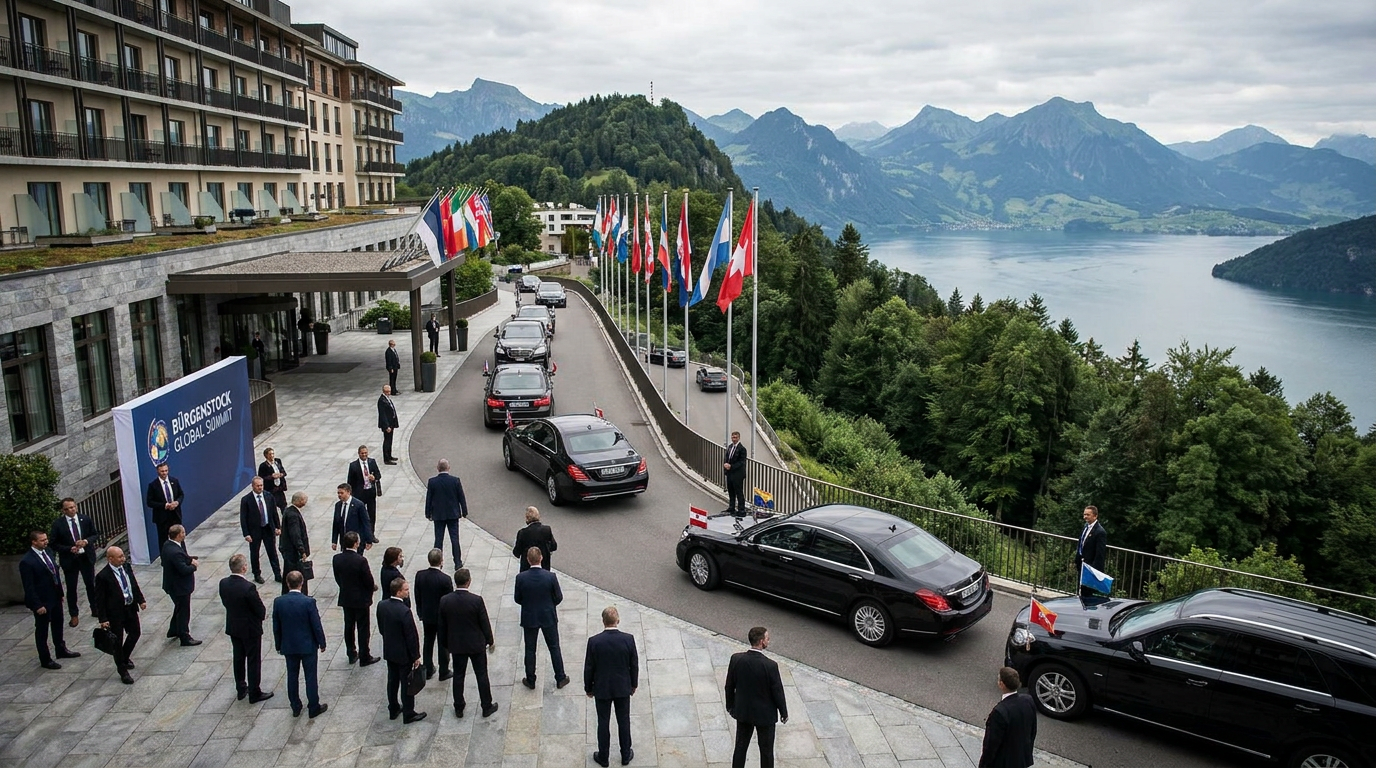
US and Iranian delegations arrive at the Bürgenstock Resort in Switzerland for scheduled talks.
Sunday Afternoon
Tehran announces the closure of the Strait of Hormuz, sending global oil prices surging.
Viewpoints in depth
Iranian Strategic Calculus
Tehran views the threat to global energy as its ultimate diplomatic trump card.
For Iranian hardliners and military strategists, the Strait of Hormuz is the ultimate asymmetric weapon. By threatening to choke off 20% of the world's oil supply, Tehran believes it can bypass direct military confrontation with Israel and instead force the United States and Europe to rein in Israeli operations. This perspective argues that without the threat of catastrophic economic pain, the West will never take Iranian security demands regarding Lebanon seriously.
US Diplomatic and Military Posture
Washington seeks to balance deterrence with the urgent need for de-escalation.
The US administration is operating on two parallel tracks. Militarily, the Fifth Fleet is tasked with calling what Washington hopes is an Iranian bluff, maintaining freedom of navigation to reassure markets. Diplomatically, negotiators in Switzerland are desperately trying to salvage the fragile memorandum of understanding. The US perspective is heavily colored by domestic politics; a sustained oil shock ahead of the midterms is viewed as an existential threat to the current administration's political survival.
Global Energy Markets
Traders and shipping companies are forced to price in worst-case scenarios.
The energy and maritime shipping sectors operate on risk, not political rhetoric. Even if the US Navy keeps the strait nominally open, the soaring cost of maritime insurance and the physical danger to crews force shipping companies to reroute or halt operations. From this perspective, the mere announcement of a closure is enough to inflict severe economic damage, as markets instantly price in the risk of a miscalculation that could lead to a shooting war in the Persian Gulf.
What we don't know
- Whether Iran has actually laid naval mines or deployed fast-attack craft to physically block commercial vessels.
- How much leverage the US negotiators in Switzerland actually have to restrain Israeli operations in Lebanon.
- At what price point the oil spike will begin to cause demand destruction in major global economies.
Key terms
- Strait of Hormuz
- A strategically vital maritime chokepoint between the Persian Gulf and the Gulf of Oman, through which a fifth of the world's oil passes.
- Brent Crude
- The major trading classification of sweet light crude oil that serves as a major benchmark price for purchases of oil worldwide.
- US Fifth Fleet
- The US Navy fleet responsible for naval forces in the Persian Gulf, Red Sea, Arabian Sea, and parts of the Indian Ocean.
- Memorandum of Understanding (MoU)
- A formal, though often legally non-binding, agreement between two or more parties outlining the terms and details of a mutual understanding.
Frequently asked
What is the Strait of Hormuz?
It is a narrow waterway between Oman and Iran that connects the Persian Gulf to the open ocean, serving as the only sea passage for oil exported from the region.
How much oil passes through the strait?
Approximately 21 million barrels of oil per day transit the strait, representing about 20% of total global petroleum consumption.
Can Iran physically close the strait?
Iran has the military capability—via mines, fast attack craft, and missiles—to severely disrupt shipping, but a total blockade would likely trigger direct US military intervention.
Why are the US and Iran meeting in Switzerland?
The talks were originally scheduled to discuss unfreezing Iranian funds and managing oil sales under a fragile agreement, but have now been hijacked by the Lebanon and Hormuz crises.
Sources
Source coverage
8 outlets
3 viewpoints surfaced







[1]The GuardianIranian Leadership
Middle East live: US-Iran talks to begin in Switzerland as Tehran says it has closed strait of Hormuz
Read on The Guardian →[2]NYTUS Administration
A Glamorous Swiss Resort Hosts Officials for U.S.-Iran Talks
Read on NYT →[3]Al JazeeraIranian Leadership
US-Iran talks in Switzerland: Is Lebanon top of agenda; who is attending?
Read on Al Jazeera →How Trump’s Fragile Agreement With Iran Is Shaping the Midterms
Read on NYT →[5]ReutersEnergy & Shipping Sector
Oil surges past $120 as Iran claims Strait of Hormuz closure
Read on Reuters →[6]BloombergEnergy & Shipping Sector
Global Shipping Scrambles as Hormuz Threat Rocks Energy Markets
Read on Bloomberg →[7]U.S. Energy Information AdministrationEnergy & Shipping Sector
World Oil Transit Chokepoints: The Strait of Hormuz
Read on U.S. Energy Information Administration →[8]USNI NewsUS Administration
Fifth Fleet Maintains Posture Amid Iranian Hormuz Claims
Read on USNI News →
More in news politics
See all 6 stories →Education Policy
Fact-Checking Universal School Meals: What the Evidence Says About Grades, Health, and Costs
8 sources

Strait of Hormuz
US and Iran Begin High-Stakes Talks in Switzerland as Strait of Hormuz Remains Closed
7 sources
US-Iran Peace Talks
US and Iran Open High-Stakes Peace Talks in Switzerland as Strait of Hormuz Remains Closed
8 sources
U.S.-Iran Talks
U.S. and Iran Open High-Stakes Talks in Switzerland as Strait of Hormuz Remains Closed
6 sources
Every angle. Every day.
Get news politics stories with full source coverage and perspective breakdowns delivered to your inbox.