
Astrotourism Booms as Travelers Seek Certified Dark Sky Parks in 2026
As light pollution erases the stars for much of the global population, travelers are increasingly seeking out certified Dark Sky Parks. This surging 'noctourism' trend is driving a new wave of eco-tourism focused on preserving the nocturnal environment.
By Factlen Editorial Team
- Conservationists & Astronomers
- Focuses on the ecological and scientific necessity of dark skies, viewing astrotourism as a vehicle to fund conservation and enforce strict lighting ordinances.
- Travel Industry & Hospitality
- Views pristine darkness as a highly marketable luxury amenity and a major economic differentiator in a crowded global travel market.
- Public Land Managers
- Focuses on balancing public access with resource preservation, managing the practical challenges of retrofitting infrastructure and handling nighttime crowds.
What's not represented
- · Local residents near dark sky reserves facing strict lighting ordinances
- · Indigenous communities whose traditional sky knowledge is impacted by light pollution
Why this matters
As artificial light pollution erases the stars for most of the global population, preserving dark skies has become both a critical ecological mission and a booming travel sector. Understanding how destinations protect their night skies helps travelers find awe-inspiring experiences while supporting vital conservation efforts.
Key points
- Astrotourism is surging in 2026, driven by celestial events like the August solar eclipse and a desire to escape digital overload.
- Global sky brightness increased by an average of 9.6% annually between 2011 and 2022, making true dark skies a rare resource.
- DarkSky International has certified over 200 places globally that meet strict darkness thresholds and enforce lighting policies.
- The Bortle Scale is used to measure night sky brightness, with Class 1 representing the most pristine, unpolluted skies.
- The travel industry is adapting rapidly, with luxury hotels building observatories and offering specialized stargazing amenities.
In 2026, the travel industry is officially entering "dark mode." As digital lives grow increasingly saturated and urban environments become brighter, a counter-movement has taken hold: astrotourism. Travelers are trading crowded beaches and neon-lit cities for remote deserts, high-altitude plateaus, and certified dark-sky reserves. According to recent travel data, 62% of vacationers now express a specific interest in darker-sky destinations and "noctourism" experiences. This shift represents more than just a passing fad; it is a fundamental realignment of what people seek from a getaway, prioritizing awe, scale, and a quiet connection to the natural universe.[1][7][8]
The surge in astrotourism is being catalyzed by a calendar of spectacular celestial events. The total solar eclipse slated for August 12, 2026, which will sweep across Greenland, Iceland, and northern Spain, has already triggered a booking frenzy, with specialized tours selling out months in advance. But beyond these singular moments, the everyday night sky has become one of the most coveted amenities in hospitality. From the Atacama Desert in Chile to the Mackenzie Basin in New Zealand, destinations are realizing that pristine darkness is a highly marketable resource.[1][6][8]
To understand the value of a truly dark sky, one must first understand how rare it has become. Light pollution is one of the fastest-growing environmental issues on the planet. Between 2011 and 2022, the brightness of the night sky background increased globally by an average of 9.6% per year. This phenomenon, known as "skyglow," occurs when poorly designed or incorrectly directed artificial light scatters off moisture and aerosols in the atmosphere, creating a pervasive orange haze that obscures the stars.[4][5]

The consequences of skyglow extend far beyond frustrated stargazers. Artificial light at night disrupts the circadian rhythms of wildlife, affecting navigation, reproduction, and predator-prey dynamics across countless species. It also severs a profound cultural and historical link; for millennia, the night sky served as humanity's calendar, navigational map, and storytelling canvas. Today, a majority of the population in North America and Europe lives in areas where the Milky Way is completely invisible to the naked eye.[1][4][5]
This widespread loss of the night sky has birthed a rigorous system for measuring and protecting what remains. The gold standard for quantifying night sky brightness is the Bortle Scale. Devised by amateur astronomer John E. Bortle in 2001, this nine-level numeric scale provides a standardized way to evaluate the observability of celestial objects. It operates inversely: a lower number indicates a darker, more pristine sky.[5][7]
At the top of the scale, a Bortle Class 9 represents an inner-city sky, where only the moon and a handful of the brightest planets are visible through the ambient glare. A Bortle Class 5 is a typical suburban sky, where the Milky Way is washed out and significant light domes dominate the horizon. To truly experience the cosmos, astrotourists seek out Bortle Class 1 or 2 environments—places so dark that the Milky Way casts distinct shadows on the ground, and the sheer volume of visible stars can make identifying familiar constellations difficult.[5][7]

Finding these Class 1 and 2 skies is increasingly the domain of DarkSky International (formerly the International Dark-Sky Association). Since 2001, this organization has managed the International Dark Sky Places (IDSP) program, which certifies communities, parks, and protected areas that demonstrate exceptional dedication to preserving the nocturnal environment. To date, the organization has certified more than 200 places across 22 countries, protecting over 160,000 square kilometers of land.[2][6]
Achieving this certification is not a simple matter of being located far from a city. The process is modeled on rigorous conservation programs like UNESCO World Heritage Sites and typically takes one to three years to complete. Applicants must conduct extensive baseline measurements of their sky quality using specialized meters, proving that their darkness meets strict thresholds.[2][3]
Achieving this certification is not a simple matter of being located far from a city.
More importantly, a prospective Dark Sky Place must implement comprehensive lighting policies. This often requires expensive retrofits to ensure that all outdoor lighting is fully shielded, directed downward, and utilizes warm color temperatures that minimize atmospheric scattering. The certification does not carry legal regulatory authority on its own; rather, it relies on the commitment of public land managers and local governments to enforce these standards and educate their communities.[2][3]
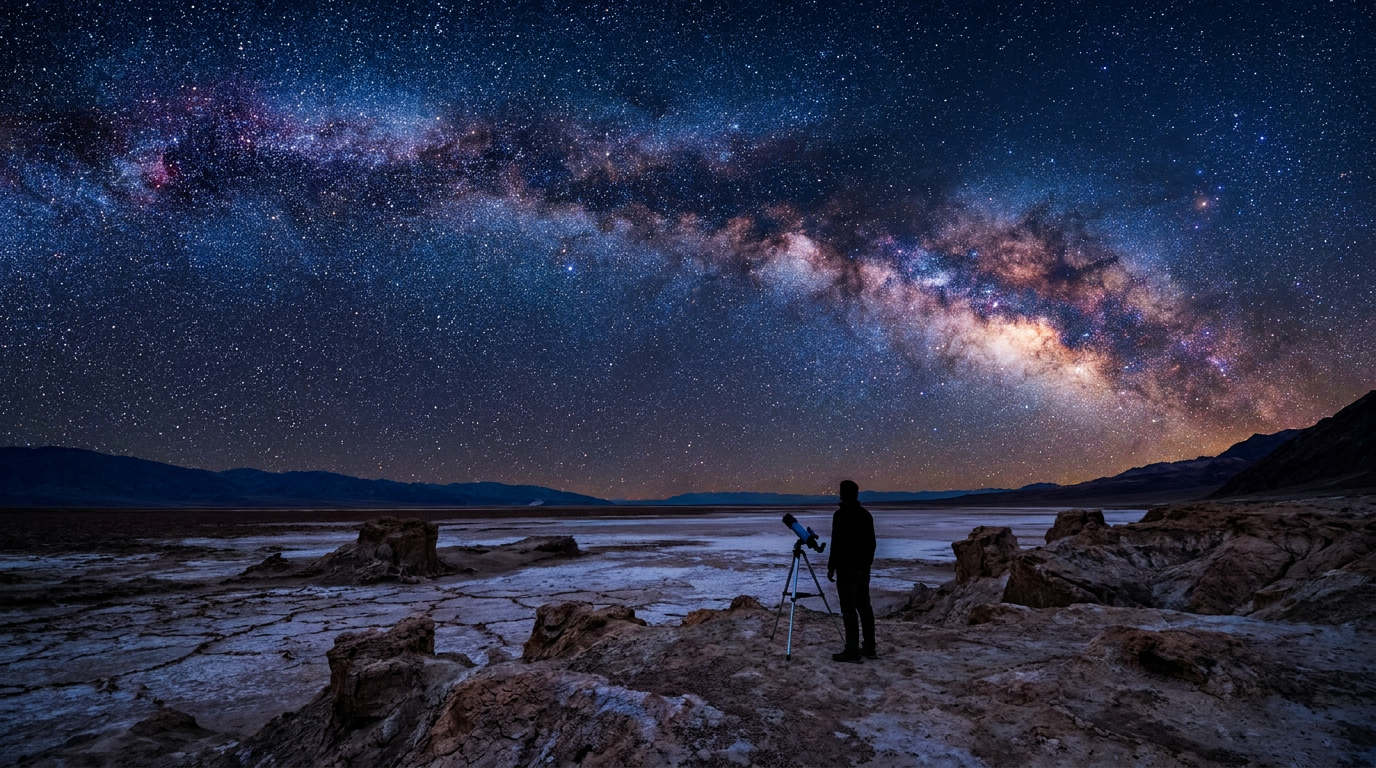
The IDSP program categorizes its protected areas into several distinct tiers based on their conservation approach and location. International Dark Sky Parks are publicly or privately owned conservation areas, such as national parks, that implement good outdoor lighting and provide regular astronomy education programs. Death Valley National Park in California, for instance, boasts a Bortle Class 1 rating and is widely considered one of the premier Dark Sky Parks in the United States.[2][6]
International Dark Sky Reserves are even larger, consisting of a dark "core" zone surrounded by a populated periphery. In these reserves, the surrounding communities agree to strict policy controls to protect the darkness of the core. The Aoraki Mackenzie International Dark Sky Reserve in New Zealand, established in 2012, spans over 4,300 square kilometers and remains one of the largest such reserves in the Southern Hemisphere, drawing thousands of astrotourists annually.[2][6]

The most pristine and fragile category is the International Dark Sky Sanctuary. These are typically situated in the most remote locations on Earth, far from any significant threats of light pollution. Because of their isolation, sanctuaries focus less on public outreach and more on pure conservation, ensuring that these rare pockets of absolute darkness remain untouched for future generations and scientific study.[2][7]
Recognizing that not everyone can travel to a remote desert, the program also includes Urban Night Sky Places. These are sites near or surrounded by large urban areas whose planning and design actively promote an authentic nighttime experience despite the surrounding skyglow. Saguaro National Park, located just outside Tucson, Arizona, holds this designation, offering residents a chance to see the stars framed by giant cacti without leaving the metropolitan orbit.[2][6]
The travel and hospitality industries have quickly adapted to capitalize on these designations. Industry estimates suggest that dark sky tourism could be worth $400 million globally by 2030. Luxury properties in or near certified dark sky areas are transforming darkness into their most coveted amenity. Hotels are installing permanent observatories, hiring resident astronomers to guide guests through the cosmos, and designing rooms with glass ceilings for stargazing from bed.[1][6]

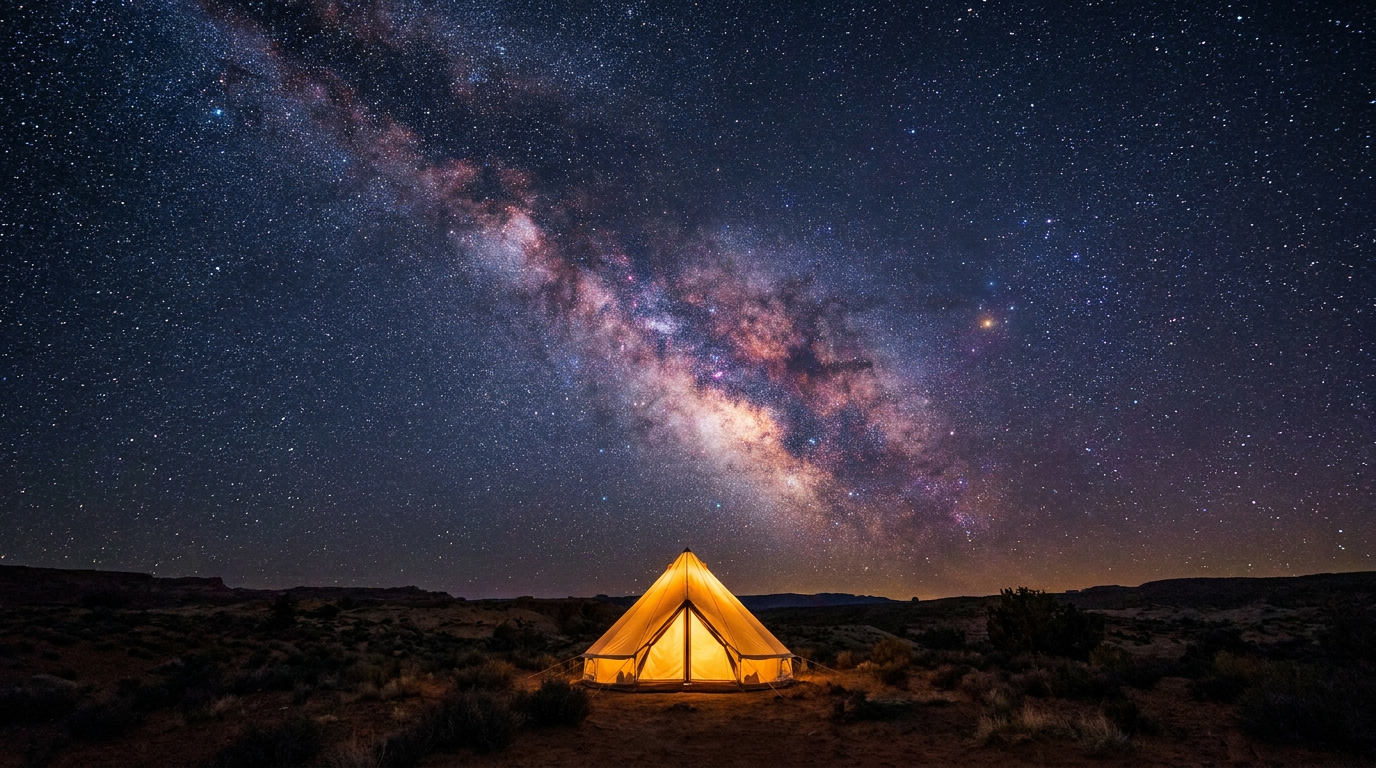
In places like Moab, Utah—a certified International Dark Sky Community surrounded by national parks—the local economy has embraced the trend. Glamping resorts offer DarkSky-approved stargazer tents, while local ordinances ensure that the town's development does not compromise the very resource drawing visitors to the region. This creates a powerful economic incentive for conservation: when a dark sky becomes a primary driver of tourism revenue, local stakeholders are far more likely to protect it.[3][6][7]
However, the astrotourism boom presents a unique paradox. The very act of bringing thousands of tourists to remote, dark locations introduces new threats of light pollution. Increased vehicle traffic, new hotel developments, and the infrastructure required to support visitors all require lighting. If not managed with extreme care, the influx of astrotourists could inadvertently destroy the pristine skies they traveled so far to see.[5][7]
To mitigate this risk, DarkSky International requires certified places to submit annual reports detailing their ongoing compliance, lighting retrofits, and outreach efforts. The certification is not awarded in perpetuity; it can be revoked if a park or community fails to maintain its standards or permits new development with non-compliant lighting. This ongoing accountability is crucial to ensuring that astrotourism remains a sustainable form of eco-tourism.[2]
Ultimately, the rise of astrotourism reflects a deep-seated human need for perspective. Standing beneath a canopy of thousands of stars, untouched by the orange glow of modern civilization, offers a humbling reminder of our place in the universe. As the world grows brighter and more connected, the simple act of looking up into the dark has become one of the most profound travel experiences available, driving a global movement to turn off the lights and let the stars shine.[1][7][8]
How we got here
1972
Tucson, Arizona becomes the first city to adopt widespread ordinances to minimize light pollution.
2001
Flagstaff, Arizona is named the first International Dark Sky City, launching the DarkSky certification program.
2012
The Aoraki Mackenzie region in New Zealand is designated as a massive Dark Sky Reserve.
2023
Aenos National Park becomes Greece's first Dark Sky Park, highlighting the program's global expansion.
August 2026
A highly anticipated total solar eclipse crosses Europe, driving a massive spike in astrotourism bookings.
Viewpoints in depth
Conservationists & Astronomers
Advocates who view dark skies as a critical ecological and scientific resource that must be protected from human encroachment.
For conservationists and astronomers, the loss of the night sky is an ecological crisis on par with deforestation. They point to data showing that artificial light disrupts the migratory patterns of birds, the reproductive cycles of amphibians, and the foraging behaviors of nocturnal mammals. From this perspective, astrotourism is a double-edged sword. While it provides a powerful educational platform and economic incentive for local governments to enact strict lighting ordinances, the sheer volume of tourists traveling to remote areas threatens to introduce the very light pollution they are trying to escape. This camp insists that any dark sky designation must be accompanied by rigorous, legally binding enforcement of lighting standards.
Travel Industry & Hospitality
Businesses capitalizing on the growing consumer demand for unique, unplugged, and awe-inspiring travel experiences.
The hospitality sector views pristine darkness as the ultimate modern luxury. In an era where travelers are constantly connected to screens, the industry is successfully marketing the night sky as a premium wellness and experiential product. Hotels and tour operators are investing heavily in astronomical infrastructure—from high-end telescopes and resident astronomers to custom-built stargazing suites. For this camp, the economic potential of astrotourism is vast, projected to reach hundreds of millions of dollars by the end of the decade. They argue that by turning dark skies into a profitable commodity, they are ensuring its long-term protection, as local economies become dependent on maintaining the resource.
Public Land Managers
The officials tasked with balancing public access, safety, and the preservation of natural resources in parks and reserves.
Park rangers and public land managers operate on the front lines of the astrotourism boom. Their primary challenge is logistical: how to safely accommodate thousands of nighttime visitors in remote areas without compromising the darkness. This involves retrofitting aging park infrastructure with dark-sky compliant lighting, managing nighttime traffic, and educating visitors who may not understand why they cannot use bright flashlights or headlights. They view the Dark Sky certification not just as a badge of honor, but as a vital management tool that provides the framework and funding necessary to protect the nocturnal environment while still allowing the public to enjoy it.
What we don't know
- Whether the rapid influx of tourists to remote dark sky areas will inadvertently introduce new light pollution that degrades the resource.
- How effectively local municipalities will enforce lighting ordinances as the economic incentives for large-scale resort development grow.
Key terms
- Skyglow
- The brightening of the night sky over inhabited areas caused by artificial light scattering in the atmosphere.
- Bortle Scale
- A nine-level numeric scale that measures the night sky's brightness and the observability of celestial objects.
- Light Pollution
- The inappropriate or excessive use of artificial light, which obscures the stars and disrupts nocturnal ecosystems.
- Noctourism
- Travel specifically focused on nighttime experiences, such as stargazing, aurora viewing, or nocturnal wildlife spotting.
Frequently asked
What makes a Dark Sky Park different from a regular park?
A certified Dark Sky Park has proven its sky quality meets strict darkness thresholds and has implemented comprehensive lighting policies and educational programs to protect the nocturnal environment.
Can I see the Milky Way from a city?
Generally, no. The ambient light pollution (skyglow) in urban and suburban areas washes out faint celestial objects. You typically need to reach a Bortle Class 3 or lower to clearly see the Milky Way.
How do destinations reduce light pollution?
They retrofit outdoor lighting to ensure fixtures are fully shielded (pointing down), use lower-wattage bulbs, and employ warm color temperatures that scatter less in the atmosphere.
Sources
Source coverage
8 outlets
3 viewpoints surfaced








[1]ForbesTravel Industry & Hospitality
The Rise Of Astrotourism: 25 Hotels Leading The Stargazing Trend
Read on Forbes →[2]DarkSky InternationalConservationists & Astronomers
International Dark Sky Places
Read on DarkSky International →[3]National Park ServicePublic Land Managers
Frequently Asked Questions: International Dark Sky Certification
Read on National Park Service →[4]European Southern ObservatoryConservationists & Astronomers
Light Pollution
Read on European Southern Observatory →[5]MDPIConservationists & Astronomers
Light Pollution and Astrotourism: The Tourist Light Pollution Scale
Read on MDPI →[6]Miami HeraldTravel Industry & Hospitality
Astrotourism is booming. Here are the best dark sky destinations.
Read on Miami Herald →[7]Factlen Editorial TeamPublic Land Managers
Synthesis by Factlen editorial team
Read on Factlen Editorial Team →[8]South China Morning PostTravel Industry & Hospitality
2026 travel trends: astrotourism, nostalgia trips and even more solo holidays
Read on South China Morning Post →

Every angle. Every day.
Get travel stories with full source coverage and perspective breakdowns delivered to your inbox.