
U.S. and Iran Open High-Stakes Peace Talks in Switzerland to Halt 114-Day War
U.S. and Iranian delegations have arrived in Switzerland for critical negotiations aimed at finalizing a preliminary ceasefire to end the 114-day conflict involving the U.S., Israel, and Iran. Mediated by Qatar and Pakistan, the talks face significant hurdles regarding ongoing fighting in Lebanon and security in the Strait of Hormuz.
By Factlen Editorial Team
- U.S. Administration
- Focused on finalizing a diplomatic off-ramp to end the 114-day war, secure the Strait of Hormuz, and avoid further Middle Eastern entanglement.
- Iranian Government
- Seeking an end to direct military strikes and economic relief, while insisting that Israeli operations in Lebanon violate the interim agreements.
- Israeli Leadership
- Deeply skeptical of the preliminary deal, viewing any cessation of hostilities that leaves Iranian and Hezbollah military infrastructure intact as a strategic threat.
What's not represented
- · Lebanese Government
- · Global Shipping Industry
Why this matters
The outcome of these negotiations will determine whether a devastating 114-day regional war ends in a diplomatic settlement or escalates into a broader conflict that could severely disrupt global energy markets and international shipping.
Key points
- U.S. and Iranian delegations are holding indirect talks in Switzerland to end a 114-day conflict.
- Vice President JD Vance, Jared Kushner, and Steve Witkoff are leading the U.S. delegation.
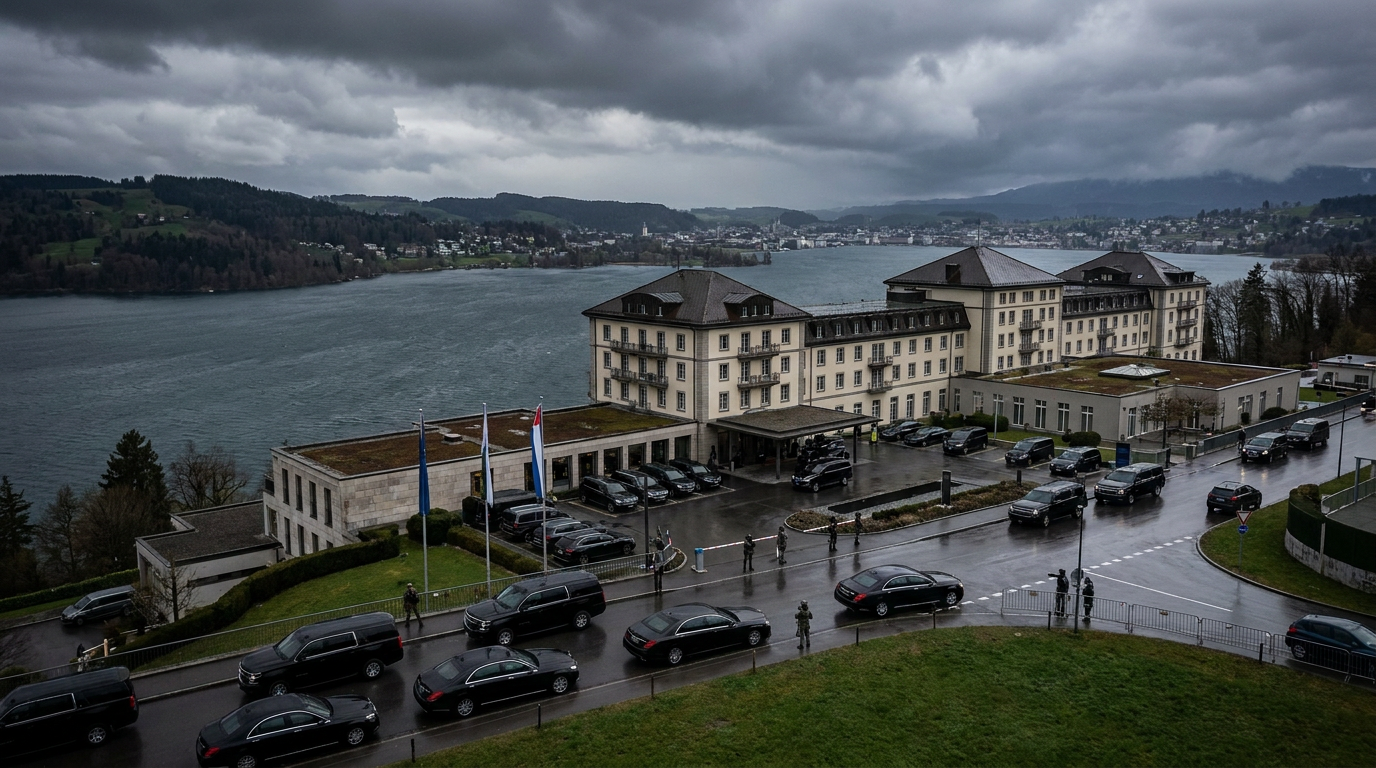
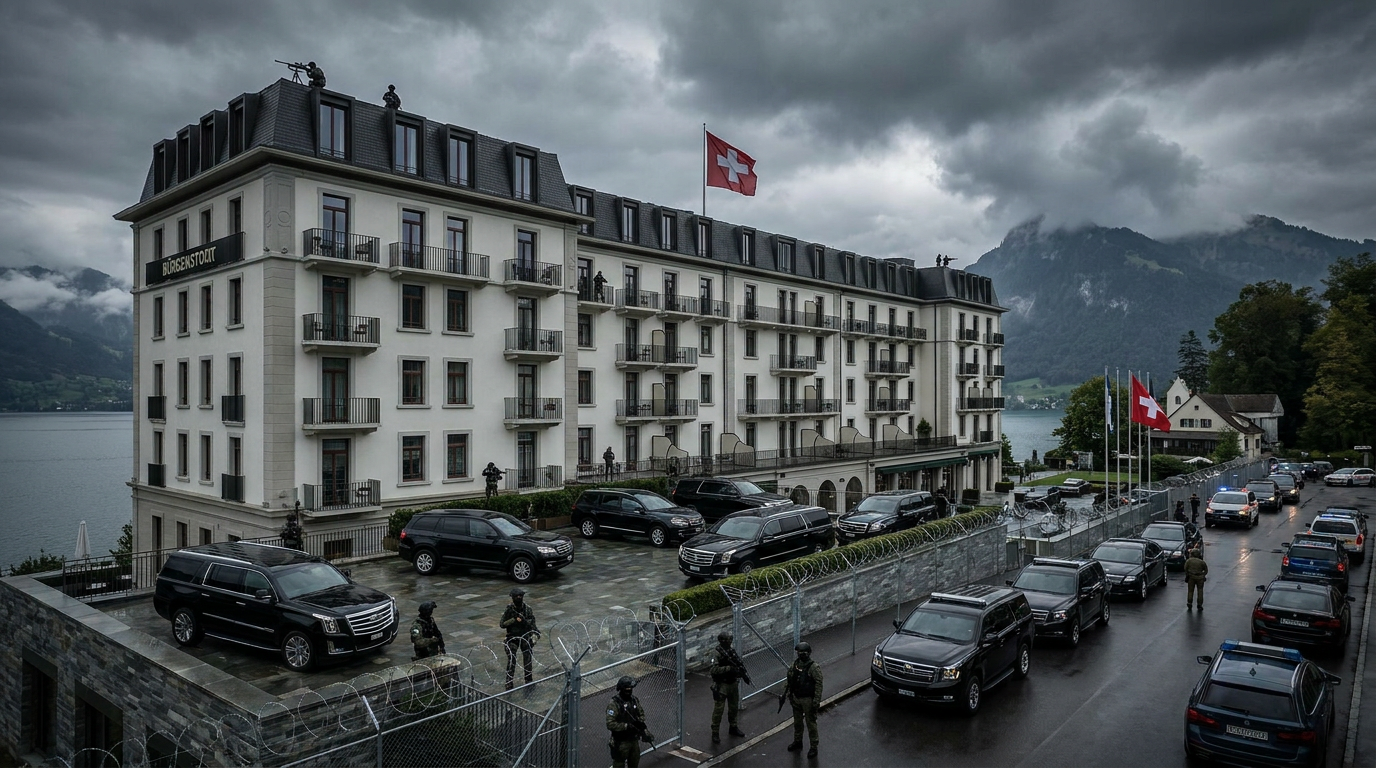
- Qatar and Pakistan are mediating the proximity talks at the Bürgenstock resort.
- Ongoing violence in Lebanon and maritime security in the Strait of Hormuz are the primary obstacles.
- Israeli leadership has reportedly expressed deep skepticism regarding the preliminary U.S.-Iran deal.
The arrival of U.S. Vice President JD Vance, alongside envoys Jared Kushner and Steve Witkoff, in Switzerland marks a critical juncture in the 114-day conflict that has engulfed the United States, Israel, and Iran. The high-level delegation underscores the urgency in Washington to finalize a preliminary ceasefire and halt a war that has severely destabilized the Middle East over the past three months.[1][2]
The talks, held at the secluded Bürgenstock resort, are designed to reinforce a fragile Memorandum of Understanding drafted in recent weeks. This document serves as the foundational framework for a broader peace agreement, aiming to transition the warring parties from active military engagement to a structured diplomatic off-ramp.[5]
Direct negotiations between Washington and Tehran remain politically fraught, necessitating the involvement of third-party brokers. Qatar, a traditional backchannel for U.S.-Iranian dialogue, and Pakistan, a nuclear-armed neighbor with complex ties to both nations, are serving as the primary mediators for these make-or-break sessions.[2][5]

The core mechanism of the proposed settlement involves a phased cessation of hostilities, beginning with a halt to direct missile exchanges and airstrikes. This step-by-step approach is intended to build baseline trust before addressing the more intractable issues of proxy engagements and regional security architecture.[3]
A primary focal point for the Swiss negotiations is the escalating violence in Lebanon. Iranian officials have vehemently condemned recent Israeli military operations across the Lebanese border, characterizing them as direct violations of the interim understandings that paved the way for the Bürgenstock summit.[6]
The U.S. delegation is prioritizing the stabilization of the Lebanese theater, recognizing that a full-scale war between Israel and Hezbollah would likely collapse the broader U.S.-Iran peace framework. Negotiators are attempting to decouple the Lebanese border clashes from the direct state-on-state conflict to prevent a cascading failure of the talks.[2][3]
Negotiators are attempting to decouple the Lebanese border clashes from the direct state-on-state conflict to prevent a cascading failure of the talks.
Equally critical to the global economy is the status of the Strait of Hormuz. The narrow waterway, which facilitates roughly one-fifth of the world's daily oil consumption, has been a zone of intense confusion and intermittent disruption since the conflict began 114 days ago.[3][7]

Securing guaranteed maritime transit rights through the Strait is a non-negotiable demand for the American envoys. The current ambiguity regarding naval deployments and commercial shipping protections threatens to trigger severe volatility in global energy markets if left unresolved by the diplomatic teams.[3]
The diplomatic push has exposed significant rifts between the United States and its closest regional ally, Israel. Israeli Prime Minister Benjamin Netanyahu has reportedly expressed deep skepticism regarding the preliminary deal, viewing any arrangement that leaves Iran's military infrastructure intact as a strategic defeat.[4]
Analysts suggest that the U.S. administration's aggressive push for a settlement reflects a desire to avoid a protracted Middle Eastern entanglement. By deploying high-profile figures like Vance and Kushner, the White House is signaling its intent to force an end to the hostilities, even if it requires overriding Israeli objections.[1][4]

For Tehran, the 114 days of conflict have exacted a heavy toll on an already strained economy and military apparatus. The Iranian delegation approaches the talks seeking immediate relief from direct strikes and a pathway to economic stabilization, though they remain publicly defiant regarding their regional deterrence capabilities.[2][6]
The mediation strategy employed by Qatar and Pakistan relies heavily on "proximity talks," where the U.S. and Iranian delegations operate in separate rooms while mediators shuttle proposals between them. This format mitigates the domestic political risks for both governments associated with face-to-face negotiations.[2]
If the Bürgenstock talks collapse, military analysts warn of a rapid escalation phase, potentially involving broader strikes on energy infrastructure and a full mobilization of regional proxy forces. The coming days will determine whether the preliminary deal holds or the region descends further into an unprecedented multi-front war.[2][3]
How we got here
Late Feb 2026
Direct military conflict erupts involving U.S., Israeli, and Iranian forces.
May 2026
A preliminary Memorandum of Understanding is drafted to halt the fighting.
June 20, 2026
U.S. and Iranian delegations arrive in Switzerland for make-or-break negotiations.
Viewpoints in depth
U.S. Administration's view
The White House is prioritizing a rapid diplomatic off-ramp to stabilize the region and protect global energy markets.
For the U.S. delegation, the primary objective is to formalize the preliminary ceasefire and prevent the 114-day conflict from spiraling into a permanent, multi-front war. By dispatching top-tier envoys like Vice President JD Vance and Jared Kushner, the administration is signaling that ending the conflict is a core priority, even if it requires strong-arming regional allies. Securing guaranteed, unharassed commercial transit through the Strait of Hormuz remains their non-negotiable baseline for any final agreement.
Iranian Government's view
Tehran seeks an end to direct military strikes and economic relief, while defending its regional proxy network.
Iran approaches the Bürgenstock talks under significant economic and military strain after months of direct conflict. Their negotiators are demanding an immediate halt to Israeli and U.S. strikes on their infrastructure. However, they view the ongoing Israeli military operations in Lebanon as a bad-faith violation of the interim agreements, arguing that they cannot sign a comprehensive peace deal while their primary regional ally, Hezbollah, remains under heavy bombardment.
Israeli Leadership's view
Israel views the preliminary U.S.-Iran deal as a strategic threat that leaves hostile military infrastructure intact.
Prime Minister Benjamin Netanyahu and his cabinet are reportedly deeply opposed to the framework being discussed in Switzerland. From the Israeli perspective, a ceasefire that halts operations without dismantling Iran's forward-deployed military capabilities or Hezbollah's arsenal in Lebanon is merely a pause, not a solution. They fear the U.S. eagerness to exit the conflict will leave Israel vulnerable to future, better-coordinated attacks.
What we don't know
- Whether Israel will abide by the terms of a U.S.-brokered ceasefire if it feels its security concerns in Lebanon are unaddressed.
- The specific mechanisms proposed to guarantee safe commercial shipping through the Strait of Hormuz.
- How much economic or sanctions relief the U.S. is offering Iran in exchange for a cessation of hostilities.
Key terms
- Memorandum of Understanding (MoU)
- A preliminary, non-binding agreement outlining the broad terms of a potential peace deal before a formal treaty is signed.
- Proximity Talks
- A diplomatic format where opposing sides sit in separate rooms and communicate exclusively through third-party mediators.
- Strait of Hormuz
- A narrow maritime chokepoint between the Persian Gulf and the Gulf of Oman through which roughly 20% of the world's oil supply passes.
Frequently asked
Why are the talks happening in Switzerland?
Switzerland frequently hosts high-level international diplomacy due to its historic neutrality, providing a secure and impartial ground for hostile nations to negotiate.
What is the role of Qatar and Pakistan?
Because the U.S. and Iran do not have formal diplomatic relations, Qatar and Pakistan are acting as mediators, shuttling proposals between the two delegations in what are known as 'proximity talks.'
How does Lebanon factor into the U.S.-Iran talks?
Lebanon is a primary theater of proxy conflict. Iran argues that ongoing Israeli strikes against Hezbollah in Lebanon violate the preliminary ceasefire understandings, making it a major hurdle to a final deal.
Sources
Source coverage
7 outlets
3 viewpoints surfaced





[1]Fox NewsU.S. Administration
JD Vance arrives in Switzerland to join Kushner and Witkoff for new round of Iran negotiations
Read on Fox News →[2]Al JazeeraIranian Government
Iran war day 114: US, Iranian delegations in Switzerland for key talks
Read on Al Jazeera →[3]NYTU.S. Administration
U.S. and Iranian Officials to Meet for Peace Talks in Switzerland
Read on NYT →[4]The GuardianIsraeli Leadership
Trump may survive the humiliation of the Iran deal. Netanyahu will not
Read on The Guardian →US and Iran face make-or-break talks in Switzerland
Read on Al Jazeera →Vance arrives in Switzerland for US-Iran talks
Read on Al Jazeera →[7]U.S. Energy Information Administration
World Oil Transit Chokepoints: Strait of Hormuz
Read on U.S. Energy Information Administration →

Every angle. Every day.
Get news politics stories with full source coverage and perspective breakdowns delivered to your inbox.