
Open-Ear vs. Bone Conduction: How 'Aware Audio' is Changing Headphones in 2026
As consumers move away from isolating earbuds, open-ear audio has become the fastest-growing headphone category. Here is how air conduction and bone conduction technologies work, and why they are replacing traditional designs for active users.
By Factlen Editorial Team
- Comfort & Everyday Use Proponents
- Argue that air conduction provides the best balance of all-day physical comfort and premium audio fidelity for remote workers and casual listeners.
- Safety & Active Lifestyle Advocates
- Prioritize absolute situational awareness, arguing that bone conduction is essential for the physical safety of runners, cyclists, and urban commuters.
- Audiophile & Tech Reviewers
- Focus on measurable acoustic performance, evaluating how well open-ear designs overcome their inherent lack of bass and passive noise isolation.
- Factlen Synthesis
- Evaluates the broader market shift from acoustic isolation to aware audio.
What's not represented
- · Traditional Audiophiles
- · Hearing Health Professionals
Why this matters
Prolonged use of sealed earbuds can lead to ear fatigue and situational blindness in busy environments. Understanding the new wave of open-ear technology helps buyers choose devices that protect their hearing health while keeping them safely connected to their surroundings.
Key points
- Open-ear headphones are replacing sealed earbuds for users who prioritize safety, comfort, and situational awareness.
- Bone conduction technology bypasses the eardrum entirely, sending sound vibrations through the cheekbones directly to the inner ear.
- Air conduction uses directional speakers hovering outside the ear to beam sound into the canal, offering richer bass and superior audio fidelity.
- New hybrid models and "open-ear noise reduction" algorithms are bridging the gap between environmental awareness and audio immersion.
For the past decade, the headphone industry has been locked in an arms race to block out the world. Active Noise Cancellation (ANC) became the gold standard, with manufacturers engineering increasingly dense silicone seals to isolate listeners in a bubble of silence. But in 2026, the pendulum has swung in the exact opposite direction.[8]
A growing demographic of runners, commuters, and remote workers are rejecting the isolation of traditional earbuds. The reasons range from safety concerns on busy city streets to the physical discomfort and ear fatigue caused by wearing sealed silicone tips for eight hours a day.[4]
In response, the audio market has pivoted to "aware audio"—specifically, the booming category of open-ear headphones. Unlike traditional in-ear monitors or over-ear cups, open-ear devices leave the ear canal completely unobstructed. They allow ambient environmental noise to mix naturally with your music or podcast.[8]
However, the terminology surrounding this new category can be confusing for shoppers. If a speaker isn't inside your ear, how does the sound get to your brain? The answer lies in two distinct, competing technologies: bone conduction and air conduction.[1][2]

Bone conduction is the older and more radical of the two approaches. Instead of utilizing the ear canal at all, bone conduction headphones rest small transducers against the listener's cheekbones or temples.[2]
These transducers convert audio signals into mechanical vibrations. The vibrations travel directly through the bones of the skull and stimulate the cochlea—the sensory organ in the inner ear—completely bypassing the eardrum.[2]
The primary advantage of bone conduction is absolute situational awareness. Because the ear canal is entirely open, users hear traffic, nature, and conversations exactly as they would without headphones. This makes it the undisputed champion for cyclists, runners, and individuals with certain types of conductive hearing loss.[2][4]
The primary advantage of bone conduction is absolute situational awareness.
But bone conduction has inherent acoustic limitations. Because human bone is not an ideal medium for transmitting low-frequency sound waves, these headphones notoriously struggle to produce deep bass. Furthermore, at high volumes, the mechanical transducers can create a tickling or buzzing sensation on the cheekbones that some users find distracting.[2][7]

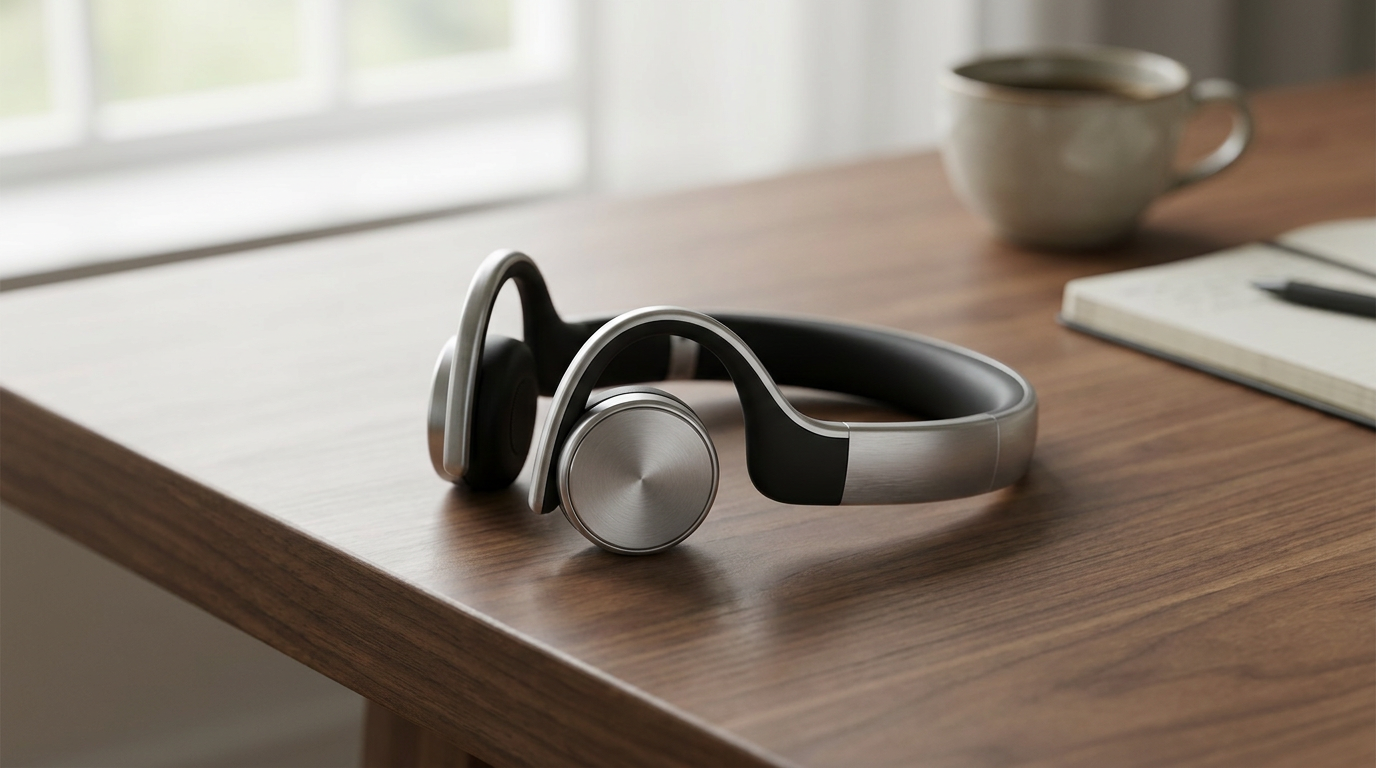
Enter modern air conduction, the technology driving the current open-ear boom. Devices like the Bose Ultra Open and Soundcore AeroFit use tiny, highly directional speakers that hover just outside the ear canal, often attaching via a cuff or ear-hook design.[1][3]
Air conduction relies on the natural pathway of human hearing. The speakers beam concentrated sound waves through the air directly into the ear canal. To solve the problem of sound leakage—preventing everyone on the train from hearing your music—engineers utilize acoustic phase cancellation, projecting inverted sound waves outward to neutralize escaping audio.[1][7]
The result is a massive leap in audio fidelity. Air conduction models deliver the rich bass, wide soundstage, and vocal clarity that audiophiles expect from premium earbuds, all without the pressure of a silicone seal.[1][3]
The industry is now seeing the emergence of hybrid devices that refuse to compromise. Flagship models in 2026, such as the Shokz OpenRun Pro 2, utilize "DualPitch" technology. They deploy bone conduction transducers to handle crisp mids and highs, while a dedicated air conduction driver pumps bass directly into the ear.[2]
Software is also bridging the gap between awareness and focus. Historically, open-ear headphones were useless in loud environments like airplanes or subway cars. Now, companies are introducing "open-ear noise reduction," utilizing external microphones to dynamically soften background droning by up to 19 decibels without physically plugging the ear.[5][6]

From a health perspective, audiologists note that open-ear designs significantly reduce the moisture buildup and bacterial risks associated with prolonged earbud use. A 2024 audiology study noted that traditional sealed buds can increase hearing strain by 20% during extended wear, making the open-ear pivot a smart choice for all-day listeners.[4]
There are still trade-offs. Open-ear headphones will never provide the pristine, isolated sanctuary of high-end ANC over-ear headphones. If your primary goal is to sleep on a transatlantic flight, a sealed design remains the superior tool.[7][8]
But for the rest of the day, the paradigm has shifted. Audio technology is no longer just about escaping the environment; it is about seamlessly scoring the world around us, keeping listeners connected, comfortable, and safe.[8]
How we got here
Pre-2020
Bone conduction remains a niche technology primarily used by audiologists, military personnel, and dedicated marathon runners.
2022–2023
Major audio brands begin experimenting with air-conduction 'clip-on' designs to solve the comfort issues of sealed earbuds.
2024
Bose releases the Ultra Open Earbuds, proving that air-conduction can deliver premium, audiophile-grade sound without an ear seal.
2025–2026
Hybrid technologies emerge, combining bone and air conduction in single devices, while 'open-ear noise reduction' algorithms are introduced.
Viewpoints in depth
The Active Safety Camp
Prioritizes situational awareness and physical safety over absolute audio fidelity.
For runners, cyclists, and urban commuters, the ability to hear a car horn or a bicycle bell is a matter of life and death. This camp champions pure bone conduction because it leaves the ear canal 100% unobstructed. They argue that any device projecting sound into the ear canal—even air conduction models—creates a cognitive masking effect that slightly diminishes environmental awareness. For them, the trade-off of weaker bass is a necessary compromise for absolute safety.
The All-Day Comfort Camp
Focuses on eliminating the physical fatigue and ear health risks of sealed earbuds.
Remote workers and casual listeners are driving the surge in air conduction 'clip-on' designs. This perspective argues that humans were not meant to have silicone plugged into their ear canals for eight hours a day, which can lead to moisture buildup, bacterial infections, and physical pressure fatigue. They view open-ear air conduction as the ultimate everyday wearable—a device comfortable enough to leave on from morning until night, seamlessly blending Zoom calls with household awareness.
The Audiophile Skeptics
Evaluates headphones strictly on acoustic performance, frequency response, and isolation.
Traditional audio reviewers remain cautious about the open-ear trend. While they acknowledge the massive leaps in air conduction bass response and hybrid driver technology, they point out that open-ear physics cannot defeat a noisy environment. Without passive isolation, low-frequency details are the first to be drowned out by a passing bus or a loud air conditioner. This camp maintains that while open-ear tech is excellent for utility, true critical listening still requires a sealed in-ear monitor or over-ear headphone.
What we don't know
- How long-term exposure to directional air-conduction audio affects the eardrum compared to traditional sealed earbuds over decades of use.
- Whether open-ear noise reduction algorithms can eventually match the decibel-blocking power of physical silicone seals in extreme environments like airplanes.
Key terms
- Air Conduction
- The traditional method of hearing where sound waves travel through the air into the ear canal to vibrate the eardrum.
- Bone Conduction
- Audio technology that bypasses the eardrum by sending sound vibrations directly through the skull's cheekbones to the inner ear.
- Phase Cancellation
- An acoustic technique used in open-ear headphones to project inverted sound waves outward, preventing people nearby from hearing your music.
- Situational Awareness
- The ability to hear ambient environmental sounds—like traffic or conversations—while simultaneously listening to audio.
Frequently asked
Can other people hear my music with open-ear headphones?
While early models leaked sound, modern air-conduction headphones use directional audio and phase cancellation to keep your music surprisingly private, though some leakage occurs at maximum volume.
Are bone conduction headphones safe for your hearing?
Yes. Because they bypass the eardrum entirely, they reduce eardrum fatigue, though listening at unsafe volumes can still damage the inner ear's cochlea.
Do open-ear headphones have good bass?
Air-conduction models now offer rich bass comparable to traditional earbuds. Pure bone-conduction models still struggle with deep bass, though hybrid models are bridging the gap.
Sources
Source coverage
8 outlets
4 viewpoints surfaced








[1]BoseComfort & Everyday Use Proponents
What are open-ear headphones and how do they work?
Read on Bose →[2]ShokzSafety & Active Lifestyle Advocates
Air Conduction vs Bone Conduction: Which is Better for You?
Read on Shokz →[3]SoundcoreComfort & Everyday Use Proponents
Air Conduction vs. Bone Conduction Headphones: A Comprehensive Guide
Read on Soundcore →[4]QCYSafety & Active Lifestyle Advocates
Bone Conduction vs Open-Ear Earbuds: The 2025 Guide to Safe Listening
Read on QCY →[5]MashableAudiophile & Tech Reviewers
The best open earbuds for running, working, and everything in between
Read on Mashable →[6]ShopSavvyAudiophile & Tech Reviewers
Best Open-Ear Headphones of 2026: Tested and Reviewed
Read on ShopSavvy →[7]RTINGSAudiophile & Tech Reviewers
The 5 Best Open-Ear Headphones - Spring 2026
Read on RTINGS →[8]Factlen Editorial TeamFactlen Synthesis
Synthesis by Factlen editorial team
Read on Factlen Editorial Team →
More in shopping
See all 6 stories →Handheld PCs
Steam Deck OLED vs. ASUS ROG Ally X: The 2026 Handheld PC Matchup
6 sources

Furniture Tech
The 2026 Furniture Shift: Navigating the PFAS Ban and the Rise of Modular, Circular Design
8 sources

Camera Tech
Global Shutter Explained: The Camera Tech Changing Photography in 2026
6 sources
LED Skincare
Red Light Therapy Masks: What the Clinical Evidence Actually Says
7 sources

Every angle. Every day.
Get shopping stories with full source coverage and perspective breakdowns delivered to your inbox.