
U.S. and Iran Reach Tentative Ceasefire at G7 Summit, Paving Way to Reopen Strait of Hormuz
President Trump announced a preliminary agreement with Iran at the G7 Summit in France, aiming to end the months-long closure of the Strait of Hormuz in exchange for lifting the U.S. blockade on Iranian ports.
By Factlen Editorial Team
- U.S. Administration
- Prioritizes the economic victory of reopening the strait and validating its blockade strategy.
- Gulf Security Partners
- Focuses on regional stability and the resilience of the Abraham Accords against Iranian hostility.
- International Observers
- Emphasizes the global economic impact and the role of middle powers in facilitating diplomacy.
What's not represented
- · Iranian Domestic Public
- · European Energy Consumers
Why this matters
The reopening of the Strait of Hormuz would immediately relieve immense pressure on global energy markets, lowering oil prices and restoring a critical shipping lane that handles 20% of the world's petroleum.
Key points
- The U.S. and Iran have reached a tentative ceasefire agreement at the G7 Summit in France.
- Iran has committed to reopening the Strait of Hormuz, a critical global oil chokepoint, by Friday.
- In exchange, the United States has ordered the end of its naval blockade on Iranian ports.
- The formal memorandum of understanding will be signed in Switzerland.
- Gulf states welcome the economic relief but remain wary of Iran's long-term regional strategy.
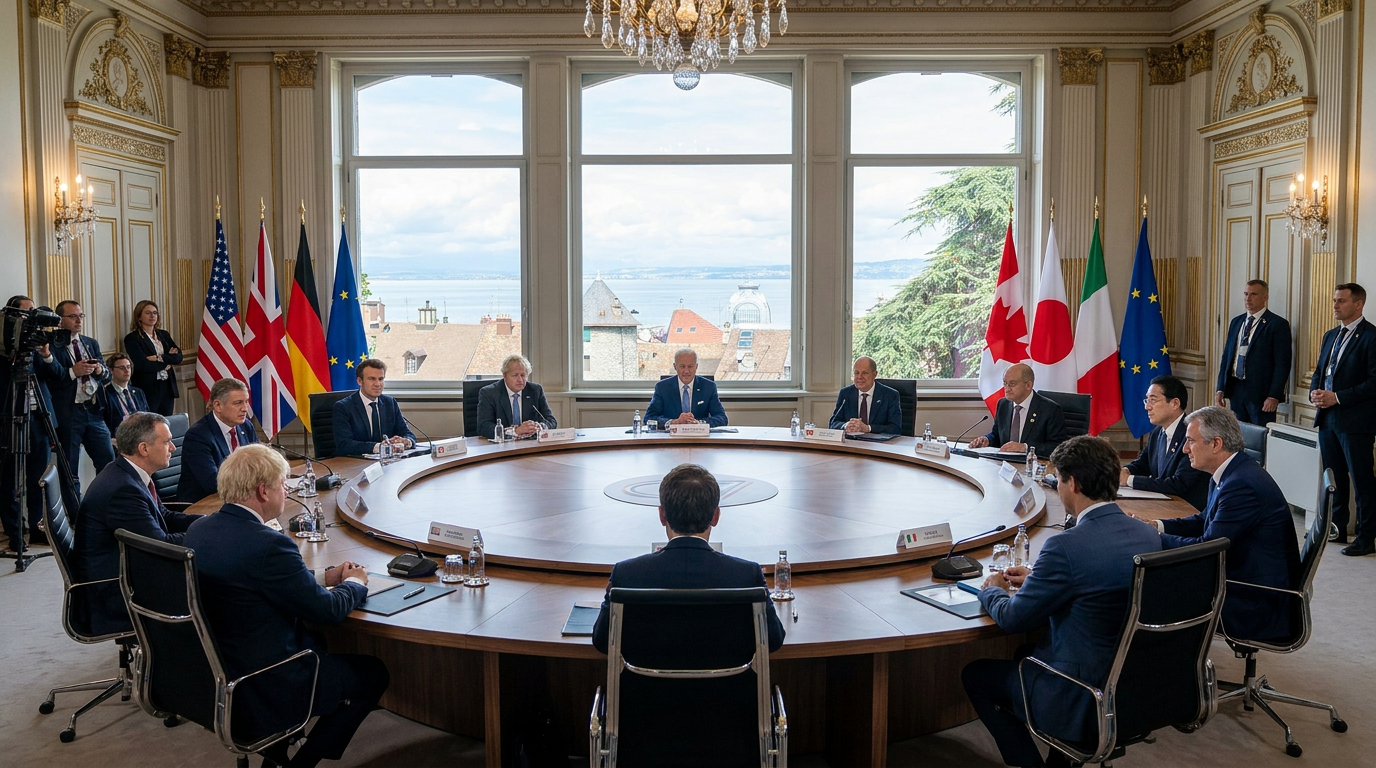
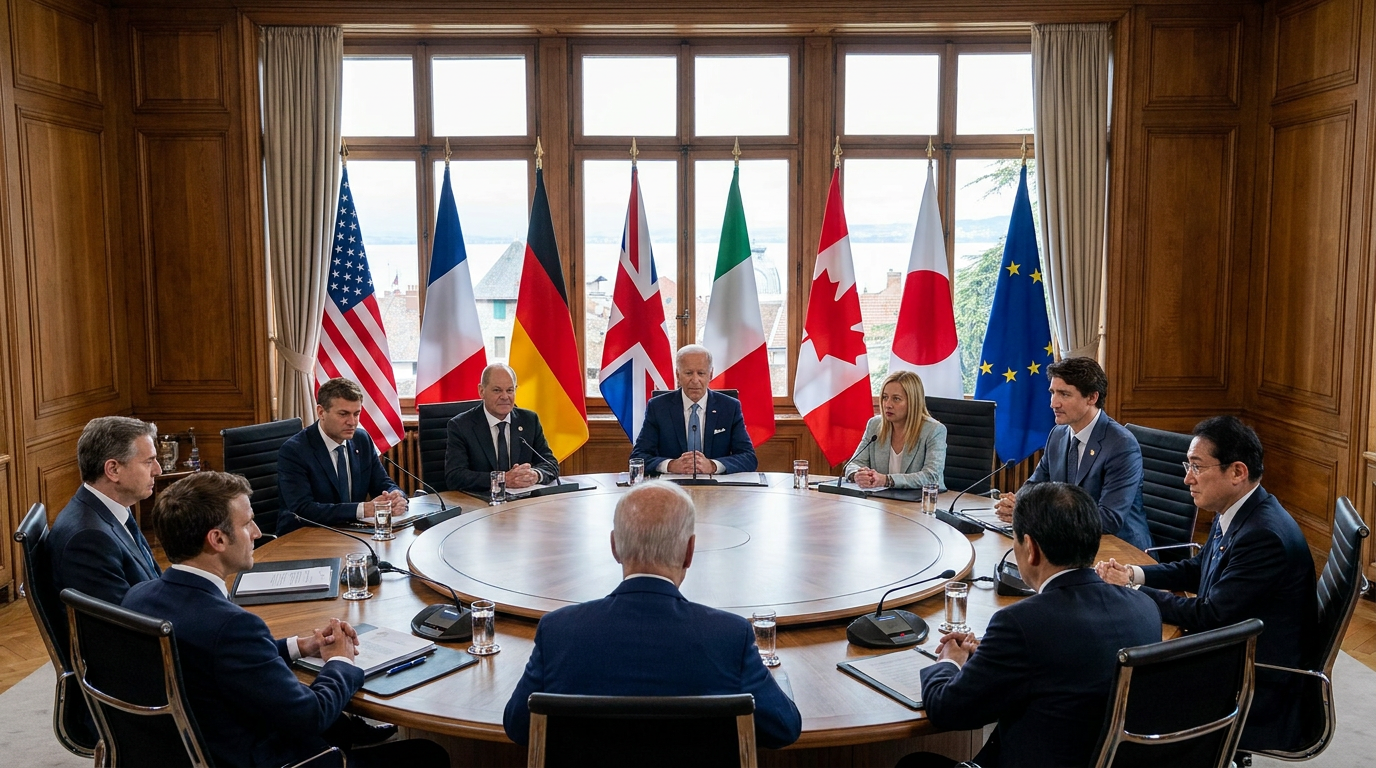
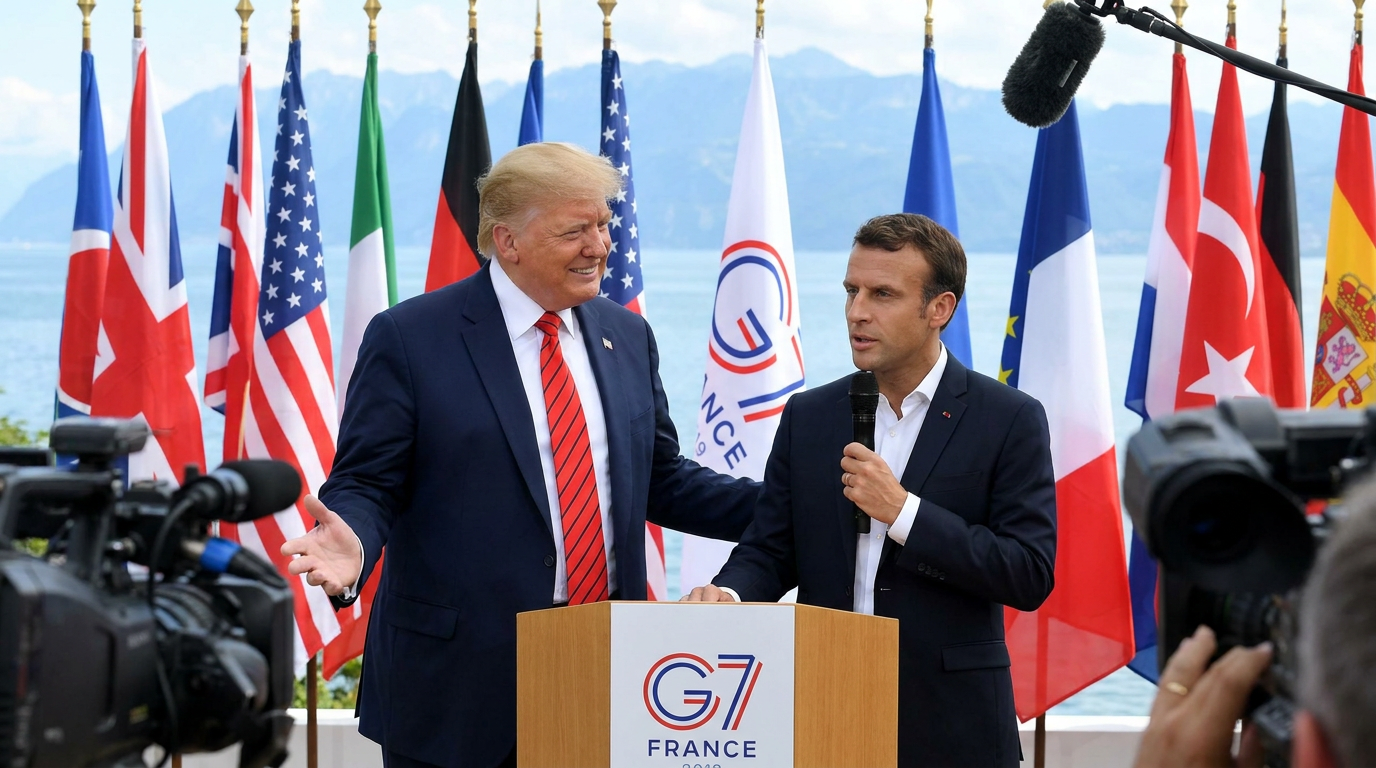
The 52nd G7 Summit in Évian-les-Bains, France, is concluding under the shadow of a major geopolitical breakthrough that promises to reshape the immediate future of the Middle East. President Donald Trump is utilizing the high-profile gathering of the world's largest advanced economies to finalize and publicly tout a tentative ceasefire agreement between the United States and Iran. The announcement comes at a critical juncture, as global leaders had gathered primarily to discuss economic imbalances and digital trade, only to have the agenda overtaken by the sudden prospect of peace in the Persian Gulf. The diplomatic victory offers a dramatic conclusion to a summit that was already operating under heightened security and intense international scrutiny.[1][4]
The preliminary deal, which caught many international observers and market analysts by surprise, aims to de-escalate a months-long military and economic standoff that has severely disrupted global supply chains. The centerpiece of the agreement is a mutual, synchronized stand-down between the two adversarial nations. According to the framework discussed at the summit, Iran has agreed to reopen the Strait of Hormuz to all commercial shipping, effectively ending a blockade that had paralyzed regional trade. In direct exchange, the United States has committed to lifting its aggressive naval blockade of Iranian ports, a maximum-pressure tactic that had crippled Tehran's ability to engage in maritime commerce.[3][4]
While the broad strokes of the agreement were announced in France, the formal diplomatic execution will take place elsewhere. A comprehensive memorandum of understanding is scheduled to be officially signed this coming Friday in Switzerland, a nation that frequently serves as a neutral intermediary for high-stakes international diplomacy. If executed as planned, this document would mark the most significant diplomatic engagement between Washington and Tehran in years, fundamentally altering the security architecture of the Middle East and providing a much-needed reprieve for global energy markets that have been operating under a massive risk premium.[3]
To fully understand the gravity of this bilateral agreement, one must look closely at the specific geography and strategic importance of the Strait of Hormuz. This incredibly narrow waterway, situated between the Musandam Peninsula of Oman and the southern coast of Iran, serves as the only sea passage connecting the petroleum-rich Persian Gulf to the Gulf of Oman and, ultimately, the open waters of the Arabian Sea. It is a geographical bottleneck that dictates the pace of the global economy, making it one of the most fiercely contested maritime corridors on the planet.[6]
The physical dimensions of the strait underscore its vulnerability to military disruption. At its absolute narrowest point, the waterway is a mere 21 miles wide. However, the actual navigable shipping lanes that can safely accommodate massive, deep-draft crude oil tankers are significantly smaller—just two miles wide in either direction, separated by a two-mile buffer zone to prevent collisions. This tight squeeze means that even a minor military presence or the threat of naval mines can effectively shut down the entire corridor, trapping billions of dollars of commerce inside the gulf.[6]

For months, Iranian naval forces and the Islamic Revolutionary Guard Corps have effectively shut down this route, choking off a vital artery for global energy supplies in retaliation for international sanctions. Historically, roughly 20 percent of total global petroleum consumption passes through this specific corridor on a daily basis. The prolonged closure has sent shockwaves through global markets, driving up inflation, increasing transportation costs, and severely straining the economies of energy-importing nations across Europe and Asia who rely on uninterrupted Middle Eastern crude.[6]
In direct response to the strait's closure, the United States military had imposed a strict, uncompromising naval blockade on major Iranian ports. This operation involved deploying carrier strike groups and destroyers to intercept and turn away vessels attempting to dock in Iran, crippling Tehran's ability to export its own oil or import essential civilian and industrial goods. This maximum-pressure tactic was explicitly designed to force the Iranian government back to the negotiating table by suffocating its maritime economy and draining its foreign currency reserves.[3]
During his press conference in Évian-les-Bains, President Trump confirmed to the international press corps that he has already ordered the U.S. military to begin unwinding the blockade. This preemptive gesture of goodwill is predicated on the strict expectation that Iran will follow through on its reciprocal commitment to allow safe, unharassed passage for all commercial vessels through the Strait of Hormuz by the Friday deadline. The rapid timeline leaves very little room for error or miscommunication between the opposing naval forces.[3]
During his press conference in Évian-les-Bains, President Trump confirmed to the international press corps that he has already ordered the U.S.
The profound economic implications of this sudden de-escalation were a central theme during the final hours of the G7. French President Emmanuel Macron, hosting the summit at the luxurious lakeside resort, had previously identified the reduction of global economic imbalances as the primary goal for France's G7 presidency. The sudden prospect of stabilized energy markets and reduced shipping costs provided an unexpected but highly welcome boost to those macroeconomic discussions, allowing leaders to project a unified message of economic recovery.[4]

However, the geopolitical reaction across the Middle East remains highly complex and deeply layered. Regional powers, particularly those directly affected by the maritime standoff, are watching the U.S.-Iran rapprochement with a mixture of immediate economic relief and deep, long-term caution. For nations sharing the Persian Gulf, the reopening of the strait is an existential economic necessity, but they remain acutely aware that the underlying ideological and strategic conflicts with Tehran have not been resolved by this single memorandum.
Voices from the Gulf emphasize that Iran's recent hostilities have been broad and indiscriminate, affecting a wide range of regional actors. Commentators and officials in the United Arab Emirates have pointed out that Tehran's aggressive maritime posture targeted both Arab and Jewish populations alike, inadvertently strengthening the strategic and security alliances formed under the Abraham Accords. Rather than fracturing the coalition, the shared threat of a closed gulf has solidified the diplomatic normalization between Israel and several of its Arab neighbors.[2]
For these regional stakeholders, the primary concern is whether the ceasefire represents a genuine, long-term shift in Iranian foreign policy or merely a tactical pause designed to relieve crippling domestic economic pressure. The exact terms of the impending memorandum of understanding remain tightly guarded, and regional leaders are anxious to see if the deal includes any provisions regarding Iran's nuclear enrichment activities or its continued financial and military support for proxy militias operating in Yemen, Lebanon, and Syria.[3]
The crisis and its subsequent resolution have also highlighted the growing influence of middle powers in modern geopolitics. International organizations and economic forums have noted that countries outside the core G7 are increasingly acting as crucial mediators and stakeholders in a shifting global order. The fact that the formal signing will take place in Switzerland, relying on the diplomatic infrastructure of a neutral third party, underscores the ongoing necessity of broad international coalitions to facilitate and guarantee high-stakes bilateral agreements.[5]

The domestic political timing for the U.S. administration is also a notable factor in the rapid push for a finalized deal. The diplomatic breakthrough comes as President Trump navigates a highly active political calendar back home, including recent primary elections and contentious congressional battles over national intelligence appointments. Securing a major foreign policy victory that simultaneously lowers domestic gas prices could provide the administration with significant political capital heading into the latter half of the year.[1]
Despite the optimism in France, significant uncertainties loom over the immediate implementation phase of the ceasefire. The mechanics of verifying the safe passage of commercial vessels through the Strait of Hormuz will require robust, transparent international monitoring. Shipping companies and maritime insurers will need concrete assurances that the waterway is completely clear of naval mines and that Iranian fast-attack craft have returned to their bases before they risk sending multi-million-dollar tankers back into the corridor.
Furthermore, the physical unwinding of a comprehensive naval blockade is a highly complex logistical and military operation. U.S. Central Command will need to establish crystal-clear rules of engagement to avoid accidental skirmishes or miscalculations with the Islamic Revolutionary Guard Corps during the delicate transition period. The proximity of heavily armed vessels from both nations in a confined space creates a volatile environment where a single misstep could instantly derail the fragile peace agreement.

The stakes for the upcoming Friday deadline could not be higher. If the scheduled signing in Switzerland falls through, or if Iran fails to fully reopen the strait to commercial traffic, the tentative agreement could spectacularly collapse. Such a failure would likely lead to an even more volatile and dangerous escalation in the Gulf, as both sides would feel compelled to double down on their respective military postures, potentially dragging the broader region into a direct kinetic conflict.
For now, the global community is holding its collective breath, watching the waters of the Persian Gulf for signs of returning commerce. The 52nd G7 summit in Évian-les-Bains will likely be remembered by historians not for its scheduled agenda on digital infrastructure or biodiversity finance, but as the critical stage where the world stepped back from the brink of a catastrophic economic and military conflict in the Middle East.[4]
How we got here
Early 2026
Iran effectively shuts down commercial transit through the Strait of Hormuz.
Spring 2026
The United States imposes a strict naval blockade on Iranian ports in retaliation.
June 15, 2026
The 52nd G7 Summit begins in Évian-les-Bains, France.
June 17, 2026
President Trump announces the tentative ceasefire and the end of the U.S. blockade.
June 19, 2026
Scheduled signing of the formal memorandum of understanding in Switzerland.
Viewpoints in depth
U.S. Administration
Views the deal as a successful application of maximum pressure.
The U.S. administration argues that the naval blockade successfully forced Tehran to the negotiating table. By crippling Iran's maritime economy, Washington believes it has secured a vital concession—the reopening of the Strait of Hormuz—without committing to long-term sanctions relief or military escalation. The administration views this as a major diplomatic and economic victory ahead of domestic elections.
Gulf States & Abraham Accords Partners
Cautiously optimistic but deeply concerned about long-term Iranian intentions.
Regional powers, particularly the UAE and other Abraham Accords signatories, view the ceasefire through a security lens. They note that Iran's recent hostilities targeted both Arab and Jewish populations, underscoring a shared regional threat. While they welcome the de-escalation and the economic relief of an open strait, they remain skeptical that a limited memorandum of understanding will curb Iran's broader regional ambitions or proxy network.
Global Energy Markets
Focused entirely on the reliable flow of petroleum and the reduction of risk premiums.
For energy importers and market analysts, the geopolitical nuances are secondary to the physical flow of oil. The months-long closure of the Strait of Hormuz introduced massive volatility and inflation into the global economy. This camp views the ceasefire as an essential economic relief valve, though they warn that markets will remain jittery until commercial tankers successfully and safely transit the strait without harassment.
What we don't know
- The exact terms of the memorandum of understanding regarding Iran's nuclear program.
- Whether Iran will fully allow unhindered commercial transit by the Friday deadline.
- How the U.S. Navy and the IRGC will manage the logistical unwinding of the blockade without accidental conflict.
Key terms
- Strait of Hormuz
- A narrow waterway between the Persian Gulf and the Gulf of Oman, serving as the only sea passage from the Persian Gulf to the open ocean.
- Naval Blockade
- An effort to cut off supplies, war material, or communications from a particular area by force, in this case applied by the U.S. to Iranian ports.
- Abraham Accords
- A series of joint normalization statements initially signed in 2020 between Israel, the United Arab Emirates, and Bahrain, reshaping Middle East alliances.
- Chokepoint
- A narrow route providing passage through or to another region, which can be easily blocked to control transportation.
Frequently asked
What did the U.S. and Iran agree to?
They reached a tentative ceasefire where Iran will reopen the Strait of Hormuz to commercial shipping, and the U.S. will lift its naval blockade on Iranian ports.
Why is the Strait of Hormuz important?
It is the world's most critical oil transit chokepoint, handling roughly 20% of global petroleum consumption. Its closure severely disrupted global energy markets.
When will the agreement become official?
A formal memorandum of understanding is scheduled to be signed by representatives in Switzerland on Friday, June 19, 2026.
How are other Middle Eastern countries reacting?
Gulf states and Abraham Accords partners are relieved by the de-escalation but remain highly cautious about Iran's long-term regional intentions.
Sources
Source coverage
6 outlets
3 viewpoints surfaced





[1]NPRU.S. Administration
Trump to face questions at G7 press conference. And, Tuesday's primary results
Read on NPR →[2]Fox NewsGulf Security Partners
View from the Gulf: Iran targeted Arabs and Jews alike — antisemitism does Tehran's work
Read on Fox News →[3]The HinduInternational Observers
G7 Summit 2026 begins in Évian: Key leaders, dates, and venue details
Read on The Hindu →[4]WikipediaInternational Observers
52nd G7 summit
Read on Wikipedia →[5]World Economic ForumInternational Observers
G7 Summit 2026: will this be a middle power moment?
Read on World Economic Forum →[6]U.S. Energy Information AdministrationInternational Observers
World Oil Transit Chokepoints
Read on U.S. Energy Information Administration →
More in news politics
See all 5 stories →Electoral Reform
Evidence Pack: Does Ranked-Choice Voting Actually Reduce Political Polarization?
9 sources
Cognitive Defense
The Science of Prebunking: How Psychological Inoculation is Defending Elections Against Deepfakes
8 sources

US-Iran Pact
Trump Secures G7 Backing for Tentative US-Iran Peace Deal Amid Domestic and Regional Backlash
7 sources
Every angle. Every day.
Get news politics stories with full source coverage and perspective breakdowns delivered to your inbox.