
JUNO Underground Observatory Releases First Data, Achieving Record Precision on 'Ghost Particles'
The Jiangmen Underground Neutrino Observatory has published its first physics results, reducing the uncertainty of key neutrino oscillation parameters by a factor of 1.6. The massive Chinese detector's initial data proves its capability to solve the longstanding mystery of neutrino mass ordering.
By Factlen Editorial Team
- Particle Physicists
- Focuses on how JUNO's precision measurements fill critical gaps in the Standard Model.
- JUNO Collaboration
- Emphasizes the engineering triumph of the detector and hitting its ambitious design targets.
- Global Neutrino Community
- Looks ahead to upcoming cross-checks from the US and Japan's next-generation detectors.
What's not represented
- · Theoretical physicists proposing alternative models for the solar neutrino tension
- · Engineers detailing the specific manufacturing challenges of the acrylic sphere
Why this matters
Neutrinos are the most abundant matter particles in the universe, yet they remain the least understood. Pinning down their exact properties is the key to unlocking the next major leap in physics, potentially explaining the universe's matter-antimatter imbalance and the fundamental laws that governed the Big Bang.
Key points
- The JUNO detector in China published its first physics results in Nature.
- Data from just 59 days reduced the uncertainty of key neutrino parameters by 1.6 times.
- The findings prove the facility can achieve its goal of determining neutrino mass ordering.
- The results also confirmed a lingering discrepancy known as the 'solar neutrino tension'.
- Upcoming detectors in the US and Japan will cross-check these findings in the next decade.
The Jiangmen Underground Neutrino Observatory (JUNO) has published its first physics results in the journal Nature, marking a major milestone in particle astrophysics. Buried 700 meters beneath Guangdong province in China, the massive detector captured unprecedented data on neutrino oscillations, the quantum process by which the universe's most elusive particles change identities as they travel.[1][2]
Neutrinos—often dubbed "ghost particles"—are electrically neutral, possess almost zero mass, and pass through ordinary matter virtually unimpeded. Trillions of them pass through the human body every second, originating from the Big Bang, distant supernovae, the Sun, and human-made nuclear reactors. Because they interact so rarely with other matter, studying them requires colossal, highly sensitive instruments shielded from cosmic radiation.[4][6]
The JUNO collaboration reported that just 59.1 days of data collection yielded the most precise measurements of neutrino oscillation parameters to date. By analyzing antineutrinos emitted from two nearby nuclear power plants, the team reduced the uncertainty of two key mixing parameters by a factor of 1.6 compared to the combined global experimental results of the past several decades.[1][3]

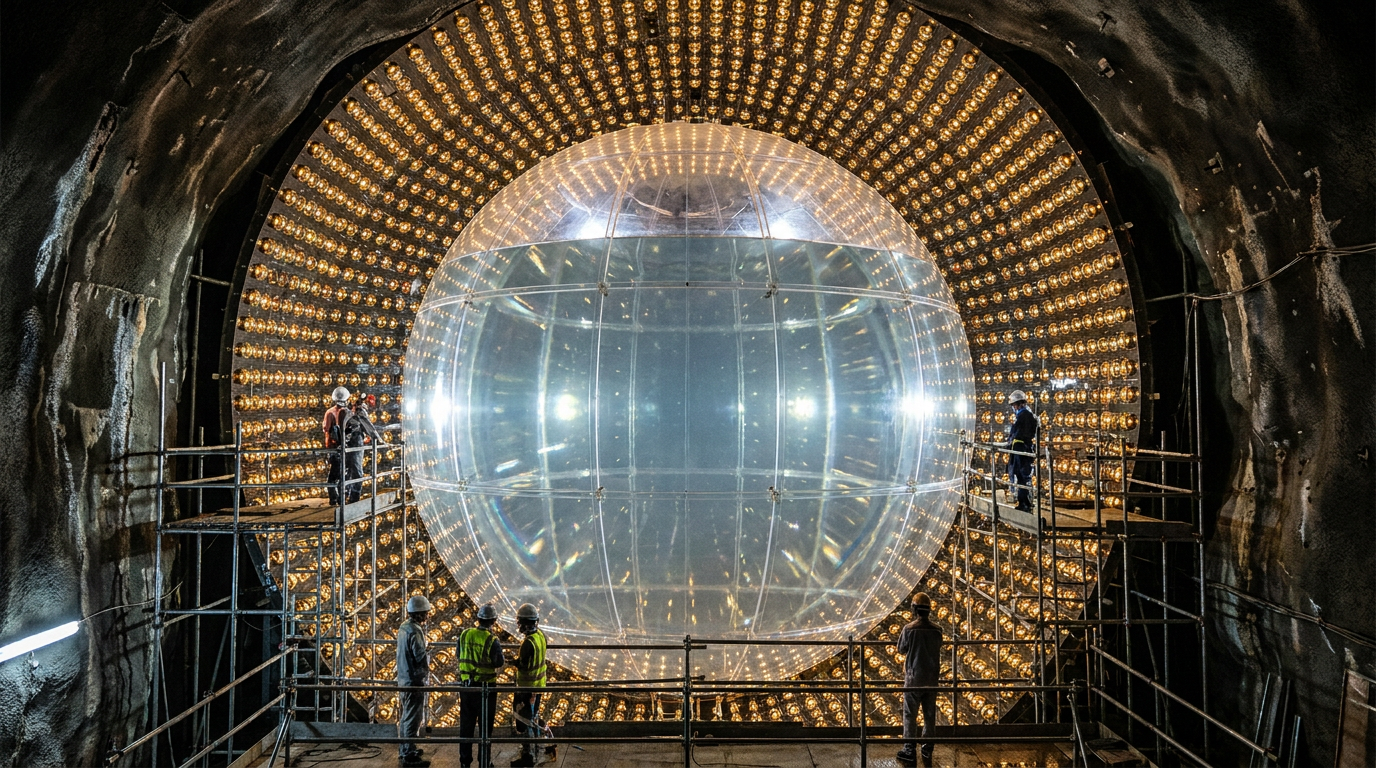
This leap in precision stems directly from JUNO's sheer scale and unprecedented engineering. The facility centers on a 35.4-meter-diameter acrylic sphere containing 20,000 tonnes of ultrapure liquid scintillator. When an antineutrino occasionally collides with an atom in the liquid via the weak nuclear force, it produces a charged particle that excites surrounding molecules, emitting a microscopic flash of light.[3][5]
These faint flashes are captured by an array of over 45,000 photomultiplier tubes lining the dark underground cavern. By measuring the exact energy of the incoming antineutrinos with sub-percent resolution, researchers can reconstruct the subtle interference patterns that dictate how the particles shift between their three known "flavors"—electron, muon, and tau.[2][4]
These faint flashes are captured by an array of over 45,000 photomultiplier tubes lining the dark underground cavern.
The initial data release primarily serves as a proof-of-concept that JUNO can achieve its ultimate scientific objective: determining the "neutrino mass ordering." Physicists know that two of the neutrino flavors are relatively close in mass, while the third is an outlier. However, they do not yet know if the third flavor is the heaviest or the lightest of the trio.[1][6]

Resolving this mass hierarchy is not merely a bookkeeping exercise; it is a fundamental missing piece of the Standard Model of particle physics. The mass ordering has profound implications for our understanding of the Big Bang, the evolution of the universe, and the potential existence of new physics beyond current theoretical frameworks.[2][5]
While the new measurements are highly precise, they also highlight an ongoing mystery within the field. The two oscillation parameters measured by JUNO can also be calculated using neutrinos emitted naturally by the Sun. Historically, reactor-based measurements and solar-based measurements have differed by about 1.5 standard deviations.[5]
JUNO's ultra-precise reactor data confirmed that this discrepancy—known in the physics community as the "solar neutrino tension"—still exists. It remains an open question whether this tension is an artifact of differing measurement techniques, an unrecognized background noise, or a genuine hint of undiscovered particle interactions.[1][5]

JUNO has been operating steadily since August 2025 and will continue to accumulate data to definitively solve the mass ordering puzzle. The international physics community has praised the initial results, noting that the detector has met its ambitious design specifications and established a new baseline for precision in the field.[3][4]
Within the next decade, JUNO will be joined by two other massive facilities: the Deep Underground Neutrino Experiment (DUNE) currently under construction in the United States, and the Hyper-Kamiokande detector in Japan. Together, this global network of observatories will cross-check JUNO's findings using different methodologies, ushering in a new era of precision neutrino astronomy.[2][6]
How we got here
2015
The JUNO experiment is proposed and construction begins on the massive underground facility.
August 2025
The detector is completed and begins its first official data collection run.
November 2025
The initial 59-day data collection period concludes, capturing crucial reactor antineutrino interactions.
June 2026
The JUNO collaboration publishes its first high-precision physics results in the journal Nature.
2030s (Projected)
US and Japanese detectors will come online to cross-check JUNO's findings.
Viewpoints in depth
The Standard Model perspective
Focuses on how JUNO's precision measurements fill critical gaps in our fundamental understanding of physics.
For theoretical physicists, JUNO's primary value lies in its ability to stress-test the Standard Model. By definitively measuring the mixing angles and mass-squared differences of neutrinos, researchers can better understand the universe's matter-antimatter asymmetry. The confirmation of the 'solar neutrino tension' is particularly exciting for this camp, as persistent discrepancies between solar and reactor data could point to entirely new physics beyond the current framework.
The engineering and facility perspective
Emphasizes the unprecedented technical achievement of building and operating the massive underground detector.
The JUNO collaboration and affiliated institutions view the first data release as a profound validation of a decade-long engineering effort. Constructing a 35.4-meter acrylic sphere 700 meters underground and filling it with 20,000 tonnes of ultrapure liquid scintillator required overcoming immense logistical and material science hurdles. The fact that the detector achieved sub-percent energy resolution on its first run proves that the facility's ambitious design parameters were successfully met.
The global observatory network
Looks ahead to a collaborative era of cross-checking data across international neutrino facilities.
While JUNO is currently leading the charge in precision measurements, the broader international community views this as the opening chapter of a global effort. With the US-based Deep Underground Neutrino Experiment (DUNE) and Japan's Hyper-Kamiokande coming online in the next decade, physicists anticipate a robust network of observatories. These facilities will use different neutrino sources—such as accelerator beams and atmospheric collisions—to cross-check JUNO's reactor-based findings and collectively resolve the mass ordering mystery.
What we don't know
- Whether the third neutrino flavor is heavier or lighter than the other two (the mass ordering).
- The exact cause of the 'solar neutrino tension' between reactor and solar measurements.
- Whether these findings will ultimately point to new physics beyond the Standard Model.
Key terms
- Neutrino
- An extremely light, electrically neutral fundamental particle that rarely interacts with normal matter.
- Neutrino Oscillation
- The quantum phenomenon where a neutrino changes between three different 'flavors' as it travels through space.
- Mass Ordering
- The unknown sequence of neutrino masses—specifically whether the third flavor is heavier or lighter than the other two.
- Liquid Scintillator
- A specialized fluid that emits tiny flashes of light when struck by certain particles, used here to detect antineutrinos.
- Standard Model
- The prevailing theoretical framework in physics that describes all known fundamental particles and the forces that govern them.
Frequently asked
Why are neutrinos called 'ghost particles'?
They have almost no mass, no electrical charge, and pass through solid matter—including our bodies and the Earth—by the trillions without interacting.
What did the JUNO experiment actually measure?
It measured how antineutrinos from nearby nuclear reactors changed 'flavors' over a distance, refining two key parameters of this oscillation.
What is the 'solar neutrino tension'?
It is a slight discrepancy between neutrino measurements taken from the Sun versus those taken from nuclear reactors, which JUNO's new data confirmed still exists.
Will other experiments verify these findings?
Yes. The Deep Underground Neutrino Experiment (DUNE) in the US and Hyper-Kamiokande in Japan will come online in the next decade to cross-check the results.
Sources
Source coverage
6 outlets
3 viewpoints surfaced





[1]NatureParticle Physicists
Measurement of reactor neutrino oscillation with the first JUNO data
Read on Nature →JUNO experiment ushers in next generation of neutrino experiments
Read on Nature News →[3]Chinese Academy of SciencesJUNO Collaboration
First physics result from JUNO released in Nature
Read on Chinese Academy of Sciences →[4]China DailyJUNO Collaboration
Underground detector in China gains insights on ghostly neutrinos
Read on China Daily →[5]CGTNJUNO Collaboration
China's JUNO publishes first physics result in Nature
Read on CGTN →[6]CastanetGlobal Neutrino Community
Massive underground detector aimed at understanding ghost particles releases first results
Read on Castanet →
More in science
See all 55 stories →Targeted Protein Degradation
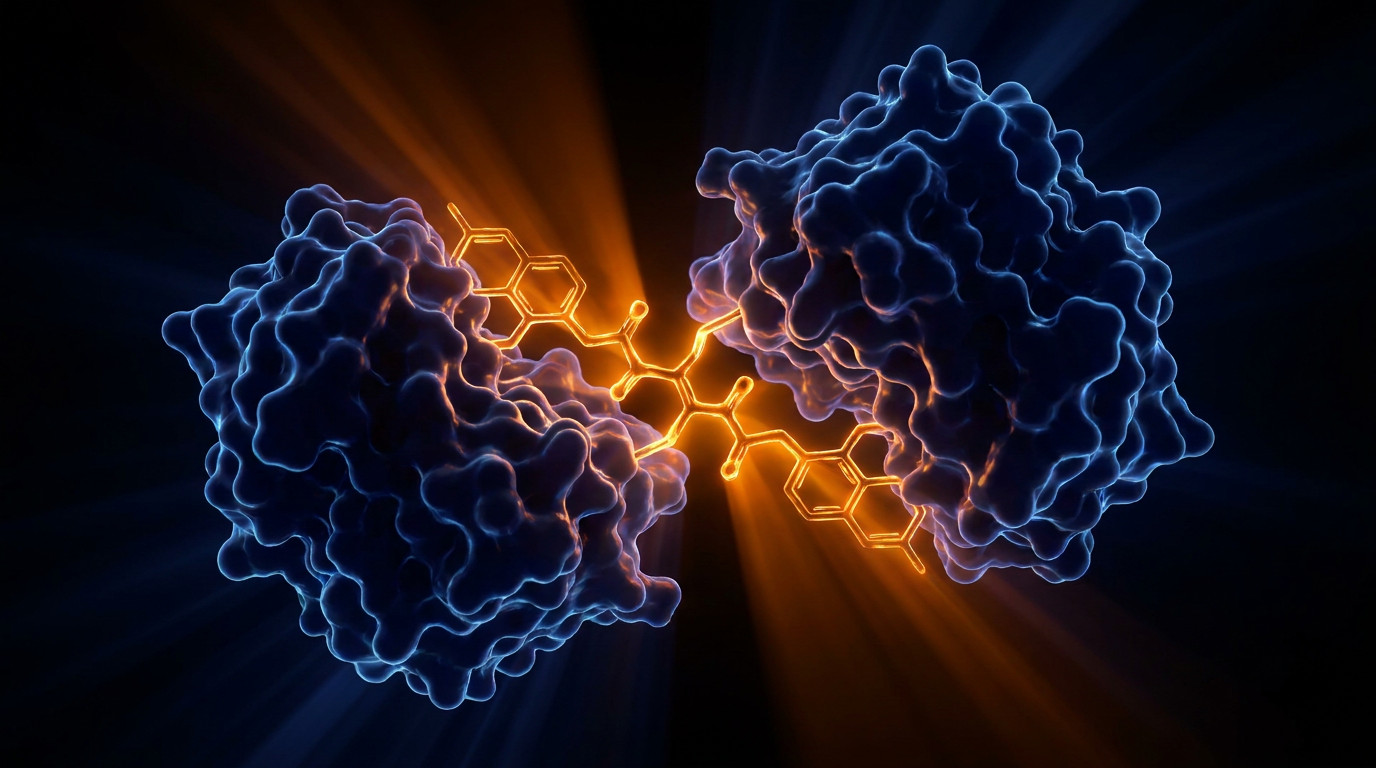
Scientists Develop 'Molecular Glue' to Destroy Undruggable Cancer Protein
6 sources
Neural Circuits
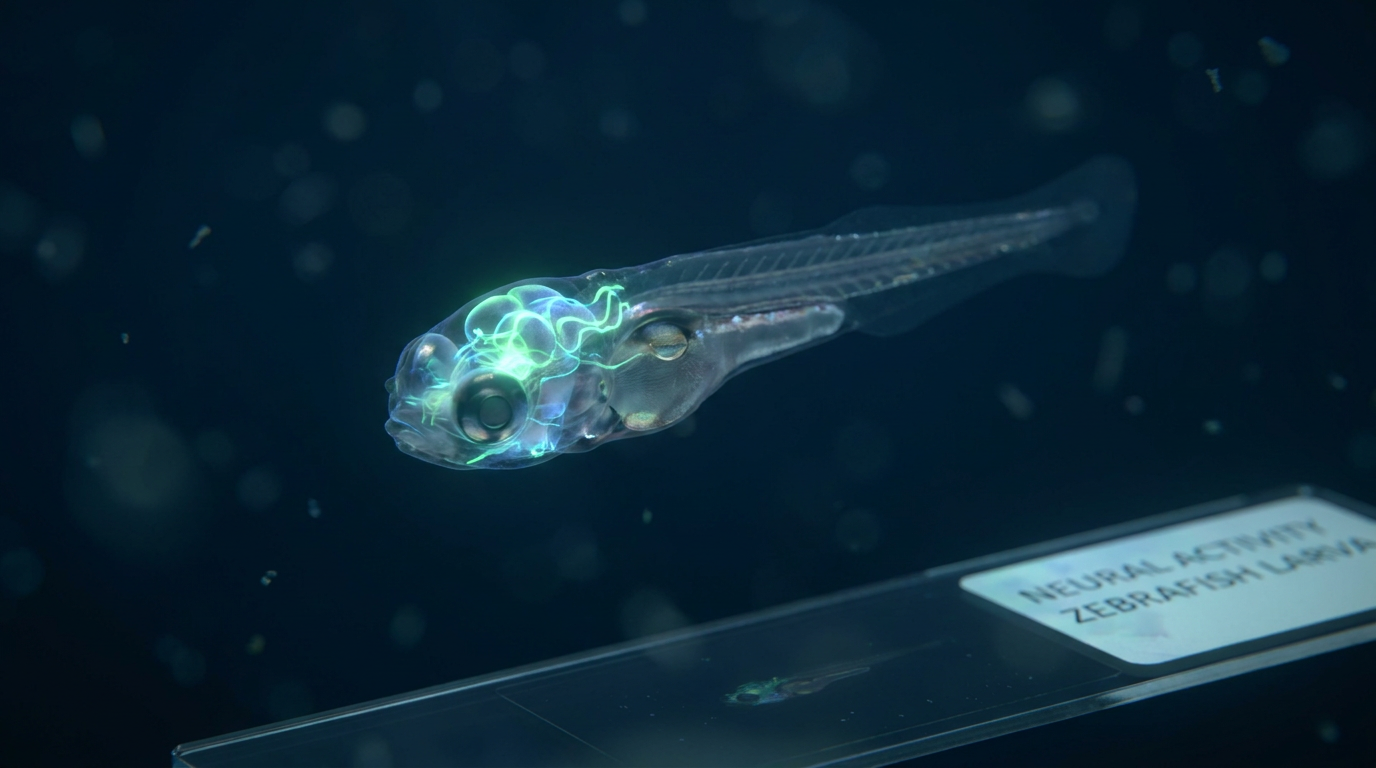
How the Brain Physically Stores Recent History to Shape Immediate Decisions
5 sources
Interoception
The 'Sixth Sense' Transforming Mental Health: How Interoception Rewires the Brain
8 sources

Cellular Aging
Sleep and Exercise Can Reprogram Mutant Blood Cells to Prevent Heart Disease
6 sources

Every angle. Every day.
Get science stories with full source coverage and perspective breakdowns delivered to your inbox.