
Iran Declares Strait of Hormuz Closed, Testing Fragile US Peace Deal
Iran's military command announced the closure of the Strait of Hormuz in response to Israeli strikes in Lebanon, a claim the US military swiftly denied as global oil prices spiked.
By Factlen Editorial Team
- US Administration
- Maintains the strait remains open and traffic is flowing, downplaying Iran's announcement while pushing to keep the fragile peace deal intact.
- Iranian Leadership
- Argues the US and Israel violated the ceasefire agreement by continuing operations in Lebanon, justifying the strait's closure as a necessary response.
- Global Energy Markets
- Focused on the severe economic threat of a disrupted chokepoint, warning that even temporary closures drain inventories and spike global fuel prices.
- Israeli Defense Establishment
- Views the continued operations in Lebanon as a necessary defense against Hezbollah rocket fire, rejecting the premise that this violates the broader US-Iran maritime agreement.
What's not represented
- · Commercial shipping companies and maritime insurers navigating the conflicting security directives.
- · Lebanese civilians caught in the crossfire of the ongoing Israel-Hezbollah conflict.
Why this matters
The Strait of Hormuz is the transit point for 20% of the world's oil; its closure threatens to instantly spike global gas prices, reignite inflation, and drag the US and Iran back to the brink of direct military conflict.
Key points
- Iran declared the Strait of Hormuz closed on Saturday, citing Israeli strikes in Lebanon as a ceasefire violation.
- The US military denied the closure, stating that 55 commercial vessels safely transited the waterway.
- Global oil markets reacted immediately, with Brent crude prices jumping back above $82 a barrel.
- The escalation threatens a fragile 14-point peace agreement signed by the US and Iran just days earlier.
- US and Iranian negotiators are scheduled to meet in Switzerland on Sunday for high-stakes talks.
Iran's military command declared the Strait of Hormuz closed to maritime traffic on Saturday, throwing a fragile, days-old peace agreement with the United States into immediate jeopardy. The sudden announcement from the Khatam-al Anbiya Central Headquarters cited ongoing Israeli military operations in southern Lebanon as a direct violation of the 14-point ceasefire memorandum signed earlier this week by President Donald Trump and Iranian President Masoud Pezeshkian. Tehran warned that the closure is merely a "first step" and threatened further action if the US fails to rein in its regional ally. The declaration immediately reignited fears of a global energy crisis, as the strait serves as the transit point for roughly one-fifth of the world's seaborne oil trade.[1][2]
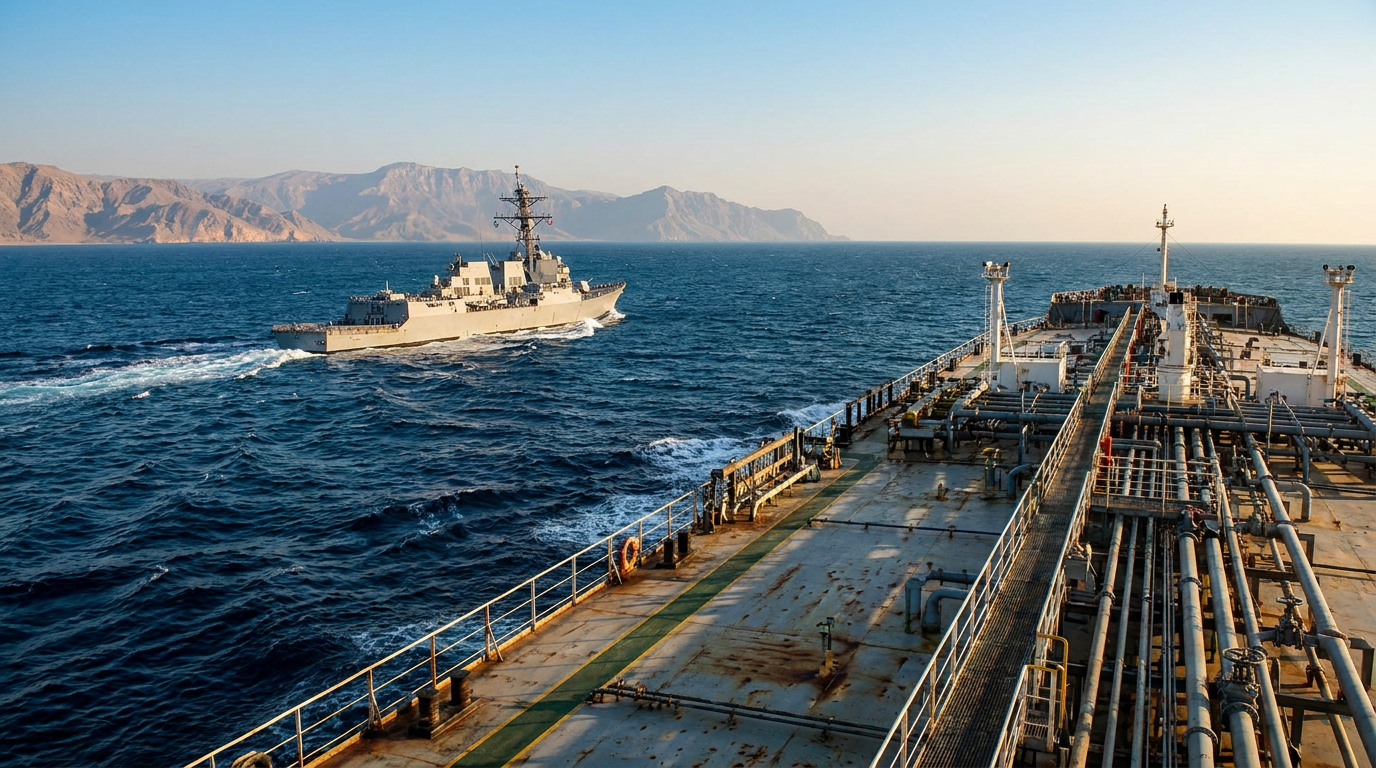
Despite the stark warning broadcast across Iranian state media, the United States military flatly denied that the critical waterway had been shuttered. US Central Command (CENTCOM) issued a statement asserting that "Iran does not control the Strait of Hormuz" and confirmed that traffic continued to flow without interruption. According to CENTCOM spokesperson Capt. Tim Hawkins, 55 commercial vessels carrying more than 17 million barrels of oil successfully navigated the strait on Saturday under the watchful eye of US naval forces. Vice President JD Vance echoed this assessment, telling reporters that the administration had seen "no evidence" of a physical blockade and that the straits remained open.[2][4][5]

The diplomatic rupture centers on the interpretation of the newly minted US-Iran memorandum of understanding, which established a 60-day window to negotiate a permanent end to regional hostilities. Iran insists the agreement explicitly requires a comprehensive halt to military operations across all fronts, including Lebanon. However, fighting between Israel and the Iran-backed militant group Hezbollah has raged on. Israel, which is not a signatory to the US-Iran pact, launched fresh strikes into southern Lebanon overnight, killing at least 16 people in what the IDF described as a necessary response to Hezbollah firing more than 50 projectiles across the border.[2][3][5]
The mere threat of a renewed blockade was enough to jolt global energy markets, which had just begun to stabilize after months of unprecedented disruption. Brent crude prices jumped back above $82 a barrel on perpetual futures platforms over the weekend, erasing the steep declines recorded earlier in the week when the peace deal was first announced. US West Texas Intermediate (WTI) similarly spiked to $79. Energy analysts warn that the global economy remains highly vulnerable to any disruption in the Persian Gulf, as the Strait of Hormuz facilitates the transit of roughly one-fifth of the world's oil supply. The months-long crisis preceding this week's agreement had already drained global emergency inventories, leaving the world short an estimated 1.2 billion barrels of oil and pushing US Strategic Petroleum Reserves to multi-decade lows.[6][7]

The mere threat of a renewed blockade was enough to jolt global energy markets, which had just begun to stabilize after months of unprecedented disruption.
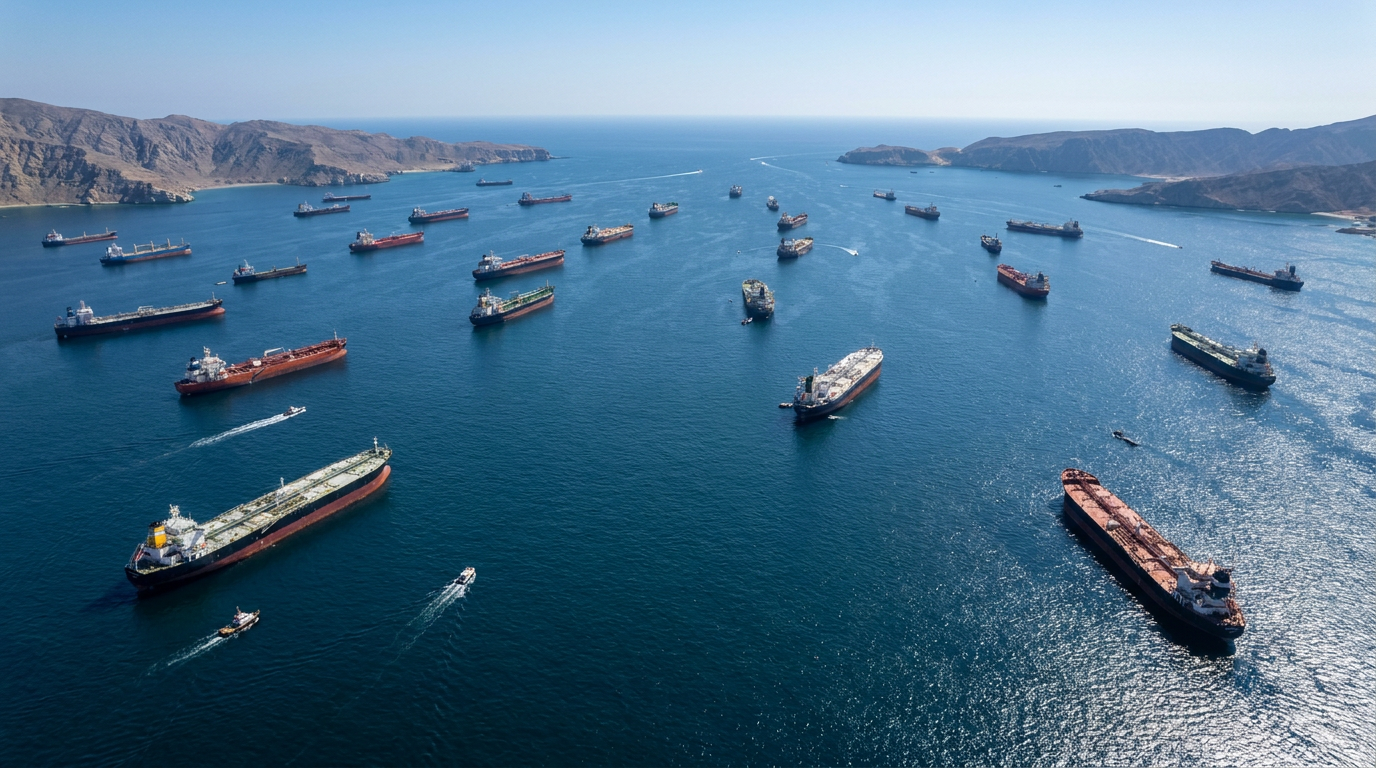
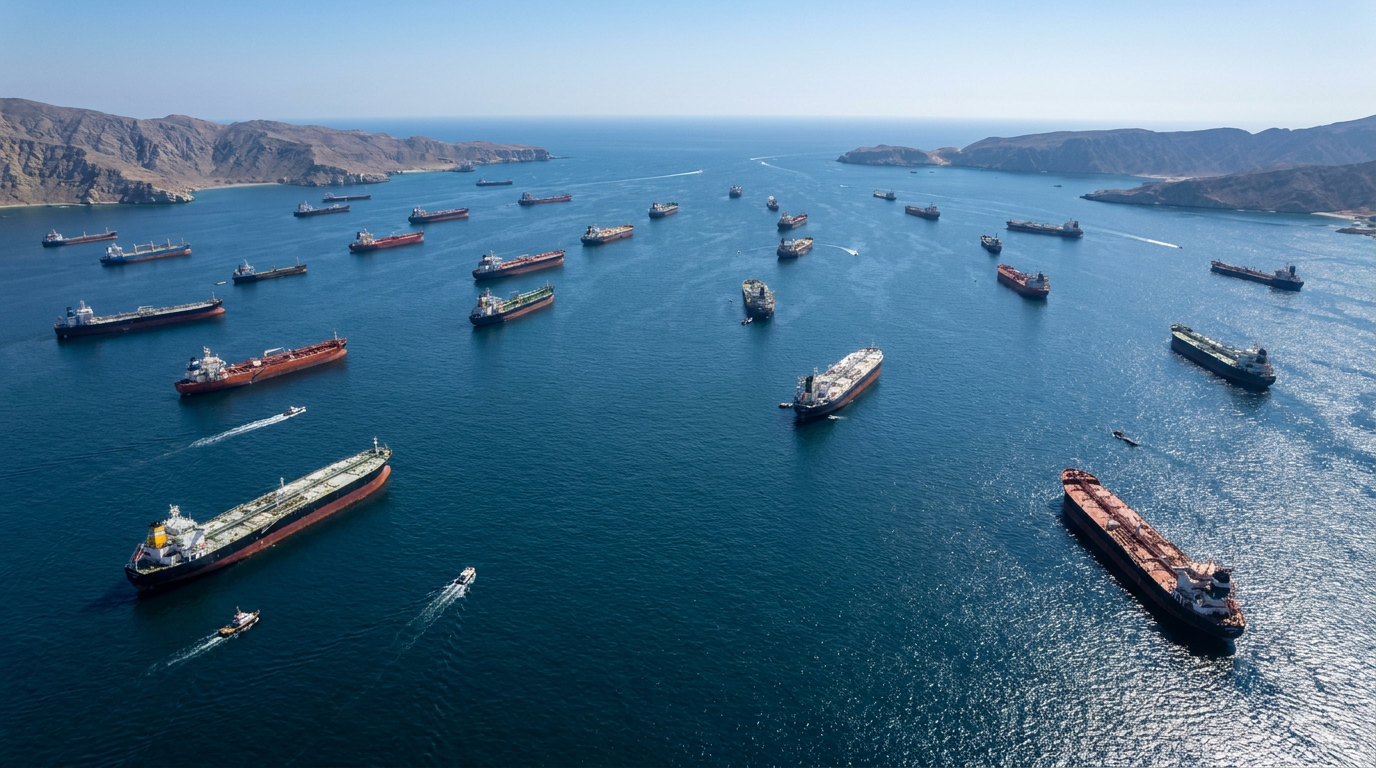
Even if the US Navy ensures safe passage, the uncertainty creates a logistical nightmare for the shipping industry. Maritime intelligence firms report that hundreds of tankers and cargo ships remain anchored off the coast of Oman, waiting for clear signals before risking the journey through the narrow chokepoint. The Iranian Revolutionary Guard Corps (IRGC) Navy has warned commercial vessels to "absolutely refrain from any movement" or risk their security. This conflicting guidance forces shipping companies and their insurers to weigh the assurances of the Pentagon against the explicit threats of the IRGC.[1][5][6]
The sudden escalation casts a heavy shadow over technical-level peace talks scheduled to begin Sunday in Burgenstock, Switzerland. The high-stakes negotiations, mediated by Pakistan and Qatar, were intended to iron out the complex details of the 60-day framework and facilitate the unfreezing of an initial $6 billion in funds to Tehran. While Iranian state media confirmed that a high-level delegation—including parliamentary Speaker Mohammad Bagher Qalibaf and Foreign Minister Abbas Araghchi—had departed for the summit, Tehran warned that little progress would be made unless the fighting in Lebanon ceases. Hezbollah officials have reportedly been informed by Iran that the strait will remain contested until Israel publicly commits to a comprehensive ceasefire, linking the fate of global shipping directly to the conflict in the Levant.[2][3]

For the Trump administration, the stakes extend beyond the Middle East to domestic politics. The initial closure of the strait earlier in the year sent US gasoline prices soaring, creating severe political headwinds ahead of the midterm elections. The White House had touted the recent peace agreement as a major foreign policy victory that would bring immediate relief to American consumers at the pump. A collapse of the deal and a return to $100-plus oil would represent a significant blow to the administration's economic narrative.[6][7]
The situation in the Persian Gulf now hinges on whether Iran's declaration is a rhetorical pressure tactic designed to extract concessions in Switzerland, or a prelude to physical enforcement. If the IRGC attempts to board merchant vessels, lay naval mines, or fire upon transiting tankers—tactics it employed extensively earlier in the conflict—it risks a direct and immediate military confrontation with the US naval forces currently patrolling the waterway. Regional analysts suggest that Tehran may be overplaying its hand, risking its status on the global stage by weaponizing a critical civilian trade route. With both sides accusing the other of bad faith just days into a landmark agreement, the path to a lasting regional peace appears narrower and more volatile than ever.[1][2][8]
How we got here
Mid-2026
A months-long crisis severely disrupts traffic through the Strait of Hormuz, draining global oil inventories.
June 17, 2026
The US and Iran sign a 14-point memorandum of understanding to halt regional hostilities and reopen the strait.
June 19, 2026
Israel and Hezbollah continue to trade fire in southern Lebanon, with Israel launching new strikes.
June 20, 2026
Iran declares the Strait of Hormuz closed in response to the Lebanon strikes; the US denies the closure.
June 21, 2026
US and Iranian negotiators are scheduled to meet in Switzerland for technical-level peace talks.
Viewpoints in depth
US Administration
Focused on maintaining the fragile peace deal and ensuring the free flow of global commerce.
The US government insists that the Strait of Hormuz remains open and that Iran does not have the authority or capability to unilaterally shut down the international waterway. US Central Command has actively publicized the successful transit of millions of barrels of oil to reassure global markets. Diplomatically, the administration is pushing to keep the 60-day negotiation window alive, viewing the peace deal as a critical foreign policy achievement that must be insulated from the ongoing, localized conflict between Israel and Hezbollah.
Iranian Leadership
Views the ceasefire as a comprehensive package that must include a halt to Israeli operations in Lebanon.
Tehran argues that the 14-point memorandum of understanding is explicitly contingent on ending hostilities across all regional fronts. By continuing to strike Hezbollah targets in southern Lebanon, Israel—and by extension, its primary backer, the United States—is seen as violating the core premise of the agreement. The Iranian military command frames the closure of the strait not as an act of unprovoked aggression, but as a reciprocal 'first step' to force compliance with the ceasefire terms.
Global Energy Markets
Highly sensitive to geopolitical risks and the physical security of energy supply chains.
Energy analysts and commodities traders view the political maneuvering with deep alarm. The market is less concerned with the diplomatic blame game and more focused on the physical reality of oil transit. With global inventories already depleted by 1.2 billion barrels due to previous disruptions, traders warn that even a partial or temporary blockade of the Strait of Hormuz will cause immediate price spikes. The conflicting reports from the US and Iran create a paralyzing uncertainty for shipping companies, driving up insurance premiums and delaying deliveries.
What we don't know
- Whether Iran's Revolutionary Guard Corps will attempt to physically board or attack transiting vessels.
- How the conflicting narratives will affect the scheduled peace talks in Switzerland.
- Whether shipping companies will continue to risk the passage despite Iranian warnings.
Key terms
- Strait of Hormuz
- A narrow, strategically vital waterway between the Persian Gulf and the Gulf of Oman through which roughly 20% of the world's oil supply passes.
- US Central Command (CENTCOM)
- The unified combatant command of the US Department of Defense responsible for military operations in the Middle East, Central Asia, and parts of South Asia.
- Brent Crude
- A major global benchmark for crude oil prices, used to price two-thirds of the world's internationally traded crude oil supplies.
- Memorandum of Understanding (MoU)
- A formal agreement between two or more parties outlining the terms and details of a mutual understanding, often used as a preliminary step toward a binding treaty.
Frequently asked
Why did Iran announce the closure of the Strait of Hormuz?
Iran cited ongoing Israeli military strikes against Hezbollah in Lebanon, which Tehran claims violates the 14-point ceasefire memorandum recently signed with the United States.
Is the Strait of Hormuz actually closed?
The situation is contested. While Iran declared it closed, the US military stated that the waterway remains open and that 55 commercial vessels successfully transited on Saturday.
How does this affect global gas prices?
The Strait of Hormuz is a critical chokepoint for 20% of the world's oil. The threat of closure immediately caused Brent crude prices to spike above $82 a barrel, which could translate to higher prices at the pump if the disruption persists.
What is the US-Iran memorandum of understanding?
It is a recently signed 14-point agreement establishing a 60-day window to negotiate a permanent end to regional hostilities, requiring a halt to military operations and the unhindered flow of maritime traffic.
Sources
Source coverage
8 outlets
4 viewpoints surfaced








[1]Seatrade Maritime NewsGlobal Energy Markets
Iran declares the Strait of Hormuz closed
Read on Seatrade Maritime News →[2]The Washington PostUS Administration
Iran says it is closing Strait of Hormuz, testing fragile agreement with U.S.
Read on The Washington Post →[3]CTV NewsIsraeli Defense Establishment
U.S.-Iran talks begin Sunday in Switzerland as Tehran closes the strait over Lebanon fighting
Read on CTV News →[4]The Times of IsraelIsraeli Defense Establishment
Iran claims Hormuz closed again as IDF attacks Hezbollah; Vance says Switzerland talks may start Sunday
Read on The Times of Israel →[5]CBS NewsUS Administration
Live Updates: Iran says it's closing Strait of Hormuz again as Hezbollah and Israel trade attacks
Read on CBS News →[6]TIMEGlobal Energy Markets
Fuelling Anxiety: What Gas Prices Tell Us About America and the World
Read on TIME →[7]BenzingaGlobal Energy Markets
Crude Oil Price Pops As Iran Closes Strait Of Hormuz
Read on Benzinga →[8]Al JazeeraIranian Leadership
Overplaying Strait of Hormuz card will turn Iran into a pariah state
Read on Al Jazeera →
More in news politics
See all 7 stories →Disability Rights
Justice Department Memo Challenges Legal Mandate for Community-Based Disability Care
7 sources
Disability Rights
Justice Department Memo Challenges Disability Integration Mandate, Sparking Fears of Increased Institutionalization
8 sources
Strait of Hormuz
Iran Declares Strait of Hormuz Closed Over Lebanon Dispute, Threatening Fragile Peace Deal
6 sources
Strait of Hormuz
Iran Declares Strait of Hormuz Closed Over Lebanon Strikes; U.S. Military Denies Blockade
6 sources
Every angle. Every day.
Get news politics stories with full source coverage and perspective breakdowns delivered to your inbox.