
How the SpaceX IPO is Unlocking a New Era of Space-Tech Venture Capital
With SpaceX's record-breaking public debut validating the commercial space industry, venture capital firms are pouring billions into the next generation of orbital startups.
By Factlen Editorial Team
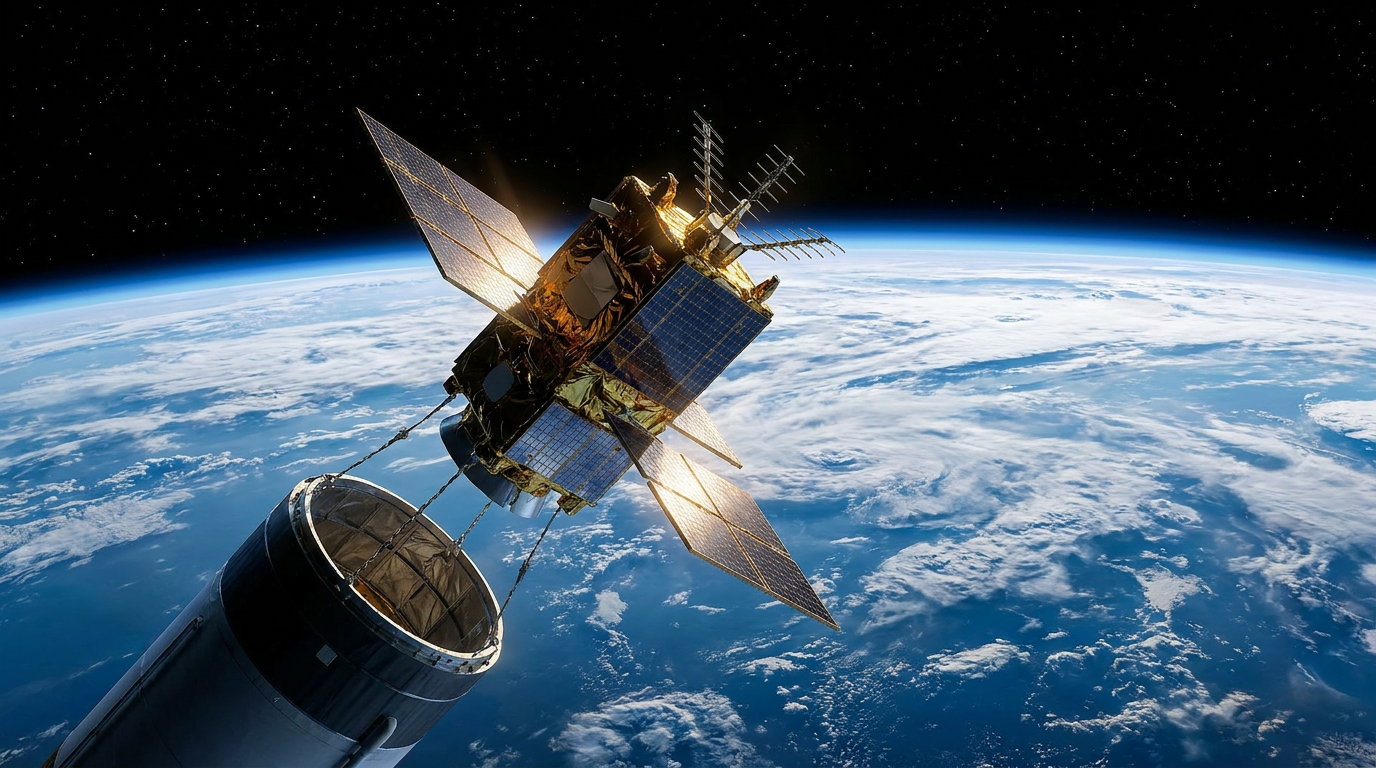
- Space-Tech Optimists
- Argue that orbital infrastructure is the next trillion-dollar market, comparable to the early internet boom.
- Pragmatic Analysts
- Focus on near-term profitability, contracted backlog, and the risks of a market dominated by a single giant.
- Terrestrial Beneficiaries
- Emphasize how space technology primarily creates value by enabling Earth-bound industries.
What's not represented
- · Environmental advocates concerned about orbital debris
- · Astronomers impacted by satellite mega-constellations
Why this matters
The commercialization of space is no longer just about rockets; it is about building the infrastructure for a $1.8 trillion orbital economy that will power global communications, climate monitoring, and physical AI, directly impacting terrestrial industries.
Key points
- SpaceX's record-breaking IPO and $2.1 trillion valuation have validated the commercial space sector for institutional investors.
- Venture capital investment in space-tech reached a record $36 billion in the first quarter of 2026.
- Funding is shifting away from launch vehicles and toward orbital infrastructure, such as space-based data centers.
- The global space economy is projected to reach $1.8 trillion by 2035, driven largely by terrestrial applications.
- Investors are increasingly demanding regulatory readiness and proven commercial viability from space startups.
The commercial space industry has officially crossed the Rubicon. Following a highly anticipated public debut, SpaceX has achieved a staggering $2.1 trillion valuation, fundamentally altering the financial gravity of the aerospace sector. The company recently revealed that underwriters exercised options to purchase an additional 83 million shares, raising another $10.7 billion in what is already a record-breaking initial public offering. This watershed moment is not just a victory for a single company; it serves as the ultimate validation for a decade of high-risk venture capital bets on the viability of the commercial space economy.[1][2][8]
The immediate ripple effects of this mega-IPO are already reshaping the public markets. Initially, there was widespread debate over whether a public SpaceX would act as a black hole, sucking up all available investor oxygen and capital. However, the opposite appears to be happening. Shares of competitors like Rocket Lab have rebounded sharply, with analysts noting that the initial SpaceX-fueled selloff of adjacent stocks was entirely misguided. Instead of cannibalizing the market, the sheer scale of the SpaceX debut has legitimized the entire sector in the eyes of institutional investors.[3][8]
Behind the public market headlines, the private venture capital landscape is experiencing an unprecedented gold rush. According to Space Capital’s latest quarterly report, the first three months of 2026 shattered all previous records, with a staggering $36 billion invested across 148 space-tech companies. This influx of capital represents a massive acceleration, driven by the convergence of artificial intelligence, geopolitical competition, and the rapid maturation of orbital compute technologies. The architecture of the next-generation space economy is being drawn in real time, and venture capitalists are racing to secure ownership of the foundational rails.[5][8]

While different analysts use varying methodologies to measure this boom, the underlying trend is undeniable. Novaspace, which utilizes a narrower definition focused strictly on hardware and direct services, reported that private space investment reached $9.4 billion in the first quarter of 2026—a 145% increase year-over-year. Space Capital’s broader $36 billion figure includes the wider space stack, encompassing applications that rely on space-based data. Despite the discrepancy in scope, both datasets confirm that capital has returned to the sector with a velocity that far exceeds a standard hype cycle.[5][6][8]
This investment surge marks a critical transition in the space economy: the shift from launch to infrastructure. For years, venture capital was heavily concentrated on building rockets to get payloads into orbit. Today, because launch costs have plummeted so dramatically, the barrier to entry has been permanently lowered. Investors are no longer funding the delivery trucks; they are funding the businesses that will operate at the destination.[4][8]
The most lucrative of these new destinations is the orbital data center. The race to process massive amounts of data directly in space has graduated from a theoretical concept to a heavily capitalized competition. Major players, including NVIDIA and Google, are now actively competing to establish compute infrastructure in low Earth orbit. By processing data in space rather than beaming it back to Earth, these orbital data centers drastically reduce latency, enabling real-time physical AI and advanced spatial computing.[5][8]
The financial commitment to this new layer of the space economy is staggering. In the first quarter of 2026 alone, investment in orbital infrastructure reached $6.7 billion, putting the sector on pace to easily exceed the annual record set the previous year. Nasdaq executives have noted that when looking across the key areas of space infrastructure, distribution, and applications, the trajectory points clearly toward a trillion-dollar-plus market. The primary question for investors is no longer if the market will scale, but which companies possess the innovation to capture the lion's share of the value.[5][7]
The financial commitment to this new layer of the space economy is staggering.
As the stakes have risen, the nature of venture capital funding in the space sector has matured. There is a pronounced shift toward late-stage dominance, with roughly 41% of space funding now targeting mature, late-stage deals. Investors are demanding more than just visionary pitch decks; they require proven commercial viability, contracted backlog, and a clear path to profitability. This late-stage focus means that while early-stage startups face intense competition for seed capital, those that survive can access massive follow-on rounds to scale their operations.[7][8]

The ultimate prize is a market that extends far beyond the stratosphere. A landmark report by McKinsey & Company and the World Economic Forum projects that the global space economy will grow at roughly 9% annually, reaching an astonishing $1.8 trillion by 2035. Crucially, this growth will not be driven solely by rockets and satellites, but by the terrestrial industries that space technology enables.[4]
Space is rapidly becoming the invisible backbone of the global economy. The McKinsey report highlights that the majority of the projected $1.8 trillion value will come from space-based technologies revolutionizing Earth-bound sectors. Industries as varied as agriculture, supply chain logistics, consumer goods, and climate disaster mitigation are increasingly reliant on satellite connectivity and geospatial intelligence. For these sectors, integrating space tech is no longer a futuristic luxury; it is a competitive necessity.[4][8]
To support this massive expansion, the financial infrastructure must also evolve. Nasdaq has explicitly positioned itself to be the primary exchange for the space economy, drawing parallels to its historical role in facilitating the internet and mobile technology booms. By providing a robust public market for mature space companies to list, exchanges ensure that venture capitalists have a reliable exit strategy, which in turn encourages more aggressive early-stage investment.[7][8]
However, navigating the space-tech landscape requires more than just capital and engineering prowess; it requires intense regulatory readiness. Startups must proactively address complex licensing requirements, export controls, and international compliance frameworks. Venture capitalists now view regulatory maturity as a decisive factor when evaluating potential investments, as early engagement with government agencies significantly reduces perceived risk and accelerates go-to-market timelines.[8]

Adding to the complexity is the inherent dual-use nature of modern space technology. Innovations designed for commercial applications—such as high-resolution Earth observation and secure satellite communications—often possess significant defense and intelligence capabilities. This dynamic has driven substantial capital from government-adjacent funds into the private sector, further blurring the lines between commercial enterprise and national security infrastructure.[8]
Despite the overwhelming optimism, some analysts caution that the sheer size of the market's biggest player could present structural challenges. At a $2.1 trillion valuation, SpaceX is so massive that it may struggle to maintain the exponential growth rates expected by public markets, potentially becoming its own worst enemy due to its size alone. Yet, for the broader ecosystem of startups, SpaceX's success provides the reliable, low-cost launch cadence necessary to deploy their own business models.[1][8]
The venture capital flowing into space technology today is laying the groundwork for the next half-century of human economic activity. The industry has definitively transitioned from a government-dominated frontier to a thriving, commercially viable ecosystem. As orbital infrastructure converges with terrestrial needs, the companies being funded today will not just explore the stars—they will fundamentally upgrade the operating system of Earth itself.[4][8]
How we got here
2012-2015
Early commercial space pioneers begin proving the viability of private launch vehicles, slowly attracting initial seed capital.
2020-2021
A wave of space-tech companies go public via SPACs, leading to a brief bubble and subsequent market correction.
2024
The space economy reaches an estimated $613 billion, driven by a surge in active low Earth orbit satellites.
January 2026
McKinsey and the World Economic Forum publish a landmark report projecting a $1.8 trillion space economy by 2035.
April 2026
Space Capital reports a record-shattering $36 billion invested in space-tech startups in a single quarter.
June 2026
SpaceX executes a record-breaking IPO, achieving a $2.1 trillion valuation and triggering a massive rally in adjacent space stocks.
Viewpoints in depth
Space-Tech Optimists
Argue that orbital infrastructure is the next trillion-dollar market, comparable to the early internet boom.
This camp, which includes major venture capital firms and public exchanges like Nasdaq, views the current surge in funding as the foundational layer of a new economic era. They argue that just as fiber-optic cables enabled the internet boom, low-cost launch vehicles and orbital data centers will unlock unprecedented applications in physical AI and global connectivity. For these optimists, the $36 billion invested in early 2026 is not a bubble, but a rational reallocation of capital toward the most critical infrastructure of the 21st century.
Pragmatic Analysts
Focus on near-term profitability, contracted backlog, and the risks of a market dominated by a single giant.
Financial analysts and market pragmatists acknowledge the massive potential of the space economy but remain laser-focused on unit economics. They caution that while SpaceX's $2.1 trillion valuation is a rising tide, it also creates a gravitational pull that could starve smaller competitors of capital. This camp demands that startups demonstrate clear paths to profitability, robust regulatory compliance, and actual contracted revenue, rather than relying solely on visionary promises of a multi-planetary future.
Terrestrial Beneficiaries
Emphasize how space technology primarily creates value by enabling Earth-bound industries.
Consultancies like McKinsey and terrestrial industry leaders view space not as a destination, but as a tool to solve Earth's most pressing challenges. They argue that the true value of the $1.8 trillion space economy lies in its applications: using satellite imagery to optimize agricultural yields, deploying orbital sensors to monitor climate change, and utilizing space-based connectivity to untangle global supply chains. For this group, the success of space-tech venture capital is measured by its impact on the ground.
What we don't know
- Whether the massive influx of capital will lead to an oversupply of orbital infrastructure before terrestrial demand fully materializes.
- How international regulatory bodies will manage the impending congestion and debris risks in low Earth orbit.
Key terms
- Orbital Infrastructure
- The hardware and software deployed in space, such as satellites and space stations, that provide foundational services like communications and data processing.
- Low Earth Orbit (LEO)
- An Earth-centered orbit with an altitude of 2,000 km or less, which is the primary destination for modern commercial satellites due to lower launch costs and reduced latency.
- Dual-Use Technology
- Innovations developed for commercial space applications that also have significant military or defense capabilities, such as high-resolution Earth observation.
- Space Economy
- The full range of activities and the use of resources that create value and benefits for human beings in the course of exploring, researching, understanding, managing, and utilizing space.
- Orbital Compute
- The ability to process complex data and run artificial intelligence algorithms directly on satellites in space, rather than beaming raw data back to Earth first.
Frequently asked
Why is venture capital suddenly pouring into space tech?
Plummeting launch costs have lowered the barrier to entry, allowing startups to focus on building profitable orbital infrastructure and data services rather than just rockets.
How big is the space economy expected to get?
McKinsey and the World Economic Forum project the global space economy will reach $1.8 trillion by 2035, growing at roughly 9% annually.
Does SpaceX's dominance hurt other space startups?
Analysts are divided; some fear SpaceX's massive valuation sucks up available capital, while others argue it validates the market and creates a rising tide that lifts competitors.
What are orbital data centers?
They are specialized satellites designed to process massive amounts of data directly in space, reducing latency for Earth-bound applications and physical AI.
Sources
Source coverage
8 outlets
3 viewpoints surfaced






[1]MarketWatchPragmatic Analysts
SpaceX’s massive $2.1 trillion valuation may soon become its own worst enemy
Read on MarketWatch →SpaceX’s stock jumps as the company reveals its IPO has raised another $10.7 billion
Read on MarketWatch →Rocket Lab’s stock rebounds, as one analyst says the SpaceX-fueled selloff was misguided
Read on MarketWatch →[4]McKinsey & CompanyTerrestrial Beneficiaries
Space: The $1.8 trillion opportunity for global economic growth
Read on McKinsey & Company →[5]Space CapitalSpace-Tech Optimists
Space Investment Quarterly: Q1 2026
Read on Space Capital →[6]NovaspacePragmatic Analysts
Space Economy Report 2026
Read on Novaspace →[7]NasdaqSpace-Tech Optimists
Nasdaq sees the trajectory of the space economy reaching a trillion-dollar-plus number
Read on Nasdaq →[8]Factlen Editorial Team
Synthesis by Factlen editorial team
Read on Factlen Editorial Team →


Every angle. Every day.
Get finance stories with full source coverage and perspective breakdowns delivered to your inbox.