
How Synthetic Fuels Are Saving the Supercar V12 from Extinction
As the 2035 ban on combustion engines approaches, automakers like Porsche and Ferrari are investing heavily in carbon-neutral synthetic fuels to keep their iconic engines alive.
By Factlen Editorial Team
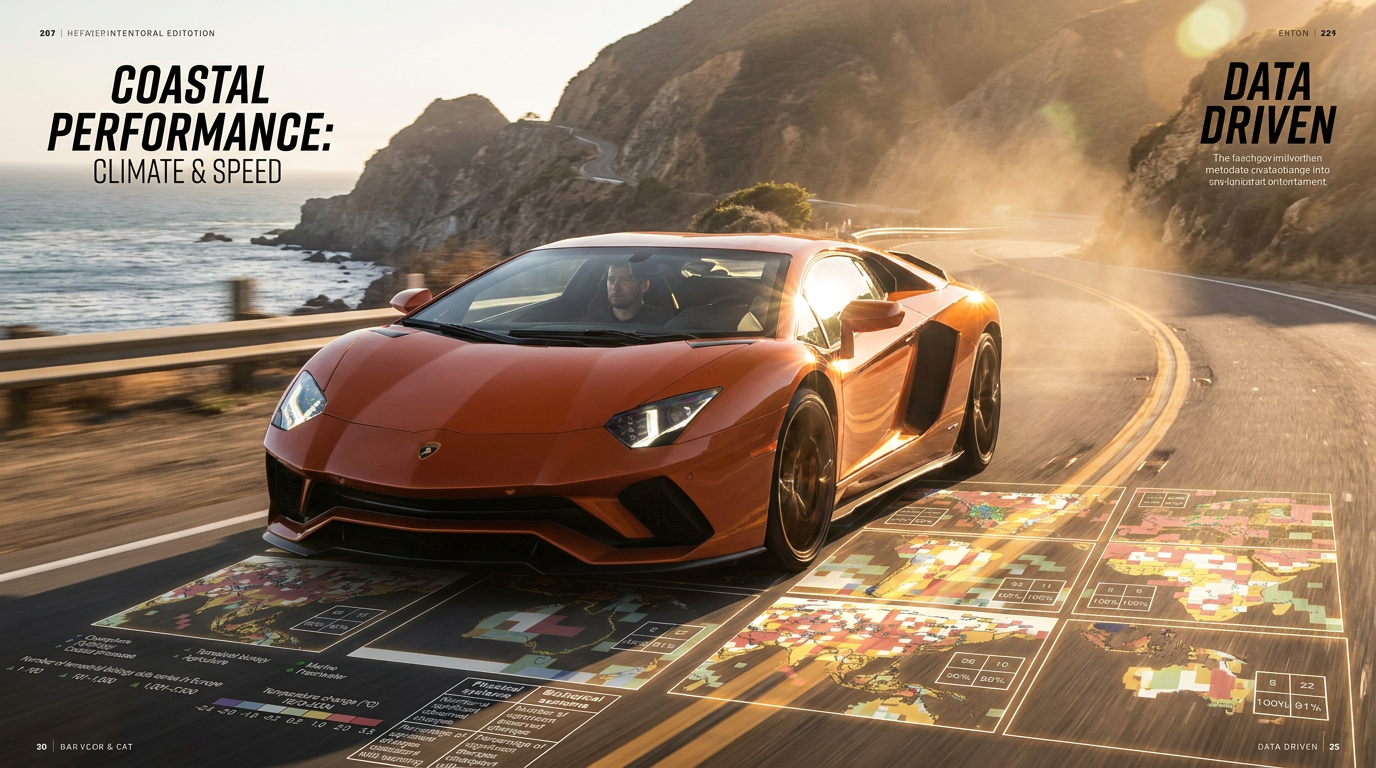
- Heritage Automakers
- Manufacturers prioritizing the emotional engagement and mechanical legacy of internal combustion.
- Market Skeptics
- Analysts and executives who doubt the scalability and thermodynamic efficiency of synthetic fuels.
- Policy & Infrastructure
- Regulators and energy developers balancing emissions targets with industrial realities.
- Editorial Synthesis
- Independent analysis weighing the cultural value of supercars against the practicalities of the energy transition.
What's not represented
- · Everyday commuters who rely on affordable transportation
- · Battery-electric vehicle manufacturers who view e-fuels as a distraction from full electrification
Why this matters
For automotive enthusiasts and the broader transportation sector, synthetic fuels represent a critical bridge between the mechanical heritage of the past and the carbon-neutral mandates of the future. If successfully scaled, this technology could save the internal combustion engine from extinction and provide a sustainable lifeline for the 1.4 billion gas-powered vehicles already on the road.
Key points
- Synthetic fuels (e-fuels) are created by combining green hydrogen with carbon dioxide captured from the air.
- Because they recycle existing CO2, e-fuels are virtually carbon-neutral when burned in an internal combustion engine.
- Porsche's Haru Oni plant in Chile is currently producing e-fuels and aims to scale to 55 million liters by 2026.
- The European Union has granted a legislative exemption allowing the sale of e-fuel-powered combustion cars beyond its 2035 ban.
- While too expensive for mass-market commuter cars, e-fuels offer a lifeline for high-end supercars and classic vehicles.
For decades, the defining characteristic of a supercar has not been its top speed or its aerodynamic silhouette, but the visceral, mechanical scream of its engine. As the global automotive industry accelerates toward a fully electric future, enthusiasts and engineers alike have braced for the extinction of the high-displacement internal combustion engine. Yet, a technological lifeline is emerging from an unlikely source: wind-swept Patagonia and the laboratories of Formula 1. Synthetic fuels, commonly known as e-fuels, are rapidly transitioning from a theoretical concept to a commercial reality, offering a pathway to keep the V8 and V12 engines alive in a carbon-conscious world.[7]
The mechanism behind synthetic fuel is an elegant reversal of the traditional fossil fuel combustion cycle. Instead of extracting carbon that has been locked underground for millions of years and releasing it into the atmosphere, e-fuel production pulls existing carbon dioxide directly out of the air. This captured CO2 is then combined with green hydrogen—produced by splitting water molecules using renewable electricity—to synthesize a liquid hydrocarbon. The resulting fuel is a drop-in replacement for conventional gasoline, meaning it can be pumped into an existing engine without requiring any mechanical modifications.[1][5]
Because the carbon dioxide emitted at the tailpipe is exactly equal to the amount captured during the fuel's creation, the entire lifecycle is virtually carbon-neutral. For legacy automakers whose brand identities are inextricably linked to the emotional resonance of internal combustion, this chemical alchemy represents a profound breakthrough. It allows them to meet stringent environmental regulations without sacrificing the acoustic and tactile engagement that battery-electric vehicles currently struggle to replicate. The visceral thrill of a high-revving engine can thus be preserved for future generations.[2][6]

Leading the charge in the commercialization of this technology is Porsche, which has heavily invested in the Haru Oni pilot plant located in Punta Arenas, Chile. The site was carefully chosen for its relentless, high-speed winds, which allow industrial wind turbines to operate at peak efficiency for roughly 270 days a year. This abundant and reliable renewable energy is absolutely critical, as it powers the highly energy-intensive electrolysis process required to generate the green hydrogen that forms the base of the synthetic fuel.[5]
While the Haru Oni facility is currently operating as a pilot project, producing roughly 130,000 liters of e-fuel annually, the scaling targets are aggressive and well-funded. Porsche and its international partners, including Siemens Energy and ExxonMobil, plan to expand production capacity to 55 million liters by 2026, with a long-term goal of reaching 550 million liters by the end of the decade. The fuel is already being utilized in the Porsche Mobil 1 Supercup racing series, proving its viability and performance under extreme motorsport conditions.[1][5]

Ferrari is pursuing a parallel strategy, leveraging its deep motorsport pedigree to accelerate the development and adoption of e-fuels. The Italian marque is actively preparing for the 2026 Formula 1 season, which will introduce sweeping new technical regulations mandating the use of 100 percent sustainable fuels across the grid. Ferrari CEO Benedetto Vigna has explicitly stated that the company views this racing technology as a direct pipeline to its future road cars, noting that e-fuels will serve as a highly valid way forward for internal combustion engines.[2][4]
Rather than viewing electrification as a wholesale replacement for combustion, Ferrari is adopting what Vigna describes as a strategy of technology neutrality. The company plans to launch its first fully electric vehicle in 2026, but it will continue to develop V6, V8, and V12 engines alongside hybrid and battery-electric powertrains. This multi-pronged approach ensures that clients can choose the powertrain that best fits their desired driving experience, while the company relies on carbon-neutral fuels to satisfy emissions mandates and preserve its mechanical heritage.[2][4]
Rather than viewing electrification as a wholesale replacement for combustion, Ferrari is adopting what Vigna describes as a strategy of technology neutrality.
The political landscape in Europe has recently shifted in a way that directly accommodates this technological development. In 2023, the European Union finalized a landmark environmental policy intended to ban the sale of all new carbon-emitting passenger vehicles by the year 2035. However, following intense, last-minute lobbying from the German transport ministry and a coalition of low-volume performance manufacturers, the EU agreed to a crucial legislative exemption that alters the trajectory of the industry. This compromise highlighted the growing recognition that electrification might not be the sole pathway to achieving climate neutrality in the transportation sector.[3][6]
Under the revised European framework, automakers will be permitted to sell new internal combustion vehicles well beyond the 2035 deadline, provided those vehicles are engineered to run exclusively on carbon-neutral synthetic fuels. This legislative loophole effectively guarantees a future for the combustion-engine supercar in Europe, ensuring that historic brands like Porsche, Ferrari, and Lamborghini can continue to cater to their traditional customer base without violating international climate agreements. The ruling provides a vital regulatory safety net for companies that have spent decades perfecting the architecture of the V8 and V12 engine, allowing their engineering legacy to survive the green transition.[3][6]

Despite the widespread optimism surrounding e-fuels among enthusiasts, significant hurdles remain, chief among them being cost and overall thermodynamic efficiency. The multi-step process of capturing direct air carbon, splitting water for hydrogen, and synthesizing a liquid fuel requires massive amounts of electricity. Market analysts and industry skeptics point out that using renewable energy to charge a battery-electric vehicle directly is vastly more efficient than using that same energy to manufacture a combustible liquid, leading to questions about the technology's broader viability.[3]
Consequently, synthetic fuel is currently prohibitively expensive to produce, costing roughly four times the wholesale price of conventional fossil gasoline. While economies of scale are fully expected to drive prices down as global production facilities expand, e-fuels are highly unlikely to become a mass-market solution for daily commuters driving standard sedans or crossover SUVs. The underlying economics and energy requirements simply favor battery-electric platforms for mainstream, high-volume transportation where cost per mile is the primary consumer consideration. For the average driver, plugging into the grid will remain the most logical and affordable choice.[3]
However, the global supercar market operates on an entirely different set of economic principles and consumer desires. Buyers spending hundreds of thousands of dollars on a bespoke Ferrari or a limited-edition Porsche 911 are highly insensitive to the fluctuating price of fuel. For these ultra-wealthy consumers, paying a premium of fifteen or twenty dollars a gallon for synthetic gasoline is a negligible operating cost compared to the preservation of the vehicle's mechanical soul, acoustic signature, and engaging driving dynamics.[7]

Beyond the realm of new supercars, e-fuels offer a highly compelling environmental solution for the estimated 1.4 billion internal combustion vehicles already on the road globally today. Classic cars, vintage racers, and historically significant vehicles cannot be easily retrofitted with electric drivetrains without fundamentally destroying their heritage and value. Synthetic fuels provide a seamless mechanism to decarbonize this massive existing fleet, allowing classic car enthusiasts to continue driving their beloved vehicles without contributing new carbon emissions to the atmosphere.[1][6]
The next few years will be absolutely critical in determining the ultimate trajectory and commercial success of synthetic fuels. Regulators across the globe will need to establish strict certification standards to ensure that the e-fuels entering the consumer market are genuinely carbon-neutral and produced entirely using renewable energy. Furthermore, automakers will need to develop sophisticated, tamper-proof sensors to guarantee that post-2035 combustion vehicles cannot be fueled with cheaper, legacy fossil gasoline, ensuring compliance with the spirit of the emissions ban.[3][6]
If these technical and regulatory challenges can be successfully navigated, the automotive landscape of the late 2030s may be far more diverse and interesting than initially predicted. While the vast majority of the world's passenger fleet will inevitably transition to silent, highly efficient battery power, the absolute pinnacle of automotive performance will likely remain a multi-sensory, mechanical experience. Thanks to the chemical alchemy of synthetic fuels, the visceral roar of the internal combustion engine is poised to echo well into the future.[7]
How we got here
2021
Construction begins on the Haru Oni e-fuel pilot plant in Punta Arenas, Chile.
2022
Porsche officially opens the Haru Oni facility and begins pilot production of synthetic gasoline.
2023
The European Union agrees to exempt vehicles running exclusively on e-fuels from its 2035 combustion engine ban.
2024
Ferrari CEO Benedetto Vigna confirms the company's commitment to developing e-fuels alongside its electric vehicle lineup.
2026
Formula 1 introduces new technical regulations requiring all race cars to run on 100% sustainable synthetic fuels.
Viewpoints in depth
Heritage Automakers
Manufacturers prioritizing the emotional engagement of internal combustion.
Brands like Porsche and Ferrari argue that the acoustic and tactile sensations of a high-revving engine are fundamental to their identity. They view synthetic fuels not as a replacement for EVs, but as a necessary complement that allows them to preserve their mechanical heritage while still meeting strict carbon-neutrality goals. For these companies, the high cost of e-fuels is a worthwhile trade-off to keep the V12 alive.
Market Skeptics
Analysts and executives who doubt the scalability of synthetic fuels.
Critics, including several mainstream automotive CEOs and financial analysts, point out the sheer thermodynamic inefficiency of e-fuels. Using renewable electricity to create a combustible liquid requires significantly more energy than simply storing that electricity in a battery. They argue that e-fuels will remain a niche, expensive luxury product for the ultra-wealthy, rather than a viable climate solution for the broader transportation sector.
Environmental Regulators
Policymakers balancing emissions targets with industrial realities.
European regulators initially pushed for a blanket ban on all internal combustion engines by 2035 to force the transition to zero-emission vehicles. However, they have conceded to a legislative loophole for e-fuels to protect low-volume manufacturers and preserve automotive jobs. Their current focus is on developing strict certification frameworks to ensure that any fuel burned in post-2035 vehicles is genuinely 100% renewable and not mixed with fossil fuels.
What we don't know
- Whether global e-fuel production can scale quickly enough to meet the demands of the legacy automotive fleet.
- How regulators will technologically enforce the requirement that post-2035 combustion cars run exclusively on synthetic fuels rather than cheaper fossil gasoline.
- The exact price point at which e-fuels will stabilize once commercial-scale production facilities are fully operational.
Key terms
- Synthetic Fuel (E-Fuel)
- A drop-in liquid fuel created by combining green hydrogen with captured carbon dioxide, resulting in virtually carbon-neutral combustion.
- Electrolysis
- The process of using electricity to split water into hydrogen and oxygen, a crucial step in creating the green hydrogen used for e-fuels.
- Direct Air Capture
- A technological process that extracts carbon dioxide directly from the atmosphere to be used as a raw material in fuel synthesis.
- Technology Neutrality
- An engineering philosophy where an automaker develops multiple powertrain types (electric, hybrid, combustion) rather than committing exclusively to one.
Frequently asked
Can synthetic fuels be used in older cars?
Yes. E-fuels are designed as a 'drop-in' replacement for conventional gasoline, meaning they can power existing internal combustion engines without requiring any mechanical modifications.
Why are e-fuels considered carbon-neutral?
Because the amount of carbon dioxide emitted when the fuel is burned is exactly equal to the amount of carbon dioxide captured from the atmosphere to produce it.
Will regular commuter cars run on e-fuels?
It is highly unlikely. E-fuels are currently very expensive and energy-intensive to produce, making battery-electric vehicles a much more cost-effective and efficient solution for everyday driving.
Sources
Source coverage
7 outlets
4 viewpoints surfaced






[1]Porsche NewsroomHeritage Automakers
eFuels pilot plant in Chile officially opened
Read on Porsche Newsroom →[2]AutocarHeritage Automakers
Ferrari boss: F1's carbon-neutral fuel could hit the road
Read on Autocar →[3]ForbesMarket Skeptics
E-Fuel Exemption From EU ICE Ban Likely To Only Benefit Supercars
Read on Forbes →[4]Motor AuthorityHeritage Automakers
Ferrari sees synthetic fuel as savior of ICE supercars
Read on Motor Authority →[5]InvestChilePolicy & Infrastructure
Production of e-fuels in Chile
Read on InvestChile →[6]GoodwoodPolicy & Infrastructure
ICE cars running on e-fuels escape 2035 EU ban
Read on Goodwood →[7]Factlen Editorial TeamEditorial Synthesis
Synthesis by Factlen editorial team
Read on Factlen Editorial Team →
More in automotive
See all 33 stories →EV Showdown
Rivian R2 vs. Tesla Model Y (2026): Choosing Your Next Electric SUV
6 sources
EV Buying Guide
PHEV vs. BEV in 2026: The Ultimate Trade-Off Analysis for Car Buyers
8 sources
Electric SUVs
The 2026 Mid-Size Electric SUV Showdown: Rivian R2 vs. Tesla Model Y
8 sources
Electric Hydrofoils
How Hydrofoil Technology is Finally Making Electric Boats Viable
7 sources
Every angle. Every day.
Get automotive stories with full source coverage and perspective breakdowns delivered to your inbox.