
How Parametric Insurance Uses Data to Pay Disaster Claims Instantly
By replacing human adjusters with automated data triggers, parametric insurance is providing instant financial relief to businesses and vulnerable communities facing climate shocks.
By Factlen Editorial Team
- Climate Resilience Advocates
- Argue that parametric insurance is a lifeline for vulnerable communities, democratizing access to financial protection.
- Commercial Insurers
- View parametric models as a highly efficient, complementary product to fill gaps in traditional indemnity coverage.
- Regulatory Analysts
- Focus on the risks of data calibration, warning that imperfect triggers can leave policyholders without coverage.
What's not represented
- · Traditional claims adjusters facing industry disruption
- · Homeowners in areas lacking reliable meteorological data
Why this matters
As climate change accelerates the frequency of natural disasters, the traditional insurance model is buckling under the weight of slow claims processing. Parametric policies offer a crucial financial shock absorber, ensuring that families, businesses, and entire nations have the immediate cash flow needed to survive the critical first days of a crisis.
Key points
- Parametric insurance pays out automatically based on objective data triggers, such as wind speed or rainfall.
- The model eliminates the need for claims adjusters, allowing funds to be disbursed in days or hours.
- It is increasingly used to protect smallholder farmers, global supply chains, and sovereign national budgets.
- The main drawback is 'basis risk,' where a policyholder suffers damage but the data trigger is not met.
When a natural disaster strikes, the immediate physical devastation is often followed by a secondary, equally paralyzing crisis: the agonizing wait for financial relief. Traditional indemnity insurance requires policyholders to explicitly prove their exact losses before a single dollar is released. This means filing complex, heavily documented claims, waiting for overwhelmed adjusters to physically inspect the damage, and enduring months of bureaucratic back-and-forth. For a small business with a destroyed storefront, a coastal municipality with flooded roads, or a farmer whose crops have withered in a drought, that delay can be fatal to their long-term survival.[1]
Enter parametric insurance, a rapidly growing financial model that fundamentally rewrites the rules of risk management. Instead of reimbursing the policyholder for the verified cost of the physical damage, parametric insurance pays out automatically when a predefined, objective event occurs. If a hurricane's wind speeds cross a specific threshold, or an earthquake hits a certain magnitude on the Richter scale, the money is released immediately. There are no claims adjusters deployed to the site, no subjective damage assessments, and no lengthy negotiations over the value of the lost property.[1][6]
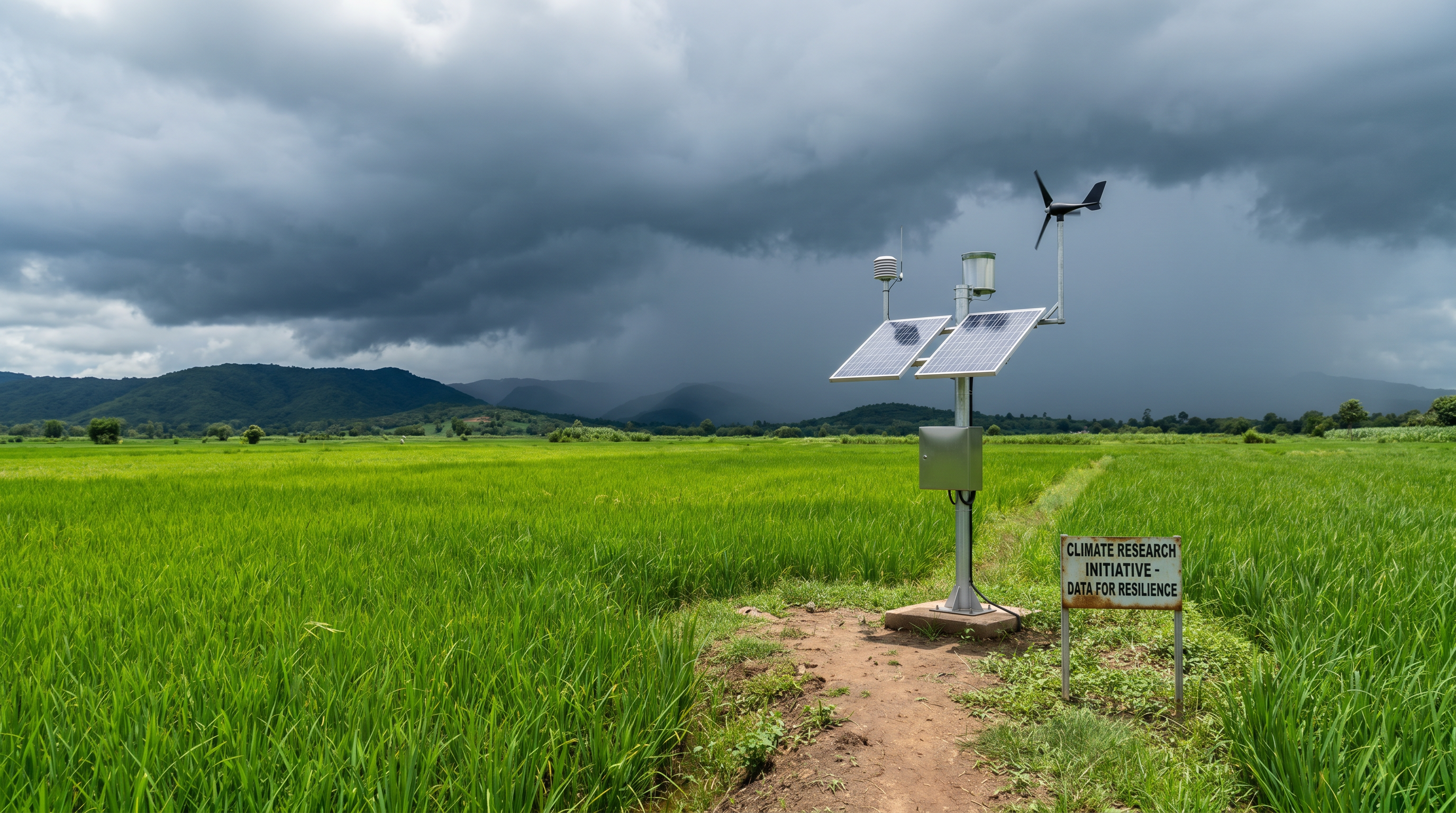
The entire mechanism relies on independent, third-party data to function. An insurer and a buyer agree in advance on a specific parameter—such as inches of rainfall recorded by a national meteorological agency, or seismic data from government geological sensors. When that exact metric is met, the contract executes automatically. Because the process entirely bypasses the traditional loss-adjustment phase, payouts can be wired directly to policyholders in a matter of days, or even hours, providing an unprecedented level of financial agility.[2][7]

This speed is transformative for disaster recovery, shifting the paradigm from reactive rebuilding to immediate stabilization. According to the National Association of Insurance Commissioners, the rapid liquidity provided by parametric policies can be up to 3.5 times more effective at stabilizing a community than delayed humanitarian aid or traditional claims. When funds arrive immediately, businesses can secure emergency supplies, pay their employees, and begin clearing debris before economic paralysis sets in and forces them into bankruptcy. This immediate cash flow acts as a vital bridge, keeping local economies afloat during the most chaotic days following a catastrophe.[4]
The model is proving especially vital for climate adaptation in vulnerable, developing regions where traditional insurance infrastructure is sparse. In February 2026, Ecuador launched its first parametric agricultural insurance program, specifically designed to protect smallholder rice and maize farmers from the devastating impacts of extreme weather. Backed by the United Nations Development Programme and the InsuResilience Solutions Fund, the pioneering initiative provides a financial safety net for up to 10,000 people who are critical to the nation's domestic food security.[3]
Under the Ecuadorian program, if local weather stations record excessive rainfall or prolonged drought that exceeds the predefined limits, the farmers receive an automatic cash transfer directly to their accounts. This immediate capital allows them to purchase new seeds, fertilizer, and equipment for the next planting cycle, preventing a single bad harvest from spiraling into generational poverty. It represents a profound shift from relying on reactive, slow-moving humanitarian aid to building proactive, self-sustaining financial resilience. By guaranteeing liquidity, the program ensures that the agricultural supply chain remains intact even in the face of severe climate anomalies.[3][8]
It represents a profound shift from relying on reactive, slow-moving humanitarian aid to building proactive, self-sustaining financial resilience.
Beyond agriculture, parametric models are increasingly utilized by global supply chains and coastal businesses to manage operational risks. The Stockholm Environment Institute notes that rapid liquidity helps companies reroute shipments, secure backup logistics, or source alternative materials when critical infrastructure, like a major port or transit corridor, is compromised by extreme weather. A coastal hotel, for instance, might use a parametric windstorm policy to cover lost revenue and immediate cleanup costs while waiting for their traditional, slower property insurance claim to process. This dual-policy approach ensures that the business survives the short-term shock while still being covered for long-term structural rebuilding.[5][6]
The concept is also scaling up to the sovereign level, where entire nations are purchasing parametric coverage to protect their national budgets from catastrophic climate shocks. The African Risk Capacity pool, a sovereign insurance mechanism backed by the African Union, has disbursed over $125 million to member states. These funds provide immediate, unencumbered relief for drought and cyclone recovery, supporting food security for millions of citizens without forcing developing governments to take on high-interest emergency debt. By pooling their risk, these nations can afford premiums that would otherwise be out of reach, creating a unified financial shield against extreme weather.[7]

Even everyday consumers are beginning to interact with parametric models, most notably in the commercial travel sector. Some modern travel insurance policies now monitor real-time aviation and weather data directly. If a policyholder's flight is delayed beyond a set threshold—often just two hours—the system automatically triggers a micro-payout or issues a voucher for airport lounge access directly to the traveler's smartphone, entirely eliminating the need to file a cumbersome claim. This seamless experience hints at the broader consumer potential of data-driven insurance.[1]
Despite its elegance and speed, the parametric model has a significant Achilles' heel known in the industry as 'basis risk.' This is the inherent, unavoidable gap between the objective data trigger and the actual physical damage experienced on the ground. If a business buys a policy that triggers at 100 mph winds, but their roof is completely destroyed by a localized storm that peaks at 99 mph, the policy pays absolutely nothing. This all-or-nothing threshold can leave policyholders financially devastated if the parameters are not perfectly calibrated.[1][4]
Conversely, positive basis risk occurs when the environmental trigger is met, but the policyholder miraculously suffers no actual damage. Because the contract is tied strictly to the data parameter rather than the physical loss, the insurer is still legally obligated to pay the full agreed-upon amount. Managing this mathematical disconnect requires highly localized, precise data modeling to ensure the triggers accurately reflect the reality of the risk on the ground. Insurers must constantly refine their algorithms to minimize these discrepancies, ensuring the product remains financially viable for both parties.[1]

The recent boom in parametric insurance is largely driven by the explosion of reliable, high-fidelity data. The proliferation of connected Internet of Things (IoT) sensors, high-resolution satellite imagery, and artificial intelligence has given insurers the granular, tamper-proof data they need to underwrite these policies with confidence. As climate volatility makes traditional risks harder to model and predict, this data-driven approach offers a vital, objective alternative that removes human bias from the equation. Without this technological leap, the independent verification required to make parametric policies trustworthy simply would not exist.[2][5]
The financial trajectory of the sector reflects this growing reliance on data-driven solutions. The World Economic Forum projects that the global parametric insurance market will expand rapidly to reach $34.4 billion by 2033. This growth is driven by the urgent need to close the global 'protection gap'—the vast disparity between total economic losses and insured losses—especially in regions where traditional insurance is either unavailable, prohibitively expensive, or structurally inadequate to handle climate extremes. As more capital flows into the space, the cost of premiums is expected to stabilize, making the coverage accessible to a broader range of industries.[2]
Ultimately, parametric insurance is not designed to completely replace traditional indemnity policies, which remain absolutely necessary for comprehensive, total-loss recovery and structural rebuilding. Instead, it acts as a highly specialized financial shock absorber. By guaranteeing immediate, frictionless liquidity when the worst happens, it ensures that communities, businesses, and governments have the critical resources they need to survive the crucial first days of a crisis. In an era defined by unpredictable climate threats, this fusion of big data and financial engineering is proving to be one of the most effective tools for building global resilience.[1][6]
How we got here
2007
The Caribbean Catastrophe Risk Insurance Facility (CCRIF) is established, becoming the first multi-country risk pool to utilize parametric insurance for governments.
2014
The African Risk Capacity pool launches, providing parametric drought and cyclone coverage to African Union member states.
2023
The global parametric insurance market sees accelerated growth as climate volatility increases the frequency of uninsurable natural disasters.
February 2026
Ecuador launches its first parametric agricultural insurance program, protecting 10,000 smallholder farmers against extreme rainfall and drought.
2033 (Projected)
The global parametric insurance market is forecast to reach $34.4 billion, driven by advances in satellite data and AI modeling.
Viewpoints in depth
Climate Resilience Advocates
Argue that parametric insurance is a lifeline for the developing world and vulnerable communities.
Organizations focused on climate adaptation view parametric insurance as a tool that democratizes access to financial protection. By removing the need for expensive claims adjusters and lengthy verification processes, it allows microinsurance to reach smallholder farmers and sovereign nations alike. They emphasize that receiving instant liquidity prevents climate shocks from becoming long-term economic catastrophes, keeping supply chains and food security intact.
Commercial Insurers
View parametric models as a highly efficient, complementary product rather than a total replacement for traditional insurance.
The insurance industry values parametric models for eliminating claims-processing overhead and reducing the potential for fraud. However, they caution that these policies are not a silver bullet. Commercial insurers emphasize that clients should pair parametric policies—which provide immediate cash flow to survive the initial shock—with traditional indemnity policies that cover the exact, comprehensive costs of structural rebuilding and total losses.
Regulatory Analysts
Focus heavily on the challenge of 'basis risk' and the need for perfect data calibration.
Regulators and policy analysts warn that the mathematical rigidity of parametric insurance can be a double-edged sword. If triggers are not perfectly calibrated using hyper-local data, policyholders might suffer catastrophic damage without receiving a payout, leading to a false sense of security. They advocate for strict transparency requirements so buyers understand exactly what parameters must be met, and push for continuous refinement of the underlying data models.
What we don't know
- How basis risk will be legally regulated as parametric policies reach everyday consumers.
- Whether the cost of high-resolution satellite data will keep premiums artificially high for microinsurance markets.
Key terms
- Parametric Insurance
- A type of insurance that pays a pre-agreed amount automatically when a specific, measurable event occurs, rather than paying for verified physical damage.
- Indemnity Insurance
- Traditional insurance that reimburses the policyholder for the exact, verified cost of the damages or losses they suffered.
- Basis Risk
- The discrepancy between the payout triggered by a parametric policy and the actual financial loss experienced by the policyholder.
- Trigger
- The specific, objective data point—such as a wind speed of 100 mph or a 6.5 magnitude earthquake—that automatically activates a parametric payout.
- Microinsurance
- Small-scale insurance policies designed for low-income populations in developing markets, often utilizing parametric models to keep administrative costs low.
Frequently asked
Does parametric insurance replace my normal property insurance?
No. It is designed to complement traditional insurance by providing immediate cash flow for initial recovery, while traditional policies cover the exact cost of total property replacement.
What happens if I have damage but the trigger isn't met?
This is known as 'basis risk.' If the predefined parameter (like a specific wind speed) is not reached, the parametric policy will not pay out, regardless of the actual damage you suffered.
How fast do parametric policies actually pay out?
Because they rely on automated data triggers rather than human claims adjusters, payouts are typically disbursed within days, and sometimes within hours of the event being verified.
Who decides if the trigger was met?
The policies rely on independent, third-party data sources agreed upon in advance, such as national meteorological agencies, satellite imagery, or official earthquake monitoring centers.
Sources
Source coverage
8 outlets
3 viewpoints surfaced








[1]Factlen Editorial TeamCommercial Insurers
Synthesis by Factlen editorial team
Read on Factlen Editorial Team →[2]World Economic ForumClimate Resilience Advocates
How parametric insurance is building climate resilience
Read on World Economic Forum →[3]United Nations Development ProgrammeClimate Resilience Advocates
Ecuador contracts first parametric insurance for climate-vulnerable farmers
Read on United Nations Development Programme →[4]National Association of Insurance CommissionersRegulatory Analysts
Parametric Disaster Insurance
Read on National Association of Insurance Commissioners →[5]Stockholm Environment InstituteRegulatory Analysts
Insurance and reinsurance under climate stress
Read on Stockholm Environment Institute →[6]InsureonCommercial Insurers
What is Parametric Insurance?
Read on Insureon →[7]Climate Policy InitiativeClimate Resilience Advocates
Parametric Insurance
Read on Climate Policy Initiative →[8]Observer Research FoundationRegulatory Analysts
Parametric Insurance for Climate Change Adaptation
Read on Observer Research Foundation →
More in finance
See all 49 stories →Space Economy
How the SpaceX IPO Works: Market Mechanics, Valuation, and Navigating the Hype
6 sources

Soft Landing
The Mechanics of the Soft Landing: How Real Wages Finally Outpaced Inflation
7 sources

SpaceX IPO
SpaceX Prices Historic $75 Billion IPO, Launching Elon Musk to Trillionaire Status
8 sources

Space Economy
Inside the SpaceX IPO: How the $1.75 Trillion Listing Reshapes the Space Economy
7 sources

Every angle. Every day.
Get finance stories with full source coverage and perspective breakdowns delivered to your inbox.