
How London Built a $230 Billion AI Ecosystem
Driven by deep-tech talent and massive government infrastructure investments, London has cemented its position as Europe's premier hub for enterprise AI.
By Factlen Editorial Team
- Ecosystem Optimists
- Argue that London's combination of academic talent, targeted government funding, and mature VC makes it the premier global hub for enterprise AI.
- Enterprise AI Adopters
- Prioritize inspectable, reliable AI architectures over black-box models to ensure compliance and security in corporate environments.
- Tech Sovereignty Advocates
- Believe the state must actively intervene in compute infrastructure and hardware procurement to prevent reliance on foreign tech monopolies.
What's not represented
- · Silicon Valley foundational model builders
- · Open-source AI developers
Why this matters
As artificial intelligence transitions from consumer novelty to critical enterprise infrastructure, the UK's success in building defensible, deep-tech companies provides a blueprint for how nations can compete globally without relying entirely on Silicon Valley. For business leaders and investors, understanding this ecosystem reveals where the next generation of reliable, compliance-ready AI tools will be built.
Key points
- London has emerged as Europe's undisputed AI capital, hosting over 2,300 VC-backed startups with a combined ecosystem valuation exceeding $230 billion.
- Investors are shifting focus from consumer AI applications to highly defensible enterprise infrastructure and deep-tech solutions.
- Voice AI leader ElevenLabs recently reached an $11 billion valuation by building enterprise-grade conversational agents using inspectable cascaded architectures.
- The UK government is actively intervening to support the sector, committing £2 billion to expand domestic supercomputing capacity by 2030.
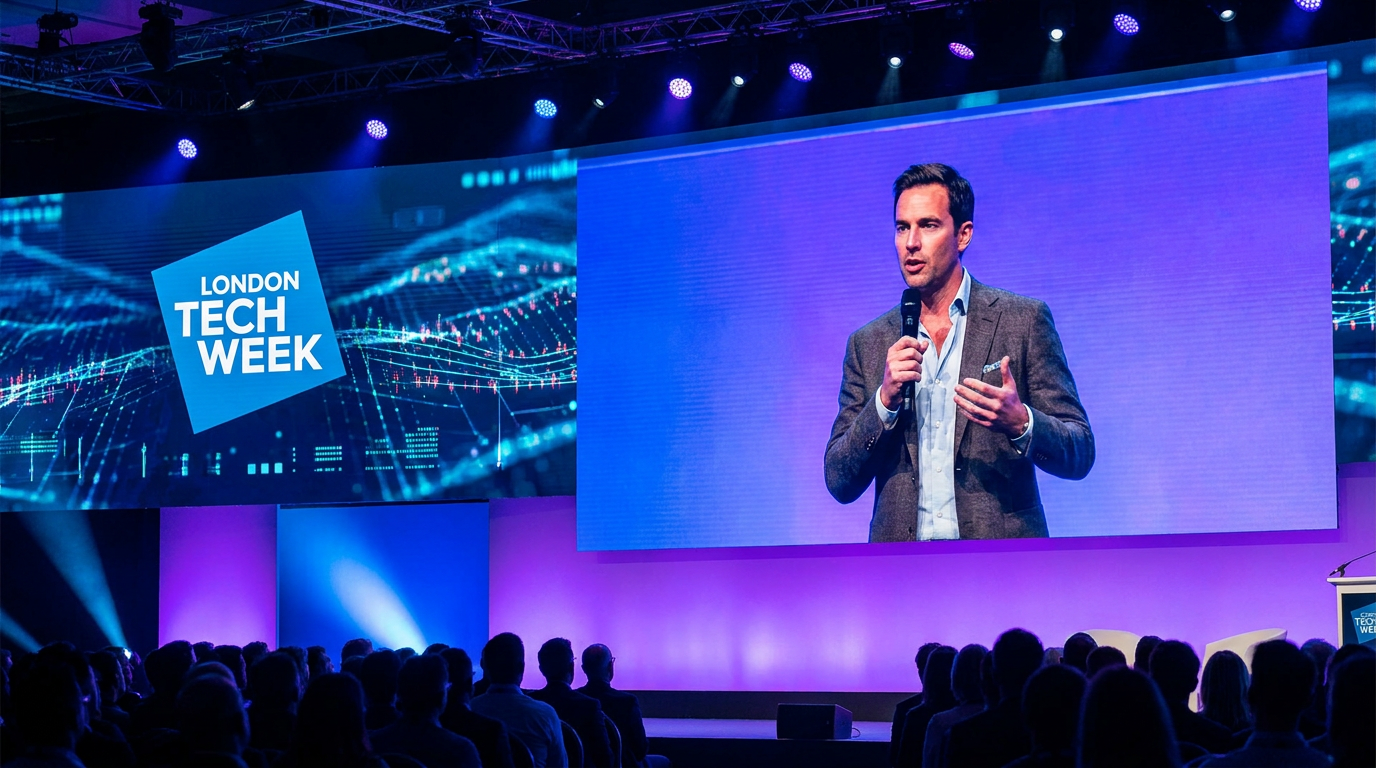
ElevenLabs Chief Executive Officer Mati Staniszewski stood on stage at London Tech Week 2026 and declared that the city's artificial intelligence ecosystem has "never been better." With his company recently hitting an $11 billion valuation following a massive $500 million Series D funding round, the sentiment carries undeniable weight. The UK's most valuable AI startup is not an anomaly, but rather the most visible success story of a broader structural shift occurring across the British technology landscape. As founders increasingly realize they can build global, decacorn-scale companies from Britain, the gravitational pull of Silicon Valley is facing its first genuine geographic rival in the deep-tech sector.[1][3]
London has quietly cemented itself as Europe's undisputed artificial intelligence capital, evolving far beyond its historical roots as a financial technology hub. While Silicon Valley continues to dominate mainstream headlines with the development of massive, generalized foundational models, the UK has carved out a highly lucrative and defensible niche in applied deep-tech and enterprise infrastructure. This strategic divergence is paying massive dividends, as corporate clients worldwide begin to demand specialized, reliable AI tools rather than generic chatbots. The ecosystem is uniquely positioned to deliver these solutions by drawing on decades of specialized academic research and a regulatory environment that actively encourages commercialization.[3][6]
The sheer scale of the British ecosystem is now operating at an industrial level. In 2025 alone, UK AI startups raised over £3.4 billion in venture capital, accounting for an unprecedented 30% of all British VC funding. The "golden triangle" connecting London, Cambridge, and Oxford now hosts more than 2,300 VC-backed AI companies. Together, these firms represent a combined ecosystem valuation exceeding $230 billion. This capital is not flowing into speculative consumer applications, but rather into companies building the foundational plumbing of the next digital economy.[3]

The composition of this ecosystem has matured dramatically over the past two years. Investors have largely abandoned consumer-facing "wrapper" applications—tools that simply repackage OpenAI's models with a new user interface—in favor of companies building defensible technical moats. The market now demands durability over viral growth. Startups focusing on enterprise infrastructure, secure data handling, and specialized hardware are capturing the lion's share of late-stage funding. This shift aligns perfectly with the needs of corporate clients who require reliability, security, and strict compliance over flashy but unpredictable consumer tools.[3][6]
ElevenLabs itself serves as the perfect case study for this maturation. Originally famous for generating emotionally rich text-to-speech voices for creators and audiobook publishers, the company has evolved into a full-stack conversational AI platform. By launching Conversational AI 2.0, the firm signaled a major strategic pivot: it no longer wants to be just the voice behind someone else's product; it wants to power the entire interaction layer for global enterprises. To understand why investors value this capability at $11 billion, one must look at how enterprise voice AI is actually constructed.[5]
Most modern voice agents are built on a spectrum between two distinct technical architectures: "cascaded" and "fused." Fused architectures—such as OpenAI's Realtime model—process everything inside a single multimodal network. Audio enters the system, the model reasons internally, and audio exits. While this approach can produce impressively lifelike short exchanges and preserve natural prosodic cues, it operates entirely as a black box. There is no intermediate text layer to inspect, which presents a massive problem for corporate adoption.[4]
Audio enters the system, the model reasons internally, and audio exits.
For enterprise clients, a black-box AI is often a non-starter. If a fused model hallucinates a financial figure or violates a compliance rule during a customer service call, developers have limited ability to debug the failed response or enforce strict guardrails. ElevenLabs, by contrast, utilizes an advanced cascaded architecture. This approach chains together specialized, independent components: a Speech-to-Text recognition module, a Large Language Model for reasoning, and a Text-to-Speech engine for generation.[4][6]
Because the cascaded system breaks the conversational process into distinct, inspectable stages, developers retain total control. They can swap in stronger language models as they become available, define strict conversation flows, and ensure the agent safely integrates with external databases via tool calling. For governments, healthcare providers, and financial institutions, this level of inspectability is a hard regulatory requirement, not a luxury. It allows them to deploy AI agents into critical workflows with confidence.[4][6]

However, a cascaded model still needs to sound human, which has historically been its greatest weakness. To bridge this gap, ElevenLabs layers in "contextual prosody"—training its models to understand emotional patterns much like a language model predicts the next word. The system analyzes the context of the generated text to instinctively adjust pacing, intonation, and even subtle imperfections, ensuring the speech sounds alive rather than robotic.[4][5]
The latest breakthrough in this stack is real-time turn-taking. The AI actively listens for subtle human conversational cues—such as pauses, hesitations, or interruptions—and uses them to decide whether to speak or wait. This transforms the AI from a reactive text-reader into a proactive conversational participant. Combined with automatic language detection and low-latency transcription, the platform allows enterprises to build agents that interact fluidly across multiple languages without prior setup.[5]
This level of deep-tech innovation requires massive computational resources, an area where the UK government is aggressively intervening to support the ecosystem. Recognizing artificial intelligence as a strategic national asset akin to energy or telecommunications, the government has launched a comprehensive AI Opportunities Action Plan. The state is injecting £2 billion to expand UK compute capacity twentyfold by 2030, ensuring that domestic startups have the raw processing power needed to train world-class models.[2]
This infrastructure push includes the deployment of the Isambard-AI supercomputer and the designation of five "AI Growth Zones" across Great Britain. These zones offer enhanced planning approvals and streamlined energy access for AI data centers, which has already generated over £28 billion in private investment commitments. By solving the physical infrastructure bottleneck, the UK is removing one of the most significant barriers to scaling deep-tech companies locally.[2]

Furthermore, the government's Sovereign AI Unit, backed by £500 million, is actively investing in domestic companies across the entire AI value chain. This is paired with a newly proposed £400 million hardware procurement plan, which aims to have the public sector purchase AI chips directly from British designers. By using government procurement as a demand signal, ministers hope to reduce reliance on foreign supply chains and encourage emerging hardware companies to remain anchored in Britain.[2][6]
The convergence of deep-tech academic talent, targeted government infrastructure, and mature venture capital has created a self-sustaining flywheel in London. As founders like Staniszewski prove that global, decacorn-scale AI companies can be built and scaled from Britain, the ecosystem is transitioning from a promising regional hub into a permanent pillar of the global AI economy. For the enterprise sector, London is no longer just an alternative to Silicon Valley—it is rapidly becoming the primary destination for reliable, compliance-ready artificial intelligence.[1][3][6]
How we got here
2022
ElevenLabs is founded, focusing on emotionally rich text-to-speech generation.
Jan 2025
The UK government launches the AI Opportunities Action Plan, committing £2 billion to compute infrastructure.
Feb 2026
ElevenLabs closes a $500 million Series D funding round, reaching an $11 billion valuation.
Jun 2026
At London Tech Week, leaders highlight the shift toward enterprise AI and announce new sovereign hardware procurement plans.
Viewpoints in depth
Ecosystem Optimists
London's structural advantages make it the premier hub for deep-tech AI.
Proponents of the UK ecosystem argue that London has successfully transitioned from a fintech capital to a deep-tech powerhouse. By leveraging the academic output of the 'golden triangle' (London, Cambridge, and Oxford), the city provides a unique density of machine learning talent. Optimists point to the £3.4 billion raised by UK AI startups in 2025 as proof that investors recognize this structural advantage, particularly as the market shifts away from consumer applications toward highly defensible enterprise infrastructure.
Enterprise AI Adopters
Corporate clients require inspectability and compliance over raw conversational fluidity.
For enterprise users—ranging from banks to healthcare providers—the underlying architecture of an AI agent is a critical liability issue. This camp strongly favors cascaded architectures over fused, multimodal networks. While fused models can produce incredibly lifelike audio in short bursts, their 'black box' nature makes it impossible to guarantee that an agent won't hallucinate or violate compliance rules. Cascaded models allow companies to inspect the intermediate text layer, enforce strict guardrails, and swap out underlying language models as technology improves.
Tech Sovereignty Advocates
The state must actively build compute infrastructure to prevent reliance on foreign monopolies.
This perspective, heavily championed by the UK government and defense sectors, views artificial intelligence as a critical national asset akin to energy or telecommunications. Advocates argue that relying entirely on US-based hyperscalers for compute power and hardware creates an unacceptable strategic vulnerability. They support aggressive state intervention, such as the £2 billion investment in domestic supercomputers like Isambard-AI and the £400 million public procurement plan designed to buy chips directly from British designers.
What we don't know
- Whether the UK's sovereign compute investments will be enough to offset the massive capital advantages of US hyperscalers.
- How incoming EU AI regulations might impact the operational models of London-based startups serving the continent.
Key terms
- Cascaded Architecture
- An AI system built by chaining together separate, specialized models (like speech recognition, reasoning, and speech generation) rather than using one giant model.
- Fused Architecture
- An AI system where a single multimodal network processes audio input and generates audio output directly, acting as an uninspectable black box.
- Contextual Prosody
- The ability of an AI voice model to instinctively adjust its rhythm, pacing, and emotional tone based on the meaning of the sentence.
- Sovereign AI
- Artificial intelligence infrastructure and capabilities developed and controlled domestically, reducing a nation's reliance on foreign technology.
Frequently asked
Why is London considered Europe's AI capital?
London benefits from a 'golden triangle' of academic talent from Cambridge and Oxford, combined with deep venture capital markets. In 2025 alone, UK AI startups raised over £3.4 billion, driving an ecosystem valuation of $230 billion.
How does ElevenLabs' voice AI actually work?
It uses a cascaded architecture that separates speech recognition, language reasoning, and speech generation. It also employs contextual prosody to instinctively adjust emotional tone and pacing based on the meaning of the text.
Why do enterprise companies prefer cascaded AI models?
Cascaded models allow developers to inspect the intermediate text layer between speech and reasoning. This makes it possible to enforce strict compliance guardrails and debug errors, which is impossible in a 'black box' fused model.
What is the UK government doing to support AI startups?
The government is investing £2 billion to expand supercomputing capacity, establishing AI Growth Zones for data centers, and launching a £500 million Sovereign AI Unit to back domestic companies.
Sources
Source coverage
6 outlets
3 viewpoints surfaced






[1]BloombergEcosystem Optimists
London's AI Ecosystem Never Better: ElevenLabs CEO
Read on Bloomberg →[2]UK GovernmentTech Sovereignty Advocates
AI Opportunities Action Plan and Sovereign AI Unit
Read on UK Government →[3]EU Tech FutureEcosystem Optimists
London's AI startup scene: A globally dominant force in 2026
Read on EU Tech Future →[4]ElevenLabs EngineeringEnterprise AI Adopters
Cascaded vs Fused Models: How architecture determines whether your voice agent is enterprise-ready
Read on ElevenLabs Engineering →[5]Opus ResearchEnterprise AI Adopters
Why Is ElevenLabs Building a Conversational AI Stack?
Read on Opus Research →[6]Factlen Editorial TeamTech Sovereignty Advocates
Synthesis by Factlen editorial team
Read on Factlen Editorial Team →

More in business
See all 48 stories →Space Economy
SpaceX Completes Record $75 Billion IPO Ahead of Nasdaq Debut
7 sources

Skills-First Hiring
The Collapse of the 'Paper Ceiling': How Skills-First Hiring is Rewiring the Corporate Ladder
6 sources

SpaceX Listing
SpaceX Prices Record $1.77 Trillion IPO, Becoming Largest Public Offering in History
7 sources

Strait of Hormuz
Risk the Strait or Wait: The Costly Dilemma Trapping 500 Ships in the Persian Gulf
7 sources

Every angle. Every day.
Get business stories with full source coverage and perspective breakdowns delivered to your inbox.