
How Induction Stoves Work: The Science, Health Benefits, and Retrofit Reality
As federal rebates and health concerns drive a shift away from gas, induction cooking offers a faster, cleaner, and more efficient way to cook using electromagnets.
By Factlen Editorial Team
- Public Health & Electrification Advocates
- Emphasize the elimination of indoor air pollution and the climate benefits of transitioning away from fossil fuels.
- Homeowners & Contractors
- Focused on the practicalities of cooking performance, electrical retrofits, and the economics of federal rebates.
- Natural Gas Industry
- Argues that gas stoves are safe when properly ventilated and disputes direct causal links to respiratory illnesses.
What's not represented
- · Renters unable to upgrade appliances
- · Professional chefs accustomed to gas
Why this matters
Switching to an induction stove can eliminate a major source of indoor air pollution while significantly speeding up cooking times. With federal rebates now available, understanding the electrical requirements can help homeowners plan a cost-effective kitchen retrofit.
Key points
- Induction stoves use electromagnets to heat cookware directly, making them faster and up to 90% energy efficient.
- Recent public health studies link nitrogen dioxide emissions from gas stoves to increased risks of childhood asthma.
- The federal HEAR program provides up to $840 in point-of-sale rebates for qualifying households to switch to electric or induction ranges.
- Retrofitting an induction stove typically requires a dedicated 240-volt electrical circuit, which may necessitate a panel upgrade in older homes.
The American kitchen is undergoing a quiet but profound transformation. For decades, the blue flame of a gas stove was the gold standard for home cooks, marketed heavily as the pinnacle of culinary control and professional performance. But a growing convergence of public health research, federal financial incentives, and leaps in electromagnetic technology is rapidly shifting consumer momentum toward induction cooking. As awareness of indoor air quality grows, the once-niche technology is moving squarely into the mainstream. Homeowners are increasingly viewing the kitchen not just as a place to prepare meals, but as a critical environment for health and energy efficiency.[8]
Unlike traditional electric stoves that rely on glowing red resistive coils, or gas ranges that combust fossil fuels to create an open flame, induction represents a fundamental scientific shift in how heat is generated. It is remarkably fast, highly energy-efficient, and entirely flameless. As homeowners weigh the benefits of upgrading their appliances, understanding the underlying mechanics, the documented health implications, and the practical electrical realities of retrofitting has become an essential part of the remodeling process. The transition requires more than just buying a new appliance; it requires a holistic view of the home's energy infrastructure.[8]
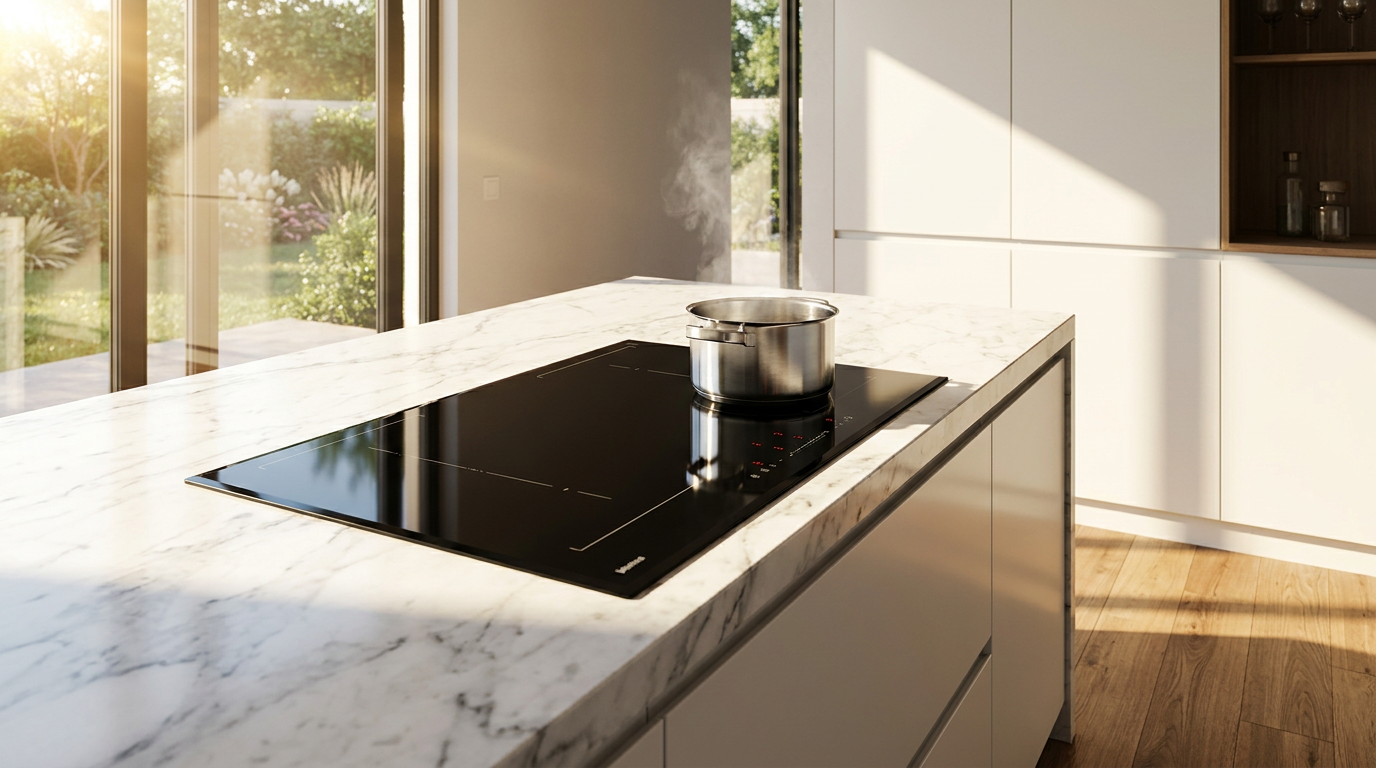
To understand the appeal of induction, one must look beneath the sleek, glass-ceramic surface of the cooktop. Instead of a traditional heating element that radiates warmth, an induction cooktop houses a tightly wound coil of copper wire. When the stove is turned on, an alternating electrical current flows through this copper coil, generating a rapidly fluctuating magnetic field directly above the burner. This invisible field is the engine of the entire cooking process, operating on principles of electromagnetism rather than thermal conduction.[4][6]
This magnetic field passes harmlessly through the glass surface of the stove and the surrounding ambient air. It only reacts when it encounters a compatible, ferromagnetic pot or pan placed directly on the cooking zone. When the magnetic field intersects with the metal of the cookware, it induces swirling electrical currents—known in physics as eddy currents—within the atomic structure of the pan's base. The pan itself becomes the active participant in the heating process, rather than a passive vessel receiving heat from below.[4][6]
Because the metal of the pan has a natural electrical resistance, these rapidly swirling eddy currents generate intense friction at the molecular level. Through a scientific principle known as Joule's Law of Heating, this kinetic energy is converted directly into thermal energy. In short, the cooktop itself does not get hot; the pan becomes its own self-contained heating element. The only heat transferred to the glass surface is the residual warmth radiating back down from the hot cookware.[6]

This direct transfer of energy makes induction cooking remarkably efficient. While a traditional gas flame loses roughly 50 to 60 percent of its thermal energy to the ambient air around the pot, induction cooktops deliver 85 to 90 percent of their electrical energy directly to the food. This localized heating results in boiling times that are often twice as fast as gas, alongside precise, instantaneous temperature control that rivals the responsiveness of professional gas ranges. Home cooks find that water boils in a fraction of the time, and delicate tasks like melting chocolate or simmering sauces can be managed with exact precision without the risk of scorching.[6][7]
However, this magnetic magic requires specific culinary tools. Because induction relies entirely on electromagnetism, only cookware made of ferromagnetic materials will work. Cast iron skillets, carbon steel woks, and most magnetic stainless steel pots are perfectly compatible with the technology. Conversely, aluminum, copper, glass, and ceramic cookware will not heat up at all unless they have been manufactured with a specialized magnetic steel plate embedded in their base. A simple refrigerator magnet provides a foolproof test: if it sticks firmly to the bottom of the pan, it will work on an induction stove.[4][7]
Beyond raw cooking performance, the shift toward induction is being heavily driven by emerging research on indoor air quality. For years, environmental scientists have warned that combusting natural gas indoors releases a complex cocktail of pollutants. These include carbon monoxide, formaldehyde, and benzene—a volatile organic compound and known human carcinogen. Without robust, hospital-grade ventilation, these invisible byproducts can accumulate in the kitchen and spread throughout the home, creating an environment that compromises respiratory health. The realization that a daily household chore could be contributing to long-term health risks has prompted many families to rethink their reliance on fossil fuels in the kitchen.[1][2]
Beyond raw cooking performance, the shift toward induction is being heavily driven by emerging research on indoor air quality.
A landmark 2024 study led by researchers at Stanford University and the Harvard T.H. Chan School of Public Health quantified these respiratory risks on a national scale. The researchers directly measured emissions in hundreds of homes and found that gas stoves routinely emit nitrogen dioxide (NO2) at levels that far exceed the safety guidelines set by the World Health Organization and the U.S. Environmental Protection Agency. The study highlighted that the pollution burden is not distributed equally, with smaller homes experiencing significantly higher concentrations of toxic gases.[1][2]
The health implications of this indoor pollution are particularly acute for young children, whose lungs are still developing. The Harvard and Stanford researchers estimated that 50,000 current cases of childhood asthma in the United States can be directly traced to NO2 exposure from gas stoves. When factoring in the cumulative effects of other emitted pollutants, public health experts suggest the true respiratory burden could be substantially higher, framing the gas stove not just as an appliance, but as a localized public health hazard.[1]

The natural gas industry, however, strongly disputes these epidemiological findings. The American Gas Association argues that the available body of scientific research does not provide consistent, causal evidence demonstrating chronic hazards from gas ranges. Industry representatives point out that federal agencies like the Consumer Product Safety Commission have not historically classified gas stoves as a significant health hazard. They emphasize that proper kitchen ventilation, such as using a high-CFM range hood that vents directly to the outside, is sufficient to mitigate indoor emissions and maintain safe air quality.[5]
Despite the industry's pushback, the momentum toward residential electrification is being backed by unprecedented federal investment. The Inflation Reduction Act (IRA) of 2022 established the Home Electrification and Appliance Rebates (HEAR) program, a multi-billion-dollar initiative that is rolling out across individual states through 2026. This program is specifically designed to make the transition to clean, electric appliances financially accessible for low- and moderate-income households, removing the premium price barrier that has historically kept induction technology out of reach for many. By subsidizing the upfront cost, the government aims to accelerate the phase-out of residential fossil fuel use.[3][4]
Under the HEAR program, qualifying households can receive a point-of-sale rebate of up to $840 for the purchase of an electric or induction stove. The rebate structure is strictly income-tiered to ensure equitable distribution: households earning below 80 percent of their Area Median Income (AMI) can have 100 percent of the appliance cost covered up to the $840 cap. Meanwhile, those earning between 80 and 150 percent of their AMI are eligible to receive a 50 percent subsidy, significantly offsetting the cost of a mid-range induction model.[3][7]

While the appliance itself is heavily subsidized, the physical reality of retrofitting an older kitchen presents its own set of logistical challenges. Transitioning from a gas range to an induction cooktop is rarely as simple as plugging in a new appliance. Full-size residential induction ranges draw a substantial amount of power and typically require a robust electrical supply—specifically, a dedicated 240-volt circuit connected to a 30- to 50-amp breaker. This ensures the stove receives stable power without tripping breakers during high-heat cooking.[4]
For homes built in the mid-20th century, the existing electrical service panel may not have the physical space or the total amperage capacity to handle this additional load. Upgrading a home's electrical panel can cost several thousand dollars, presenting a hidden hurdle for electrification. Fortunately, the IRA also includes provisions to absorb these infrastructure costs, offering up to $2,500 in rebates specifically for electrical wiring upgrades and up to $4,000 for comprehensive panel upgrades for qualifying households. These incentives are crucial for modernizing the aging electrical grids inside American homes.[3][4]

To avoid the significant expense and disruption of a full panel upgrade, some innovative homeowners and electricians are turning to smart electrical splitters or power-sharing devices. These intelligent technologies allow a new induction stove to safely share a high-amperage circuit with another large appliance, such as an electric vehicle charger or a clothes dryer. The device automatically pauses power to one appliance when the other is in active use, seamlessly managing the home's electrical load without requiring a larger utility service drop.[8]
Additionally, the physical gas line must be safely capped and sealed by a licensed plumber, adding another necessary step to the retrofit process. Despite these logistical hurdles and the need for coordinated contractor work, the combination of superior cooking technology, documented health benefits, and robust federal funding is making the friction of retrofitting increasingly worthwhile. Families are finding that the upfront effort pays dividends in both daily convenience and long-term peace of mind. The kitchen becomes a safer, cooler, and more efficient workspace.[4]
As building codes in major municipalities increasingly favor or outright mandate all-electric infrastructure for new construction, the induction stove is poised to become the undisputed new standard. It represents a rare intersection of climate policy, public health intervention, and consumer convenience. Ultimately, induction technology is not just about reducing a home's carbon footprint; it fundamentally improves the daily, universal act of making dinner, proving that the kitchen of the future is already here. By combining the speed of gas with the safety of electricity, induction is redefining culinary expectations for a new generation of home cooks.[8]
How we got here
August 2022
The Inflation Reduction Act is signed into law, establishing billions in funding for home electrification rebates.
May 2024
Harvard and Stanford researchers publish a landmark study linking gas stove NO2 emissions to 50,000 cases of childhood asthma.
2025–2026
States begin rolling out the HEAR rebate program, offering up to $840 for induction stove upgrades to qualifying households.
Viewpoints in depth
Public Health Researchers
Focus on the epidemiological evidence linking gas combustion to indoor air pollution and respiratory illness.
Public health advocates and environmental researchers argue that the gas stove is a significant, yet historically overlooked, source of indoor air pollution. Citing extensive data from institutions like Stanford and Harvard, this camp emphasizes that combusting fossil fuels indoors releases nitrogen dioxide, carbon monoxide, and benzene at levels that frequently exceed outdoor safety standards. They point to the disproportionate impact on children and low-income households living in smaller, poorly ventilated spaces, arguing that electrification is a necessary public health intervention.
The Natural Gas Industry
Argues that proper ventilation is sufficient and questions the methodology of studies linking gas stoves directly to asthma.
Representatives from the natural gas sector, including the American Gas Association, maintain that gas cooking is safe and reliable. They argue that recent studies linking gas stoves to asthma rely on flawed methodologies or fail to account for other environmental factors. The industry emphasizes that any combustion process produces byproducts, and that the solution is proper kitchen ventilation—such as using a range hood—rather than banning or phasing out an energy source that millions of Americans prefer for its culinary performance and reliability during power outages.
Electrical Contractors
Focused on the practical realities of retrofitting, emphasizing the need for dedicated 240V circuits and potential panel upgrades.
For the professionals tasked with installing these appliances, the conversation centers on infrastructure. Electricians note that while induction technology is vastly superior in performance, the American housing stock is largely unprepared for the electrical load. They highlight the hidden costs of retrofitting, pointing out that many older homes require expensive panel upgrades to safely support a 40- or 50-amp dedicated circuit. This camp advocates for broader awareness of smart splitters and federal wiring rebates to help homeowners navigate the logistical hurdles of electrification.
What we don't know
- How quickly older, low-amperage homes can be retrofitted given the nationwide shortage of licensed electricians.
- Whether the natural gas industry's lobbying efforts will successfully block local municipal bans on gas hookups in new construction.
Key terms
- Eddy Currents
- Swirling electrical currents induced within a metal pan by a magnetic field, which generate the heat used for induction cooking.
- Ferromagnetic
- Materials, such as iron or certain steel alloys, that are highly susceptible to magnetization and are required for induction cooking.
- Joule's Law of Heating
- A physical law describing how electrical current passing through a material with resistance generates heat.
- HEAR Program
- The Home Electrification and Appliance Rebates program, a federal initiative providing point-of-sale discounts for energy-efficient home upgrades.
- Area Median Income (AMI)
- The midpoint of a region's income distribution, used to determine eligibility for federal appliance rebates.
Frequently asked
Does my current cookware work on an induction stove?
If a magnet sticks firmly to the bottom of your pots and pans, they are compatible with induction. Cast iron and most stainless steel work well, while aluminum, copper, and glass do not.
Do I need to upgrade my electrical panel for an induction stove?
It depends on your home's current electrical capacity. Induction ranges typically require a dedicated 240-volt, 30- to 50-amp circuit. Older homes may require a panel upgrade or a smart power-sharing device.
How much is the federal rebate for induction stoves?
Under the IRA's HEAR program, low- and moderate-income households can qualify for an upfront point-of-sale rebate of up to $840 for an electric or induction stove.
Is induction cooking the same as a traditional electric stove?
No. Traditional electric stoves use resistive coils that get hot and transfer heat to the pan. Induction uses electromagnets to heat the pan directly, making it faster and more energy-efficient.
Sources
Source coverage
8 outlets
3 viewpoints surfaced








[1]Harvard T.H. Chan School of Public HealthPublic Health & Electrification Advocates
Gas stoves emit unsafe levels of nitrogen dioxide
Read on Harvard T.H. Chan School of Public Health →[2]Stanford UniversityPublic Health & Electrification Advocates
Gas stoves linked to asthma and health risks
Read on Stanford University →[3]U.S. Department of EnergyPublic Health & Electrification Advocates
Federal Tax Credits and Rebates for Energy Efficiency
Read on U.S. Department of Energy →[4]Rewiring AmericaPublic Health & Electrification Advocates
How induction stoves work and IRA rebates
Read on Rewiring America →[5]American Gas AssociationNatural Gas Industry
Are there documented risks to respiratory health from the use of natural gas stoves?
Read on American Gas Association →[6]The Indian ExpressHomeowners & Contractors
How an induction cooktop works
Read on The Indian Express →[7]Energy Rebate CalculatorHomeowners & Contractors
Electric Stove & Induction Cooktop Rebates 2026
Read on Energy Rebate Calculator →[8]Factlen Editorial TeamHomeowners & Contractors
Synthesis by Factlen editorial team
Read on Factlen Editorial Team →
Every angle. Every day.
Get home stories with full source coverage and perspective breakdowns delivered to your inbox.