
How Enhanced Geothermal Systems Are Unlocking 24/7 Clean Energy Anywhere
By borrowing horizontal drilling techniques from the oil and gas industry, next-generation geothermal technology is creating artificial underground reservoirs to provide round-the-clock, carbon-free baseload power.
By Factlen Editorial Team
- Geothermal Innovators
- Focus on the technological breakthrough of horizontal drilling to unlock heat anywhere.
- Grid Reliability Advocates
- Emphasize the urgent need for firm, 24/7 clean energy to back up intermittent solar and wind.
- Fossil Fuel Transitioners
- Highlight how EGS utilizes existing oil and gas workforce skills and drilling technology.
What's not represented
- · Environmental Conservationists
- · Local Communities
Why this matters
As the world races to decarbonize, the biggest vulnerability of solar and wind power is their intermittency. Enhanced Geothermal Systems (EGS) offer a scalable way to replace coal and natural gas plants with reliable, 24/7 clean energy, fundamentally stabilizing the future power grid.
Key points
- Traditional geothermal energy is limited to rare volcanic regions with natural underground water and permeable rock.
- Enhanced Geothermal Systems (EGS) create artificial reservoirs by injecting water to fracture hot, dry rock deep underground.
- The technology borrows horizontal drilling techniques from the oil and gas industry to maximize contact with hot rock formations.
- EGS provides 'firm' baseload power, running 24/7 to complement intermittent renewable sources like solar and wind.
- Fervo Energy's Cape Station in Utah is scheduled to become the first large-scale commercial EGS plant in June 2026.
The global energy transition has a massive, looming blind spot: what happens when the wind stops blowing and the sun goes down? While solar and wind capacity has exploded over the last decade, their inherent intermittency forces grid operators to rely on natural gas or coal plants to maintain a stable baseline of electricity. The holy grail of climate technology has long been a source of "firm" power—energy that is carbon-free, infinitely scalable, and available twenty-four hours a day, seven days a week.[4][7]
Historically, geothermal energy was the perfect, yet frustratingly limited, answer to this problem. Traditional geothermal plants draw on the Earth's natural underground heat to generate electricity with a remarkably small surface footprint. However, these conventional systems require a rare geological trifecta: extreme subsurface heat, naturally occurring underground water, and highly permeable rock that allows that water to flow freely. Because of these strict requirements, traditional geothermal development has been largely restricted to volcanic regions and tectonic plate boundaries, such as Iceland, the Philippines, and parts of California.[3][4][6]
That geographic bottleneck is now being shattered by a breakthrough known as Enhanced Geothermal Systems (EGS). Instead of hunting for the planet's rare natural underground radiators, engineers have figured out how to build their own from scratch. By artificially engineering reservoirs in hot, dry rock formations that lack natural water or permeability, EGS technology promises to unlock geothermal power generation in virtually any region with sufficient subsurface heat.[3][5][7]

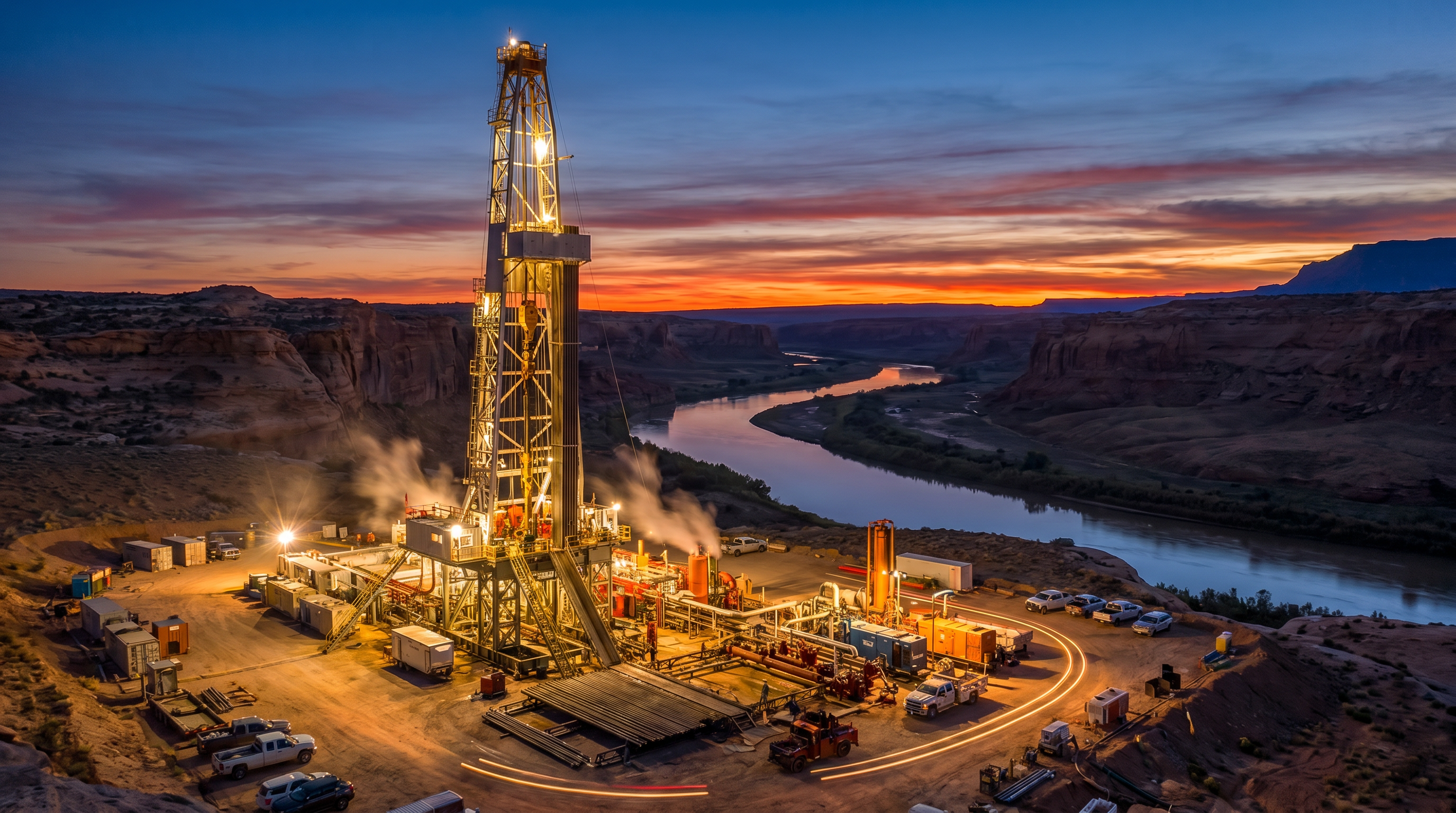
The process begins with advanced drilling rigs boring deep into the Earth's crust. To reach rock that is hot enough to generate commercial-scale electricity—often exceeding 350 degrees Fahrenheit—developers must drill up to 15,000 feet below the surface. At these extreme depths, the rock is incredibly dense and entirely dry, meaning no natural hydrothermal system exists to carry the heat to the surface.[3][6]
To solve this, next-generation geothermal companies are borrowing a page directly from the shale oil revolution: horizontal drilling. Once the drill reaches the target depth, engineers steer the bit to turn 90 degrees, boring horizontally through the hot rock layer for thousands of feet. This horizontal trajectory is crucial because it exponentially increases the well's surface-area contact with the high-temperature formation, a technique perfected by the fossil fuel industry over the last two decades.[4][6]
With the horizontal wells in place, operators initiate a process called hydraulic stimulation. High-pressure water is pumped down into the well to create a vast network of tiny, millimeter-wide fractures in the solid rock. Unlike traditional oil and gas fracking, which relies on chemical slurries and proppants to extract hydrocarbons, EGS stimulation primarily uses clean water to simply open pathways, creating a highly permeable, artificial sponge of hot rock.[3][5][7]
With the horizontal wells in place, operators initiate a process called hydraulic stimulation.
This engineered fracture network becomes the heart of a massive, closed-loop thermal engine. Cold water is pumped down an injection well and forced through the newly created artificial fractures. As the water slowly permeates through the sprawling network of hot rock, it absorbs the Earth's ambient heat. A second well, known as the production well, intersects this fracture network at the other end, capturing the superheated fluid and carrying it back to the surface.[3][4][5]

At the surface facility, the system generates electricity without ever exposing the geothermal fluid to the open air. In a "binary cycle" power plant, the superheated water passes through a heat exchanger, transferring its thermal energy to a secondary working fluid with a much lower boiling point. This secondary fluid instantly vaporizes, creating high-pressure gas that spins a turbine to generate electricity. The original geothermal water, now cooled, is immediately pumped back down the injection well to repeat the cycle, ensuring zero water is lost to evaporation.[4][6]
This concept is rapidly moving from theoretical modeling to commercial reality. Fervo Energy, a leading EGS developer, is currently constructing the Cape Generating Station in Beaver County, Utah. Utilizing these advanced horizontal drilling and stimulation techniques, the Cape Station project is scheduled to become the first large-scale commercial EGS facility in the United States, with its initial phase slated to deliver power to the grid by June 2026.[1][2]
Wall Street and major technology firms are signaling immense confidence in this approach. In late 2025, Fervo closed a massive $462 million Series E funding round, backed by major venture capital firms and tech giants like Google, who are desperate for 24/7 clean energy to power their rapidly expanding artificial intelligence data centers. This influx of capital is transforming EGS from a niche science experiment into a highly bankable infrastructure asset class.[1][7]
The potential scale of EGS deployment is staggering. The U.S. Geological Survey estimates that the Great Basin region of the American Southwest alone holds 135 gigawatts of potential EGS electric-power generation. Nationwide, the Department of Energy projects that advanced geothermal technologies could unlock at least 90 gigawatts of capacity by 2050—enough to power tens of millions of homes and fundamentally alter the composition of the national grid.[2][3]

Beyond the climate benefits, EGS offers a unique geopolitical and economic advantage: a seamless transition for the fossil fuel workforce. Because EGS relies on the exact same drilling rigs, steel casing, fiber-optic sensors, and roughnecks as the oil and gas industry, it provides a direct, high-paying pivot for fossil fuel workers into the clean energy economy. In fact, a significant majority of the workforce at leading EGS startups transitioned directly from the petroleum sector.[1][6]
Despite the surging optimism, the industry still faces significant engineering and economic hurdles. Deep drilling through hard, igneous rock remains incredibly expensive and causes rapid wear on drill bits. Furthermore, these artificial reservoirs must prove their longevity; operators need to demonstrate that the engineered fracture networks will not close up or cool down too rapidly over a 20-to-30-year commercial lifespan.[5][7]
If these next-generation systems can achieve long-term reliability and cost parity with fossil fuels, the implications are profound. By effectively turning the Earth's crust into a universal, inexhaustible thermal battery, Enhanced Geothermal Systems could finally solve the hardest problem in the energy transition, providing the reliable, round-the-clock clean power needed to fully retire the carbon economy.[3][7]
How we got here
Nov 2023
Fervo Energy brings its initial 3.5-megawatt pilot facility online in Nevada, proving the commercial viability of the closed-loop EGS concept.
Dec 2025
Fervo closes a $462 million Series E funding round backed by major tech and climate investors to accelerate deployment.
Mar 2026
An additional $421 million in project financing is secured to fund the construction of the Cape Station project in Utah.
June 2026
The first phase of the Cape Station EGS facility is scheduled to begin delivering commercial power to the grid.
Viewpoints in depth
Geothermal Innovators
Argue that applying oil and gas drilling techniques to geothermal energy unlocks a massively scalable, 24/7 clean power source.
This camp, comprising startups like Fervo Energy and advanced engineering firms, views EGS as the ultimate bridge between the fossil fuel era and a decarbonized future. By repurposing the horizontal drilling and hydraulic fracturing technologies perfected during the shale boom, they argue that geothermal energy is no longer constrained by geography. Their primary focus is on driving down drilling costs through economies of scale and proving that engineered reservoirs can sustain commercial heat extraction for decades, ultimately making EGS the default baseload power source for the 21st century.
Grid Reliability Advocates
Emphasize the urgent necessity of firm, non-intermittent clean energy to stabilize grids heavily reliant on solar and wind.
Grid operators, the Department of Energy, and utility companies view EGS through the lens of system stability. As grids retire aging coal and natural gas plants, the influx of intermittent renewables like solar and wind has created dangerous vulnerabilities during extreme weather or nighttime hours. This camp values EGS not just for its zero-carbon emissions, but for its high capacity factor—the ability to run at maximum output 24/7. They argue that even if EGS electricity is initially more expensive than solar, its ability to provide "firm" baseload power makes it an indispensable asset for national energy security.
Fossil Fuel Transitioners
Highlight EGS as a unique economic off-ramp for the oil and gas workforce and supply chain.
Industry analysts and labor advocates point out that EGS is the only major renewable energy sector that directly utilizes the existing skills and equipment of the petroleum industry. Rather than requiring roughnecks and petroleum engineers to completely retrain for solar installation or battery manufacturing, EGS allows them to use the exact same rigs, casing, and subsurface modeling software to extract heat instead of hydrocarbons. This camp argues that EGS could neutralize political and economic resistance to the energy transition in traditional oil-producing regions by offering a lucrative, 1-to-1 job replacement.
What we don't know
- Whether the engineered underground fracture networks will remain open and maintain their heat output over a multi-decade commercial lifespan.
- How quickly the incredibly high costs of deep, hard-rock drilling can be reduced through economies of scale.
- The extent to which deep hydraulic stimulation might induce minor seismic activity in certain geological formations.
Key terms
- Enhanced Geothermal System (EGS)
- A human-made underground reservoir created by injecting fluid into hot, dry rock to generate permeability and extract heat.
- Horizontal Drilling
- A technique borrowed from the oil and gas industry that turns a vertical well sideways to maximize contact with a hot rock formation.
- Baseload Power
- The minimum amount of electric power needed to be supplied to the electrical grid at any given time, requiring 24/7 continuous generation.
- Permeability
- The ability of a rock formation to allow fluids to pass through its pores and fractures.
- Binary Cycle Power Plant
- A system where hot geothermal fluid heats a secondary liquid with a lower boiling point, creating vapor to spin a turbine without releasing emissions.
Frequently asked
How is EGS different from traditional geothermal energy?
Traditional geothermal relies on naturally occurring hot water and permeable rock, limiting it to volcanic regions. EGS creates its own reservoirs by fracturing hot, dry rock, allowing plants to be built almost anywhere.
Does EGS use fracking?
Yes, it uses hydraulic stimulation similar to oil and gas fracking to create fractures in deep rock. However, it uses clean water rather than chemical slurries, and the fluid is continuously recycled in a closed loop.
When will these next-generation plants be ready?
The first large-scale commercial EGS plant, Fervo Energy's Cape Station in Utah, is scheduled to begin delivering power to the grid in June 2026.
Can this completely replace fossil fuels?
While it won't replace everything, EGS provides the crucial 'firm' 24/7 clean power needed to replace coal and natural gas baseload plants, complementing intermittent solar and wind.
Sources
Source coverage
7 outlets
3 viewpoints surfaced





[1]Canary MediaGeothermal Innovators
Fervo Energy raises $462M to build next-generation geothermal plants
Read on Canary Media →[2]U.S. Energy Information AdministrationGrid Reliability Advocates
First commercial-scale enhanced geothermal system under construction in Utah
Read on U.S. Energy Information Administration →[3]U.S. Department of EnergyGrid Reliability Advocates
What is an Enhanced Geothermal System (EGS)?
Read on U.S. Department of Energy →[4]MIT Climate PortalGrid Reliability Advocates
Explainer: Geothermal Energy
Read on MIT Climate Portal →[5]ThinkGeoEnergyGeothermal Innovators
Advanced Geothermal Systems (AGS) and Enhanced Geothermal Systems (EGS)
Read on ThinkGeoEnergy →[6]Gates NotesFossil Fuel Transitioners
Utah's hottest new power source is 15,000 feet below the ground
Read on Gates Notes →[7]Factlen Editorial TeamGeothermal Innovators
Synthesis by Factlen editorial team
Read on Factlen Editorial Team →

More in guides
See all 18 stories →Battery Tech
The Solid-State Battery Era Arrives: How It Works and the Race to 1,000-Kilometer EVs
7 sources

Longevity Science
The Science of Zone 2: Why the Easiest Workout Is the Most Important for Longevity
7 sources

Cybersecurity
The End of the Password: How Passkeys Work and Why You Should Use Them
8 sources

Digital Estate Planning
The Digital Legacy Checklist: How to Secure Your Online Life for Your Heirs
8 sources

Every angle. Every day.
Get guides stories with full source coverage and perspective breakdowns delivered to your inbox.