
How Empty Office Buildings Are Being Engineered Into Residential Neighborhoods
With national office vacancies hovering at 20%, developers are increasingly turning to 'adaptive reuse' to transform obsolete commercial towers into apartments. The complex structural conversions are helping cities combat housing shortages and revitalize struggling downtowns.
By Factlen Editorial Team
- Commercial Developers
- Focused on the tight financial viability, structural realities, and necessary tax incentives required to make conversions profitable.
- Urban Planners & Policymakers
- Viewing conversions as a vital tool to revitalize struggling central business districts and combat housing shortages.
- Affordable Housing Advocates
- Pushing to ensure conversions serve low- and middle-income residents rather than exclusively creating luxury units.
What's not represented
- · Existing commercial tenants forced to relocate during building conversions
- · Construction unions navigating new retrofitting safety protocols
Why this matters
As remote work permanently empties downtown office buildings, adaptive reuse offers a dual solution to two of America's biggest crises: revitalizing struggling central business districts and creating thousands of new homes during a historic housing shortage.
Key points
- The national pipeline for office-to-residential conversions has reached 90,300 units in 2026.
- Deep commercial floor plates require architects to core out building centers to ensure apartments receive natural light.
- Retrofitting centralized commercial plumbing into decentralized residential systems remains one of the most expensive engineering hurdles.
- Conversion costs can range from $100 to over $500 per square foot, often rivaling new construction.
- Cities are deploying aggressive tax incentives and zoning reforms to make the tight profit margins viable for developers.
- Reusing existing concrete and steel structures saves millions of pounds of carbon emissions compared to ground-up construction.
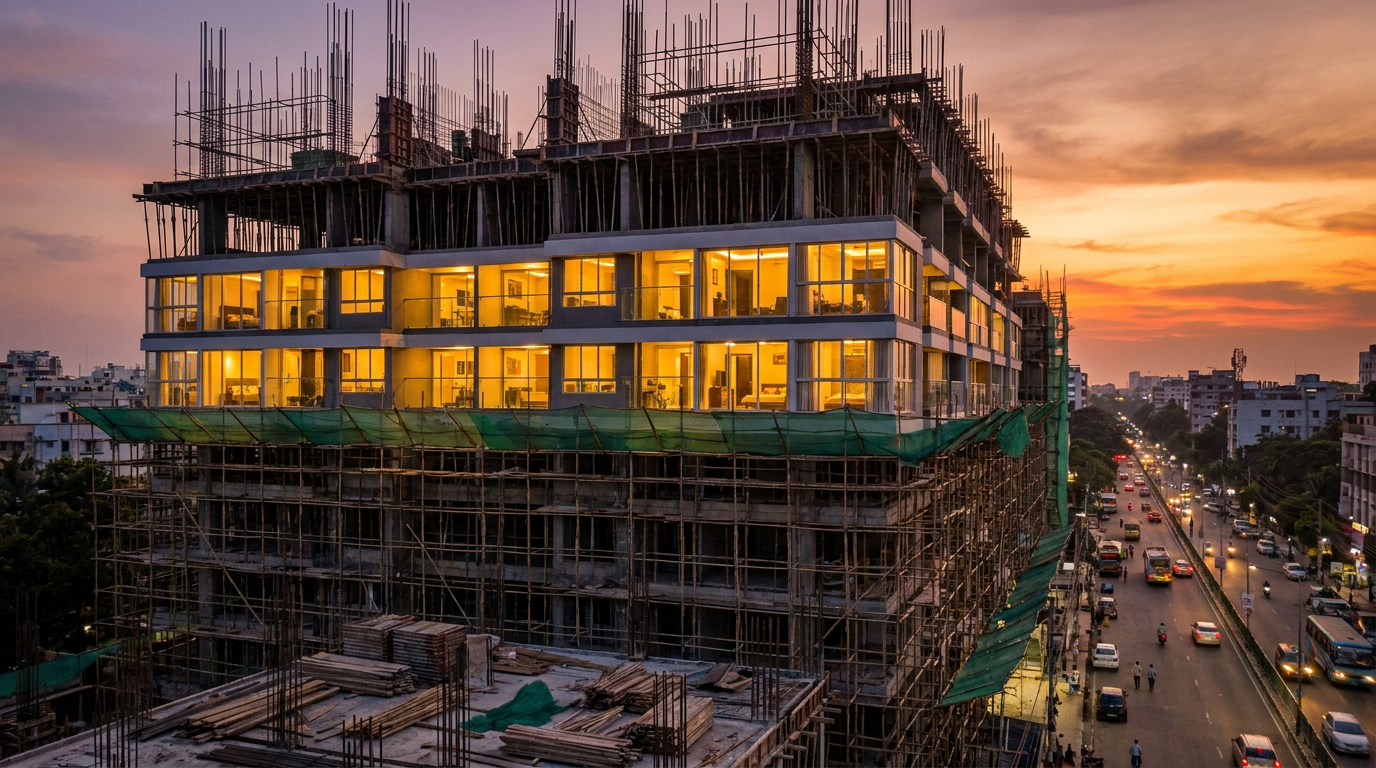
Six years after the pandemic permanently altered the American workday, the commercial real estate market remains fundamentally reshaped. Nationwide, roughly 20% of office space sits vacant, casting a long shadow over central business districts from San Francisco to Manhattan. Yet, this surplus of empty corporate real estate is colliding with another pressing national crisis: a severe, persistent shortage of residential housing. As cities grapple with the economic fallout of empty downtowns, developers and urban planners are increasingly looking at these obsolete glass-and-steel monoliths not as liabilities, but as the raw material for a massive urban transformation.[3][4]
The solution gaining unprecedented momentum in 2026 is "adaptive reuse"—the complex architectural alchemy of turning obsolete office towers into residential apartments. The national pipeline for office-to-residential conversions has swelled to over 90,300 units, representing a historic shift in how developers utilize commercial space. New York City alone is on track to commence roughly 9.5 million square feet of conversions this year, more than double its 2025 output. This surge marks a transition from speculative pilot projects to a standardized, institutionalized real estate strategy.[1][5]

But transforming a 1970s corporate headquarters into a modern living space is rarely as simple as erecting drywall and moving in beds. Office buildings and residential towers are fundamentally different species of architecture, engineered for entirely different human behaviors. The most glaring obstacle that architects face when evaluating a potential conversion is the "floor plate"—the sheer depth and overall footprint of the building's concrete slab.[4][6]
Modern residential building codes strictly mandate that every bedroom must have an operable window for natural light and fire egress. Typically, this requires the deepest part of a living space to be no more than 28 feet from the exterior wall. However, mid-century office buildings were designed to maximize desk space, featuring sprawling floor plates that can extend 40 to 60 feet deep from the windows to the elevator core, creating massive, windowless interior zones that are legally uninhabitable as bedrooms.[4]
To solve this geometric puzzle, architects must perform radical structural surgery. Developers frequently core out the center of the building, cutting through decades-old concrete to transform a solid block into an "O" or "C" shape. This creates a new interior courtyard, effectively doubling the window line and allowing natural light to penetrate the apartments from both sides. Alternatively, designers are repurposing the dark, windowless cores into stacked residential amenities—building vertical columns of fitness centers, movie theaters, and co-working lounges that do not require natural sunlight.[5][7]

Beyond the floor plan, the hidden nervous system of an office building presents a massive engineering hurdle. Commercial towers are built with highly centralized utilities. A typical office floor might have just two large communal bathrooms and a unified HVAC system designed to cool hundreds of active workers simultaneously. Residential living, by contrast, requires decentralized independence and granular climate control.[7]
Beyond the floor plan, the hidden nervous system of an office building presents a massive engineering hurdle.
Conversion teams must drill hundreds of new vertical shafts through the reinforced concrete floors to run individual plumbing lines, gas pipes, and sub-metered electrical panels for every single apartment. This meticulous retrofitting is highly labor-intensive and requires careful navigation around existing structural ribs, post-tension cables, and load-bearing elements. A single misplaced core drill can compromise the structural integrity of the entire floor.[1][4]
To circumvent these exorbitant plumbing costs, some urban planners and housing advocates are championing a "co-living" model. By retaining the centralized bathrooms and communal kitchens of the original office layout, developers can create dorm-style micro-apartments. Recent studies indicate this approach can reduce construction costs by 25% to 35% per square foot compared to traditional conversions, offering a viable, market-driven path to deeply affordable urban housing without requiring massive public subsidies.[3]
Even if the layout and plumbing puzzles are solved, older office buildings must be brought up to stringent modern residential codes. This often involves upgrading the exterior facade for energy efficiency, reinforcing the steel skeleton to meet modern seismic load requirements, and installing advanced sound insulation to achieve the necessary Sound Transmission Class (STC) ratings between units. Office walls are notoriously thin; residential walls must guarantee privacy.[7]

Consequently, adaptive reuse is staggeringly expensive. Depending on the building's age, location, and structural condition, conversion costs currently range from $100 to well over $500 per square foot. In many major markets, the price tag of gutting and retrofitting an obsolete Class B office building rivals or even exceeds the cost of demolishing it and building a brand-new residential tower from scratch.[6][8]
Because the profit margins are so razor-thin, the current conversion boom is heavily reliant on government intervention. Municipalities desperate to revitalize their downtowns are stepping in with aggressive financial incentives. New York's "City of Yes" zoning reforms and state tax abatements have catalyzed its current surge, while cities like Boston and Chicago are deploying massive tax increment financing and property tax breaks to make the math work for developers willing to take on the risk.[2][5]

Despite the steep financial costs, the environmental argument for adaptive reuse is ironclad. In the construction industry, the greenest building is almost always the one that already exists. By preserving the massive concrete foundation and steel superstructure of an office tower, developers prevent the release of millions of pounds of carbon dioxide that would otherwise be emitted during the manufacturing, transportation, and assembly of new construction materials.[6]
For city governments, these conversions serve as a strategic defense against the "urban doom loop"—a vicious economic cycle where empty offices lead to shuttered local businesses, plummeting property tax revenues, and further civic decline. Replacing transient 9-to-5 commuters with permanent, full-time residents injects 24/7 economic vitality back into the urban core, supporting local grocery stores, restaurants, and public transit networks.[6]
While adaptive reuse will not single-handedly solve the national housing shortage—analysts estimate that only a small fraction of existing office stock is structurally and economically suited for conversion—it represents a critical shift in urban design. As developers refine their architectural playbooks and cities streamline their zoning laws, the empty corporate monuments of the 20th century are steadily being transformed into the vibrant, mixed-use neighborhoods of the 21st.[6][8]
How we got here
2020
The pandemic triggers a mass shift to remote work, emptying central business districts.
2022
Early adaptive reuse projects begin as office vacancies show no signs of recovering.
2024
Major cities like New York and Boston introduce aggressive tax incentives and zoning reforms to spur conversions.
2026
The national conversion pipeline hits a record 90,300 units, with NYC leading the surge.
Viewpoints in depth
Commercial Developers
Focused on the financial viability and structural realities of conversions.
For developers, the math of adaptive reuse is notoriously tight. While acquiring an empty Class B office building might seem like a bargain, the costs of coring out floor plates, installing sub-metered utilities, and upgrading seismic supports can quickly push projects past $400 per square foot. They argue that without significant government intervention—such as tax abatements, relaxed zoning, or grants—most conversions simply do not pencil out against the potential rental yields.
Urban Planners
Viewing conversions as a lifeline for struggling central business districts.
City planners see adaptive reuse as the antidote to the 'urban doom loop.' By replacing 9-to-5 commuters with full-time residents, cities can sustain local retail, restaurants, and transit systems that have struggled since the pandemic. Planners advocate for zoning overhauls, like New York's 'City of Yes,' to remove red tape and accelerate the transformation of single-use financial districts into vibrant, 24/7 mixed-use neighborhoods.
Affordable Housing Advocates
Pushing to ensure conversions serve low- and middle-income residents.
Housing advocates warn that without strict mandates, developers will exclusively build luxury apartments to recoup their high conversion costs. They champion models like 'co-living' micro-apartments, which utilize centralized plumbing to cut construction costs by up to 35%, allowing for lower rents. They also lobby for tying municipal tax incentives directly to affordable housing quotas, ensuring the adaptive reuse boom benefits essential workers.
What we don't know
- Whether the pace of conversions will remain robust once current municipal tax incentives and grant programs expire.
- How the influx of new residential units will impact the long-term property tax revenues of central business districts.
Key terms
- Adaptive Reuse
- The process of repurposing an existing building for a use other than what it was originally designed for.
- Floor Plate
- The total rentable area on a single floor of a building, which dictates how far interior spaces are from exterior windows.
- Urban Doom Loop
- A cycle where empty downtown offices lead to closed local businesses, lower tax revenues, and further urban decline.
- Sound Transmission Class (STC)
- A rating system used to measure how well a building partition, such as a wall or floor, attenuates airborne sound.
- Sub-metering
- The installation of individual utility meters for separate apartments within a building that previously had a single, centralized commercial meter.
Frequently asked
Can any office building be converted into apartments?
No. Buildings with very deep floor plates or outdated structural grids are often too expensive to convert because residential codes require bedrooms to have natural light.
Is converting an office cheaper than building from scratch?
Not always. Due to the massive plumbing, electrical, and structural overhauls required, conversions can cost up to $500 per square foot, often rivaling new construction.
How does adaptive reuse help the environment?
Reusing a building's existing concrete and steel framework prevents the release of millions of pounds of carbon dioxide associated with manufacturing and transporting new materials.
What happens to the windowless center of an office building?
Architects either core out the center to create an open-air courtyard or repurpose the dark interior space for residential amenities like gyms, theaters, and co-working lounges.
Sources
Source coverage
8 outlets
3 viewpoints surfaced








[1]Cushman & WakefieldCommercial Developers
Office-to-Residential Conversions Surge to Record Levels in New York City
Read on Cushman & Wakefield →[2]J.P. MorganUrban Planners & Policymakers
What to know about office-to-residential conversion
Read on J.P. Morgan →[3]The Pew Charitable TrustsAffordable Housing Advocates
Converting Obsolete Offices to Small Co-Living Apartments Could Help Ease U.S. Housing Shortage
Read on The Pew Charitable Trusts →[4]Hughes MarinoCommercial Developers
The Worst Commercial Real Estate Market in 30 Years: What Office & Industrial Tenants Must Know in 2026
Read on Hughes Marino →[5]NorthspyreCommercial Developers
Office-to-Residential Conversions: Why Demand is Soaring
Read on Northspyre →[6]Center for American ProgressUrban Planners & Policymakers
Converting Vacant Office Space Into Housing
Read on Center for American Progress →[7]EisnerAmperCommercial Developers
Challenges in Converting Office Buildings to Residential
Read on EisnerAmper →[8]CaliberCommercial Developers
Rising Trend of Office Space Conversion to Multifamily Residential Units
Read on Caliber →
More in real estate
See all 19 stories →Credit Building
How Rent Reporting is Transforming Credit Building for Millions of Tenants
6 sources

Housing Supply
The Rise of Build-to-Rent: How Purpose-Built Subdivisions Are Reshaping the Housing Market
8 sources
AI Infrastructure
How Data Center REITs Became the Physical Backbone of the AI Boom
7 sources
Home Selling
Selling Your Home in 2026: The iBuyer vs. Traditional Agent Trade-Off
7 sources
Every angle. Every day.
Get real estate stories with full source coverage and perspective breakdowns delivered to your inbox.