
How Community-Based Tourism and Indigenous Guides Are Rewriting the Travel Playbook
A surge in demand for authentic, community-owned travel experiences is shifting billions of dollars toward Indigenous-led guides and regenerative local tourism.

In short
- Community-Based Tourism (CBT) places local residents in charge of travel experiences, ensuring profits remain in the host neighborhood.
- The Indigenous tourism sector is projected to reach $67 billion globally by 2034, driven by a 64% surge in traveler demand for authentic cultural engagement.
- Countries like Australia and Canada are heavily investing in Indigenous-led guiding to promote cultural preservation and rural economic growth.
For decades, the global travel industry operated on a largely extractive model: multinational tour operators brought visitors into local communities, captured the bulk of the profits, and left residents to manage the environmental and cultural toll. But a quiet revolution is reshaping how people explore the world, driven by a new generation of travelers who want their vacations to leave a positive footprint. This shift is moving the industry away from mass-market sightseeing and toward highly localized, community-owned experiences that prioritize mutual respect over mere consumption.[5]
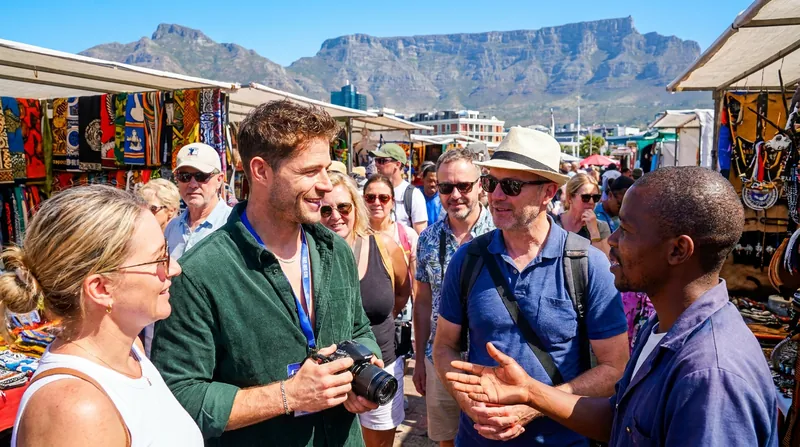
The transformation is being driven by a structural model known as Community-Based Tourism (CBT). Unlike traditional tourism, where large outside corporations dictate the narrative and retain the revenue, CBT ensures that local communities have full ownership and management of the tourism experience.
This approach flips the traditional power dynamic, placing the host community at the center of the planning, development, and execution of local guides and hospitality services. By retaining control, neighborhoods and rural villages can dictate how many visitors they receive, what cultural elements they share, and how the resulting income is distributed.[3]
Under the CBT framework, residents act not merely as employees or background characters, but as land managers, entrepreneurs, and executive decision-makers. When a traveler books a local guide through a CBT network, the financial benefits are channeled directly into the community rather than leaking out to foreign headquarters. Often, a portion of the tourist income is set aside for collective projects, such as upgrading local infrastructure, funding education, or supporting health initiatives, ensuring that even residents who do not directly work with tourists still benefit from their presence.[3]
This model is rapidly gaining traction, particularly within the Indigenous tourism sector, which has become one of the fastest-growing segments of the global travel economy. A comprehensive 2024 report by the World Travel & Tourism Council (WTTC) projects that Indigenous tourism will contribute a staggering $67 billion to the global economy by 2034. This growth is not just an economic windfall; it serves as a vital mechanism for cultural preservation, language revitalization, and the economic empowerment of historically marginalized communities in remote regions.[1]
The demand for these authentic, community-led experiences is surging among modern travelers who are increasingly disillusioned with manufactured tourist traps. According to market analysis by Credence Research, 64% of tourists now actively pursue opportunities to engage with Indigenous cultures, a significant jump from previous years. Travelers are actively seeking deeper connections with their destinations, eager to learn about traditional heritage, local wisdom, and sustainable practices directly from the people who have stewarded the land for generations. This consumer shift aligns perfectly with a broader movement toward responsible, ethical travel.[2]
Australia offers one of the most successful national blueprints for this transition. Through its 'Discover Aboriginal Experiences' collective, Tourism Australia heavily promotes over 185 authentic, Aboriginal-guided tourism offerings. These range from urban walking tours that reveal the hidden Indigenous history of major cities to multi-day immersive journeys in the remote Outback. By integrating these experiences into its core national marketing strategy, Australia has elevated Indigenous operators to the forefront of its global tourism identity, ensuring that the nation's 60,000-year-old culture is shared accurately and respectfully.
The impact of this national initiative has been substantial and measurable across both international and domestic markets. Prior to the pandemic disruptions, more than 1.4 million international visitors—roughly 17% of all arrivals—participated in an Indigenous tourism experience while visiting Australia. Domestic travelers have also embraced the movement, with over a million Australians engaging in local Aboriginal tours annually. This steady year-over-year increase demonstrates that cultural tourism is not a niche market, but a primary driver of destination appeal that yields significant economic dividends for remote communities.
North America is also scaling its community-led guiding infrastructure with ambitious funding targets designed to overcome historical barriers to entry. In Canada, the Indigenous Tourism Destination Fund was launched with the goal of raising $2 billion by 2030. This massive capital injection aims to create 800 new Indigenous-owned businesses and generate over 21,000 jobs across the country. Such funds are critical to ensuring that Indigenous communities have the necessary capital to build high-quality tourism infrastructure that can compete on the global stage without compromising their cultural integrity.[1]
In the United States, initiatives like Native American Cultural Tours in North Dakota are pioneering strict Native-ownership models that prioritize sovereignty. Every tour offered through the platform is designed, managed, and delivered by the sovereign Tribal Nation it represents. This structure allows communities to reclaim their historical narratives and validate exactly how their cultures are portrayed to outsiders. It effectively dismantles the centuries-long cycle of cultural erasure and misrepresentation that often characterized historical tourism in the American West, replacing stereotypes with authentic, lived experiences.
Beyond economic empowerment and cultural reclamation, community-led guiding is deeply intertwined with the emerging concept of 'regenerative tourism.' While traditional sustainable tourism focuses merely on minimizing harm—such as reducing carbon footprints or limiting waste—regenerative tourism actively seeks to leave a destination in a measurably better state than before.
It operates on the premise that tourism should heal ecosystems and revitalize local traditions rather than just sustaining a baseline of degradation. This holistic approach views the environment, the local economy, and the host culture as an interconnected web that must be nurtured simultaneously.[4][5]
Indigenous guides are uniquely positioned to lead this regenerative shift, as they often incorporate traditional ecological knowledge into their tours. By sharing centuries-old practices of land stewardship, guides transform visitors from passive observers into active participants in conservation. This educational component is vital; when tourists understand the delicate balance of a local ecosystem through the eyes of its original inhabitants, they are far more likely to adopt respectful behaviors and support ongoing conservation efforts long after they return home. The tours themselves become a mechanism for environmental education and advocacy.[5]
The tangible impacts of regenerative, community-led tourism are already visible globally. In regions like Costa Rica and Panama, visitor fees from community-led tours directly fund large-scale reforestation and biodiversity protection projects. Guests frequently participate in hands-on activities, such as tree planting, native seed collection, or agroforestry workshops, making their travel an integral part of the landscape's physical recovery. These initiatives prove that when local communities control the tourism revenue, they consistently reinvest it into protecting the natural resources that sustain them, reversing decades of deforestation and habitat loss.[6]
Recognizing this paradigm shift, major international travel operators are beginning to adapt their business models to align with community values. Companies like Intrepid Travel are actively partnering with local communities to develop new CBT experiences from the ground up. For instance, in Nepal's Madi Valley, Intrepid provided funding and logistical support to help a local community upgrade their homestays and train female guides. This collaborative approach brings international travelers and reliable income to remote villages while ensuring the community retains ownership of the physical assets and the operational decision-making power.[3]
However, the transition to community-owned guiding is not without friction. Authentic allyship requires a long-term commitment and a willingness to build trust, which moves much slower than the traditional corporate travel sector is accustomed to. Furthermore, many small Indigenous operators still face significant structural barriers, including difficulties in securing initial funding, navigating complex regulatory environments, and accessing the global digital marketing channels necessary to reach international tourists directly. Without adequate support, these small co-ops struggle to compete with well-funded, non-local tour operators who dominate search engine results.[1]
There is also the persistent risk of 'greenwashing' or cultural commodification within the industry. As demand for authentic experiences grows, some large operators market their tours as 'community-based' without actually ceding ownership or fairly distributing profits. In these exploitative scenarios, locals are hired merely as low-wage guides or cultural performers, while the overarching narrative and the lion's share of the revenue remain firmly in the hands of outside corporations. This superficial engagement defeats the entire purpose of the CBT model and perpetuates the extractive dynamics it was designed to replace.[5]
To combat these exploitative practices, organizations like the Indigenous Tourism Collaborative of the Americas (ITCA) are launching comprehensive educational frameworks. These programs are designed to teach the broader travel industry how to partner with Indigenous communities respectfully and equitably. By establishing clear standards for mutual respect, economic empowerment, and sustainable partnerships, these frameworks help travelers and agencies distinguish between genuine community-owned enterprises and superficial marketing ploys. They provide a roadmap for operators who genuinely want to support local sovereignty but lack the institutional knowledge to do so effectively.
To combat these exploitative practices, organizations like the Indigenous Tourism Collaborative of the Americas (ITCA) are launching comprehensive educational frameworks.
Ultimately, the rise of community-based guiding represents a fundamental realignment of travel's value chain. By placing local residents at the helm, the industry is proving that tourism does not have to be a destructive force. When executed correctly, it can be a powerful engine for cultural preservation, environmental restoration, and shared prosperity. For the modern traveler, choosing a community-owned guide is no longer just about seeing a destination—it is about actively participating in its survival and flourishing, ensuring that the world's most beautiful places remain vibrant for generations to come.[5]
Key terms
- Community-Based Tourism (CBT)
- A form of tourism where local residents invite tourists into their communities, managing the operations communally and sharing the profits.
- Regenerative Tourism
- An approach to travel that actively improves the social, cultural, and environmental systems of a destination, leaving it better than it was found.
- Traditional Ecological Knowledge
- The evolving knowledge acquired by Indigenous and local peoples over hundreds or thousands of years through direct contact with the environment.
- Greenwashing
- A deceptive marketing practice where a company falsely claims that its products, policies, or tours are environmentally friendly or community-owned.
Frequently asked
What is Community-Based Tourism (CBT)?
CBT is a travel model where local residents have full ownership and management of the tourism experience, ensuring profits stay within the community.
How does regenerative tourism differ from sustainable tourism?
Sustainable tourism aims to minimize harm and maintain the status quo, while regenerative tourism actively seeks to improve and heal the destination's environment and culture.
Why is Indigenous tourism growing so quickly?
Modern travelers are increasingly seeking authentic, educational experiences and want to ensure their money directly supports marginalized communities rather than multinational corporations.
What is greenwashing in the travel industry?
Greenwashing occurs when large operators market their tours as 'community-based' or 'eco-friendly' without actually ceding ownership or fairly distributing profits to the locals.
Viewpoints in depth
Indigenous Tour Operators
Prioritize full ownership and control over how their stories and lands are shared.
For Indigenous communities, CBT is fundamentally about sovereignty. Operators argue that true community-based tourism requires full ownership and control over the narrative, not just employment by outside firms. By designing and delivering their own tours, Tribal Nations and Aboriginal collectives can dismantle historical stereotypes, validate their own heritage, and ensure that the economic benefits of tourism are reinvested directly into their people.
Regenerative Travel Advocates
Focus on the environmental benefits of tourism that actively heals ecosystems.
Advocates for regenerative travel emphasize that minimizing harm is no longer sufficient. They argue that tourism must be used as a tool to actively restore degraded environments. By integrating traditional ecological knowledge and using visitor fees to fund conservation projects like reforestation, these advocates believe that travel can transform from an extractive industry into a vital funding mechanism for global biodiversity.
Mass-Market Travel Agencies
Acknowledge the demand for authentic experiences but face logistical challenges in scaling them.
Traditional tour operators recognize the shifting consumer demand toward localized experiences but often struggle to integrate them into large-scale business models. They point out that small community co-ops frequently lack the infrastructure to handle high volumes of tourists. While some agencies are genuinely trying to partner with local guides, others resort to 'greenwashing'—marketing tours as community-based without fundamentally changing their extractive financial structures.
- Indigenous Communities & Operators
- Prioritize full ownership, cultural preservation, and controlling the narrative of their heritage.
- Regenerative Travel Advocates
- Focus on tourism as a tool for environmental restoration and sustainable community development.
- Travel Industry Analysts
- Track the economic growth, consumer demand, and market viability of the community-based tourism sector.
Perspectives this story doesn't cover
- Local residents who do not wish to participate in the tourism economy
- Budget travelers priced out of specialized boutique tours
Sources
Source coverage
6 outlets
3 viewpoints surfaced






- [1]Travel WeeklyTravel Industry Analysts
Indigenous tourism is on a growth curve
Read on Travel Weekly → - [2]Credence ResearchTravel Industry Analysts
Indigenous Tourism Market Size, Growth and Forecast 2032
Read on Credence Research → - [3]Intrepid TravelRegenerative Travel Advocates
Community-based tourism
Read on Intrepid Travel → - [4]VisitBritainRegenerative Travel Advocates
The Regenerative Tourism Guide
Read on VisitBritain → - [5]Factlen Editorial TeamRegenerative Travel Advocates
Synthesis by Factlen editorial team
Read on Factlen Editorial Team → - [6]CarbonClickRegenerative Travel Advocates
Regenerative tourism examples in small communities
Read on CarbonClick →

More in Travel
See all →High-Speed Rail
America's First True Bullet Train: Brightline West Begins Heavy Construction in the Mojave Desert
6 sources

Overtourism Policy
Japan Triples International Tourist Tax to ¥3,000 to Fund National Overtourism Countermeasures
2 sources

Airport Infrastructure
LAX Finally Opens the SkyLink Automated People Mover, Ending the Central Terminal Traffic Bottleneck
2 sources

Tourism Shifts
Global Tourism Shifts: How Europe and Africa Are Absorbing 2026's Rerouted Travel Boom
4 sources
Comments
Every angle. Every day.
Get Travel stories with full source coverage and perspective breakdowns, free every day.