
EV vs. PHEV: The Ultimate 2026 Buyer's Guide to Electrified Driving
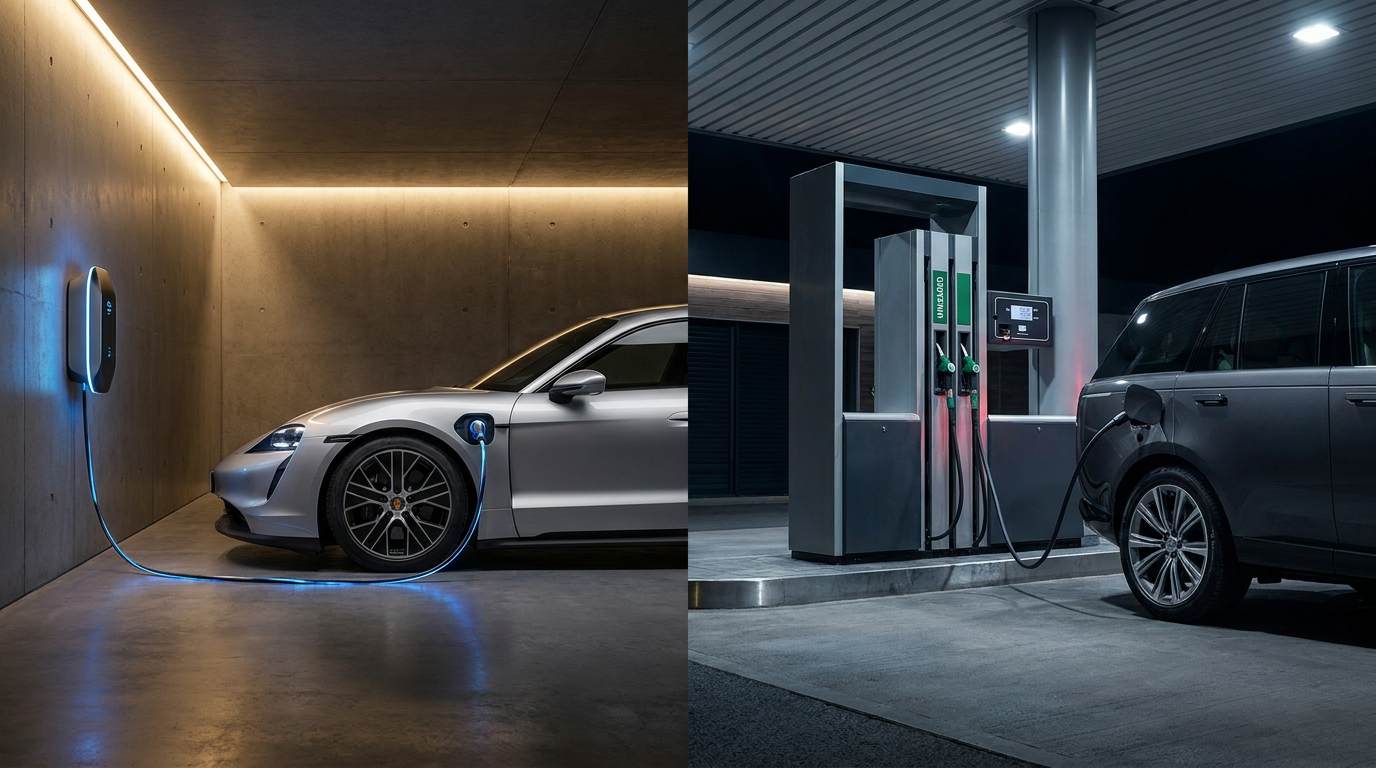
As the automotive market shifts away from traditional combustion engines, the choice between a fully electric vehicle and a plug-in hybrid comes down to a strict trade-off between mechanical simplicity and road-trip flexibility.
By Factlen Editorial Team
- Pragmatic Transitioners
- View plug-in hybrids as the essential stepping stone, arguing that public charging infrastructure is not yet robust enough for every household to go fully electric without anxiety.
- Pure Electric Advocates
- Argue that plug-in hybrids are an unnecessary half-measure that delays true decarbonization and burdens owners with obsolete combustion maintenance.
- Total Cost Analysts
- Focus purely on the spreadsheet, noting that while EVs win on lifetime maintenance, PHEVs often have a lower upfront purchase price and avoid the premium pricing of public fast chargers.
What's not represented
- · Automotive mechanics facing the transition from combustion repair to high-voltage battery diagnostics.
- · Apartment renters who cannot install home chargers and rely entirely on public infrastructure.
Why this matters
Choosing between a fully electric vehicle and a plug-in hybrid is the most consequential financial and lifestyle decision in the 2026 auto market. Making the wrong choice can trap buyers in expensive maintenance cycles or leave them stranded by incompatible charging infrastructure, while the right choice can slash running costs by up to 70 percent.
Key points
- Fully electric vehicles (EVs) offer the lowest running costs and eliminate traditional engine maintenance, but require reliable charging infrastructure.
- Plug-in hybrids (PHEVs) provide 30 to 50 miles of electric range for daily commutes while retaining a gas engine for unlimited road trips.
- PHEVs are the most mechanically complex vehicles on the road, requiring owners to maintain both a high-voltage battery and a combustion engine.
- An EV is the optimal choice for drivers with overnight home charging, while a PHEV serves as a safety net for single-car households taking frequent long trips.
As the automotive industry pushes deeper into the electrified era in 2026, buyers face a critical fork in the road: commit to a fully electric vehicle, or hedge their bets with a plug-in hybrid. The decision is no longer about which technology is inherently superior, but rather a strict trade-off analysis of daily driving habits, charging access, and long-term financial planning. With both categories offering mature, highly capable models, the showroom debate has shifted from early-adopter enthusiasm to pragmatic lifestyle compatibility.[1][7]
The mechanical distinction between the two dictates their respective advantages. A battery electric vehicle relies entirely on a large battery pack and electric motors, offering ranges that now routinely exceed 300 to 400 miles on a single charge. In contrast, a plug-in hybrid electric vehicle features a much smaller battery—typically yielding 30 to 50 miles of pure electric driving—paired with a traditional gasoline engine. Once the battery is depleted, the internal combustion engine seamlessly takes over, providing the unlimited range and rapid refueling of a conventional car.[1][3]
The primary argument for the fully electric vehicle centers on mechanical simplicity and the lowest possible running costs. Because an electric drivetrain contains roughly twenty moving parts, it eliminates the need for oil changes, spark plugs, timing belts, and transmission fluid. The U.S. Department of Energy calculates that this simplicity translates to a 39 percent reduction in maintenance costs over the first seven years of ownership. Furthermore, fueling an electric vehicle at home on off-peak electricity rates is significantly cheaper than buying gasoline, often dropping energy costs to between $35 and $45 per thousand miles.[2][5][6]

However, the evidence against the fully electric route lies in its reliance on external infrastructure and higher upfront purchase prices. While daily commuting is easily covered by overnight home charging, long-distance road trips require careful planning around public fast-charging networks. Although these networks have expanded massively by 2026, drivers can still encounter broken chargers, long queues during holiday travel, and charging times that stretch from twenty to forty minutes. For households that frequently drive cross-country or lack a dedicated driveway for overnight charging, this infrastructure dependency remains a significant friction point.[1][4]
Conversely, the case for the plug-in hybrid rests entirely on its role as the ultimate safety net, eliminating range anxiety without sacrificing daily efficiency. A plug-in hybrid allows drivers to complete their typical daily commute, school runs, and grocery trips entirely on cheap electricity. Yet, when the weekend arrives and a 400-mile road trip is on the itinerary, the gasoline engine provides the familiar convenience of a five-minute fill-up at any standard gas station. It offers the quiet, zero-emission benefits of an electric car for the daily grind, while retaining the go-anywhere freedom of a combustion engine.[1][4]
Conversely, the case for the plug-in hybrid rests entirely on its role as the ultimate safety net, eliminating range anxiety without sacrificing daily efficiency.
The strongest argument against the plug-in hybrid is its mechanical complexity, which can easily result in the worst of both worlds. A plug-in hybrid is the most complex vehicle on the road today, housing two entirely separate powertrains squeezed into a single chassis. Owners must still pay for traditional engine maintenance, oil changes, and exhaust system upkeep, while simultaneously managing a high-voltage battery system. If a component fails, the diagnostic and repair bills can be substantially higher than those for a simpler, purely electric vehicle.[2][5]

Furthermore, the financial and environmental evidence supporting plug-in hybrids comes with a strict behavioral condition: the vehicle must be plugged in daily. If an owner neglects to charge the battery and relies primarily on the gasoline engine, they are simply driving a heavier, less fuel-efficient combustion car. The added weight of the unused battery pack drags down the vehicle's overall miles-per-gallon, entirely negating the cost savings and environmental benefits that justified the purchase price in the first place.[2][3]
Looking toward the future, fully electric vehicles hold a distinct advantage in regulatory compliance and urban access. As global cities increasingly implement strict zero-emission zones to combat urban pollution, plug-in hybrids are beginning to face restrictions and entry fees if their gasoline engines engage within city limits. An electric vehicle represents a future-proof investment, guaranteeing compliance with tightening environmental laws and holding its resale value as the secondary market increasingly demands pure electric platforms.[2][3]
Ultimately, the fully electric vehicle fits well when a driver has reliable access to overnight home charging, maintains a predictable daily commute, and prioritizes long-term maintenance savings over the occasional convenience of rapid refueling. It is the optimal choice for multi-car households where a second vehicle can be used for remote road trips, or for drivers who view the mechanical simplicity of a battery-only system as a major ownership upgrade.[3][4]

On the other hand, the plug-in hybrid fits well when a buyer operates a single-car household, frequently embarks on long-distance travel through rural corridors, or lives in an apartment complex where guaranteed overnight charging is impossible. It serves as the ideal stepping stone for those who want to slash their weekly fuel bills and reduce their carbon footprint, but who are not yet ready to completely sever their ties to the ubiquitous gasoline station network.[1][4]
How we got here
2010
The Nissan Leaf and Chevy Volt introduce modern BEVs and PHEVs to the mass consumer market.
2020
EV ranges begin consistently crossing the 250-mile threshold, significantly reducing daily range anxiety.
2023
Automakers heavily expand PHEV offerings as a bridge technology for buyers hesitant to go fully electric.
2026
EVs routinely hit 300-400 miles of range, while PHEVs offer 40-50 miles of pure electric driving, sharpening the consumer choice.
Viewpoints in depth
Pure Electric Advocates
Argue that plug-in hybrids are an unnecessary half-measure that delays true decarbonization.
This camp views the plug-in hybrid as a compromised technology that burdens owners with the maintenance of an obsolete combustion engine. They argue that with 2026 electric vehicles routinely exceeding 300 miles of range and fast-charging networks expanding rapidly, the 'range anxiety' justification for carrying a heavy gasoline engine is no longer valid. From an environmental standpoint, they point out that PHEVs still emit greenhouse gases on long trips and are often driven without being plugged in, negating their ecological benefits entirely.
Pragmatic Transitioners
View plug-in hybrids as the essential stepping stone for households not yet ready for pure electric driving.
Proponents of the PHEV argue that public charging infrastructure is still too inconsistent in rural corridors and during holiday travel peaks to demand that every household go fully electric. They see the PHEV as the perfect pragmatic compromise: it allows drivers to complete 90 percent of their daily driving on cheap, zero-emission electricity, while retaining the fail-safe of a five-minute gas station fill-up for the remaining 10 percent of long-distance travel. For single-car households, they argue this flexibility is indispensable.
Total Cost Analysts
Focus purely on the spreadsheet, weighing upfront purchase prices against long-term maintenance and fuel savings.
Financial analysts look past the technology to focus on the total cost of ownership. They acknowledge that pure EVs win decisively on lifetime maintenance—saving roughly 39 percent over seven years due to the lack of engine wear-and-tear. However, they also note that PHEVs often carry a lower upfront purchase price than long-range EVs and avoid the premium pricing of public fast chargers on road trips. Their conclusion is highly conditional: an EV is the better financial investment only if the buyer has access to cheap, off-peak home charging.
What we don't know
- How rapidly public fast-charging networks will expand into rural corridors to fully eliminate road-trip range anxiety for pure EVs.
- Whether future zero-emission urban zones will completely ban plug-in hybrids or simply charge them fees when their combustion engines engage.
- How the long-term resale value of complex plug-in hybrids will hold up as the global market shifts entirely toward pure electric platforms.
Key terms
- Battery Electric Vehicle (BEV)
- A vehicle powered exclusively by a battery pack and electric motors, with no gasoline engine or tailpipe emissions.
- Plug-in Hybrid Electric Vehicle (PHEV)
- A vehicle that combines a battery large enough for short electric-only trips with a traditional gasoline engine for longer journeys.
- Regenerative Braking
- A system that captures the kinetic energy normally lost during braking and converts it into electricity to slightly recharge the vehicle's battery.
- Level 2 Charging
- A 240-volt charging system, commonly installed in homes, that can fully recharge an electric vehicle overnight.
- Range Anxiety
- The fear that an electric vehicle will run out of battery power before reaching a destination or a suitable charging station.
Frequently asked
Do plug-in hybrids charge themselves while driving?
While they use regenerative braking to capture small amounts of energy, a plug-in hybrid must be plugged into an external power source to fully recharge its battery for its 30-50 mile electric range.
Are electric vehicles really cheaper to maintain?
Yes. Because they lack an internal combustion engine, EVs do not require oil changes, spark plug replacements, or traditional transmission servicing, reducing maintenance costs by roughly 39% over seven years.
What happens if a plug-in hybrid runs out of battery?
The vehicle seamlessly transitions to using its gasoline engine, operating exactly like a traditional hybrid car until you are able to plug it in or refuel at a gas station.
Can I plug an EV into a regular wall outlet?
Yes, using a Level 1 charger, but it is very slow, adding only 3 to 5 miles of range per hour. Most EV owners install a 240-volt Level 2 charger at home for full overnight charging.
Sources
Source coverage
7 outlets
3 viewpoints surfaced







[1]GreenCarsPragmatic Transitioners
PHEV vs EV: Which One Fits Your Driveway and Drive?
Read on GreenCars →[2]MobileStudio24hPure Electric Advocates
EV vs PHEV Which One Better: 2026 Comparison
Read on MobileStudio24h →[3]Go-ElectraPure Electric Advocates
Electric Car or Plug-in Hybrid: Which One Should You Choose?
Read on Go-Electra →[4]ZenithPragmatic Transitioners
EV and PHEV comparison
Read on Zenith →[5]Cars.co.zaTotal Cost Analysts
Maintenance costs: EV vs PHEV vs REEV
Read on Cars.co.za →[6]U.S. Department of EnergyTotal Cost Analysts
Vehicle Cost Calculator and Maintenance Data
Read on U.S. Department of Energy →[7]Factlen Editorial TeamTotal Cost Analysts
Synthesis by Factlen editorial team
Read on Factlen Editorial Team →

More in shopping
See all 6 stories →Handheld PCs
Steam Deck OLED vs. ASUS ROG Ally X: The 2026 Handheld PC Matchup
6 sources

Furniture Tech
The 2026 Furniture Shift: Navigating the PFAS Ban and the Rise of Modular, Circular Design
8 sources

Camera Tech
Global Shutter Explained: The Camera Tech Changing Photography in 2026
6 sources

LED Skincare
Red Light Therapy Masks: What the Clinical Evidence Actually Says
7 sources

Every angle. Every day.
Get shopping stories with full source coverage and perspective breakdowns delivered to your inbox.