
Cellular GPS vs. Bluetooth: Choosing the Right Smart Tracker for Your Pet
As pet tracking technology bifurcates into two distinct categories, choosing between a cellular GPS collar and a Bluetooth tag comes down to your pet's environment and escape habits.
By Hui Lin

Pet ownership is rising, and so is the desire for peace of mind. The market for pet trackers has exploded, bifurcating into two distinct technological paths: cellular GPS trackers like the Fi Series 3 and Tractive, and Bluetooth proximity tags like the Apple AirTag. While both promise to help locate a lost furry friend, they solve the problem using entirely different infrastructure, leading to vastly different results depending on where you live and how your pet behaves.
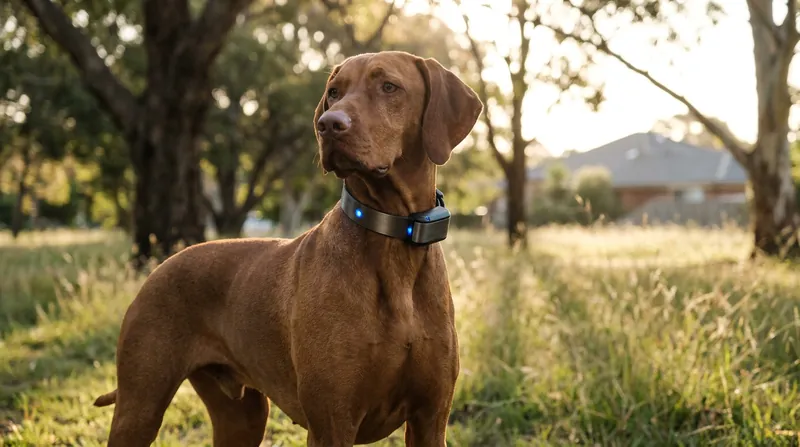
The core difference lies in how the devices communicate. Cellular GPS trackers are essentially fully-fledged smartphones for dogs and cats. They pull location data directly from overhead satellites and transmit that data to your phone via LTE mobile networks, providing real-time tracking anywhere there is cell service. In contrast, Bluetooth trackers like the AirTag do not have built-in GPS or cellular radios. They rely on a crowdsourced network, pinging nearby Apple devices via Bluetooth to relay their location to the cloud.[1]
The case for dedicated cellular GPS trackers centers on their unlimited range and real-time accuracy. Devices like Tractive and Fi allow owners to open an app and watch their pet's movements live on a map, updating every few seconds during a designated lost-pet mode. Furthermore, these devices offer proactive geofencing, sending instant escape alerts to your smartphone the moment a pet breaches a designated safe zone, such as a backyard or a campsite.[2]
The arguments against cellular trackers focus entirely on cost and maintenance. Because they utilize mobile networks, they require ongoing monthly or annual subscription fees, which typically range from $99 to $144 per year. Additionally, maintaining a cellular connection drains power quickly. While newer models have optimized battery life to last several weeks under normal conditions, active tracking mode can drain the battery in a matter of days, requiring regular recharging routines.[1]
The evidence from real-world testing consistently validates cellular trackers as the gold standard for recovery in varied environments. Reviewers note that in rural or suburban areas where houses are spread far apart, GPS is the only reliable method for finding a wandering pet. When a dog bolts into the woods or a cat roams across large properties, the independent satellite connection ensures the owner can pinpoint their exact location without needing another human nearby.[1][2]
Conversely, the case for Bluetooth trackers like the Apple AirTag is built on affordability and zero-maintenance convenience. At roughly $29 with absolutely no monthly subscription fees, they represent a fraction of the cost of cellular models. Furthermore, they utilize a standard CR2032 coin battery that lasts for approximately a year and requires no weekly charging. For precision recovery, the ultra-wideband chip in AirTags allows for directional navigation, pointing owners exactly to the tag when they are within thirty feet.
The arguments against using Bluetooth tags for pets highlight their severe range limitations and lack of proactive alerts. An AirTag only updates its location if a stranger with an iPhone happens to walk within thirty to one hundred feet of the lost pet. If a dog escapes into a quiet neighborhood, a sprawling park, or a rural area, the AirTag will simply display its last known location until someone else crosses its path. Furthermore, AirTags cannot send an immediate alert when a pet leaves the yard.
Despite these limitations, evidence shows that Bluetooth trackers perform exceptionally well in highly dense urban environments. In cities where pedestrian traffic is constant and iPhones are ubiquitous, an AirTag on a dog's collar will update its location almost as frequently as a cellular tracker. Tech reviewers note that for city dwellers whose primary concern is a dog slipping its leash on a crowded sidewalk, the Find My network provides a highly effective and budget-friendly safety net.
Beyond the tracking technology, hardware durability and pet safety present significant trade-offs. Dedicated GPS collars are purpose-built for animals; they are typically IP68 waterproof, chew-resistant, and lay flush against the neck. AirTags were designed for keys and backpacks. They require third-party holders, are only water-resistant, and if left dangling, can present a severe choking or swallowing hazard for active dogs, prompting veterinarians to warn against improper attachment.
A secondary benefit of cellular GPS collars is the inclusion of health and activity monitoring. Much like a smartwatch for humans, devices like Fi and Tractive track daily steps, sleep quality, and overall wellness, allowing owners to spot potential health issues early. Bluetooth tags offer zero health metrics, functioning strictly as location beacons. For owners invested in the holistic wellness of their pets, this added data often justifies the ongoing subscription costs.[1]
Ultimately, a cellular GPS tracker fits well when you live in a suburban or rural area, have a highly active dog prone to escaping, or frequently take your pet hiking off-leash. It is the definitive choice for owners who require real-time location updates, proactive escape alerts, and the peace of mind that comes from knowing they can track their pet's exact movements regardless of who is nearby.
However, a cellular tracker does not fit when you are strictly on a budget and cannot commit to a multi-year subscription plan. It is also less ideal for indoor-only cats or small pets who might find the integrated GPS hardware too bulky, or for owners who know they will struggle to remember to unclip and recharge the collar every few weeks.
On the other hand, a Bluetooth tracker fits well when you live in a densely populated urban center with a high concentration of smartphones. It is an excellent, low-cost backup for dogs that are always kept on a leash or supervised, providing a simple safety net without the burden of subscriptions or constant battery anxiety.
Conversely, a Bluetooth tracker does not fit when you live in a quiet neighborhood, a rural setting, or near large open parks where foot traffic is sparse. It is entirely unsuitable for owners who want immediate notifications the second their pet leaves the property, or for those who need to actively track a moving animal across long distances.
Key points
- Cellular GPS trackers offer unlimited range and real-time tracking but require ongoing subscription fees.
- Bluetooth trackers like AirTags have no monthly fees but rely entirely on nearby smartphones to update their location.
- GPS collars feature proactive geofencing, sending instant alerts if a pet leaves a designated safe zone.
- AirTags are highly effective in dense urban environments but struggle in rural or quiet suburban areas.
What we don’t know
- Whether Apple will eventually release a dedicated pet-tracking mode or hardware for the Find My network.
- How quickly satellite-direct tracking (bypassing cellular towers entirely) will become affordable enough for consumer pet collars.
How we got here
2012
Early GPS pet trackers enter the market, relying on bulky 2G and 3G networks with short battery lives.
April 2021
Apple releases the AirTag, prompting millions of pet owners to attach the $29 Bluetooth trackers to dog collars.
Late 2022
Major GPS brands transition to LTE-M cellular networks, drastically improving battery life and rural coverage.
2024-2026
GPS collars integrate advanced health monitoring, transforming from simple locators into comprehensive pet wellness devices.
- Cellular GPS Advocates
- Argues that real-time satellite tracking and proactive escape alerts are the only reliable way to recover a lost pet.
- Bluetooth Budget Trackers
- Values the zero-subscription, low-maintenance convenience of AirTags, arguing they are highly effective in dense urban areas.
- Pet Health & Safety Monitors
- Focuses on the holistic benefits of smart collars, prioritizing activity tracking, sleep data, and purpose-built hardware safety.
Perspectives this story doesn't cover
- Feline-specific behavioral experts
- Android ecosystem developers
Sources
Source coverage
2 outlets
3 viewpoints surfaced


- [1]PCMagCellular GPS Advocates
Fi Smart Dog Collar Series 3 Review
Read on PCMag → - [2]TreeLine ReviewCellular GPS Advocates
Best GPS Dog Collars of 2026
Read on TreeLine Review →

More in Shopping & Reviews
See all →Litter Materials
Tofu vs. Clay Cat Litter: The 2026 Trade-Off Analysis
2 sources

Canine Safety
Fi Series 3 vs. Tractive: Comparing the Top GPS Dog Collars of 2026
2 sources
Pet Tech
Rotating Drums vs. Raking Systems: How to Choose the Right Automatic Litter Box
5 sources

Canine Nutrition
Fresh Dog Food vs. Kibble: Weighing the Costs, Convenience, and Canine Health Benefits
4 sources

Comments
Every angle. Every day.
Get Shopping & Reviews stories with full source coverage and perspective breakdowns, free every day.