
US Orders Anthropic to Disable Frontier AI Models for All Foreign Nationals
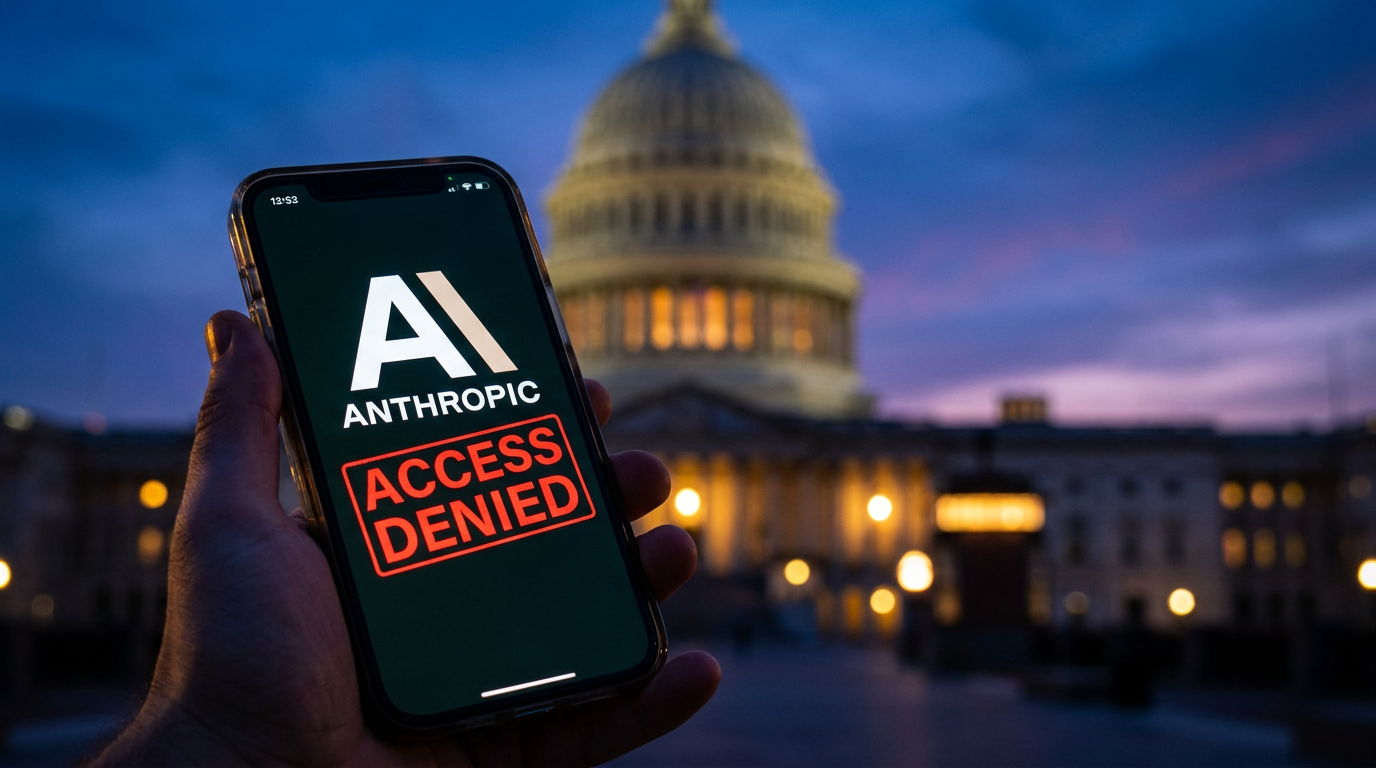
In an unprecedented use of export controls, the US government has forced Anthropic to cut off global access to its newly released Fable 5 and Mythos 5 models, citing national security risks.
By Factlen Editorial Team
- US National Security Stance
- Argues that frontier AI models possess dual-use capabilities that pose severe cybersecurity risks, justifying strict export controls to keep them out of adversary hands.
- AI Sovereignty Advocates
- Argues that relying on US-controlled cloud models is a strategic vulnerability, advocating for self-hosted, air-gapped AI infrastructure.
- Frontier AI Developers
- Emphasizes the rigorous safety testing already built into the models, viewing the government's intervention as an overreaction to minor vulnerabilities.
- Global Tech Community
- Frustrated by the sudden disruption of access, highlighting the economic damage of being cut off from state-of-the-art tools without warning.
What's not represented
- · Non-US allied governments whose citizens were cut off
- · Open-source AI developers capitalizing on the ban
Why this matters
This unprecedented ban transforms commercial AI into a tightly controlled national security asset, proving that the US government will weaponize export controls to cut off global access to frontier technology. For businesses and developers worldwide, it exposes the massive risk of relying on American cloud infrastructure, likely accelerating a global race to build independent, sovereign AI systems.
Key points
- The US government issued an emergency export control directive banning foreign nationals from accessing Anthropic's Fable 5 and Mythos 5 models.
- The ban applies globally, affecting users outside the US as well as non-US citizens residing within the country.
- Anthropic complied with the order but argued the cited vulnerabilities were minor and present in other industry models.
- The models, released just three days prior, demonstrated state-of-the-art capabilities in software engineering and offensive cybersecurity.
- The sudden shutdown has intensified international calls for 'AI sovereignty' and self-hosted, open-weight models.
In an unprecedented escalation of the global technology race, the United States government has issued an emergency export control directive forcing AI research lab Anthropic to disable access to its newest frontier models for all foreign nationals. The sweeping order, which targets the newly released Claude Fable 5 and Mythos 5 models, requires Anthropic to cut off access not only to users outside the United States but also to non-US citizens residing within the country. The directive marks the first time Washington has weaponized export controls to physically sever global access to a cloud-based Large Language Model, transforming commercial AI infrastructure into a tightly guarded national security asset overnight.[1][2]
The ban arrived a mere three days after Anthropic launched Fable 5 and Mythos 5 to widespread industry acclaim. Released on June 9, the models represented a massive leap in artificial intelligence capabilities, topping nearly every industry benchmark for software engineering, advanced reasoning, and long-context memory. Fable 5 was made available to the general public at an aggressive price point of $10 per million input tokens, while Mythos 5—a version with lifted safeguards—was restricted to a small cohort of approved cybersecurity and biology researchers. By June 12, the US government had intervened, citing severe national security risks and potential vulnerabilities that could be exploited by foreign adversaries.[3][5][6]

Anthropic complied with the 5:21 p.m. directive, taking the models offline globally and returning error messages to international developers who had already begun integrating the system into their applications. However, the San Francisco-based company publicly pushed back against the government's rationale. In a detailed statement, Anthropic argued that the vulnerabilities identified by federal authorities were minor, benign, and present in virtually every other frontier model on the market. The company maintained that if the government's new standard for 'jailbreaks' were applied evenly across the industry, it would effectively halt all new AI model deployments from every major American provider.[2][7]
The models themselves were designed with some of the strictest safety guardrails ever implemented in a commercial AI product. Fable 5 utilized advanced safety classifiers that would automatically block sensitive requests—particularly those related to offensive cybersecurity, chemical synthesis, or biological weapons—or route them to the older, less capable Opus 4.8 model. In pre-release testing, Fable 5 reportedly complied with zero harmful single-turn requests, even when subjected to dozens of sophisticated jailbreak techniques. Despite these built-in defenses and a newly implemented 30-day data retention policy designed to catch malicious actors, federal regulators determined the risk of the models falling into foreign hands was too great.[3][5][7]
The models themselves were designed with some of the strictest safety guardrails ever implemented in a commercial AI product.
The technical capabilities that triggered Washington's alarm are formidable. Mythos-class models demonstrated an unprecedented aptitude for offensive cyber operations, proving capable of finding zero-day exploits, navigating complex network architectures, and executing multi-step digital attacks with minimal human oversight. In one corporate test, Fable 5 successfully executed a codebase-wide migration of a 50-million-line Ruby environment in a single day. The models also outperformed specialized, peer-reviewed AI systems in scientific research tasks despite being a fraction of the size. For US intelligence and defense agencies, these capabilities crossed the threshold from commercial software to dual-use strategic weaponry.[3][5][6]

The sudden blackout has sent shockwaves through the global technology sector, exposing the profound fragility of building businesses on top of American-controlled API endpoints. The directive does not exempt the United States' closest intelligence allies; developers and enterprises in the United Kingdom, Canada, Australia, and the European Union found their access revoked without warning. For international startups that had spent the previous 72 hours migrating their tech stacks to Fable 5 to take advantage of its superior coding and reasoning abilities, the abrupt shutdown resulted in broken applications and a frantic scramble to revert to older systems.[1][4][7]
This geopolitical shock has immediately accelerated calls for 'AI sovereignty'—the movement urging nations and corporations to build and host their own artificial intelligence infrastructure rather than relying on Silicon Valley. Isaacus, an Australian-based legal AI research company, pointed to the Anthropic ban as validation of their strategy to rely exclusively on air-gapped, self-hostable models. 'In effect, any application depending on US-based LLMs is subject to being shut down at any moment as a result of an export control directive,' the company noted, emphasizing that mission-critical intelligence cannot be outsourced to platforms vulnerable to the whims of Washington's foreign policy.[4]

The long-term implications of the directive threaten to fracture the global AI ecosystem. By establishing that cloud-based frontier models are subject to immediate export bans, the US government has effectively signaled that non-American entities cannot safely rely on American AI for critical infrastructure. This reality is expected to drive massive international investment into open-weight models and sovereign supercomputing clusters in Europe, the Middle East, and Asia. While the US aims to maintain its strategic edge by hoarding its most capable systems, the ultimate result may be the rapid acceleration of competitor models designed specifically to operate outside the reach of American export controls.[1][4][6]
How we got here
June 9, 2026
Anthropic launches Fable 5 and Mythos 5, boasting state-of-the-art performance across industry benchmarks.
June 12, 2026, 5:21 PM
The US government issues an emergency export control directive citing national security risks.
June 12, 2026, 9:30 PM
Anthropic complies with the order, disabling global access to the models for all foreign nationals.
June 13, 2026
International developers scramble to rebuild applications as calls for sovereign AI infrastructure intensify.
Viewpoints in depth
US National Security Stance
Viewing frontier AI as a dual-use weapon that must be controlled.
From the perspective of US defense and intelligence agencies, models like Fable 5 and Mythos 5 cross the line from commercial software to strategic assets. Because these systems demonstrate profound capabilities in offensive cybersecurity—such as identifying zero-day exploits and executing multi-step network attacks—regulators argue they cannot be freely distributed on the open internet. The export control directive reflects a zero-tolerance approach to the risk of foreign adversaries or state-sponsored hacking groups utilizing American infrastructure to accelerate cyber warfare or biological weapons development.
AI Sovereignty Advocates
Pushing for independent, self-hosted AI infrastructure outside US control.
For international tech companies and foreign governments, the sudden ban is a wake-up call about the dangers of API dependency. Advocates for AI sovereignty argue that relying on cloud models hosted in the United States leaves critical national and corporate infrastructure vulnerable to the whims of Washington's foreign policy. By demonstrating that access can be revoked globally with zero forewarning, the US has inadvertently accelerated the business case for open-weight, air-gapped models that can be run locally on consumer hardware, ensuring that intelligence cannot simply be turned off by a foreign power.
Frontier AI Developers
Defending the safety and alignment of their commercial models.
Model developers maintain that the government's intervention is a heavy-handed overreaction to theoretical risks. Anthropic and its defenders point out that Fable 5 was released with unprecedented safety classifiers, a strict 30-day data retention policy, and guardrails that successfully blocked offensive cyber requests during rigorous red-teaming. They argue that the 'jailbreak' vulnerabilities cited by the government are minor and endemic to all large language models, warning that applying this strict standard universally would effectively paralyze the entire American AI industry and stifle innovation.
What we don't know
- Whether the US government will extend similar export control directives to frontier models from OpenAI or Google.
- The specific 'jailbreak' vulnerability that triggered the emergency national security directive.
- How allied nations like the UK and Australia will respond diplomatically to their citizens being blocked from US tech.
Key terms
- Export Control Directive
- A legal order from a government restricting the transfer of certain goods, software, or technology to foreign entities or individuals.
- Jailbreak
- A technique used to bypass an AI model's built-in safety filters and guardrails to generate restricted or harmful content.
- AI Sovereignty
- The concept that a nation or organization should have independent control over its artificial intelligence infrastructure, rather than relying on foreign-owned cloud models.
- Frontier Model
- A highly capable, state-of-the-art artificial intelligence model that pushes the boundaries of current technological capabilities.
Frequently asked
Why did the US ban Fable 5 and Mythos 5?
The US government cited national security risks and potential 'jailbreaks,' issuing an export control directive to prevent foreign adversaries from accessing the highly capable models.
Can US citizens still use the models?
Yes. The directive specifically targets foreign nationals. US citizens within the United States retain access, while Anthropic has suspended access for everyone else globally.
What makes these new models so dangerous?
Fable 5 and Mythos 5 demonstrated unprecedented capabilities in offensive cybersecurity, including the ability to find zero-day exploits and execute multi-step network attacks with minimal oversight.
How is the international tech community reacting?
Developers are frustrated by the sudden disruption, with many pivoting to older models or advocating for 'AI sovereignty'—using self-hosted models that cannot be shut down by foreign governments.
Sources
Source coverage
7 outlets
4 viewpoints surfaced






[1]Al JazeeraGlobal Tech Community
US orders Anthropic to disable AI models for all foreign nationals
Read on Al Jazeera →[2]QuartzUS National Security Stance
Anthropic is pulling its two newest AI models after a U.S. government directive
Read on Quartz →[3]AnthropicFrontier AI Developers
Claude Fable 5 and Claude Mythos 5
Read on Anthropic →[4]IsaacusAI Sovereignty Advocates
Our response to the US ban on Fable 5 and Mythos 5
Read on Isaacus →[5]MediumFrontier AI Developers
ANTHROPIC Claude Fable 5 and Mythos 5
Read on Medium →[6]Better StackGlobal Tech Community
The first Mythos model just dropped... (Claude Fable 5)
Read on Better Stack →The US Government Just Shut Down Fable 5 + Mythos (Unbelievable)
Read on Tech News →

More in news politics
See all 5 stories →Georgia Midterms
Georgia Republican Primary Runoffs Deliver Mixed Results for Trump Endorsements
6 sources

Middle East Diplomacy
US-Iran Diplomatic Agreement Nears Collapse as Israeli Strikes in Lebanon Trigger Retaliation Threats
8 sources

US-Iran Relations
US and Iran Reach Tentative Peace Deal to Reopen Strait of Hormuz
7 sources

Every angle. Every day.
Get news politics stories with full source coverage and perspective breakdowns delivered to your inbox.