
US Grid Adds Record 17.1 Gigawatts of Clean Power in First Half of 2026 as Solar and Storage Dominate
The United States connected 17.1 gigawatts of new utility-scale clean energy to the grid in the first half of 2026, driven by a surge in solar and battery storage installations. The 45% year-over-year increase occurred despite federal policy shifts, signaling that market fundamentals are sustaining the transition.
By Layla Zaher

Share this story
Predictions that federal regulatory rollbacks under the second Trump administration would stall the renewable energy transition have collided with the physical reality of the 2026 electrical grid. Rather than slowing down, the United States connected a record 17.1 gigawatts of utility-scale clean power during the first half of the year, representing a 45 percent increase over the same period in 2025. The surge was driven almost entirely by market economics rather than federal mandates, with solar and battery storage cementing their status as the default infrastructure for new generation.[1][2]
The American Clean Power Association documented the acceleration in its second-quarter market report, noting that the 17.1-gigawatt total represents the highest mid-year deployment volume in the organization's tracking history. The September 3 release highlighted that clean power maintains strong momentum, with capacity additions up 45 percent year over year, proving that the fundamentals of clean energy are overriding political cycles.[1]
Solar capacity accounted for the vast majority of the new generation, but the most systemic shift occurred in how that solar is being deployed. According to MarketScale's August analysis of grid interconnections, standalone solar is rapidly being replaced by hybrid solar-plus-storage facilities. Developers are increasingly pairing photovoltaic arrays with lithium-ion battery banks to capture midday generation and discharge it during the evening peak, a configuration that has become the standard template for utility-scale projects across the Sun Belt.[5]
This shift has triggered an unprecedented expansion in battery infrastructure. PV Tech reported on September 1 that US utility-scale battery energy storage capacity has nearly doubled over the past 18 months. That storage buffer fundamentally alters how grid operators manage the system, transforming intermittent solar generation into a dispatchable resource that can be called upon when natural gas plants trip offline or transmission lines congest.[7]
The geographic distribution of these additions highlights the disconnect between state-level politics and energy economics. Texas, a state with no renewable portfolio standard and a political leadership openly hostile to wind and solar subsidies, led the nation in new capacity. Inside Climate News tracking indicates that the Electric Reliability Council of Texas (ERCOT) grid absorbed the largest share of the 17.1 gigawatts, driven by industrial demand and the sheer cost advantage of zero-marginal-cost generation.[6]
Environmental advocacy groups have seized on the data as proof of the transition's durability. The Sierra Club, in a September 1 statement, emphasized that the deployment records were achieved "despite Trump," pointing to the administration's efforts to lease more federal lands for oil and gas drilling while slow-walking offshore wind permits. The organization argued that capital markets have already priced in the transition, making federal obstruction a friction point rather than a roadblock.[4]
However, the 17.1-gigawatt figure masks underlying vulnerabilities in specific sub-sectors. While solar and storage are booming, the wind industry continues to struggle with supply chain constraints, inflation, and local opposition to transmission lines. Windtech International reported on September 4 that onshore wind additions remained relatively flat compared to historical averages, as developers navigate a multi-year backlog in the interconnection queues of regional transmission organizations like PJM and MISO.[3]
The offshore wind sector faces even steeper headwinds, with high capital costs and canceled power purchase agreements stalling several major projects along the Atlantic coast. CleanTechnica's September 3 analysis noted that while the aggregate clean energy numbers are breaking records, the composition of that energy mix is becoming heavily skewed toward solar, raising long-term questions about winter grid reliability when solar output drops and heating demand spikes.[2]
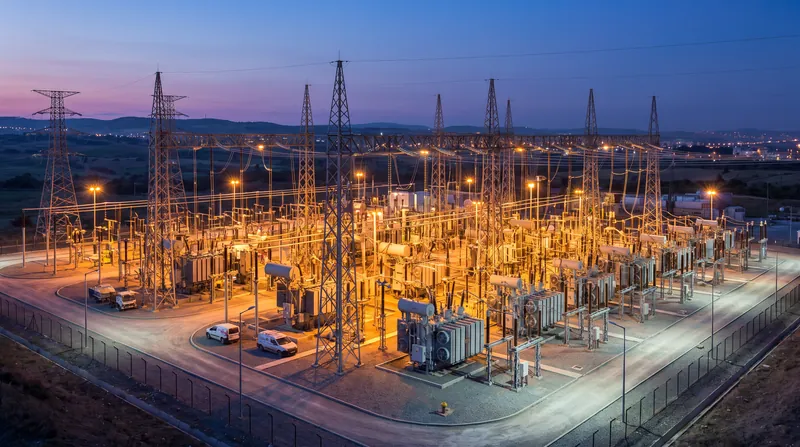
For now, the sheer volume of new capacity is providing immediate relief to a grid strained by extreme weather and the sudden load growth from artificial intelligence data centers. The 17.1 gigawatts added in the first half of 2026 is enough to power approximately 3.5 million homes, assuming standard capacity factors. As developers look toward the second half of the year, the primary constraint is no longer finding capital or customers, but securing the high-voltage transformers and switchgear needed to physically wire these record-breaking projects into the transmission network.[1]
Viewpoints in depth
Clean Energy Developers
Focuses on market economics, falling costs, and the shift to solar-plus-storage.
For developers and project financiers, the 2026 deployment numbers validate a long-term bet that clean energy economics would eventually decouple from federal subsidies. By pairing solar arrays directly with lithium-ion batteries, developers are bypassing the traditional intermittency problem and selling firm, dispatchable power to utilities and corporate buyers. This camp views the current market not as a policy victory, but as a structural shift where zero-marginal-cost generation simply outcompetes legacy fossil fuels on price.
Environmental Advocates
Focuses on the resilience of the transition despite federal policy rollbacks.
Climate and environmental advocacy groups point to the 17.1-gigawatt milestone as evidence that the energy transition has achieved escape velocity. Organizations like the Sierra Club argue that despite the second Trump administration's efforts to prioritize oil and gas leasing and slow down offshore wind permitting, the sheer momentum of state-level demand and corporate procurement is overriding federal friction. They view the data as a critical counter-narrative to claims that deregulation would revive the coal industry.
Key points
- The US added a record 17.1 gigawatts of clean power capacity in the first half of 2026, a 45% year-over-year increase.
- Growth was overwhelmingly driven by utility-scale solar and battery storage projects, which have become the default grid additions.
- Battery storage capacity on the US grid has nearly doubled over the past 18 months, providing crucial peak-demand support.
- The deployment surge occurred despite federal policy rollbacks, indicating that market economics are now the primary driver of the transition.
- Industry Data & Developers
- Focuses on deployment metrics, cost curves, and the physical hardware installations driving the market.
- Climate & Policy Advocates
- Focuses on the political resilience of the transition and the failure of federal rollbacks to stop deployment.
Perspectives this story doesn't cover
- Fossil Fuel Industry Representatives
- Local Transmission Opposition Groups
Sources
Source coverage
7 outlets
2 viewpoints surfaced







- [1]American Clean Power AssociationIndustry Data & Developers
REPORT: Clean Power Maintains Strong Momentum in Q2 2026, with Capacity Additions Up 45% Year Over Year
Read on American Clean Power Association → - [2]CleanTechnicaClimate & Policy Advocates
U.S. Renewable Deployment Hits Record High Despite Trump
Read on CleanTechnica → - [3]Windtech InternationalIndustry Data & Developers
US clean power additions reach 17.1 GW in second quarter
Read on Windtech International → - [4]Sierra ClubClimate & Policy Advocates
U.S. Renewable Deployment Hits Record High Despite Trump
Read on Sierra Club → - [5]MarketScaleIndustry Data & Developers
H1 2026 U.S. grid additions show solar plus batteries has become the default project, and gas is the long-lead counterweight
Read on MarketScale → - [6]Inside Climate NewsClimate & Policy Advocates
These States Are Leading the Electricity Generation Boom
Read on Inside Climate News → - [7]PV TechIndustry Data & Developers
US utility-scale battery energy storage capacity almost doubled during first 18 months of Trump's second term
Read on PV Tech →

More in Energy
See all →Global Fuel Markets
China Suspends October Fuel Exports to Rebuild Domestic Stockpiles, Tightening Global Diesel Market
6 sources

LNG Pricing
The S-Curve and J-Curve That Define the Price Relationship Between Oil-Indexed and Hub-Indexed LNG Contracts
5 sources

Capacity Markets
The Net Cost of New Entry and Value of Lost Load That Anchor Capacity Markets
3 sources
Frontier AI
TotalEnergies and Mistral AI Launch €100 Million Program to Develop Frontier AI for Oil and Gas Exploration
6 sources

Comments
Every angle. Every day.
Get Energy stories with full source coverage and perspective breakdowns, free every day.