
How Estrogen and Progesterone Shift Exercise Fuel Selection, and Why the Luteal Phase Fat-Oxidation Advantage is Smaller Than Advertised
The fitness industry promotes 'cycle-syncing' workouts to match hormonal fluctuations, claiming the luteal phase is optimal for fat burning. However, clinical evidence shows that exercise intensity overrides baseline hormones, and the 50% of active women on hormonal birth control operate on an entirely different metabolic paradigm.

Share this story
In short
- Cycle-syncing requires a natural ovulatory cycle, excluding the ~50% of active women on hormonal contraceptives.
- While estrogen promotes fat burning, progesterone counteracts it, making the luteal phase metabolic shift highly unreliable.
- Exercise intensity overrides baseline hormones; crossing 65% of VO2 max forces the body to burn carbohydrates regardless of cycle phase.
For any of the popular advice about 'cycle-syncing' your workouts to matter, one non-negotiable biological condition has to hold: you must have a natural, unsuppressed ovulatory cycle. For the roughly 50% of active women using hormonal contraceptives, that condition is simply not met. Yet the fitness industry continues to prescribe a rigid, calendar-based template—high-intensity carbohydrate-burning in the follicular phase, low-intensity fat-burning in the luteal phase—as if it applies universally to all female physiology.
This one-size-fits-all approach ignores the complex reality of how ovarian hormones actually influence substrate oxidation, which is the biological process of choosing between fat and carbohydrates for fuel during exercise. By flattening decades of nuanced endocrinology into a catchy social media trend, cycle-syncing advocates have inadvertently created a set of rules that are biologically irrelevant for half their audience and heavily overstated for the rest.
The foundational premise of cycle-syncing rests on the idea that endogenous hormonal fluctuations dictate how the female body fuels itself under physical stress. Specifically, the framework claims that women should perform their most demanding, high-intensity work in the low-hormone follicular phase, when the body is supposedly primed to burn carbohydrates. Conversely, it dictates a switch to low-intensity, steady-state work in the high-hormone luteal phase, operating on the assumption that the body has shifted to burning fat and cannot sustain high-end output.
While this narrative sounds intuitively aligned with natural biological rhythms, it dramatically oversimplifies the metabolic hierarchy. The female body is not a rigid machine that toggles between two distinct fueling states based on the day of the month; it is a highly adaptable system where exercise intensity, nutritional status, and individual hormonal ratios constantly interact to determine fuel selection.
The biological mechanism behind the cycle-syncing claim is rooted in real, documented endocrinology, even if the practical application misses the mark. Estrogen, specifically in the form of estradiol-β-17, acts as a master regulator of bioenergetics in the female body. It actively promotes lipid oxidation—the breakdown of fat for energy—and spares muscle glycogen, making it a highly efficient endurance hormone. This is a primary reason why female physiology is uniquely suited for ultra-endurance events.
As researchers Nathalie Boisseau and Laurie Isacco noted in a 2022 review for the European Journal of Sport Science, "Compared with men, women rely more on fat and less on carbohydrates at the same relative exercise intensity". Estrogen achieves this by upregulating specific enzymes involved in lipid mobilization and lipolysis, effectively teaching the female muscle to reach for fat stores before tapping into limited carbohydrate reserves.[2]
During the luteal phase of a natural menstrual cycle, both estrogen and progesterone are significantly elevated following ovulation. Because estrogen promotes fat burning, researchers have long hypothesized that the luteal phase should be the optimal window for fat oxidation. A 2022 study published in the journal Endocrine by researcher A.C. Hackney and colleagues tested this directly.
They found that peak fat oxidation rates reached 0.49 grams per minute during luteal phase exercise, compared to just 0.41 grams per minute during the follicular phase. This measurable shift in substrate utilization provides the exact data point that cycle-syncing programs rely upon to justify their luteal-phase programming, suggesting a clear metabolic advantage for low-intensity, fat-burning workouts during the days leading up to menstruation.[1]
Hackney's team concluded that "increases in SSH [sex steroid hormone] concentrations from the FP to LP in eumenorrheic women are associated with a greater reliance on fat as an exercise energy substrate". However, they immediately noted a critical physiological caveat that popular fitness advice ignores: progesterone has potent anti-estrogenic effects. While estrogen is trying to upregulate fat oxidation, progesterone is actively working to counteract that process.
The metabolic outcome of the luteal phase is not simply the result of high estrogen; it is the result of a biological tug-of-war between two competing hormones. If a woman's progesterone levels rise too aggressively relative to her estrogen levels, the anticipated shift toward fat burning is completely neutralized, leaving her metabolic profile looking exactly as it did during her follicular phase.[1]
This delicate hormonal balance means that the fat-oxidation shift only happens if the ratio of estrogen to progesterone (E2/P4) hits a specific, highly individualized threshold. Because this ratio varies wildly not just between different women, but between different cycles in the same woman, the metabolic shift is notoriously unreliable.
This unreliability explains why so many clinical trials fail to find any difference in fuel selection across the menstrual cycle. When researchers average the data across dozens of women, the subtle, ratio-dependent shifts disappear into the statistical noise, revealing that the 'fat-burning luteal phase' is a conditional possibility rather than a biological guarantee.[1][2]
This unreliability explains why so many clinical trials fail to find any difference in fuel selection across the menstrual cycle.
In fact, broader analyses of the clinical literature consistently fail to support the cycle-syncing mandate. A September 2026 study published in Medicine & Science in Sports & Exercise tracked women through all three distinct hormonal phases—follicular, ovulatory, and luteal—using rigorous blood sampling and temperature tracking.
The researchers found absolutely no between-phase differences in respiratory exchange ratio, fat oxidation, or carbohydrate oxidation during submaximal aerobic exercise. While the sexual dimorphism between men and women is stark and undeniable, the day-to-day metabolic differences within a single woman's natural cycle are often too negligible to warrant overhauling a carefully structured training program.[2][3]
Furthermore, the intensity of the exercise itself acts as a metabolic trump card, easily overriding the background hormonal environment. Once a woman's exertion crosses roughly 65% to 70% of her maximal oxygen consumption (VO2 max), the working muscles demand rapid, accessible energy. At this intensity, the body has no choice but to shift heavily toward carbohydrate oxidation, regardless of whether her estrogen levels are peaking or her progesterone is surging.
The biological imperative to produce adenosine triphosphate (ATP) quickly forces the muscle to tap into glycogen stores. Therefore, telling a woman she cannot or should not perform high-intensity intervals in her luteal phase because her body is 'stuck' in fat-burning mode demonstrates a fundamental misunderstanding of how exercise physiology supersedes baseline endocrinology.[2]
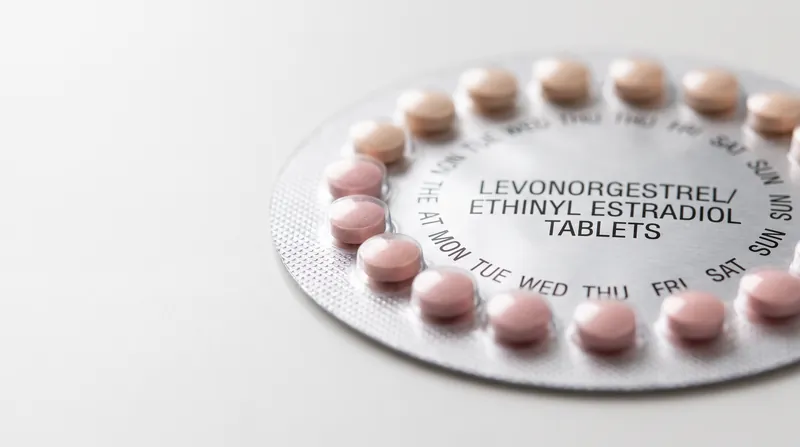
Then there is the massive, glaring blind spot in the cycle-syncing conversation: hormonal contraception. Combined oral contraceptives intentionally downregulate a woman's endogenous estradiol and progesterone, replacing them with synthetic estrogens and progestins to prevent ovulation. Because these synthetic hormones suppress the natural cycle, the entire concept of follicular and luteal phases ceases to exist for these women.
Yet, many fitness apps and coaches still instruct contraceptive users to sync their workouts to their pill packs, treating the active pill days as a pseudo-luteal phase and the placebo week as a pseudo-follicular phase. This advice is not just inaccurate; it fundamentally misrepresents how synthetic hormones interact with the body's metabolic pathways.[5]
The metabolic reality for women on the pill is entirely different. A September 2024 study published in medRxiv tested 16 women taking combined oral contraceptives to see how the synthetic hormones actually affected their fueling. The researchers found that during the active pill phase, the women's respiratory exchange ratio (RER) was significantly lower than during the placebo phase.
A lower RER indicates that the body is burning a higher proportion of fat relative to carbohydrates. The researchers concluded that "Combined OC ingestion acutely affects substrate metabolism, affective responses to exercise and verbal fluency". Ironically, this means the active pill phase drives a distinct, measurable shift toward fat oxidation that the natural luteal phase often struggles to match reliably.[4]
This pronounced metabolic shift occurs because synthetic progestins do not perfectly mimic the behavior of endogenous progesterone. While they successfully suppress the endometrium and prevent pregnancy, they exert entirely different downstream effects on lipid mobilization and carbohydrate sparing. A woman taking a monophasic oral contraceptive is operating on a completely different fueling paradigm than a naturally cycling woman.
Her fat oxidation rates are dictated by the pharmacokinetics of her specific pill formulation, the dosage of synthetic estrogen, and the androgenic profile of the progestin used. Attempting to map a natural 28-day cycle-syncing template onto this synthetic hormonal environment is biologically incoherent.[5]
Despite these biological realities, the fitness industry continues to market cycle-syncing as a universal, empowering rule for female athletes. Women are routinely told to avoid heavy lifting, skip high-intensity intervals, and stick to yoga or light jogging during their luteal phase to 'work with their bodies.'
This directive lacks robust clinical backing and often serves to artificially limit a woman's training progression. By convincing women that their bodies are too fragile or metabolically compromised to handle intense work for two weeks out of every month, the trend inadvertently promotes detraining and stalls strength adaptations under the guise of hormonal optimization.
The most practical takeaway from the clinical evidence is highly reassuring: women can train hard, lift heavy, and fuel adequately at any point in their cycle, regardless of whether they are naturally cycling or using hormonal contraceptives. The female body is remarkably resilient and metabolically flexible.
While tracking symptoms—such as cramping, fatigue, or altered recovery metrics—and adjusting daily volume for personal comfort makes perfect sense, micromanaging substrate oxidation based on a calendar is biologically unnecessary. The science confirms that when you ask your muscles to perform, they will find the fuel they need, regardless of what the calendar says.
Key terms
- Substrate Oxidation
- The biological process of breaking down macronutrients, primarily fats and carbohydrates, to produce energy during exercise.
- Respiratory Exchange Ratio (RER)
- A metric used in physiology to determine whether the body is burning primarily fat or carbohydrates, calculated by the ratio of carbon dioxide produced to oxygen consumed.
- Estradiol-β-17
- The primary and most potent form of estrogen in the female body, responsible for promoting fat oxidation and sparing carbohydrate stores.
- Monophasic Oral Contraceptives
- A type of birth control pill that delivers a constant, unchanging daily dose of synthetic estrogen and progestin throughout the active pill phase.
Reader questions
Should I avoid high-intensity workouts during my luteal phase?
No. Clinical evidence shows that women can perform high-intensity exercise and lift heavy weights at any point in their cycle. Exercise intensity overrides hormonal fluctuations in dictating fuel selection.
Does hormonal birth control change how my body burns fat?
Yes. Combined oral contraceptives suppress your natural hormones and replace them with synthetic versions. Studies show the active pill phase actually lowers your respiratory exchange ratio, meaning your body burns a higher proportion of fat during exercise compared to the placebo week.
Why do women burn more fat during exercise than men?
Estrogen is a master regulator of bioenergetics that promotes lipid oxidation and spares muscle glycogen. This hormonal baseline makes female physiology highly efficient at utilizing fat for endurance.
Where opinion splits
The Exercise Physiology View
Exercise intensity dictates fuel selection more than background hormones.
Exercise physiologists emphasize that the body's demand for adenosine triphosphate (ATP) during high-intensity work forces a shift to carbohydrate oxidation, regardless of the menstrual cycle phase. When a woman crosses 65% of her VO2 max, the working muscles cannot oxidize fat fast enough to sustain the effort. Therefore, advising women to stay in a 'fat-burning zone' during their luteal phase artificially caps their training intensity and ignores the fundamental hierarchy of bioenergetics.
The Endocrinology View
The ratio of estrogen to progesterone determines the metabolic outcome.
Endocrinologists point out that looking solely at estrogen levels paints an incomplete picture. While estradiol promotes lipid oxidation, progesterone actively antagonizes this process. For a woman to actually experience the much-touted 'fat-burning luteal phase,' her estrogen-to-progesterone ratio must hit a specific, individualized threshold. Because this ratio fluctuates wildly between women and even between cycles for the same woman, the metabolic shift is highly inconsistent in clinical trials.
The Cycle-Syncing View
Workouts should be tailored to the hormonal calendar to optimize recovery.
Advocates of cycle-syncing argue that pushing through high-intensity workouts during the high-hormone luteal phase increases systemic stress and cortisol. They recommend leveraging the follicular phase for heavy lifting and glycogen-depleting intervals, while reserving the luteal phase for steady-state cardio and yoga. While this approach encourages women to listen to their bodies and prioritize recovery, critics note it often relies on an oversimplified interpretation of female metabolism and completely excludes the 50% of women on hormonal birth control.
- Exercise Physiologists
- Argue that while hormonal fluctuations influence metabolism, exercise intensity and training status override cycle phases.
- Endocrinology Researchers
- Focus on the precise ratios of estradiol to progesterone required to trigger measurable shifts in substrate oxidation.
- Cycle-Syncing Advocates
- Promote adjusting workout intensity and fueling strategies based on the calendar phases of the menstrual cycle.
Perspectives this story doesn't cover
- Recreational athletes attempting to apply cycle-syncing protocols
- Sports dietitians managing fueling strategies for contraceptive users
Sources
Source coverage
6 outlets
3 viewpoints surfaced





- [1]EndocrineEndocrinology Researchers
Menstrual cycle hormonal changes: estradiol-β-17 and progesterone interactions on exercise fat oxidation
Read on Endocrine → - [2]European Journal of Sport ScienceExercise Physiologists
Substrate metabolism during exercise: Sexual dimorphism and women's specificities
Read on European Journal of Sport Science → - [3]Medicine & Science in Sports & ExerciseExercise Physiologists
No Influence of Menstrual Phase on Substrate Oxidation Following Submaximal Aerobic Exercise in the Fed State
Read on Medicine & Science in Sports & Exercise → - [4]medRxivEndocrinology Researchers
Acute effects of combined oral contraceptive ingestion on cognitive function, substrate metabolism and exercise performance
Read on medRxiv → - [5]Sports
The Influence of Hormonal Contraceptives on Muscular Strength and Recovery in Active Women
Read on Sports → - [6]Factlen Editorial Team
Synthesis by Factlen editorial team
Read on Factlen Editorial Team →

More in Health
See all →Menopause Research
Major Study Links Menopause Blood Protein Signatures to Increased Dementia Risk
5 sources

Menopause Treatments
FDA Evaluates Potential Regulatory Pathway for Testosterone Therapy in Menopausal Women
4 sources

Contraceptive Science
The Dual Mechanism: How Progestin and Estrogen Combine to Prevent Pregnancy
7 sources
PCOS Diagnosis
The Three Criteria for PCOS Diagnosis and the Insulin-Androgen Feedback Loop
10 sources

Comments
Every angle. Every day.
Get Health stories with full source coverage and perspective breakdowns, free every day.