
The Video-First Era: How YouTube and Spotify Transformed Podcasting into Television
The podcasting industry has rapidly shifted from an audio-only medium to a highly visual format dominated by YouTube and Spotify, unlocking lucrative new revenue streams while raising the barrier to entry for independent creators.

For nearly two decades, the defining characteristic of a podcast was its invisibility. The medium thrived as a screen-free companion for commuting, doing dishes, or running. But by the summer of 2026, the audio-only era has quietly given way to a highly visual successor. The "vodcast"—a podcast recorded with multi-camera video setups—has become the default format for the industry's biggest creators. What began as a pandemic-era experiment with Zoom recordings has evolved into a polished, studio-driven ecosystem.[1][4]
The catalyst for this transformation is not a traditional podcasting app, but the world's largest video search engine. YouTube has aggressively positioned itself as the premier destination for episodic talk shows, reporting more than one billion monthly active viewers of podcast content globally. According to a recent Signal Hill Insights study, 42 percent of weekly podcast listeners in the United States now use YouTube as their primary platform, dwarfing Spotify's 14 percent and Apple Podcasts' 12 percent.[4]
This shift is fundamentally changing how audiences discover new shows. Historically, audio podcasts relied on word-of-mouth or opaque platform charts for growth, making audience acquisition notoriously difficult. Video solves the discovery problem by feeding directly into algorithmic recommendation engines. Creators can slice a single hour-long video interview into dozens of short-form clips for YouTube Shorts, TikTok, and Instagram Reels. These bite-sized, highly shareable moments act as lead generators, funneling millions of new viewers back to the full-length episodes.[2]
Recognizing the existential threat posed by YouTube's dominance, Spotify has radically altered its own architecture to embrace the visual medium. The streaming giant, which initially built its podcasting empire on exclusive audio deals, now hosts over half a million video podcasts. To incentivize creators to turn on their cameras, the company launched the Spotify Partner Program, which shares ad revenue with video podcasters based on premium subscriber engagement.[5]
The strategy appears to be working. Spotify recently reported that time spent watching video content on its platform has more than doubled over the past year, with over 390 million users having watched at least one video podcast. The company is even expanding its video footprint beyond its own application, announcing a 2026 partnership to syndicate its video podcasts directly to Netflix, further blurring the line between a podcast and a traditional television show.[3]
Behind this visual arms race is a simple economic reality: video generates significantly more revenue than audio alone. Advertisers are willing to pay a premium for the visual attention of an audience. Industry data shows that cost-per-mille (CPM) rates for host-read mid-roll sponsorships on top-tier YouTube podcasts now range from $25 to $80. Video allows brands to move beyond mere audio mentions, enabling hosts to physically hold products, display logos on studio monitors, and integrate visual branding directly into the set design.[2]
Furthermore, the consumption habits of the audience are shifting from mobile devices to the living room. Podcasts are increasingly competing with traditional broadcast television for prime-time viewing hours. In late 2025, viewers streamed over 700 million hours of podcast content on YouTube via connected television screens in a single month. This migration to the biggest screen in the house makes video podcasts highly attractive to premium advertisers who traditionally bought television commercials.
However, the transition to video introduces significant new hurdles for independent creators. Podcasting was originally celebrated as a democratized medium where anyone with a $50 USB microphone and a laptop could reach a global audience. Today, the expectation of high-quality video has dramatically raised the barrier to entry. Creators now face the pressure of purchasing 4K cameras, professional lighting rigs, and video editing software, turning a simple audio recording into a complex multimedia production.[1]
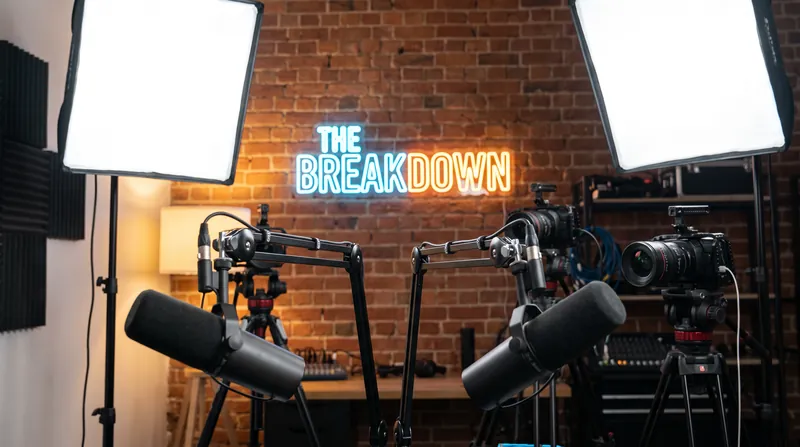
This pressure has birthed a "smoke and mirrors" culture within the industry, where independent podcasters feel compelled to rent professional studios with neon signs and plush velvet chairs just to compete. The financial burden is substantial; some creators report that a single professional video shoot can cost upwards of $3,500. Industry analysts warn that this escalating production arms race could stifle emerging voices who cannot afford the visual polish now demanded by platform algorithms.[1][4]
There is also a creative tension inherent in adding cameras to a medium built on intimacy. Audio purists argue that the magic of a great podcast lies in its unvarnished, conversational nature. When hosts and guests know they are being filmed, the dynamic often shifts from a candid discussion to a performative talk show. The visual environment invites audiences to scrutinize body language, wardrobe choices, and set design, which can distract from the substance of the conversation itself.
Despite these concerns, the momentum behind video is unlikely to reverse. The industry is settling into a hybrid model where the video feed serves as the primary growth engine, while the audio-only RSS feed remains a convenience for listeners who are driving or exercising. Creators are learning to design their shows for both experiences simultaneously, ensuring that visual gags are explained for the audio audience while keeping the on-screen action dynamic enough for viewers.[2][5]
Ultimately, the vodcast revolution represents the maturation of the creator economy. The most successful podcasters are no longer just disembodied voices; they are full-blown multimedia brands. As the boundaries between YouTube, Spotify, and traditional television continue to dissolve, the definition of a podcast will keep expanding, offering audiences unprecedented ways to connect with the conversations that matter to them.[1]
Key points
- YouTube has become the dominant platform for podcast consumption, reaching over one billion monthly viewers.
- Video algorithms solve audio's discovery problem by using short-form clips to funnel viewers to full episodes.
- Spotify has aggressively expanded its video capabilities, launching a Partner Program to share ad revenue with creators.
- The demand for high-quality video production is raising the financial barrier to entry for independent podcasters.
What we don’t know
- Whether the high cost of video production will permanently price out independent, hobbyist podcasters from reaching mainstream audiences.
- How traditional audio-only advertisers will adapt as premium brand budgets increasingly shift toward visual product placements.
How we got here
2004
The RSS feed is adapted for audio enclosures, birthing the traditional audio podcast.
2020
The pandemic forces creators to record via Zoom, inadvertently introducing audiences to unedited video formats.
2022
YouTube begins heavily investing in podcast infrastructure, offering dedicated tabs and analytics for creators.
2025
Spotify launches its Partner Program, directly paying creators for video engagement to compete with YouTube.
2026
Spotify announces a partnership to syndicate its video podcasts to Netflix, cementing the format's television-like status.
- Video-First Creators
- Creators who view video as essential for algorithmic discovery and maximizing ad revenue.
- Brand Advertisers
- Marketers who value the high engagement and visual real estate of vodcasts.
- Audio Purists
- Advocates who believe podcasting's magic lies in its intimacy and low barrier to entry.
Perspectives this story doesn't cover
- Deaf and hard-of-hearing audiences benefiting from visual cues
- Traditional radio broadcasters adapting to visual formats
Sources
Source coverage
5 outlets
3 viewpoints surfaced





- [1]MarketplaceBrand Advertisers
More and more podcasters are doing video. The change is big
Read on Marketplace → - [2]IPG Media LabVideo-First Creators
The Rise of Video Podcasts. What the seemingly paradoxical format means for brands
Read on IPG Media Lab → - [3]Media in CanadaBrand Advertisers
Spotify's video podcasts drive record-breaking user gains
Read on Media in Canada → - [4]Strategic Media Inc.Video-First Creators
The Rise of Video in Podcasting
Read on Strategic Media Inc. → - [5]TellyCastVideo-First Creators
How Spotify Is Turning Podcasts Into the New TV Industry
Read on TellyCast →
More in Entertainment
See all →Creator Economy
The Mechanics of Podcast Monetization: Comparing CPM, Host-Read Ads, Subscriptions, and Patronage Models
8 sources
Creator Economy
Spotify and Netflix Strike $100 Million Joint Deal for Jay Shetty's 'On Purpose' Podcast
6 sources
Audio Mastering
Dual-Mono Playback Doubles Acoustic Power Across Two Earbuds, Forcing Single-Channel Podcasts to Master at -19 LUFS
2 sources
Media Ethics
Gaza Photojournalist Motaz Azaiza Admits Withholding October 7 Hostage Footage
5 sources
Comments
Every angle. Every day.
Get Entertainment stories with full source coverage and perspective breakdowns, free every day.