
The Science of Thermal Recovery: How Cold Plunges and Saunas Alter Muscle Growth
While cold water immersion effectively blunts delayed-onset muscle soreness, emerging research suggests heat therapy may be superior for long-term muscle hypertrophy and strength recovery.
By Factlen Editorial Team
- Hypertrophy & Strength Coaches
- Prioritize inflammation and heat to maximize muscle growth.
- Endurance & Team Sport Athletes
- Prioritize immediate pain relief and systemic recovery to maintain high-frequency performance.
- Sports Scientists
- Advocate for periodized thermal recovery based on specific physiological goals.
What's not represented
- · Recreational gym-goers with limited access to thermal facilities
- · Physical therapists treating acute injuries
Why this matters
Athletes and fitness enthusiasts spend billions on recovery tools, but applying the wrong temperature at the wrong time can actively inhibit muscle growth and athletic performance. Understanding the cellular impact of hot and cold therapies allows individuals to align their recovery protocols with their specific training goals.
Key points
- Cold water immersion effectively reduces delayed-onset muscle soreness and clears metabolic waste by triggering rapid vasoconstriction.
- Applying cold therapy immediately after resistance training blunts the inflammatory cascade necessary for long-term muscle hypertrophy.
- Heat therapy, such as sauna use, promotes vasodilation and the release of Heat Shock Proteins, aiding in muscle repair and strength recovery.
- Contrast water therapy alternates hot and cold to create a vascular 'pumping' action, which is particularly effective for reducing perceived fatigue in team sports.
- Sports scientists now recommend periodizing recovery, using cold for immediate performance readiness and heat for long-term tissue adaptation.
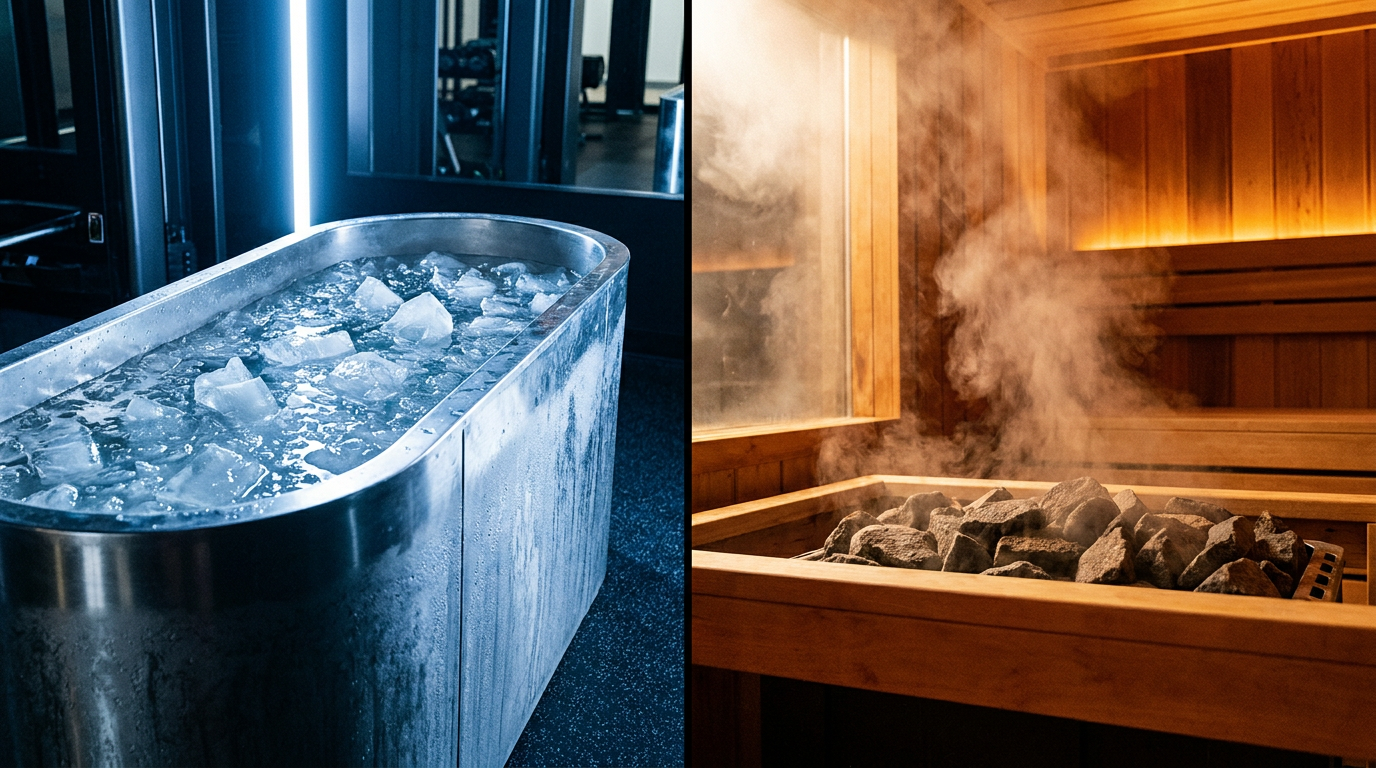
Walk into any high-performance training facility—or increasingly, a suburban garage—and you will likely find a thermal battleground. On one side sits the cold plunge, a chilling vat of water kept just above freezing, promising to extinguish inflammation and accelerate healing. On the other side glows the cedar sauna, radiating intense heat designed to flush the system and relax battered muscles. For decades, athletes relied on anecdotal evidence to choose their post-workout thermal therapy, often defaulting to the traditional ice bath popularized by professional rugby and American football teams. But as sports science has evolved, the conversation has shifted from simple pain relief to cellular adaptation. Researchers are now mapping exactly how extreme temperature exposure alters the body's physiological response to exercise, revealing that the choice between hot and cold is far more complex than personal preference.[7]
To understand why temperature matters, one must first understand the physiological toll of strenuous exercise. When muscles are subjected to heavy resistance or high-impact endurance work, they sustain microscopic tears in their fibers. This mechanical damage triggers an immediate immune response, initiating a cascade of acute inflammation. Blood vessels dilate to rush white blood cells, nutrients, and fluid to the damaged site, resulting in the swelling, stiffness, and delayed-onset muscle soreness (DOMS) that typically peaks 24 to 48 hours after a workout. For an athlete needing to compete again the next day, this inflammatory response is a debilitating obstacle. For a bodybuilder looking to grow new tissue, however, it is the crucial first step in the adaptation process.[6][7]
Cold water immersion (CWI) operates as a blunt-force physiological brake on this inflammatory cascade. When the body is submerged in water below 15 degrees Celsius (59 degrees Fahrenheit), it triggers immediate peripheral vasoconstriction. The blood vessels in the limbs and skin clamp down, forcefully redirecting blood flow toward the vital organs in the core to preserve heat. This rapid constriction acts like a physiological sponge, squeezing metabolic waste products—such as lactic acid and hydrogen ions—out of the muscle tissue. Simultaneously, the cold temperature slows nerve conduction velocity, effectively numbing the pain receptors and providing immediate, localized analgesia to the battered muscles.[1]
The clinical evidence supporting cold water immersion for acute pain relief is overwhelmingly positive. A comprehensive meta-analysis published in Sports Medicine, which reviewed 28 distinct studies, found that CWI was vastly superior to passive rest for alleviating delayed-onset muscle soreness. The data revealed that athletes who plunged into cold water immediately after strenuous exercise reported significantly lower perceived exertion and muscle stiffness at the zero-hour and 24-hour marks. Furthermore, the cold immersion effectively suppressed the accumulation of creatine kinase (CK)—a primary biomarker of muscle damage—in the bloodstream during the critical 24-hour recovery window.[1]

However, the very mechanism that makes ice baths so effective at reducing soreness is exactly what makes them detrimental to long-term muscle growth. The sports science community recently experienced a paradigm shift when researchers began looking beyond acute recovery and measuring long-term tissue adaptation. It turns out that the acute inflammation suppressed by the cold water is a necessary biological signal. The macrophages and cytokines that rush to the site of micro-tears are responsible for activating satellite cells, which fuse to existing muscle fibers to increase their size and strength. By artificially shutting down this inflammatory response with cold therapy, athletes are effectively telling their bodies to halt the repair and rebuilding process.[6]
Studies tracking resistance-trained individuals have demonstrated this "blunting" effect with startling clarity. When athletes engage in heavy strength training and immediately follow it with cold water immersion, their long-term hypertrophic adaptations are significantly compromised compared to those who simply rest at room temperature. The cold exposure downregulates the anabolic signaling pathways responsible for muscle protein synthesis. For athletes whose primary goal is to build muscle mass or increase absolute strength—such as powerlifters, bodybuilders, or off-season field athletes—jumping into an ice bath after a heavy lifting session actively sabotages the hard work they just completed on the gym floor.[6]
This realization has driven a massive resurgence of interest in the opposite end of the thermal spectrum: heat therapy. Unlike the vasoconstrictive shock of a cold plunge, stepping into a sauna—whether traditional dry heat or infrared—induces profound vasodilation. As the core temperature rises, the cardiovascular system works overtime to cool the body, pumping massive volumes of blood to the skin and peripheral tissues. This hyperemic response bathes the damaged muscles in oxygen-rich blood and essential nutrients while efficiently flushing out the metabolic byproducts of exercise. Crucially, heat therapy achieves this clearance without shutting down the localized inflammatory signals required for tissue growth.[3]
This realization has driven a massive resurgence of interest in the opposite end of the thermal spectrum: heat therapy.
The magic of heat therapy, however, lies deeper than simple blood flow; it exists at the cellular level through the activation of Heat Shock Proteins (HSPs). When the body is exposed to thermal stress, cells synthesize these specialized molecular chaperones, particularly HSP70. During intense exercise, the mechanical and oxidative stress causes cellular proteins to misfold or degrade. Heat shock proteins rush to the site of damage, repairing misfolded proteins, preventing their aggregation, and protecting the cellular machinery from further degradation. This molecular triage not only accelerates recovery but actively promotes a state of net muscle protein synthesis, tipping the scales in favor of hypertrophy.[3]

The functional benefits of post-exercise heat exposure are becoming increasingly apparent in clinical trials. Research investigating the use of infrared saunas following heavy resistance training has shown remarkable benefits for neuromuscular recovery. In one notable study, athletes who spent 30 minutes in an infrared sauna after a grueling lower-body workout demonstrated a significantly faster return of maximal isometric strength and explosive power (measured via countermovement jumps) compared to a control group that utilized passive rest. The heat-treated athletes also reported lower levels of perceived muscle soreness in the days following the training bout, achieving the pain-relief benefits of an ice bath without the anabolic penalties.[5]
For athletes unwilling to choose between hot and cold, Contrast Water Therapy (CWT) offers a compelling middle ground. This protocol involves alternating between hot water immersion (typically around 38 degrees Celsius) and cold water immersion (around 15 degrees Celsius) in rapid succession. The theory behind CWT is the "pumping action" hypothesis: the alternating temperatures cause rapid cycles of vasodilation and vasoconstriction. This rhythmic expanding and contracting of the blood vessels acts as a peripheral vascular pump, theoretically accelerating the clearance of edema and metabolic waste from the muscle tissue more effectively than either modality used in isolation.[2]
The empirical data on contrast therapy paints a nuanced picture of its efficacy. Research published in the Journal of Strength and Conditioning Research evaluated CWT specifically in the context of high-intensity team sports, which require a mix of explosive sprinting, heavy contact, and endurance. The pooled data indicated that contrast therapy was highly effective at reducing subjective feelings of whole-body fatigue at the 24-hour and 48-hour marks. Players felt fresher and more psychologically prepared to return to the field. However, when measuring objective markers of neuromuscular recovery or the clearance of specific blood biomarkers, CWT did not consistently outperform continuous cold water immersion.[4]

The duration and ratio of hot-to-cold exposure in contrast therapy also appear to dictate its success. Studies monitoring runners completing high-intensity interval track sessions found that a brief, six-minute contrast protocol (alternating one minute hot, one minute cold) resulted in faster subsequent 3,000-meter time trial performances compared to passive rest. Interestingly, extending the contrast therapy to 12 or 18 minutes provided no additional dose-response benefit and, in some cases, induced systemic fatigue that negated the recovery effects. This suggests that the primary benefit of CWT may be the acute neurological stimulation of the temperature shifts rather than deep tissue flushing.[2]
Beyond the mechanical repair of muscle tissue, both extreme heat and extreme cold exert profound effects on the central nervous system (CNS), which plays a critical, often overlooked role in athletic recovery. Immersing the body in freezing water or sitting in a 180-degree sauna triggers a massive release of catecholamines, particularly norepinephrine. This hormonal surge sharpens focus and alertness in the short term. More importantly, once the thermal stress is removed, the body experiences a powerful parasympathetic rebound. This shift from the "fight or flight" sympathetic state to the "rest and digest" parasympathetic state is essential for initiating deep, restorative sleep—the ultimate performance-enhancing recovery tool.[5][7]
Ultimately, the science suggests that the era of a one-size-fits-all recovery protocol is over. The Factlen Editorial Team's synthesis of current sports science literature points toward a new paradigm: periodized thermal recovery. Just as an athlete periodizes their training volume and intensity throughout a season, they must now periodize their recovery modalities based on the specific physiological goal of the day. If the immediate goal is to reduce inflammation, numb pain, and bounce back for a championship game the next morning, the cold plunge remains an unparalleled tool. The blunting of long-term muscle growth is a worthwhile trade-off for acute performance readiness.[7]

Conversely, during the off-season or during dedicated hypertrophy and strength-building phases, the cold plunge should be used sparingly, if at all, immediately following resistance training. In these phases, athletes are better served by embracing the heat. Utilizing a sauna post-workout will amplify blood flow, trigger the release of protective heat shock proteins, and support the inflammatory cascade necessary for building new tissue. By understanding the distinct cellular mechanisms of hot and cold, fitness enthusiasts can stop guessing and start leveraging temperature as a precision instrument for human performance.[3][7]
Viewpoints in depth
Hypertrophy & Strength Coaches
Prioritize inflammation and heat to maximize muscle growth.
For coaches focused on absolute strength and muscle mass, the acute inflammation following a heavy lifting session is not a problem to be solved, but a signal to be protected. They argue that cold water immersion artificially blunts the anabolic pathways necessary for protein synthesis. Instead, this camp advocates for passive rest or heat therapy (like saunas) post-workout, which increases blood flow and nutrient delivery without interrupting the cellular repair mechanisms that lead to hypertrophy.
Endurance & Team Sport Athletes
Prioritize immediate pain relief and systemic recovery to maintain high-frequency performance.
Athletes competing in multi-day tournaments or enduring high-impact team sports cannot afford to wait 48 hours for natural inflammation to subside. For this camp, the immediate analgesic effects of cold water immersion and the perceived freshness provided by contrast water therapy are invaluable. They argue that the slight blunting of long-term hypertrophy is a necessary and acceptable trade-off for the ability to return to the field the next day with reduced delayed-onset muscle soreness and cleared metabolic waste.
Sports Scientists
Advocate for periodized thermal recovery based on specific physiological goals.
The academic and clinical consensus is moving away from a binary 'hot vs. cold' debate toward a periodized approach. Sports scientists emphasize that recovery modalities should be prescribed with the same precision as training loads. They recommend utilizing cold therapy during intense competitive phases where acute recovery is paramount, and switching to heat therapy or passive rest during off-season or developmental phases where long-term tissue adaptation is the primary objective.
What we don't know
- The exact optimal ratio of hot-to-cold exposure in contrast water therapy for specific sports.
- Whether the long-term hypertrophic blunting of cold water immersion applies equally to highly trained elite athletes and untrained beginners.
- The precise temperature threshold at which heat therapy maximizes the production of Heat Shock Proteins without causing excessive systemic fatigue.
Key terms
- Delayed-Onset Muscle Soreness (DOMS)
- The muscular pain and stiffness that typically peaks 24 to 48 hours after strenuous or unaccustomed exercise.
- Creatine Kinase (CK)
- An enzyme found in muscle tissue that leaks into the bloodstream when muscles are damaged, used as a primary biomarker for exercise-induced muscle trauma.
- Vasoconstriction
- The narrowing of blood vessels, often triggered by cold exposure, which restricts blood flow to the extremities and redirects it to the core.
- Heat Shock Proteins (HSPs)
- Specialized proteins produced by cells in response to thermal stress that help repair misfolded proteins and protect cellular machinery.
- Hypertrophy
- The increase in the size of skeletal muscle fibers, typically achieved through resistance training and adequate recovery.
Frequently asked
Should I take an ice bath immediately after lifting weights?
If your primary goal is building muscle mass or strength, no. Research shows that cold water immersion immediately after resistance training blunts the inflammatory signals required for muscle hypertrophy.
How long should I stay in a sauna for recovery?
Clinical studies often use protocols of 20 to 30 minutes in a traditional or infrared sauna post-exercise to effectively increase blood flow and promote neuromuscular recovery.
Does alternating hot and cold water work better than just cold?
Contrast water therapy is highly effective for reducing perceived fatigue and subjective soreness, particularly in team sports, but objective data shows it does not necessarily clear muscle damage biomarkers better than continuous cold immersion.
What temperature should a cold plunge be?
Most clinical studies defining cold water immersion use water temperatures at or below 15 degrees Celsius (59 degrees Fahrenheit) to trigger the necessary vasoconstriction and analgesic effects.
Sources
Source coverage
7 outlets
3 viewpoints surfaced







[1]Sports MedicineSports Scientists
Effects of Cold-Water Immersion Compared with Other Recovery Modalities on Athletic Performance
Read on Sports Medicine →[2]International Journal of Sports Physiology and PerformanceEndurance & Team Sport Athletes
Effect of Contrast Water Therapy Duration on Recovery of Running Performance
Read on International Journal of Sports Physiology and Performance →[3]MDPIHypertrophy & Strength Coaches
Effects of Passive Sauna Bathing on Muscle Strength and Hypertrophy
Read on MDPI →[4]Journal of Strength and Conditioning ResearchEndurance & Team Sport Athletes
Effects of Cold Water Immersion and Contrast Water Therapy for Recovery From Team Sport
Read on Journal of Strength and Conditioning Research →[5]PubMed CentralSports Scientists
A post-exercise infrared sauna session improves recovery of neuromuscular performance
Read on PubMed Central →[6]Frontiers in Sports and Active LivingHypertrophy & Strength Coaches
Cold Water Immersion Blunts Muscle Hypertrophy and Strength Adaptations
Read on Frontiers in Sports and Active Living →[7]Factlen Editorial TeamSports Scientists
Synthesis by Factlen editorial team
Read on Factlen Editorial Team →
Every angle. Every day.
Get fitness stories with full source coverage and perspective breakdowns delivered to your inbox.