
The Science of Everyday Awe: How Micro-Wonder Reshapes the Brain
New psychological research reveals that finding 'everyday awe' in mundane settings can lower inflammation, quiet the ego, and significantly reduce symptoms of depression.
By Factlen Editorial Team

- Clinical Psychologists
- Focus on awe as a low-cost, non-invasive therapeutic intervention for depression and anxiety.
- Neuroscientists
- Emphasize the physiological markers of awe, such as reduced brain chatter and lower inflammation.
- Evolutionary Biologists
- View awe as an adaptive mechanism that promoted social cohesion and survival in early humans.
- Mindfulness Practitioners
- Advocate for the intentional daily cultivation of micro-awe to combat modern digital fatigue.
What's not represented
- · Urban Planners (how to design cities to facilitate everyday wonder)
- · Digital Ethicists (the impact of screen time on our baseline capacity for awe)
Why this matters
In an era of high anxiety and digital fatigue, awe offers a free, scientifically validated tool to lower stress hormones and increase feelings of social connection without requiring travel or major life changes.
Key points
- Psychologists define awe as encountering something vast that forces the brain to adjust its understanding of the world.
- Experiencing awe quiets the brain's Default Mode Network, reducing ego-driven anxieties and rumination.
- Studies show awe is uniquely linked to lower levels of proinflammatory cytokines, benefiting the immune system.
- Deliberate 'awe walks' can significantly reduce symptoms of depression by shifting focus outward.
- Everyday wonder is highly accessible and does not require expensive travel or extreme experiences.
For decades, the emotion of awe was relegated to the realm of the extraordinary. Psychologists and philosophers assumed that to experience true wonder, a person had to stand at the rim of the Grand Canyon, gaze up at the ceiling of the Sistine Chapel, or witness a total solar eclipse. It was treated as a rare, peak human experience—a luxury of travel, privilege, or pure serendipity [1].[1]
But a quiet revolution in behavioral science is upending that assumption. Researchers are increasingly turning their attention away from the mountaintops and toward the sidewalk, studying a phenomenon known as "everyday awe" or "micro-awe" [2]. Their findings suggest that this elusive emotion is not only highly accessible in mundane environments, but it also serves as a potent, measurable intervention for modern psychological distress [1].[1][2]
To study awe, scientists first had to define it. The modern psychological consensus, pioneered by researchers like Dacher Keltner at the Greater Good Science Center, identifies two core components: "perceived vastness" and a "need for accommodation" [2]. Vastness can be physical, like a towering redwood, or conceptual, like grasping the sheer scale of the universe or the complexity of a mathematical theorem.[2]
The "need for accommodation" borrows from developmental psychology. When we encounter something so complex or vast that it breaks our existing mental models, our brain has to pause and rewire itself to take in the new information [1]. It is in that exact moment of cognitive recalibration that we feel the distinct, goosebump-inducing sensation of awe [2].[1][2]
When this happens, the brain undergoes a profound shift. Neurological imaging shows that awe effectively quiets the Default Mode Network (DMN)—the interconnected brain regions responsible for mind-wandering, self-reflection, and the endless loop of ego-driven anxieties [1]. By turning down the volume on the DMN, awe provides a rare neurological break from the self.[1]

This shrinking of the ego is what psychologists call the "small self" effect. Rather than feeling diminished or insignificant in a negative way, people experiencing the small self report feeling liberated from their personal stressors [8]. They suddenly perceive themselves as a minor part of a much larger, interconnected tapestry, which dramatically alters how they process daily anxieties [2].[2][8]
The benefits extend far beyond subjective feelings of peace. Awe triggers a cascade of physiological changes that rival the effects of deep meditation. Heart rates slow, breathing deepens, and the parasympathetic nervous system—the body's "rest and digest" mechanism—takes over, flushing cortisol out of the bloodstream [1].[1]
Most surprisingly, awe appears to alter our immune response. Research published in the journal Emotion by Jennifer Stellar and colleagues found that experiencing awe is uniquely associated with lower levels of proinflammatory cytokines [4]. These proteins signal the immune system to work harder, and chronically high levels are linked to depression, autoimmune diseases, and cardiovascular issues [4].[4]

Most surprisingly, awe appears to alter our immune response.
The therapeutic potential of these physiological shifts is now being tested in clinical settings. A rigorous study published in Nature: Scientific Reports examined patients suffering from long COVID, a condition frequently accompanied by severe depression and brain fog [3]. Researchers found that teaching these patients to actively seek out moments of awe in their daily lives significantly reduced their depressive symptoms [3].[3]
The intervention used in such studies is remarkably simple: the "awe walk." Participants are instructed to take a brief, 15-minute walk with the explicit intention of finding something unexpected or vast, even if it is just a unique cloud formation, the way light hits a building, or the intricate pattern of bark on a neighborhood tree [6].[6]
The results of these walks are highly visible. In one study detailed in The Psychologist, participants were asked to take selfies during their walks. The control group took standard photos, centering their faces in the frame. The awe group, however, began taking "selfless selfies"—gradually shrinking themselves in the frame to capture more of the background landscape [6]. Their visual focus had literally shifted from inward to outward [6].[6]

This outward shift makes people demonstrably kinder. Research in the Journal of Personality and Social Psychology demonstrates that awe acts as a social glue [8]. Because it reduces egocentric thinking, people who have recently experienced awe are more likely to exhibit prosocial behaviors: they become more generous, more ethical in their decision-making, and more willing to help strangers [8].[8]
Evolutionary biologists suspect this prosocial bonding is exactly why the emotion developed in early humans. In a prehistoric world fraught with danger, awe may have evolved to suppress individual selfishness and promote tribal cohesion, ensuring that groups worked together to survive harsh environments and external threats [1].[1]
In the modern era, awe also alters our relationship with time. A fascinating study published in Psychological Science revealed that people who experience awe feel as though they have more time available to them [5]. This expanded perception of time makes them less impatient, more willing to volunteer, and more satisfied with their lives compared to those experiencing other positive emotions like joy or amusement [5].[5]

Crucially, awe does not seem to suffer from the "hedonic treadmill"—the psychological law of diminishing returns where we quickly adapt to things that bring us pleasure [1]. While the thrill of a new purchase fades rapidly, the capacity to feel wonder at the natural world remains robust, no matter how often it is practiced [7].[1][7]
However, experts caution against the modern tendency to "hack" awe by constantly chasing extreme, transcendent experiences. Relying on expensive international travel, extreme sports, or psychedelics to feel wonder can become its own form of consumption, leading to burnout and a devaluation of daily life [1].[1]
The true power of the emerging science lies in its accessibility. Cultivating micro-awe requires no money, no travel, and no special equipment [7]. It simply demands a deliberate shift in attention—a willingness to pause, look closely, and allow the ordinary world to be extraordinary [2].[2][7]
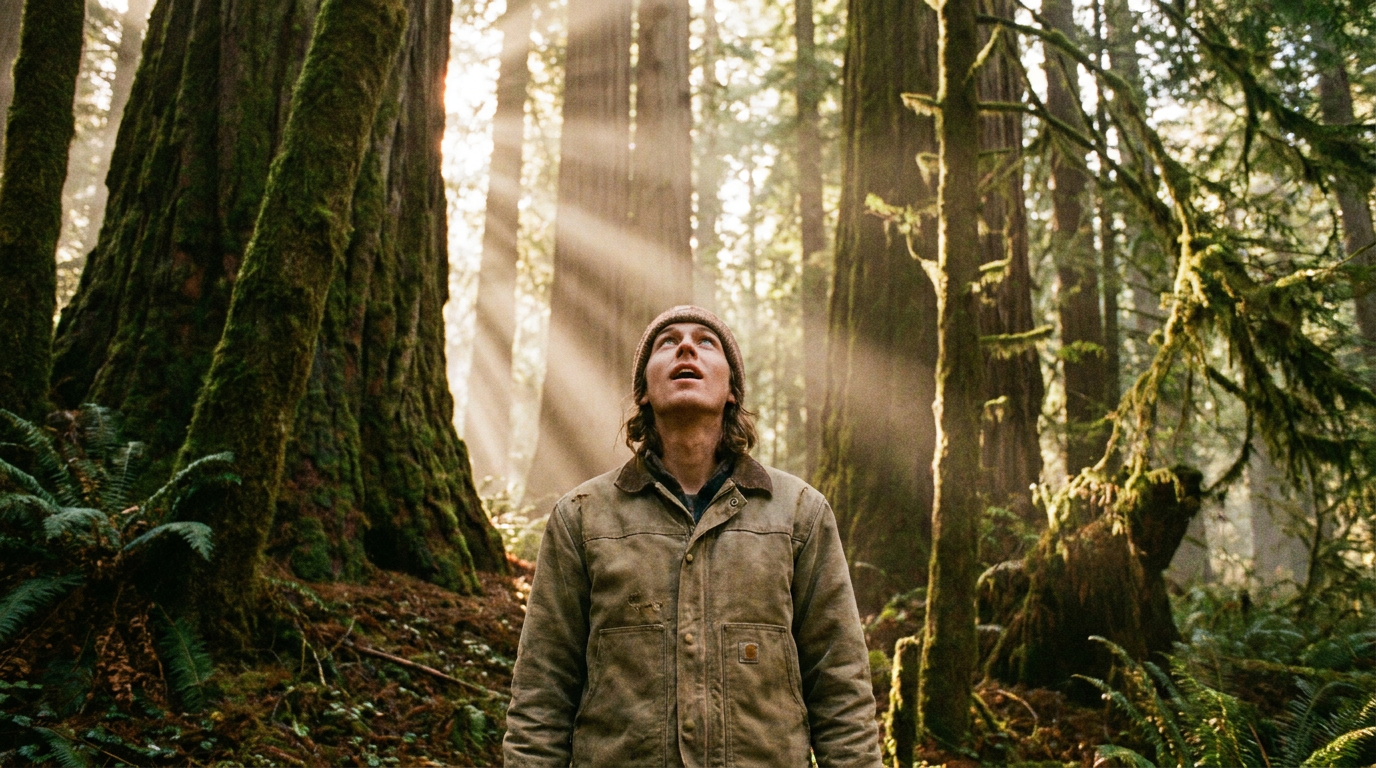
In an era defined by digital distraction, chronic stress, and an epidemic of loneliness, awe offers a natural, built-in reset button [1]. By simply stepping outside and looking up, we have the capacity to lower our inflammation, quiet our anxieties, and reconnect with the vastness of the world around us.[1]
How we got here
2003
Psychologists Dacher Keltner and Jonathan Haidt publish a seminal paper defining awe through 'perceived vastness' and 'accommodation'.
2015
Research links awe to the 'small self' effect, demonstrating its power to increase generosity and ethical behavior.
2017
Studies reveal that experiencing awe is uniquely correlated with lower levels of proinflammatory cytokines.
May 2025
A rigorous study in Nature: Scientific Reports shows everyday awe interventions can reduce depression in long COVID patients.
Viewpoints in depth
Clinical Psychologists
Focus on awe as a low-cost, non-invasive therapeutic intervention.
Clinical psychologists view awe not just as a fleeting emotion, but as a measurable clinical tool. By prescribing 'awe walks' or awe-inducing exercises, therapists can help patients break out of the rumination cycles typical of depression and anxiety, offering a free complement to traditional treatments.
Evolutionary Biologists
View awe as an adaptive mechanism that promoted survival.
From an evolutionary standpoint, awe served a critical function for early humans. By inducing the 'small self' and making individuals feel part of a larger whole, it suppressed selfish instincts and fostered the tribal cohesion necessary to survive harsh environments and external threats.
Neuroscientists
Emphasize the physiological and brain-network changes triggered by wonder.
For neuroscientists, awe is fascinating because of its unique physiological signature. It is one of the few positive emotions that reliably down-regulates the Default Mode Network while simultaneously lowering proinflammatory cytokines, bridging the gap between cognitive perception and systemic immune response.
Mindfulness Practitioners
Advocate for the intentional daily cultivation of micro-awe.
This camp emphasizes that awe is a muscle that can be trained. In a modern landscape dominated by screens and digital fatigue, they argue that practicing 'slow looking' and deliberately seeking wonder in the mundane is essential for maintaining emotional equilibrium and presence.
What we don't know
- Whether the physiological benefits of awe are strictly causal or if naturally healthier people are simply more prone to experiencing wonder.
- How simulated awe experiences, such as those generated by virtual reality, compare neurologically to real-world encounters.
- The exact duration that the immune and psychological benefits of a single awe-inducing event last before fading.
Key terms
- Default Mode Network (DMN)
- A network of interacting brain regions associated with mind-wandering, self-reflection, and ego-driven anxieties.
- Proinflammatory Cytokines
- Proteins secreted by the immune system that promote inflammation; chronically high levels are linked to depression and disease.
- The Small Self
- A psychological state triggered by awe where an individual's sense of ego shrinks, leading to feeling connected to a larger whole.
- Need for Accommodation
- The cognitive process of adjusting one's existing mental models to make sense of new, vastly complex information.
Frequently asked
Do I need to travel to experience awe?
No. Recent research focuses on 'micro-awe' or 'everyday awe,' which can be found in local parks, music, or simply observing small details in nature.
How does an 'awe walk' work?
It involves taking a 15-minute walk with the deliberate intention of finding something unexpected or vast, shifting your focus outward rather than inward.
Can awe really affect my immune system?
Yes. Studies have shown that experiencing awe is uniquely associated with lower levels of proinflammatory cytokines, which are markers of systemic inflammation.
Sources
Source coverage
8 outlets
4 viewpoints surfaced







[1]Factlen Editorial TeamEvolutionary Biologists
Synthesis by Factlen editorial team
Read on Factlen Editorial Team →[2]Greater Good Science CenterMindfulness Practitioners
The Science of Awe
Read on Greater Good Science Center →[3]Nature: Scientific ReportsClinical Psychologists
Everyday awe interventions reduce symptoms of depression
Read on Nature: Scientific Reports →[4]EmotionNeuroscientists
Positive affect and markers of inflammation: Discrete positive emotions predict lower levels of inflammatory cytokines
Read on Emotion →[5]Psychological ScienceNeuroscientists
Awe Expands People's Perception of Time, Alters Decision Making, and Enhances Well-Being
Read on Psychological Science →[6]The PsychologistClinical Psychologists
The benefits of awe walks
Read on The Psychologist →[7]UC Irvine HealthMindfulness Practitioners
Everyday Awe: Small Moments With Big Impact
Read on UC Irvine Health →Awe, the small self, and prosocial behavior
Read on Journal of Personality and Social Psychology →
Every angle. Every day.
Get culture stories with full source coverage and perspective breakdowns delivered to your inbox.